
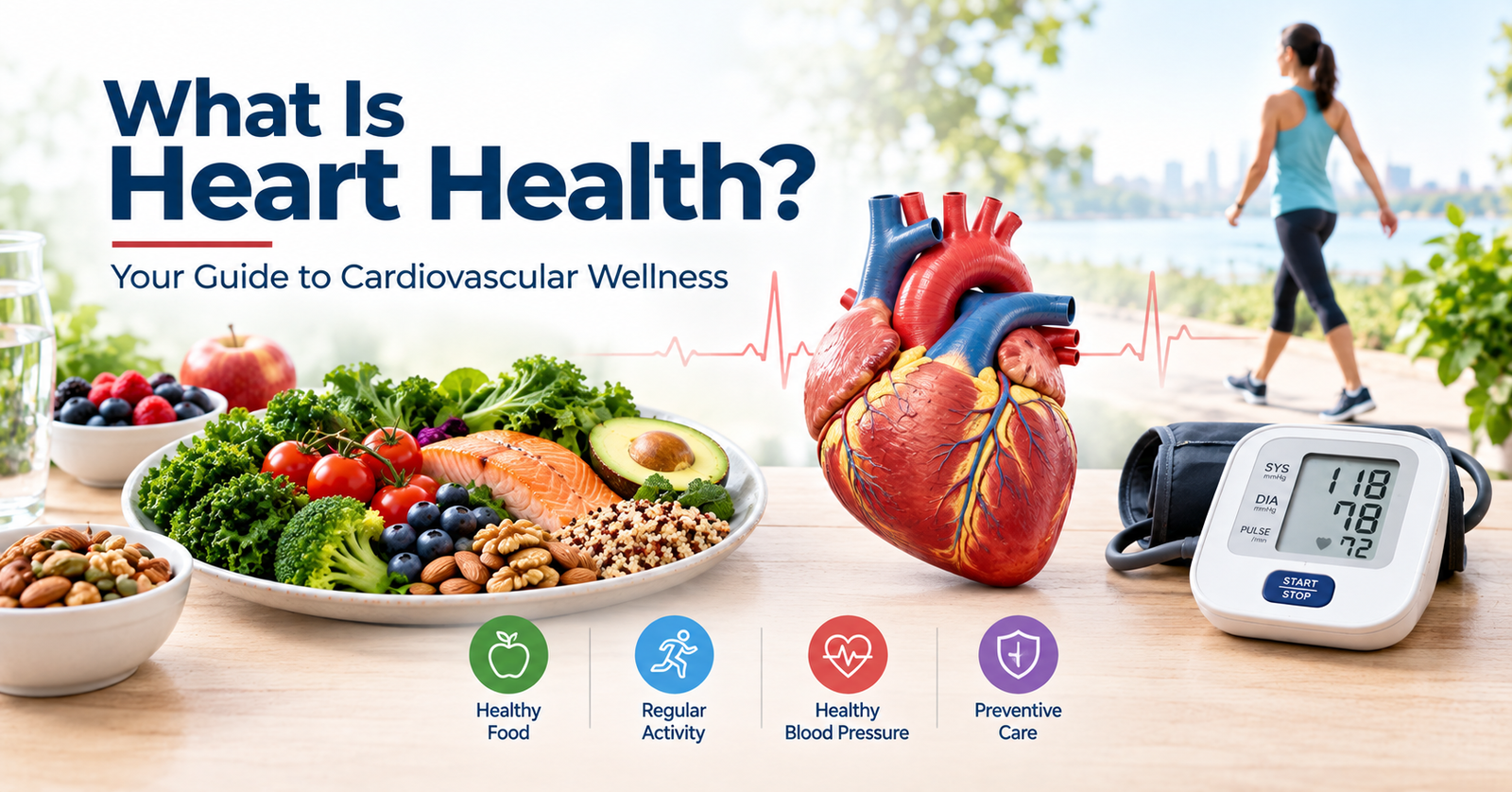

Heart health refers to the condition and function of your heart and blood vessels, along with the lifestyle habits and medical factors that influence your risk of cardiovascular disease. In other words, it’s not just about avoiding a diagnosis — it’s an ongoing state that reflects how well your heart and circulatory system are working together.
Important: This article is for general information and is not a substitute for professional medical advice. Please talk with a qualified healthcare provider about your own cardiovascular health and risk factors.
In short: Heart health means maintaining a healthy heart and blood vessels while managing the lifestyle and medical factors that can influence your risk of cardiovascular disease, including blood pressure, cholesterol, blood glucose, physical activity, diet, sleep, and tobacco exposure.
Cardiovascular health is shaped by factors you can change — like activity level, diet, and smoking — and some you can’t, like age and family history. Because of this mix, the National Heart, Lung, and Blood Institute (NHLBI) frames heart-healthy living as a process of understanding your personal risk, making sustainable healthy choices, and taking consistent steps to lower your chances of developing heart disease.
With that framework in mind, this guide walks through what heart health actually means, how the heart works, the numbers worth tracking, and practical, evidence-based ways to support your cardiovascular system for the long term.
What Does Heart Health Mean?
The terms “heart health,” “cardiovascular health,” “heart disease,” and “cardiovascular disease” are often used interchangeably, but they describe slightly different things:
- Heart health describes the overall condition of the heart, along with the behaviors and health markers connected to cardiovascular well-being.
- Cardiovascular health, meanwhile, is a broader term that includes the heart and the entire network of blood vessels throughout the body.
- Heart disease refers specifically to conditions that affect the heart itself, such as coronary artery disease or heart failure.
- Cardiovascular disease, by contrast, is the umbrella term for conditions affecting both the heart and blood vessels, including stroke and peripheral artery disease.
Heart Health vs. Heart Disease
Heart health is a state you actively build and maintain — it’s about the habits, numbers, and choices associated with a well-functioning cardiovascular system. Heart disease, on the other hand, is what can develop over time when cardiovascular risk factors go unmanaged. Framing it this way helps shift the focus from simply “not having a diagnosis” to actively supporting long-term cardiovascular function.
How Does the Heart Work?
The heart is a fist-sized muscular organ that works continuously to pump blood throughout the body. As it does, that blood carries oxygen and nutrients to your tissues and organs, then carries away waste products like carbon dioxide.
Meanwhile, blood vessels — arteries, veins, and capillaries — form the transportation network that moves blood to and from the heart. Within that network, the coronary arteries play a particularly important role, since they supply oxygen-rich blood directly to the heart muscle itself.
The Four Chambers of the Heart
To move blood efficiently, the heart relies on four chambers that work together in a coordinated rhythm:
- Right atrium – receives oxygen-poor blood returning from the body
- Right ventricle – pumps that blood to the lungs to pick up oxygen
- Left atrium – receives oxygen-rich blood from the lungs
- Left ventricle – pumps oxygen-rich blood out to the rest of the body
How Blood Flows Through the Heart
Overall, a simplified way to picture circulation looks like this:
Body → right side of the heart → lungs → left side of the heart → body
This loop repeats with every heartbeat. Because the process depends on both a strong heart muscle and healthy, open blood vessels, supporting cardiovascular health means caring for the entire system — not just the heart itself.
Why Is Heart Health Important?
A well-functioning cardiovascular system supports far more than the heart alone. Specifically, efficient circulation affects:
- Oxygen and nutrient delivery to every organ, including the brain
- Physical stamina and the ability to be active
- Kidney function and metabolic regulation
- Long-term risk of heart attack, stroke, and other cardiovascular events
Beyond these day-to-day effects, cardiovascular health is also closely tied to other systems in the body. For instance, the AHA’s current cardiovascular-risk framework, known as PREVENT, incorporates cardiovascular, kidney, and metabolic health together, reflecting how closely these systems influence one another — which is part of why conditions like type 2 diabetes and metabolic syndrome are so closely linked to cardiovascular risk.
What Affects Heart Health?
Many factors — some modifiable, some not — combine to shape overall cardiovascular risk:
| Factor | Why It Matters |
|---|---|
| Blood pressure | Persistently high levels place extra strain on the heart and arteries |
| Cholesterol | Abnormal levels can contribute to plaque buildup in the arteries |
| Blood glucose | Diabetes and elevated glucose are established cardiovascular risk factors |
| Physical activity | Supports cardiovascular fitness and helps manage other risk factors |
| Diet | Overall dietary quality has a strong influence on cardiovascular health |
| Tobacco exposure | Increases cardiovascular risk, including from secondhand smoke |
| Sleep | Sleep health is now recognized as a core component of cardiovascular health |
| Weight | Can influence blood pressure, glucose, and cholesterol |
| Family history | May contribute to inherited cardiovascular risk |
| Age | Cardiovascular risk generally increases with age |
Consistent with this, the NHLBI identifies high blood pressure, high cholesterol, overweight or obesity, prediabetes or diabetes, smoking, physical inactivity, unhealthy eating patterns, and a family history of early heart disease as risk factors for heart disease.
The 8 Key Areas of Heart Health
To put these factors into practice, the American Heart Association organizes cardiovascular health around a framework called Life’s Essential 8, which groups four health behaviors and four health factors that together define cardiovascular health.
1. Eat Better
An overall heart-healthy eating pattern emphasizes whole foods: vegetables, fruits, whole grains, beans and legumes, nuts, seeds, fish, and lean protein, along with unsaturated fats like olive and canola oil rather than tropical oils. Notably, the AHA frames this as an overall pattern rather than a list of individual “superfoods,” since consistency matters more than any single food choice.
For more on specific eating patterns, see our guides to what a balanced diet looks like, the Mediterranean diet, high-fiber foods, and high-protein foods.
2. Be More Active
Regular physical activity strengthens the heart muscle, improves circulation, and helps manage blood pressure, cholesterol, and blood glucose. Specifically, the American Heart Association recommends adults get about 150 minutes of moderate-intensity activity, or 75 minutes of vigorous activity, per week, along with regular muscle-strengthening activity. For more detail, read about the benefits of exercise.
3. Quit Tobacco
Smoking and secondhand smoke exposure both raise cardiovascular risk. In fact, smoking is associated with an immediate rise in blood pressure and heart rate and can reduce blood flow to the heart over time. For this reason, quitting — or never starting — is one of the most impactful steps for long-term cardiovascular health.
4. Get Healthy Sleep
Sleep is now recognized by the AHA as one of the eight essential components of cardiovascular health. Over time, poor sleep duration or quality has been linked to higher blood pressure and other cardiovascular risk factors. For practical strategies, see how to improve sleep.
5. Manage Weight
Body weight is best understood in the context of overall health rather than appearance. Specifically, weight can influence blood pressure, glucose regulation, cholesterol levels, and other cardiovascular risk factors. Learn more about weight management.
6. Control Cholesterol
Cholesterol is carried through the blood in several forms:
- LDL cholesterol (“bad” cholesterol) can contribute to plaque buildup in the arteries when levels are high
- HDL cholesterol (“good” cholesterol) helps carry cholesterol away from the arteries
- Triglycerides are another type of blood fat linked to cardiovascular risk when elevated
Even so, no single cholesterol number tells the whole story — a healthcare professional interprets these values together, alongside other risk factors.
7. Manage Blood Sugar
Blood glucose regulation is deeply connected to cardiovascular health. For example, conditions on the glucose spectrum — from prediabetes to type 2 diabetes — are established risk factors for heart disease, in part because insulin resistance often coexists with high blood pressure and unfavorable cholesterol patterns.
Related reading: what is diabetes, blood sugar levels, the A1C test, and how to prevent diabetes.
8. Manage Blood Pressure
Blood pressure is recorded as two numbers: systolic pressure (the force in your arteries when your heart beats) over diastolic pressure (the force between beats). Because high blood pressure often causes no symptoms, regular monitoring is one of the most important habits for protecting long-term heart health.
What Are the Major Risk Factors for Heart Disease?
Building on the areas above, the NHLBI separates cardiovascular risk factors into those you can influence and those you cannot.
Risk Factors You Can Influence
- Smoking or tobacco use
- Physical inactivity
- Overall diet quality
- High blood pressure
- High cholesterol
- Elevated blood glucose or diabetes
- Excess alcohol intake
- Overweight or obesity
Risk Factors You Cannot Change
- Age (the NHLBI notes risk rises for women at 55 and older, and for men at 45 and older)
- Family history of early heart disease (father or brother diagnosed before 55, or mother or sister before 65)
- Sex-related differences in risk
- A personal history of preeclampsia during pregnancy, which the NHLBI links to later cardiovascular risk
Ultimately, having multiple risk factors compounds overall cardiovascular risk, which is why the NHLBI emphasizes understanding your personal combination of factors rather than focusing on just one.
What Are the Most Important Heart Health Numbers?
Knowing your own numbers — and what they mean — is one of the most practical steps in managing cardiovascular risk.
Blood Pressure
According to guidance from the American Heart Association and American College of Cardiology, blood pressure falls into several general categories:
| Category | Systolic (mm Hg) | Diastolic (mm Hg) | |
|---|---|---|---|
| Normal | Below 120 | and | Below 80 |
| Elevated | 120–129 | and | Below 80 |
| Stage 1 hypertension | 130–139 | or | 80–89 |
| Stage 2 hypertension | 140 or higher | or | 90 or higher |
Beyond these categories, a reading above 180/120 mm Hg is considered a hypertensive crisis and requires immediate medical attention.
Cholesterol
A standard cholesterol panel reports LDL, HDL, and triglycerides. Rather than looking at any single number in isolation, a healthcare professional weighs these values alongside your other risk factors, including age, blood pressure, and blood glucose.
Blood Glucose
Common blood glucose measurements include fasting glucose and the A1C test, which reflects average blood sugar over roughly two to three months. Together, these values help distinguish between normal glucose regulation, prediabetes, and diabetes.
Other Health Measurements
Depending on individual risk, a clinician may also assess:
- Weight and body mass index (BMI)
- Waist circumference
- Kidney function
Accordingly, the AHA’s PREVENT risk calculator — a clinical tool used by healthcare providers — incorporates blood pressure, cholesterol, kidney function, BMI, diabetes status, and smoking status together when estimating cardiovascular risk in appropriate adults.
What Is a Heart-Healthy Diet?
A heart-healthy eating pattern is less about individual “good” or “bad” foods and more about the overall quality and consistency of what you eat.
Foods to Emphasize
- Vegetables and fruits
- Whole grains
- Beans and lentils
- Nuts and seeds
- Fish and lean protein
- Unsaturated fats (olive oil, canola oil, avocado)
For inspiration, see our guides to the healthiest foods to eat every day, anti-inflammatory foods, and whether yogurt is good for your health.
Foods to Limit
- Excess added sugars
- Highly processed foods
- Excess sodium
- Foods high in saturated fat
- Sugar-sweetened beverages
On this point, the AHA’s current dietary guidance, part of its Life’s Essential 8 framework, emphasizes building an overall healthy eating pattern rather than relying on any single food or nutrient. For a broader look, see our guides to nutrition facts basics and what makes a healthy diet.
How Does Exercise Support Heart Health?
Physical activity strengthens the heart muscle, improves circulation, helps regulate blood pressure and blood glucose, and supports healthy body weight. Useful forms of activity include:
- Brisk walking
- Cycling
- Swimming
- Strength training
- Everyday movement, like taking the stairs or gardening
How Much Exercise Do Adults Need?
For most adults, the American Heart Association recommends about 150 minutes of moderate-intensity activity, or 75 minutes of vigorous activity, each week, plus regular muscle-strengthening activity. That said, this is only a general target — activity needs and safe intensity levels can vary by age, so it’s worth discussing your own plan with a healthcare provider. For more ideas, explore the benefits of exercise.
How Does Sleep Affect Heart Health?
Sleep duration and quality both play a role in cardiovascular health, which is why sleep health is one of the AHA’s Life’s Essential 8 components. Over time, inconsistent or insufficient sleep has been associated with higher blood pressure and other cardiovascular risk factors.
If you consistently struggle with sleep — trouble falling asleep, frequent waking, or persistent daytime fatigue — it’s worth discussing with a healthcare provider, since some sleep disorders themselves carry cardiovascular implications. For general strategies, see how to improve sleep, and if fatigue is a persistent concern, see what causes fatigue.
How Are Diabetes and Heart Health Connected?
Blood glucose regulation and cardiovascular health are closely intertwined. Typically, the progression looks like this:
Prediabetes → Type 2 diabetes → Increased cardiovascular risk
That said, this connection isn’t limited to blood sugar alone. Insulin resistance, for instance, frequently coexists with high blood pressure, unfavorable cholesterol patterns, and excess abdominal weight — a cluster sometimes referred to as metabolic syndrome. Reflecting this, the AHA’s PREVENT framework treats cardiovascular, kidney, and metabolic health as interconnected rather than separate concerns.
If you’re managing blood sugar concerns, related CollectedMed resources include:
- What is prediabetes?
- Diabetes diet strategies
- How to prevent diabetes
- Type 1 diabetes and type 2 diabetes
- Signs of high blood sugar
- Diabetes symptoms
What Are the Signs of Poor Heart Health?
It’s important to understand that you generally can’t judge your cardiovascular health from symptoms alone, since many risk factors — including high blood pressure and high cholesterol — cause no noticeable symptoms at all. That said, certain symptoms can signal a developing cardiovascular problem and are worth discussing with a healthcare provider:
- Chest discomfort or pressure
- Shortness of breath
- Unusual or unexplained fatigue
- Heart palpitations
- Dizziness or fainting
- Swelling in the legs, ankles, or feet
Because these symptoms overlap with many non-cardiac conditions, it’s best to see a healthcare provider for an accurate evaluation. Related reading: what causes dizziness, shortness of breath, and what causes fatigue.
Heart Attack Warning Signs
Recognizing heart attack symptoms early can be lifesaving. According to the CDC and American Heart Association, common warning signs include:
- Chest pressure, squeezing, fullness, or discomfort — often in the center of the chest, lasting several minutes or coming and going
- Discomfort spreading to the arms, shoulder, back, neck, jaw, or upper abdomen
- Shortness of breath, with or without chest discomfort
- Breaking out in a cold sweat
- Nausea or vomiting
- Lightheadedness or fainting
Notably, women are somewhat more likely than men to experience symptoms beyond classic chest pain, such as shortness of breath, back or jaw discomfort, and nausea.
If you or someone near you experiences these symptoms, call 911 immediately. In the meantime, do not wait to see if symptoms pass, and do not attempt to drive yourself to the hospital. For related symptom guidance, see our guides to chest pain and what causes back pain.
How Is Heart Health Checked?
Preventive cardiovascular assessments typically include:
- Blood pressure measurement
- Cholesterol (lipid panel) testing
- Blood glucose or A1C testing, when appropriate
- Weight and BMI assessment
- Review of personal and family medical history
- Discussion of lifestyle factors like diet, activity, sleep, and tobacco use
In practice, healthcare professionals often combine several of these measurements — rather than relying on just one — when assessing overall cardiovascular risk.
How Often Should You Have Heart Health Screenings?
There’s no single screening schedule that fits everyone. Instead, how often you should be checked depends on:
- Your age
- Existing health conditions
- Family history of heart disease
- Previous screening results
- Overall cardiovascular risk level
- Medications you currently take
Because these factors vary so much from person to person, it’s best to discuss an individualized screening schedule with your healthcare provider rather than relying on a generic timeline.
Can Heart Health Improve?
Yes. Cardiovascular risk is not fixed — many of the factors that influence it respond to sustained lifestyle change and, when needed, medical treatment. Healthy habits combined with appropriate medical care can measurably lower cardiovascular risk over time. Meaningful changes include:
- Improving overall diet quality
- Getting regular physical activity
- Avoiding tobacco
- Managing blood pressure
- Managing cholesterol
- Managing blood glucose
- Prioritizing consistent, adequate sleep
- Following medical treatment plans as prescribed
Even so, improvement is typically gradual rather than immediate, which is why sustainable habits tend to matter more than short-term fixes. For a broader look at building sustainable habits, see our guides to how to improve your health and healthy living tips.
A Simple Daily Heart-Healthy Routine
Morning
- Eat a nutritious breakfast
- Take prescribed medications as directed
- Start the day with some movement, even a short walk
During the Day
- Include vegetables and whole foods in meals
- Stay hydrated
- Break up long periods of sitting
- Stay physically active where possible
Evening
- Eat a balanced dinner
- Limit highly processed foods
- Follow a consistent sleep routine
Ongoing
- Monitor key numbers like blood pressure, cholesterol, and blood glucose
- Attend recommended checkups and screenings
- Review your personal risk factors with a healthcare professional
Common Heart Health Myths
Myth 1: “Heart disease only affects older adults.” Cardiovascular risk builds gradually over years, often starting well before symptoms or diagnoses appear. Because of this, prevention is valuable at every age, not just later in life.
Myth 2: “If I feel healthy, my heart must be healthy.” Many major risk factors — including high blood pressure and high cholesterol — typically cause no symptoms. So, feeling well is not the same as having low cardiovascular risk.
Myth 3: “Only cholesterol matters for heart health.” In reality, cholesterol is one piece of a larger picture that includes blood pressure, blood glucose, weight, activity level, sleep, and tobacco exposure.
Myth 4: “One food can protect your heart.” No single “superfood” offsets an otherwise unhealthy pattern. Instead, overall dietary quality, sustained over time, is what influences cardiovascular risk.
Myth 5: “Heart health is only about exercise.” Exercise is important, but it’s just one of several pillars — alongside blood pressure, cholesterol, blood glucose, sleep, tobacco avoidance, and diet — that together determine cardiovascular health.
Frequently Asked Questions
What is heart health? Heart health refers to the health and function of the heart and blood vessels, along with the lifestyle and medical factors that influence cardiovascular disease risk.
What does it mean to have a healthy heart? Generally, a healthy heart means blood pressure, cholesterol, and blood glucose are within healthy ranges, and that habits like regular activity, a balanced diet, adequate sleep, and tobacco avoidance are consistently supported.
Why is heart health important? The cardiovascular system delivers oxygen and nutrients to every organ in the body. As a result, supporting it helps reduce long-term risk of heart attack, stroke, and other serious health events.
What are the signs of a healthy heart? There’s no single symptom that confirms a healthy heart. Instead, it’s better reflected by measurable numbers like blood pressure, cholesterol, and blood glucose, along with the absence of symptoms like chest discomfort or unexplained shortness of breath.
What are the biggest risk factors for heart disease? High blood pressure, high cholesterol, diabetes or prediabetes, smoking, physical inactivity, unhealthy eating patterns, overweight or obesity, and family history are among the most significant risk factors.
How can I improve my heart health naturally? Focus on the modifiable factors: eating a balanced diet, staying physically active, avoiding tobacco, prioritizing sleep, and managing weight, blood pressure, cholesterol, and blood glucose over the long term.
What foods are good for heart health? Overall, vegetables, fruits, whole grains, beans, nuts, seeds, fish, and lean proteins, prepared with unsaturated fats, support cardiovascular health as part of a broader eating pattern.
How much exercise is good for heart health? For most adults, the American Heart Association recommends about 150 minutes of moderate-intensity activity, or 75 minutes of vigorous activity, per week.
What are the most important heart health numbers? Blood pressure, cholesterol (LDL, HDL, and triglycerides), and blood glucose (fasting glucose or A1C) are among the most important numbers to track and discuss with a healthcare provider.
Can heart health improve with lifestyle changes? Yes. Sustained changes to diet, activity, sleep, and tobacco use — combined with appropriate medical care when needed — can measurably lower cardiovascular risk over time.
How often should you get your heart checked? Since screening frequency depends on individual factors like age, existing conditions, and family history, it’s best discussed directly with a healthcare provider.
How are diabetes and heart health connected? Elevated blood glucose, insulin resistance, and related conditions like prediabetes and type 2 diabetes are established cardiovascular risk factors, in part because they often occur alongside high blood pressure and unfavorable cholesterol levels.
Key Takeaways
- Heart health includes the health and function of both the heart and the blood vessels.
- Cardiovascular risk is shaped by modifiable factors (diet, activity, tobacco use, sleep) and nonmodifiable factors (age, family history).
- Blood pressure, cholesterol, blood glucose, physical activity, diet, sleep, tobacco exposure, and weight are the key areas to monitor.
- A heart-healthy eating pattern emphasizes whole, nutrient-dense foods rather than individual “superfoods.”
- Regular physical activity — about 150 minutes of moderate activity weekly — supports long-term cardiovascular health.
- Preventive screening can identify important risk factors before serious cardiovascular problems develop.
- Heart health is closely connected to metabolic and kidney health, particularly through conditions like prediabetes and type 2 diabetes.
- Any personal prevention or treatment plan should be discussed with a qualified healthcare professional.
This article is for educational purposes and is not a substitute for professional medical advice, diagnosis, or treatment. Always talk to a qualified healthcare provider about your individual cardiovascular risk and health plan.
Sources
- American Heart Association. Life’s Essential 8
- American Heart Association. PREVENT Online Calculator (clinician tool)
- American Heart Association. Understanding Blood Pressure Readings
- American Heart Association. Warning Signs of a Heart Attack
- National Heart, Lung, and Blood Institute. Heart-Healthy Living
- National Heart, Lung, and Blood Institute. Heart-Healthy Living — Understand Your Risks
- Centers for Disease Control and Prevention. About Coronary Artery Disease (CAD)
- Centers for Disease Control and Prevention. Women and Heart Disease
12 thoughts on “What Is Heart Health? A Complete Guide to Cardiovascular Health”
Comments are closed.