
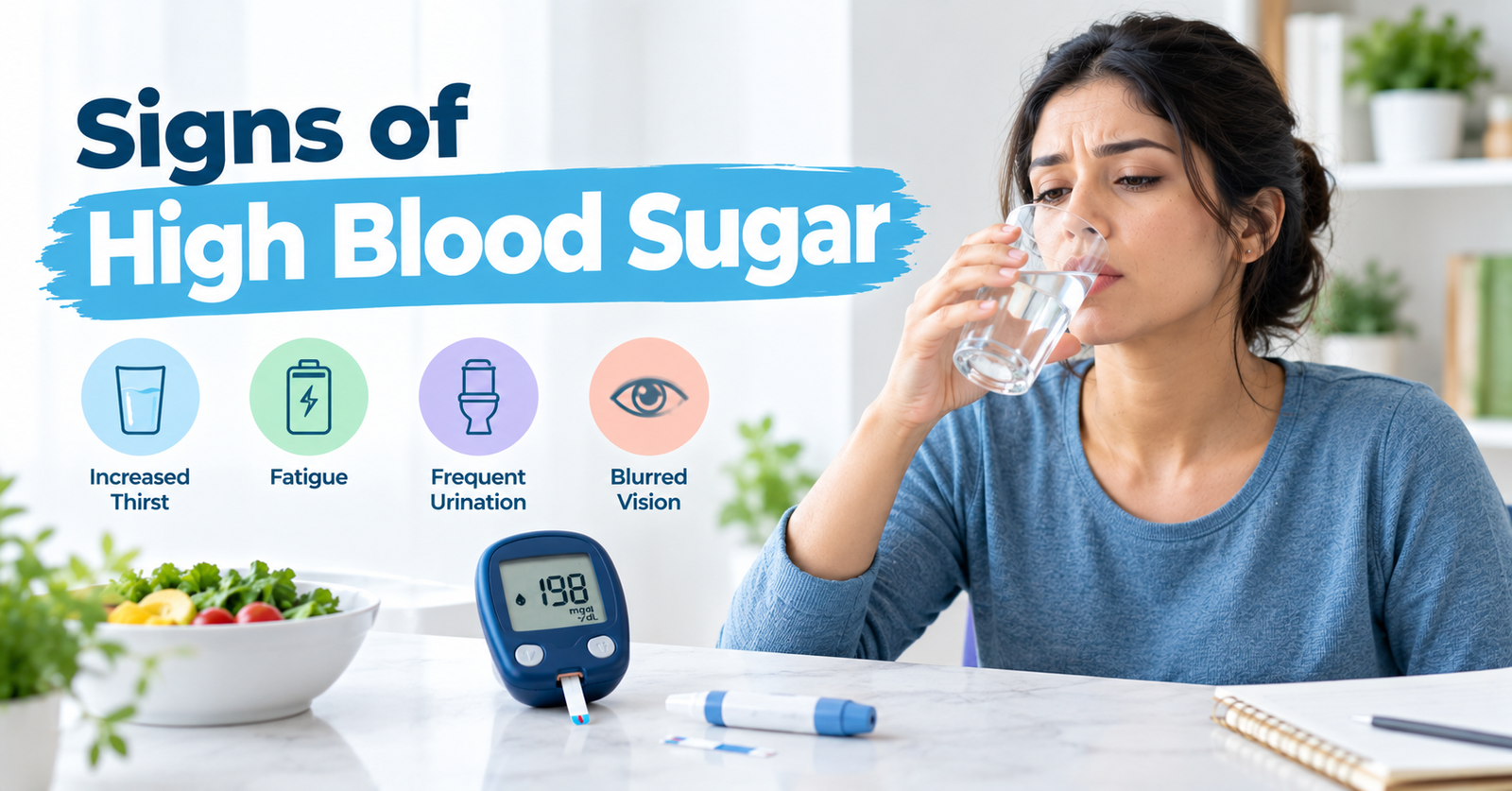

Feeling unusually thirsty, using the bathroom more often, or experiencing unexplained fatigue can sometimes be signs that your blood sugar is running high. These changes often develop gradually, which makes them easy to overlook at first.
High blood sugar, also called hyperglycemia, doesn’t always cause obvious symptoms. Some people, especially those with type 2 diabetes, may have few or none at all.
This guide covers the common signs of high blood sugar, what causes it, and when testing or medical care becomes necessary. Symptoms alone can’t diagnose diabetes, but recognizing patterns can help you know when to get checked.
What Is High Blood Sugar?
High blood sugar means there’s more glucose circulating in your blood than your body can use efficiently.
What Happens When Blood Sugar Is High?
Glucose is your body’s main energy source. Insulin, a hormone made by the pancreas, helps move glucose out of the blood and into your cells.
When there’s too little insulin, or when cells resist its effects, glucose stays in the bloodstream instead of being used. The American Diabetes Association describes hyperglycemia as high blood glucose that occurs when the body doesn’t have enough insulin or can’t use it effectively. Left unaddressed, persistent high blood sugar can contribute to complications affecting the eyes, kidneys, nerves, and heart.
Is High Blood Sugar the Same as Diabetes?
Not exactly. High blood sugar is a finding — a description of what’s happening in your blood at a given moment. Diabetes is a chronic condition.
Blood sugar can rise temporarily for reasons unrelated to diabetes, such as illness or stress. That said, repeated high readings shouldn’t be ignored. They deserve a conversation with a healthcare professional, whether or not diabetes turns out to be the cause.
What Are the Signs of High Blood Sugar?
These symptoms can appear alone or together, and they tend to build gradually rather than all at once.
1. Increased Thirst
As glucose builds up in the blood, your kidneys try to filter out the excess through urine, pulling fluid from your tissues along with it. This fluid loss often triggers a feeling of persistent thirst.
2. Frequent Urination
This is one of the most recognizable symptoms. As your kidneys work to remove extra glucose, you end up urinating more often, including at night.
3. Increased Hunger
When glucose can’t move efficiently into your cells, your body may signal hunger even though there’s technically plenty of sugar in your bloodstream. It’s a mismatch between fuel availability and fuel use.
4. Fatigue or Unusual Tiredness
Cells that aren’t getting enough usable glucose for energy can leave you feeling drained, even after adequate rest. If fatigue persists, our guide to what causes fatigue covers other possible contributors worth ruling out.
5. Blurry Vision
Shifts in blood glucose can affect the fluid balance in your eyes, temporarily changing how well you focus. This typically improves once blood sugar stabilizes.
6. Unexplained Weight Loss
When cells can’t access glucose for fuel, the body may start breaking down fat and muscle instead. Unexplained weight loss alongside other symptoms is worth mentioning to a doctor, especially with undiagnosed diabetes.
7. Headache
Headaches can occur with high blood sugar, but they’re less specific than symptoms like thirst or frequent urination. If headaches are a recurring concern on their own, see our guide on what causes headaches.
8. Dry Mouth or Dehydration
This connects directly to increased urination and fluid loss. As your body loses more fluid than usual, dry mouth often follows.
9. Slow-Healing Cuts and Wounds
Persistent high blood sugar can affect circulation and immune response, both of which slow the body’s ability to heal minor cuts and wounds.
10. Recurrent Infections
High blood sugar can make it easier for infections to take hold, including urinary tract infections and yeast infections. The CDC lists frequent urination, increased thirst and hunger, unexplained weight loss, fatigue, blurry vision, recurrent infections, and slow-healing wounds among the symptoms associated with diabetes.
Early Signs of High Blood Sugar
Early symptoms tend to be mild, which is exactly why they’re easy to dismiss. Common early signs include:
- Increased thirst
- More frequent urination
- Fatigue
- Blurry vision
- Increased hunger
- Dry mouth
It’s worth repeating: some people with type 2 diabetes have few or no obvious symptoms at all. This is why self-diagnosis based on symptoms alone can be misleading, and why testing matters even when you feel generally fine.
Signs of Very High Blood Sugar
Very high blood sugar looks different from the everyday symptoms above, and it needs to be taken more seriously.
Watch for:
- Extreme thirst
- Frequent urination
- Severe weakness
- Nausea or vomiting
- Abdominal pain
- Fruity-smelling breath
- Rapid or deep breathing
- Confusion or unusual drowsiness
When insulin is severely insufficient, very high blood sugar can contribute to diabetic ketoacidosis (DKA), a condition where the body breaks down fat for fuel and produces acids called ketones. According to Mayo Clinic, DKA symptoms can develop quickly, sometimes within 24 hours, and the condition can become life-threatening without prompt treatment.
When Is High Blood Sugar an Emergency?
Some symptoms call for urgent medical attention rather than a routine appointment.
Signs That Need Urgent Medical Attention
Seek immediate care if you or someone else experiences:
- Vomiting
- Severe abdominal pain
- Fruity-smelling breath
- Difficulty breathing
- Confusion
- Severe drowsiness
- Loss of consciousness
These symptoms can indicate DKA or another serious complication that needs emergency treatment, not home management.
High Blood Sugar and Ketones
Ketones are acids the body produces when it breaks down fat for fuel instead of glucose. People with diabetes, particularly those who use insulin, may be advised by their care team to check for ketones during illness or when blood sugar runs very high.
Exercising with significant ketones present can be unsafe. If your care team has given you a ketone-testing plan, follow it, and contact them with questions rather than adjusting insulin doses on your own.
What Causes High Blood Sugar?
Several factors can drive blood sugar up, sometimes independently and sometimes in combination.
Diabetes
High blood sugar is closely tied to type 1, type 2, and gestational diabetes. If you haven’t been diagnosed with any of these but notice recurring symptoms, our overview of type 1 diabetes and type 2 diabetes can help you understand the differences.
Common Factors That Can Raise Blood Sugar
- Eating more carbohydrates than planned
- Physical inactivity
- Illness or infection
- Stress
- Missed diabetes medication
- Insufficient insulin
- Dehydration
- Certain medications
The CDC identifies food choices, activity levels, illness, and medications as everyday factors that influence blood glucose.
What Does High Blood Sugar Feel Like?
People often describe a combination of:
- Thirst
- Dry mouth
- Frequent urination
- Fatigue
- Headache
- Blurry vision
- General weakness
Symptoms vary widely from person to person, and some people notice nothing at all. The only reliable way to know your actual blood sugar level is to measure it with an appropriate glucose test, not to guess based on how you feel.
How Do You Know If Your Blood Sugar Is High?
A few different tools can confirm what’s happening.
Blood Glucose Meter
A fingerstick test using a small glucose meter gives you a reading at that specific moment. This is the most common at-home testing method.
Continuous Glucose Monitor
A continuous glucose monitor (CGM) uses a small sensor under the skin to track glucose automatically throughout the day and night, without repeated fingersticks. The NIDDK describes CGMs as tools that check glucose levels at frequent intervals, which can help reveal patterns a single reading would miss.
A1C Test
Unlike a meter or CGM reading, A1C reflects your average blood glucose over roughly the past 2–3 months rather than a single moment. It’s a useful complement to day-to-day monitoring, not a replacement for it.
What Blood Sugar Level Is Considered High?
This depends on context. The numbers below are general treatment targets for many adults with diabetes, not universal diagnostic cutoffs.
| Measurement | Typical Reference Point |
|---|---|
| Before meals (for many adults with diabetes) | 80–130 mg/dL |
| 1–2 hours after starting a meal (for many adults with diabetes) | Below 180 mg/dL |
| A1C | Reflects average glucose over roughly 2–3 months |
A single reading above 180 mg/dL doesn’t automatically mean someone has diabetes — timing, recent food intake, and individual health context all matter. For a fuller breakdown of diagnostic ranges versus personal treatment targets, see our guide to blood sugar levels and testing.
High Blood Sugar vs. Low Blood Sugar
Some symptoms overlap, which is part of why testing is more reliable than guessing.
| High Blood Sugar | Low Blood Sugar |
|---|---|
| Increased thirst | Shaking |
| Frequent urination | Sweating |
| Dry mouth | Hunger |
| Fatigue | Dizziness |
| Blurry vision | Confusion |
| Possible nausea | Fast heartbeat |
If you’re not sure which one you’re experiencing based on symptoms alone, checking your glucose is the fastest way to know for certain.
What Should You Do If You Have Signs of High Blood Sugar?
A few practical steps can help, without requiring you to guess at treatment:
- Check your blood sugar if you have a meter or CGM available.
- Record unusual readings alongside any symptoms you’re noticing.
- Follow your existing diabetes care plan, if you have one.
- Stay appropriately hydrated, unless a clinician has advised fluid restriction.
- Contact your healthcare professional if high readings persist over several days.
- Seek urgent care for severe symptoms like vomiting, confusion, or difficulty breathing.
Don’t adjust medication or insulin doses on your own based on symptoms — that decision belongs with your care team.
Can High Blood Sugar Happen Without Diabetes?
Yes. Temporary glucose elevations can happen for reasons unrelated to diabetes, including:
- Acute illness
- Stress
- Certain medications
- Dehydration
- Other medical circumstances
That said, repeated unexplained high readings shouldn’t be assumed to be temporary. They’re worth a medical evaluation, since they could point to developing prediabetes or diabetes, even in someone without a prior diagnosis.
When Should You See a Doctor?
Make a routine appointment if:
- Symptoms repeatedly occur
- You have unexplained weight loss
- You experience persistent thirst or urination
- Home readings are repeatedly elevated
- You have risk factors for diabetes, such as those covered in our metabolic syndrome overview
Seek urgent care if:
- You have vomiting alongside high glucose
- You develop severe abdominal pain
- You have fruity-smelling breath
- You experience difficulty breathing
- You become confused or extremely drowsy
Frequently Asked Questions
What are the first signs of high blood sugar? Early signs often include increased thirst, more frequent urination, fatigue, and mild blurry vision. These can be subtle and easy to overlook at first.
What are the most common signs of high blood sugar? Increased thirst, frequent urination, fatigue, and increased hunger are among the most commonly reported symptoms, though not everyone experiences all of them.
Can you have high blood sugar without knowing it? Yes. Many people, particularly those with type 2 diabetes, have few or no noticeable symptoms even with elevated glucose. This is why routine testing matters.
Does high blood sugar make you tired? Yes. When glucose can’t move efficiently into cells for energy, fatigue is a common result, even after adequate sleep.
Can high blood sugar cause blurry vision? Yes. Fluctuating glucose levels can temporarily affect fluid balance in the eyes, which can blur vision until levels stabilize.
Does high blood sugar make you thirsty? Yes. Excess glucose pulls fluid from tissues as the kidneys work to filter it out, which often triggers noticeable thirst.
Can high blood sugar cause headaches? It can, though headaches are less specific than other symptoms and can have many other causes.
What blood sugar level is considered high? This depends on context and individual targets. For many adults with diabetes, a common target is 80–130 mg/dL before meals and below 180 mg/dL 1–2 hours after eating, but these aren’t universal diagnostic cutoffs.
Can high blood sugar happen without diabetes? Yes. Illness, stress, dehydration, and certain medications can all cause temporary blood sugar elevations unrelated to diabetes.
When is high blood sugar an emergency? Symptoms like vomiting, severe abdominal pain, fruity-smelling breath, difficulty breathing, confusion, or loss of consciousness call for immediate medical attention.
Key Takeaways
- High blood sugar is also called hyperglycemia.
- Common symptoms include increased thirst and frequent urination.
- Fatigue and blurry vision can also occur.
- Some people, especially those with type 2 diabetes, have few or no symptoms.
- Blood glucose testing is more reliable than relying on symptoms alone.
- Persistent high readings should be discussed with a healthcare professional.
- Severe symptoms, like confusion or difficulty breathing, can signal a medical emergency.
For more on managing blood sugar day to day, see our guides on diabetes diet and what is diabetes.
This article is for general educational purposes and isn’t a substitute for personalized medical advice. If you’re experiencing severe symptoms, seek emergency care rather than waiting to see if they improve.
Sources:
- Centers for Disease Control and Prevention (CDC) — Diabetes Basics
- Centers for Disease Control and Prevention (CDC) — Monitoring Your Blood Sugar
- American Diabetes Association — Understanding Carbs and Hyperglycemia
- Mayo Clinic — Diabetic Ketoacidosis: Symptoms
- Mayo Clinic — Hyperglycemia: Symptoms and Causes
- National Institute of Diabetes and Digestive and Kidney Diseases (NIDDK, NIH) — Continuous Glucose Monitoring
5 thoughts on “Signs of High Blood Sugar: Symptoms, Causes & When to Get Help”
Comments are closed.