
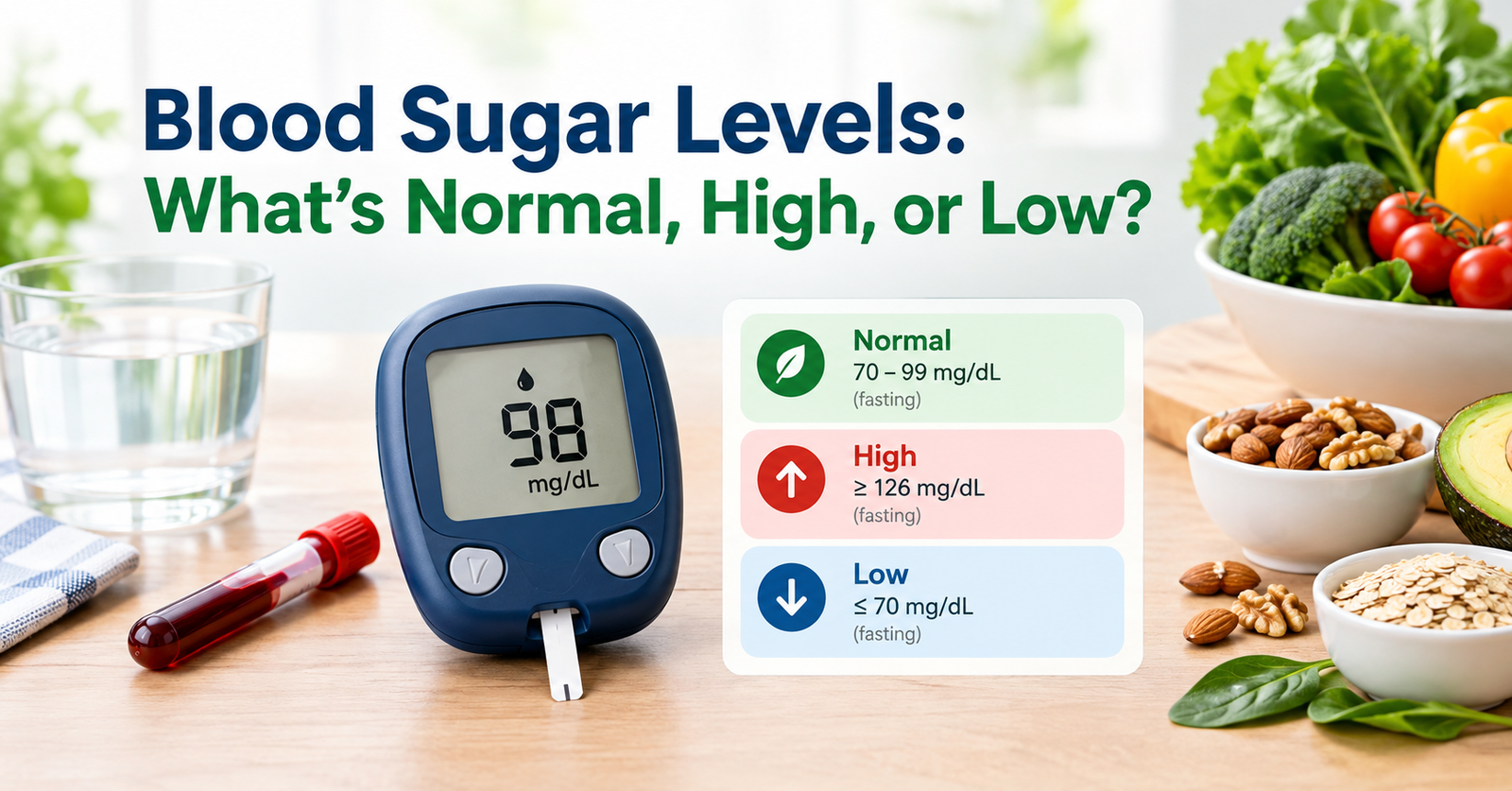

Blood sugar naturally changes throughout the day. What you eat, how active you are, your medications, illness, and even stress can all shift your numbers up or down.
The timing of a test matters just as much as the number itself. A reading taken right after breakfast means something different than one taken after an overnight fast.
A few things are worth keeping in mind before diving into specific ranges:
- One glucose reading doesn’t necessarily diagnose diabetes.
- Fasting, after-meal, random glucose, and A1C results are interpreted differently.
- People with diabetes often have individualized target ranges.
- Persistent abnormal results deserve a conversation with a healthcare professional.
The CDC notes that food, medications, and physical activity can all affect blood sugar throughout the day. This guide breaks down what counts as normal, high, and low, and how to interpret your own results with that context in mind.
What Are Blood Sugar Levels?
Blood sugar, or blood glucose, is the amount of sugar circulating in your bloodstream at any given moment. Your body relies on glucose as its primary fuel source.
Insulin, a hormone made by the pancreas, helps move glucose out of your blood and into your cells for energy. When this system works well, glucose stays within a fairly narrow range.
What Is a Normal Blood Sugar Level?
“Normal” depends heavily on when the test happens. A fasting reading and a post-meal reading use different reference points, which is why later sections break these out separately.
Why Does Blood Sugar Change Throughout the Day?
Several everyday factors shift glucose levels, sometimes more than people expect:
- Meals, especially those high in carbohydrates
- Exercise
- Stress
- Sleep
- Illness
- Medications
- Hormonal changes
None of these fluctuations are unusual on their own. What matters more is whether your levels consistently fall outside your expected range.
Blood Sugar Levels Chart
This table shows commonly used diagnostic thresholds — the numbers doctors use to help identify prediabetes and diabetes. It’s a reference for diagnosis, not a universal day-to-day target for people already managing diabetes (more on that distinction below).
| Test | Normal | Prediabetes | Diabetes |
|---|---|---|---|
| Fasting blood glucose | Below 100 mg/dL | 100–125 mg/dL | 126 mg/dL or higher |
| 2-hour glucose tolerance test | Below 140 mg/dL | 140–199 mg/dL | 200 mg/dL or higher |
| A1C | Below 5.7% | 5.7–6.4% | 6.5% or higher |
These thresholds come from CDC and ADA guidance.
Normal Blood Sugar Levels
Here’s how “normal” breaks down across the most common testing situations.
Normal Fasting Blood Sugar
A fasting glucose below 100 mg/dL is generally considered normal for diagnostic purposes. Fasting typically means at least 8 hours without food, usually tested first thing in the morning.
Normal Blood Sugar After Eating
Glucose naturally rises after a meal, since food — carbohydrates especially — breaks down into sugar during digestion. This is expected, not a red flag on its own. What matters is how high the rise is and how quickly it comes back down, which is why post-meal tests are timed at specific intervals, usually 1–2 hours after the first bite.
Normal A1C
An A1C below 5.7% falls within the normal diagnostic range. Since A1C reflects average glucose over roughly 2–3 months, it isn’t affected by what you ate that morning the way a fasting or post-meal test would be. Our full A1C test guide covers this measurement in more depth.
High Blood Sugar Levels
High blood sugar, or hyperglycemia, doesn’t have one single number that applies in every situation.
What Blood Sugar Level Is Considered High?
Interpretation depends on several factors:
- Whether the person has diabetes
- Whether the test was taken fasting or after eating
- How long after a meal the test was taken
- The person’s individual treatment plan
- Other medical circumstances
A reading that would be unremarkable after a large meal might be concerning if taken after an overnight fast. Context changes what a number means.
Signs of High Blood Sugar
Common signs include increased thirst, frequent urination, fatigue, blurry vision, increased hunger, and unexplained weight loss. For a full breakdown of these symptoms and when they need medical attention, see our guide to common signs of high blood sugar.
Low Blood Sugar Levels
Low blood sugar, or hypoglycemia, is generally defined as glucose below 70 mg/dL for people with diabetes.
Symptoms of Low Blood Sugar
Watch for:
- Shaking
- Sweating
- Hunger
- Dizziness
- Fast heartbeat
- Irritability
- Confusion
- Weakness
According to the NIDDK, these symptoms can develop quickly and need prompt attention, particularly for people who use insulin or certain diabetes medications.
What Should You Do If Blood Sugar Is Low?
Follow your established diabetes care plan if you have one. If you don’t have a plan in place or symptoms are severe — confusion, loss of consciousness, or an inability to safely eat or drink — seek medical help right away. Avoid making medication or insulin adjustments on your own; that’s a conversation for your care team.
Blood Sugar Levels by Testing Method
Different tests capture different pictures of your glucose.
Fasting Blood Sugar
This test measures glucose after at least 8 hours without food, typically in the morning before breakfast. It’s a standard tool for identifying prediabetes and diabetes, using the ranges in the chart above.
Blood Sugar After Eating
Post-meal testing captures how your body responds to food. Timing matters here — a reading taken right after the first bite tells you less than one taken at the standard 1–2 hour mark.
Random Blood Sugar
Random glucose testing can happen at any time, without any fasting requirement. It’s less precise for diagnosis on its own, but a very high random result alongside symptoms can point toward diabetes.
A1C
A1C estimates average blood glucose over roughly 2–3 months, rather than capturing a single moment. It’s a useful complement to the tests above, not a replacement for them.
Blood Sugar Levels for People With Diabetes
This section is intentionally separate from the diagnostic ranges above, because they answer different questions.
For many nonpregnant adults with diabetes, common targets include:
- Before meals: 80–130 mg/dL
- 1–2 hours after the start of a meal: below 180 mg/dL
Individual targets can differ based on age, health conditions, pregnancy status, medications, and other personal factors. Our full blood sugar guide explains what glucose is and how the body regulates it, if you want that foundational context.
Why Diabetes Targets Are Different From Diagnostic Ranges
These two sets of numbers serve different purposes:
- Diagnostic ranges answer: “Could this person have diabetes or prediabetes?”
- Treatment targets answer: “What glucose range should this person aim for while managing diabetes?”
Confusing the two can lead to unnecessary worry. A target of 130 mg/dL before meals for someone with diabetes isn’t the same thing as a diagnostic cutoff for someone being screened for the condition.
What Causes Blood Sugar to Rise?
Common contributors include:
- Eating carbohydrates
- Large meals
- Physical inactivity
- Stress
- Illness
- Poor sleep
- Certain medications
- Insufficient insulin or diabetes medication
- Dehydration
One isolated high reading doesn’t automatically mean diabetes. Repeated elevated readings over time are what typically prompt further evaluation.
What Causes Blood Sugar to Drop?
Common causes of low blood sugar include:
- Skipping meals
- Taking too much insulin
- Certain diabetes medications
- Increased physical activity
- Alcohol
- Changes in eating patterns
The CDC identifies missed meals, insulin, certain diabetes medicines, and increased activity among the common causes of low blood sugar.
How to Check Your Blood Sugar
A few tools and methods are available, depending on your needs.
Blood Glucose Meter
This involves a fingerstick, a test strip, and a small handheld meter. Follow your device’s specific instructions closely, and record results so patterns can be reviewed with your healthcare team.
Continuous Glucose Monitor
A continuous glucose monitor (CGM) uses a small sensor placed under the skin to track glucose automatically throughout the day and night. The CDC identifies both glucose meters and CGMs as tools used for ongoing blood sugar monitoring.
How Often Should You Check?
This depends on:
- Type of diabetes
- Medications
- Insulin use
- Risk of hypoglycemia
- Your healthcare provider’s specific recommendations
There’s no single schedule that fits everyone. Some people test multiple times a day; others test far less often.
Blood Sugar Levels vs. A1C
These two measurements answer different questions.
| Blood Sugar Test | A1C Test |
|---|---|
| Shows glucose at a specific time | Estimates average glucose over 2–3 months |
| Can change throughout the day | Gives a longer-term picture |
| Often measured with a meter or CGM | Usually reported as a percentage |
| Useful for daily monitoring | Useful for diagnosis and long-term management |
The CDC describes A1C as a measure of average blood sugar over roughly the previous three months, distinct from a single glucose reading. For more detail, see our full A1C test guide.
Can Blood Sugar Levels Diagnose Diabetes?
Diabetes diagnosis generally relies on standardized testing performed in an appropriate healthcare setting, using one or more of the following:
- A1C
- Fasting plasma glucose
- Oral glucose tolerance test
- Random plasma glucose, in appropriate circumstances
According to the ADA, diagnostic testing generally requires confirmation on a second day. Confirmation may not be necessary in some situations involving very high glucose or classic symptoms alongside a positive test.
How to Keep Blood Sugar Levels in a Healthy Range
These are supportive habits, not guarantees — everyone’s situation is different.
Eat Balanced Meals
Focus on portion awareness, fiber-rich carbohydrates, protein, and vegetables. Our diabetes diet guide covers practical meal ideas in detail.
Stay Physically Active
Regular movement helps your body use insulin more effectively. See benefits of exercise for more on how activity supports overall health.
Take Prescribed Medications as Directed
Never adjust a dose or stop a medication without talking to your doctor first, even if your recent numbers look fine.
Monitor Blood Sugar When Recommended
Regular monitoring, when your care team suggests it, helps identify patterns worth discussing at your next appointment.
Get Enough Sleep
Poor sleep can affect glucose regulation over time. Our guide on how to improve sleep offers practical starting points.
Manage Stress
Stress hormones can raise blood sugar independent of food intake. See how to reduce stress for supportive strategies.
When Should You See a Doctor About Blood Sugar?
Schedule an appointment if you notice:
- Repeatedly elevated readings
- Repeated low readings
- Symptoms associated with diabetes
- Unexplained weight loss
- Excessive thirst or urination
- Significant changes in your usual glucose patterns
- Difficulty keeping glucose within your prescribed range
This is different from an emergency. Severe symptoms — such as confusion, loss of consciousness, or difficulty breathing — call for urgent medical care rather than a routine follow-up appointment.
Frequently Asked Questions
What is a normal blood sugar level? It depends on timing. A normal fasting glucose is below 100 mg/dL, and a normal level 2 hours after eating is below 140 mg/dL for someone without diabetes.
What blood sugar level is considered high? This varies by context. A fasting level of 126 mg/dL or higher suggests diabetes, but for someone with diagnosed diabetes, individual treatment targets may allow a higher range before meals.
What blood sugar level is considered low? For people with diabetes, a reading below 70 mg/dL is generally considered low.
What should blood sugar be before eating? For many adults with diabetes, a common target is 80–130 mg/dL before meals, though individual goals vary.
What should blood sugar be after eating? A common target for people with diabetes is below 180 mg/dL, measured 1–2 hours after the start of a meal.
Is 120 blood sugar normal? It depends on timing. A reading of 120 mg/dL before a meal would be within a typical diabetes treatment target range, while 120 mg/dL fasting for someone without diabetes would be somewhat elevated compared to the under-100 mg/dL normal range.
Is 150 blood sugar high? Context matters. A post-meal reading of 150 mg/dL 1–2 hours after eating could be reasonable for someone with diabetes managing toward a target below 180 mg/dL, but the same number as a fasting result would fall into the prediabetes range.
Is 200 blood sugar dangerous? A reading of 200 mg/dL or higher, especially when fasting or accompanied by symptoms, is generally a signal to seek medical evaluation rather than something to interpret on your own.
Can stress raise blood sugar? Yes. Stress hormones can trigger the release of stored glucose and reduce insulin sensitivity, both of which can raise blood sugar temporarily.
Does blood sugar change throughout the day? Yes. Meals, activity, sleep, stress, and illness all cause normal fluctuations throughout the day.
What is the difference between blood sugar and A1C? A blood sugar test shows glucose at one specific moment. A1C reflects your average glucose over roughly the past 2–3 months.
Key Takeaways
- Blood sugar naturally changes throughout the day.
- Fasting, post-meal, random glucose, and A1C tests each measure glucose differently.
- Diagnostic ranges are different from individualized diabetes treatment targets.
- Both high and low blood sugar can cause noticeable symptoms.
- A single glucose reading doesn’t necessarily diagnose diabetes.
- Persistent abnormal readings should be discussed with a healthcare professional.
If you’re building a fuller picture of your metabolic health, our guides on prediabetes and insulin resistance are good next steps.
This article is for general educational purposes and isn’t a substitute for personalized medical advice. Blood sugar targets vary by individual — talk with your doctor about what range is appropriate for you.
Sources:
- Centers for Disease Control and Prevention (CDC) — Monitoring Your Blood Sugar
- Centers for Disease Control and Prevention (CDC) — Testing for Diabetes and Prediabetes
- American Diabetes Association — Diagnosing Diabetes and Learning About Prediabetes
- National Institute of Diabetes and Digestive and Kidney Diseases (NIDDK, NIH) — Low Blood Glucose (Hypoglycemia)
4 thoughts on “Blood Sugar Levels: What’s Normal, High, or Low?”
Comments are closed.