
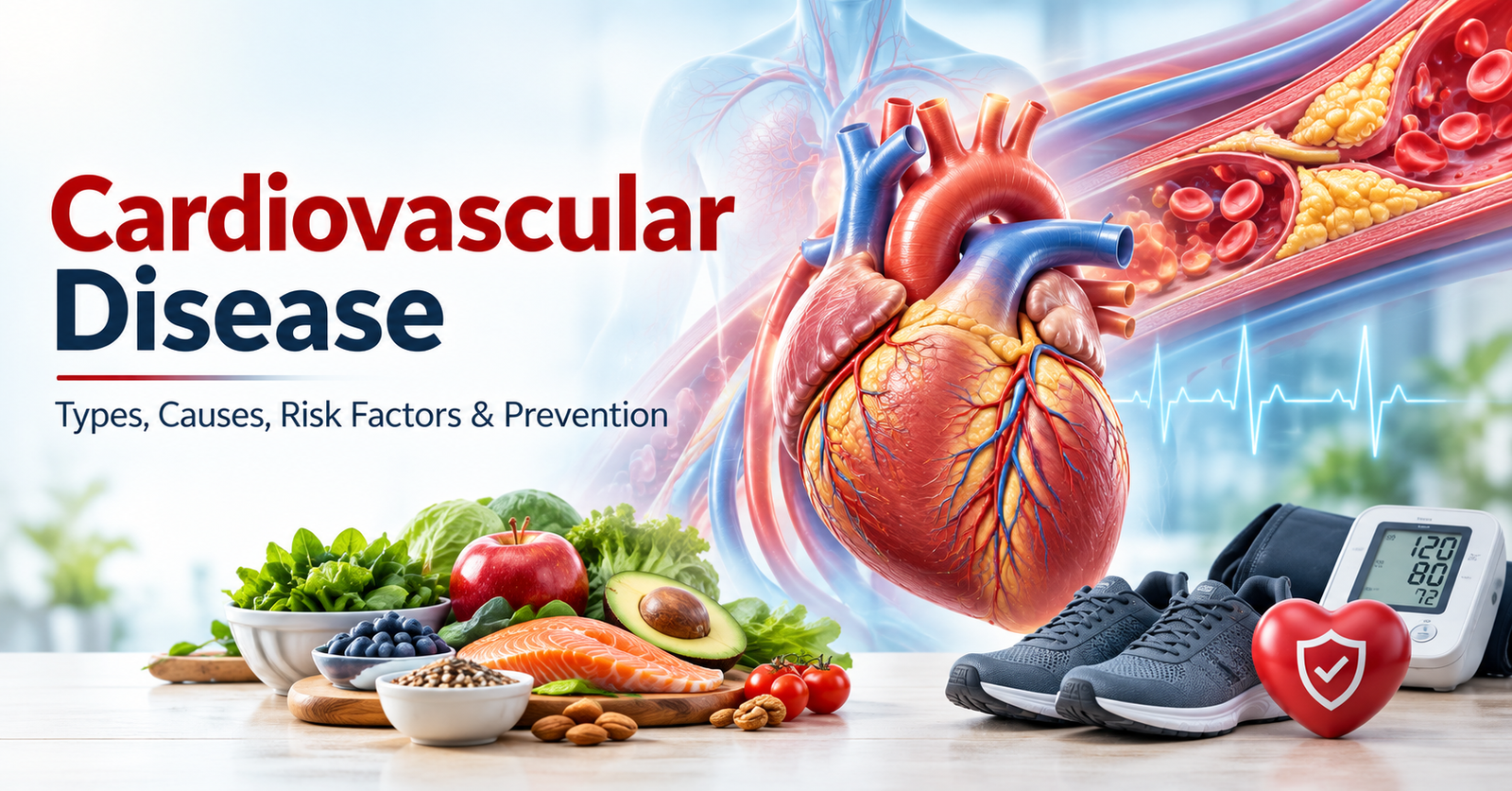

Cardiovascular disease is an umbrella term for disorders affecting the heart and blood vessels. It includes conditions like coronary heart disease, stroke, peripheral artery disease, rheumatic heart disease, and congenital heart disease, among others.
Cardiovascular disease is broader than “heart disease” alone. Some cardiovascular conditions develop gradually over decades, while others cause sudden emergencies, like a heart attack or stroke. Underlying disease can even be present without any obvious symptoms until a major event occurs. The good news: many of the most important risk factors can be prevented or controlled.
According to the World Health Organization (WHO), cardiovascular disease is the leading cause of death globally, with an estimated 19.8 million deaths in 2022, representing about 32% of all global deaths. Most of these deaths — 85% — were due to heart attack and stroke.
Important: This article is for general information only and is not a substitute for professional medical advice, diagnosis, or treatment.
What Is Cardiovascular Disease?
Cardiovascular disease affects the heart, arteries, veins, and the circulation of blood throughout the body. The heart pumps blood through arteries to deliver oxygen and nutrients to tissues, while veins carry blood back to the heart. Cardiovascular disease can disrupt any part of this system.
Cardiovascular Disease vs. Heart Disease
These terms are often used interchangeably, but they aren’t identical. Cardiovascular disease includes diseases of both the heart and blood vessels, while “heart disease” more narrowly refers to conditions affecting the heart itself. According to NHLBI, part of the NIH, stroke — a condition involving the blood vessels that supply the brain — is technically a cardiovascular condition, even though many people don’t immediately associate it with “heart disease.” Our guide to what heart health means covers these foundational concepts in more depth.
Types of Cardiovascular Disease
WHO identifies several major categories of cardiovascular disease, including coronary heart disease, cerebrovascular disease, peripheral arterial disease, rheumatic heart disease, congenital heart disease, and venous thromboembolic conditions.
Coronary Artery Disease
Coronary arteries supply blood to the heart muscle itself. Over time, plaque can build up inside these arteries in a process called atherosclerosis, narrowing them and reducing blood flow. This can cause angina (chest pain from reduced blood flow) or, if a plaque ruptures and blocks the artery entirely, a heart attack. Our guide to heart disease covers coronary artery disease in more depth.
Heart Attack
A heart attack happens when a coronary artery becomes blocked, cutting off oxygen to part of the heart muscle. Common warning symptoms include chest discomfort, pain radiating to the arm or jaw, and shortness of breath, covered in more detail further down. Emergency treatment is critical, since heart muscle begins to die quickly without restored blood flow.
Stroke
Stroke occurs when blood flow to the brain is interrupted, either by a blockage (ischemic stroke) or a ruptured blood vessel (hemorrhagic stroke). Because stroke involves the blood vessels supplying the brain, it’s classified as a cardiovascular condition, not a separate category of illness.
Heart Failure
Heart failure means the heart’s pumping or filling ability is reduced, not that the heart has stopped working entirely. It can develop from long-term high blood pressure, coronary artery disease, or other conditions that gradually weaken or stiffen the heart muscle. This is an important distinction from a heart attack, which is a sudden blockage event rather than a gradual decline in pumping function.
Peripheral Artery Disease
Peripheral artery disease involves reduced blood flow to the limbs, usually the legs, due to the same atherosclerosis process that affects coronary arteries. A common symptom is leg pain that occurs during walking and eases with rest, and it carries broader cardiovascular implications beyond the legs themselves.
High Blood Pressure and Cardiovascular Disease
High blood pressure, or hypertension, is a major cardiovascular risk factor in its own right. According to NHLBI, high blood pressure can damage blood vessels over time and increases the risk of heart attack, stroke, heart failure, and other complications.
Rheumatic Heart Disease
Rheumatic heart disease results from rheumatic fever, an inflammatory condition that can follow an untreated streptococcal infection. Over time, it can damage the heart valves, sometimes requiring lifelong monitoring or treatment.
Congenital Heart Disease
Congenital heart disease refers to structural heart problems present from birth. Severity varies widely — some people need minimal ongoing care, while others require lifelong monitoring and, in some cases, multiple surgical interventions.
Venous Thromboembolism
Venous thromboembolism includes deep vein thrombosis (DVT), a blood clot in a deep vein (usually the leg), and pulmonary embolism (PE), which occurs when part of that clot travels to the lungs. These conditions differ from the arterial cardiovascular disease described above because they involve the venous system rather than arteries.
What Causes Cardiovascular Disease?
Cardiovascular disease rarely has one single cause. Instead, it typically develops from several overlapping mechanisms working together over time.
Atherosclerosis
Atherosclerosis is the gradual buildup of plaque inside artery walls, which narrows the artery and reduces blood flow. If a plaque ruptures, a blood clot can form on top of it, potentially blocking the artery entirely.
High Blood Pressure
Sustained high blood pressure places continuous stress on artery walls, contributing to vessel damage over time and accelerating the atherosclerosis process described above.
Abnormal Blood Lipids
Elevated LDL cholesterol in particular contributes directly to plaque formation inside artery walls, making lipid levels an important, modifiable piece of the puzzle.
Blood-Clotting Problems
Abnormal blood clotting plays a direct role in both heart attacks and ischemic strokes, since a clot is often the final event that blocks blood flow after plaque has already narrowed an artery.
Inflammation and Vascular Dysfunction
Inflammation and dysfunction of the blood vessel lining are involved in how atherosclerosis develops and progresses, though inflammation on its own isn’t considered a standalone cause separate from these other mechanisms. According to WHO, heart attacks and strokes are usually associated with a blockage that prevents blood from flowing to the heart or brain, most commonly involving a buildup of fatty deposits inside blood vessels.
Cardiovascular Disease Risk Factors
Risk factors for cardiovascular disease fall into two broad categories: those you can change, and those you can’t.
Modifiable Risk Factors
These risk factors can be reduced or controlled through lifestyle changes, medical treatment, or both:
- High blood pressure
- High LDL cholesterol
- Smoking and tobacco exposure
- Physical inactivity
- Unhealthy dietary patterns
- Excess body weight
- Diabetes and elevated blood glucose
- Excessive alcohol use
- Poor sleep
- Chronic stress
- Certain environmental exposures, including air pollution
WHO identifies unhealthy diet, physical inactivity, tobacco use, harmful alcohol use, and air pollution among the most important behavioral and environmental cardiovascular risk factors.
Nonmodifiable Risk Factors
These risk factors can’t be changed, but knowing them still matters for understanding your overall risk:
- Age. Cardiovascular risk generally increases with age.
- Family history. A family history of early cardiovascular disease can meaningfully increase your own risk.
- Genetics. Certain inherited conditions directly affect cardiovascular risk.
- Sex. Cardiovascular risk patterns differ somewhat between men and women and shift with age.
- Previous cardiovascular disease. Someone who has already had a cardiovascular event generally has elevated risk for future events.
Metabolic Conditions That Increase Cardiovascular Risk
Several metabolic conditions overlap significantly with cardiovascular disease, often compounding risk when they occur together.
Hypertension, high cholesterol, prediabetes, diabetes, obesity, and metabolic syndrome frequently occur together and interact in ways that raise cardiovascular risk beyond what any single condition would cause alone. WHO identifies raised blood pressure, raised blood glucose, abnormal blood lipids, and overweight or obesity among the key metabolic risk factors for cardiovascular disease.
If you’ve been told you have prediabetes, type 2 diabetes, or are managing type 1 diabetes, it’s worth understanding how these conditions specifically affect cardiovascular risk, since diabetes and heart disease frequently go hand in hand.
Recognizing diabetes symptoms early, and working with a doctor on how to prevent diabetes if you’re at risk, is one of the more effective ways to protect your cardiovascular health at the same time.
Cardiovascular Disease Symptoms
Symptoms vary substantially depending on which cardiovascular condition is involved. Possible symptoms include:
- Chest pain or pressure
- Shortness of breath
- Unusual fatigue
- Heart palpitations
- Dizziness
- Fainting
- Swelling in the legs
- Pain or weakness during walking
- Sudden neurological symptoms associated with stroke
Some heart attack symptoms can even resemble ordinary digestive discomfort, like indigestion, particularly in women — one more reason not to dismiss unusual chest or upper abdominal symptoms as “probably nothing.”
Can Cardiovascular Disease Have No Symptoms?
Yes. Some vascular disease remains entirely silent until a major event occurs. WHO specifically notes that underlying cardiovascular disease often produces no symptoms at all, and a heart attack or stroke can be the very first sign that something was wrong. This is a major reason routine screening matters, even when you feel completely fine.
Heart Attack and Stroke Warning Signs
Because cardiovascular emergencies require immediate action, this section deserves special attention.
Heart Attack Warning Signs
According to the American Heart Association, common heart attack warning signs include:
- Chest discomfort — pressure, squeezing, fullness, or pain lasting more than a few minutes, or that goes away and comes back
- Pain or discomfort in the arms, back, neck, or jaw
- Shortness of breath, with or without chest discomfort
- Breaking out in a cold sweat, nausea, or lightheadedness
Stroke Warning Signs
The CDC recommends remembering the acronym F.A.S.T. to recognize a stroke quickly:
- F — Face drooping. Does one side of the face droop when the person tries to smile?
- A — Arm weakness. Does one arm drift downward when both arms are raised?
- S — Speech difficulty. Is speech slurred, or is the person hard to understand?
- T — Time to call emergency services. If you notice any of these signs, call 911 immediately.
A sudden, severe headache with no known cause can also be a stroke warning sign. Both heart attack and stroke are acute cardiovascular emergencies that require prompt medical attention — don’t wait to see if symptoms improve on their own.
How Is Cardiovascular Disease Diagnosed?
Diagnosis depends on your symptoms, medical history, risk factors, and the specific condition being evaluated. Common evaluation methods include:
- Blood pressure measurement
- Cholesterol testing
- Blood glucose testing, including an A1C test when relevant
- Medical and family history review
- Physical examination
- Electrocardiogram (ECG/EKG)
- Echocardiogram
- Stress testing
- Cardiac or vascular imaging, including coronary CT scans
How Doctors Assess Cardiovascular Risk
Cardiovascular risk assessment combines multiple factors rather than relying on any single number. The American Heart Association’s PREVENT equations estimate a person’s risk of heart attack, stroke, and heart failure using factors including age, sex, smoking status, blood pressure, cholesterol, kidney function, and diabetes status, giving doctors a more complete picture than any one test alone.
Can Cardiovascular Disease Be Prevented?
Not every case of cardiovascular disease can be prevented, but many of the most important risk factors genuinely can be reduced or controlled. WHO states that most cardiovascular disease can be prevented by addressing behavioral and environmental risk factors.
Evidence-Based Ways to Lower Cardiovascular Risk
The following strategies have real evidence behind them for reducing cardiovascular risk.
Don’t Smoke
Smoking damages blood vessels directly and significantly increases cardiovascular risk. Quitting lowers that risk over time, even for long-term smokers, and benefits begin accumulating soon after quitting.
Eat a Heart-Healthy Diet
Prioritize vegetables, fruits, whole grains, beans and legumes, nuts and seeds, fish, and other nutritious protein sources, along with unsaturated fats and adequate fiber. Limit excess sodium, trans fats, excess saturated fat, highly processed foods, and added sugars.
WHO’s current healthy-diet guidance emphasizes adequacy, balance, moderation, and diversity, with minimally processed foods forming the foundation of a healthy eating pattern.
Our guides to heart-healthy foods, what makes a healthy diet, the Mediterranean diet, and high-fiber foods all cover this territory in more depth.
Fish and plant oils rich in omega-3 fatty acids and other healthy fats are worth prioritizing over saturated and trans fats, and colorful fruits and vegetables rich in antioxidants add further support. Reading nutrition labels can help you spot hidden sodium and added sugar in packaged foods.
Stay Physically Active
Regular moderate aerobic activity, vigorous activity, and strength training all support cardiovascular health, as does simply reducing how much time you spend sitting. If you’re starting from an inactive baseline, building up gradually works better than jumping into an intense routine.
Our guides on the benefits of exercise, walking for health, the best exercises for beginners, and exercise and heart health specifically all cover practical ways to get moving.
Manage Blood Pressure
Know your numbers, monitor blood pressure regularly when appropriate, follow any prescribed treatment, reduce excess sodium intake, and stay physically active. Our guide on how to lower blood pressure safely covers both lifestyle and treatment options in more detail.
Manage Cholesterol
Cardiovascular risk depends on your overall lipid profile — LDL cholesterol, HDL cholesterol, and triglycerides together — rather than a simple “good vs. bad” framing. Diet, exercise, and medication, when prescribed, can all help bring cholesterol into a healthier range. Our guide to high cholesterol covers what these numbers actually mean.
Manage Blood Sugar
If you have prediabetes or diabetes, monitoring and treating elevated blood sugar levels is an important part of protecting your cardiovascular health, since diabetes significantly compounds cardiovascular risk.
Maintain a Healthy Weight
Weight is one cardiovascular risk factor among many, not a standalone determinant of cardiovascular health. Our guide to weight management covers sustainable, evidence-based approaches rather than framing body size as the whole picture.
Limit Alcohol
Alcohol shouldn’t be viewed as a cardiovascular-health strategy. If you drink, keeping intake limited and avoiding heavy or frequent use supports cardiovascular health better than moderate “protective” drinking myths might suggest.
Get Adequate Sleep
Sleep and cardiovascular risk are connected, though the relationship is complex rather than a simple cause-and-effect. Consistently poor sleep is worth addressing as part of an overall risk-reduction plan.
Attend Preventive Checkups
Regular checkups let you track blood pressure, cholesterol, blood glucose, weight, and other risk factors over time, based on your age and personal history, rather than only reacting after symptoms appear.
Cardiovascular Disease Treatment
Treatment depends heavily on the specific cardiovascular condition involved and an individual’s overall risk profile. Options can include:
- Lifestyle changes
- Blood pressure medications
- Cholesterol-lowering medications
- Diabetes treatment
- Antiplatelet or anticoagulant medications, in appropriate situations
- Procedures like angioplasty
- Surgery, including bypass surgery or valve repair/replacement
- Cardiac rehabilitation
WHO notes that management may involve medications and, in some cases, procedures such as angioplasty, bypass surgery, valve repair or replacement, or the use of implanted devices. The right combination depends entirely on the specific diagnosis, so this overview isn’t a substitute for individualized treatment planning with a cardiologist or primary care provider.
Cardiovascular Disease in Different Populations
Cardiovascular risk and presentation aren’t identical across every group.
Cardiovascular Disease in Women
Women face unique cardiovascular considerations, including pregnancy-related conditions like preeclampsia, changes in risk around menopause, and symptoms that can sometimes differ from the “classic” presentation more commonly described in men.
Cardiovascular Disease in Men
Men generally show more of the “classic” risk patterns and symptom presentation described throughout this article, but modifiable risk factors and consistent prevention matter just as much for men as for anyone else.
Cardiovascular Disease in Older Adults
Cardiovascular risk increases with age, and older adults often manage multiple health conditions simultaneously, which can complicate both medication management and physical activity planning. Preventive strategies still matter significantly at this stage of life, not just earlier on.
Cardiovascular Disease in People With Diabetes
Diabetes and cardiovascular disease are closely linked. Elevated blood sugar over time contributes to vascular damage, which is a major reason cardiovascular risk management is such a central part of diabetes care.
Common Myths About Cardiovascular Disease
A few persistent myths are worth addressing directly.
Myth: Cardiovascular disease only affects older people. Reality: Risk generally increases with age, but cardiovascular disease can and does affect younger adults too.
Myth: You would know if you had cardiovascular disease. Reality: As covered above, cardiovascular disease can develop silently, without obvious symptoms, until a major event occurs.
Myth: Heart disease is only caused by eating fatty foods. Reality: Cardiovascular risk is shaped by multiple interacting factors — diet is one piece, not the whole picture.
Myth: Being thin means you can’t develop heart disease. Reality: Body weight is only one risk factor among many; someone at a “normal” weight can still have significant cardiovascular risk.
Myth: Exercise completely eliminates cardiovascular risk. Reality: Physical activity meaningfully lowers risk, but it doesn’t erase every risk factor, especially nonmodifiable ones like age and genetics.
Myth: Women don’t need to worry about heart disease. Reality: Cardiovascular disease affects women as much as men and remains a leading cause of death among women.
When Should You See a Doctor?
Routine Evaluation
Talk with a doctor about your cardiovascular risk if you have high blood pressure, high cholesterol, diabetes, a strong family history of cardiovascular disease, a smoking history, or persistent cardiovascular symptoms of any kind.
Emergency Symptoms
Seek emergency medical care immediately for symptoms suggestive of a heart attack or stroke, severe difficulty breathing, or fainting and sudden collapse. When in doubt, call 911 — it’s always better to be evaluated and find out symptoms weren’t serious than to wait during a genuine emergency.
Cardiovascular Disease Prevention Checklist
| Cardiovascular Health Factor | What to Do |
|---|---|
| Blood pressure | Check and manage it regularly |
| Cholesterol | Know your levels and manage overall risk |
| Blood sugar | Screen for and manage diabetes |
| Tobacco | Avoid it, or work on quitting |
| Diet | Prioritize minimally processed, whole foods |
| Activity | Move regularly, most days of the week |
| Weight | Work toward a healthy, sustainable range |
| Alcohol | Avoid harmful or excessive use |
| Sleep | Prioritize consistent, adequate sleep |
| Checkups | Review your cardiovascular risk with a doctor |
Bottom Line
Cardiovascular disease is a broad group of conditions affecting the heart and blood vessels, shaped by age, genetics, underlying medical conditions, lifestyle, and environmental factors working together. Many of the most important risk factors — including smoking, physical inactivity, unhealthy diet, high blood pressure, high cholesterol, and diabetes — can be prevented or actively managed.
Early detection and consistent, ongoing risk-factor management genuinely reduce cardiovascular risk and help prevent serious events like heart attack and stroke.
For more on building these habits into daily life, our collection of healthy living tips and our guide on how to live a healthy lifestyle cover the broader picture, and our overview of the most common health issues offers useful context for understanding where cardiovascular disease fits among other major health concerns.
Frequently Asked Questions
What is cardiovascular disease?
Cardiovascular disease is an umbrella term for disorders affecting the heart and blood vessels, including coronary heart disease, stroke, heart failure, and peripheral artery disease, among other conditions.
What are the main types of cardiovascular disease?
Major types include coronary artery disease, heart attack, stroke, heart failure, peripheral artery disease, rheumatic heart disease, congenital heart disease, and venous thromboembolism.
What causes cardiovascular disease?
Cardiovascular disease typically results from a combination of factors, including atherosclerosis, high blood pressure, abnormal blood lipids, blood-clotting problems, and vascular inflammation, rather than any single isolated cause.
What are the biggest risk factors for cardiovascular disease?
Major modifiable risk factors include high blood pressure, high LDL cholesterol, smoking, physical inactivity, unhealthy diet, excess weight, diabetes, and excessive alcohol use. Nonmodifiable factors include age, family history, genetics, and sex.
Can cardiovascular disease be prevented?
Not every case can be prevented, but most cardiovascular disease can be reduced through addressing behavioral and environmental risk factors, according to the World Health Organization.
What are the warning signs of cardiovascular disease?
Possible symptoms include chest pain, shortness of breath, unusual fatigue, palpitations, dizziness, fainting, leg swelling, and pain during walking. Symptoms vary significantly depending on the specific condition involved.
Can cardiovascular disease occur without symptoms?
Yes. Underlying cardiovascular disease can develop silently, with a heart attack or stroke sometimes being the first noticeable sign that anything was wrong.
What foods help support cardiovascular health?
Vegetables, fruits, whole grains, legumes, nuts, fish, and unsaturated fats all support cardiovascular health, while excess sodium, trans fats, and highly processed foods work against it.
Does exercise reduce cardiovascular disease risk?
Yes. Regular physical activity, including aerobic exercise and strength training, meaningfully lowers cardiovascular risk, though it doesn’t eliminate every risk factor on its own.
How is cardiovascular disease diagnosed?
Diagnosis typically involves blood pressure and cholesterol measurement, blood glucose testing, a physical exam, and tests like an ECG, echocardiogram, or stress test, depending on the suspected condition.
What is the difference between cardiovascular disease and heart disease?
Cardiovascular disease is the broader term, covering conditions affecting both the heart and blood vessels, including stroke. Heart disease more specifically refers to conditions affecting the heart itself.
Sources
- World Health Organization. Cardiovascular Diseases (CVDs)
- National Heart, Lung, and Blood Institute (NHLBI), NIH. Know the Differences: Cardiovascular Disease, Heart Disease, Coronary Heart Disease
- National Heart, Lung, and Blood Institute (NHLBI), NIH. Heart-Healthy Living — Understand Your Risks
- American Heart Association. Warning Signs of a Heart Attack
- Centers for Disease Control and Prevention. Stroke Signs and Symptoms
- American Heart Association. What PREVENT Can Tell You About Heart Disease Risk
Medical Disclaimer
This article provides general health information and does not replace individualized medical evaluation or treatment. If you have concerns about your cardiovascular health, talk to a qualified healthcare professional. If you suspect a heart attack or stroke, call 911 immediately.
Read our full Medical Disclaimer.
2 thoughts on “Cardiovascular Disease: Types, Causes, Symptoms, and Prevention”
Comments are closed.