
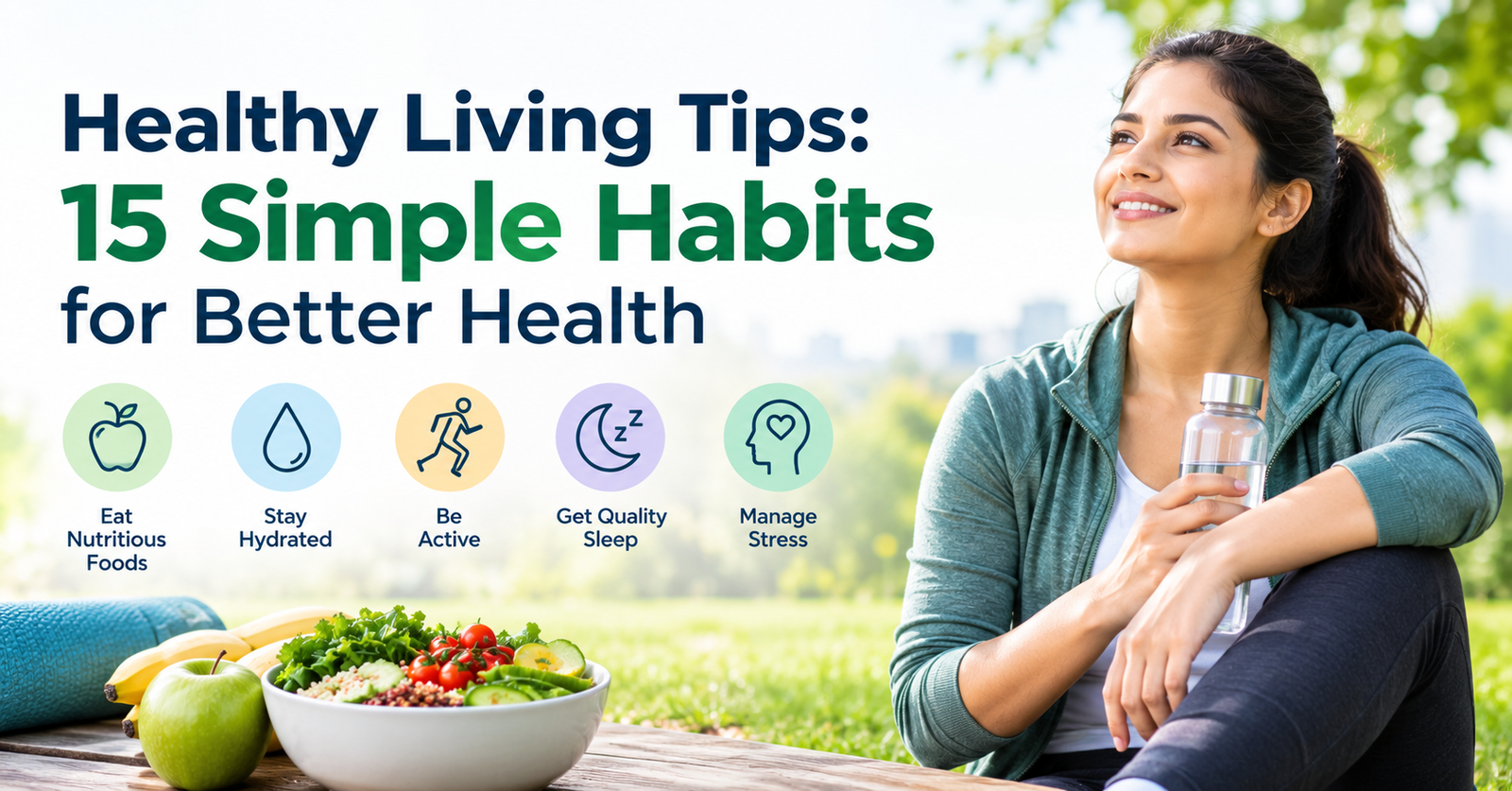

Good health rarely comes down to one big change. It comes from small, practical habits that fit into an ordinary day.
This guide covers 15 specific, evidence-based tips you can start using right away. For the broader habits behind long-term health, like sleep duration, exercise minutes, and social connection, our guide to healthy lifestyle habits covers that foundation in depth. Consider this article the practical, day-to-day companion to it.
1. Build Meals Around Plants First
Vegetables, fruits, legumes, and whole grains should make up the bulk of your plate, not an afterthought.
Why This Order Matters
Filling half your plate with plants naturally crowds out less nutritious options without requiring strict counting or tracking. Our guide to what is a balanced diet breaks down what this actually looks like in practice, and what is a healthy diet covers the broader principles behind it.
A Simple Starting Point
Add one extra vegetable to a meal you already eat regularly, rather than overhauling your whole diet at once. Small additions add up faster than dramatic changes that don’t stick.
2. Limit Ultra-Processed Foods
Not all processed food is a problem. Ultra-processed food, specifically, is where the evidence gets concerning.
What the Research Shows
A large cohort study published in The BMJ found that higher consumption of ultra-processed foods was associated with an increased risk of all-cause mortality. A separate BMJ study following more than 100,000 adults found that each 10% increase in ultra-processed food intake was linked to a greater than 10% higher risk of cardiovascular and cerebrovascular disease.
What Counts as Ultra-Processed
These are industrial formulations with ingredients rarely used in home cooking: packaged snacks, sugary cereals, reconstituted meat products, and most ready-to-heat meals. Our guide to anti-inflammatory foods covers choices that move in the opposite direction.
3. Try an Eating Pattern That Fits Your Life
Rather than following a rigid diet, consider an eating pattern with real research behind it.
Two Patterns Worth Knowing About
The Mediterranean diet remains one of the most extensively studied eating patterns for heart health and longevity. Intermittent fasting works well for some people but isn’t a fit for everyone, so it’s worth understanding the specifics before adopting it.
Consistency Matters More Than the Specific Pattern
Whichever pattern you choose, the benefit comes from sustained use, not short bursts. Pick something realistic enough that you can maintain it for months, not just weeks.
4. Support Your Gut With Fiber and Fermented Foods
Digestive health influences far more than digestion alone, including immune function and even mood.
Fiber-Rich Foods
Fiber feeds the beneficial bacteria in your gut and supports regular digestion. Our guide to high-fiber foods for digestive health covers specific sources worth adding to your routine.
Fermented Foods and Probiotics
Yogurt, kefir, and other fermented foods introduce live cultures that support gut health. Our articles on probiotics and whether yogurt is good for health cover what the evidence actually supports.
5. Get Enough Protein, Spread Throughout the Day
Protein needs often go under-discussed compared to fats and carbohydrates.
Why Distribution Matters
Spreading protein across meals, rather than loading it all into dinner, supports muscle maintenance more effectively than one large serving. Our guide to high-protein foods covers both animal and plant-based sources worth including.
A Practical Target
Include a protein source at breakfast specifically, since this is the meal most people shortchange on protein by default.
6. Break Up Long Periods of Sitting
Sedentary time carries its own risks, separate from whether you exercise regularly.
What the Data Shows
A CDC-led study published in JAMA found that one in four US adults sits for more than 8 hours a day, and the risk of premature death is particularly elevated when high sedentary time and physical inactivity occur together. The Physical Activity Guidelines for Americans similarly describes a strong relationship between time spent sedentary and risk of death from all causes.
A Simple Fix
Standing up and moving for even 2 to 3 minutes every hour meaningfully interrupts prolonged sitting. This matters even if you already exercise regularly elsewhere in your day.
7. Get Natural Light and Fresh Air Daily
Time outdoors does more than lift your mood.
The Vitamin D Connection
The body produces most of its vitamin D from sun exposure on skin, and the NIH Office of Dietary Supplements notes that low vitamin D levels are linked to bone problems and several other health concerns. Older adults, people with limited sun exposure, and people with darker skin are at higher risk of deficiency.
Balancing Sun Exposure With Skin Safety
Short, regular outdoor time supports vitamin D levels without requiring prolonged, unprotected sun exposure. Wearing sunscreen for longer periods outside protects your skin without eliminating the benefit of shorter daily exposure.
8. Protect Your Sleep Environment, Not Just Your Sleep Schedule
Where and how you sleep matters alongside how long you sleep.
Simple Environmental Changes
Keep your bedroom cool, dark, and quiet. Remove or silence devices that light up or buzz during the night, since even brief interruptions can fragment sleep quality without waking you fully.
Screens Before Bed
Reducing screen exposure in the hour before sleep helps your body wind down naturally. This is a smaller, more specific change than overhauling your entire bedtime routine at once.
9. Practice a Specific Stress-Reduction Technique
General advice to “reduce stress” is hard to act on. A specific technique is easier to actually use.
Try Box Breathing
Inhale for 4 counts, hold for 4, exhale for 4, and hold again for 4. This simple pattern activates your body’s relaxation response and takes less than a minute to complete.
Make It a Daily Habit, Not a Crisis Response
Using a stress-reduction technique proactively, before you feel overwhelmed, tends to work better than reaching for it only during acute stress.
10. Keep Up With Age-Appropriate Screenings
Preventive screenings catch problems before symptoms appear, when they’re often easiest to treat.
Why This Deserves Its Own Habit
Many common conditions, from high blood pressure to certain cancers, develop silently for years. Regular screenings, scheduled by age and risk factors rather than symptoms, are how these get caught early.
Don’t Skip Appointments Just Because You Feel Fine
Feeling healthy isn’t the same as being free of every risk factor. A yearly checkup remains one of the simplest ways to catch a developing issue early.
11. Watch for Digestive Warning Signs
Digestive symptoms are common, but persistent ones deserve attention rather than being brushed off.
What’s Typical vs. What Isn’t
Occasional bloating or irregular bowel movements are usually not concerning. Our guide to common digestive problems covers what’s typical, and what abdominal pain feels like can help you describe symptoms more precisely if something feels off.
Acid Reflux as a Common Example
Acid reflux is one of the most common digestive complaints tied directly to daily habits. Our guide to acid reflux risk factors covers what raises your risk, how acid reflux is diagnosed explains what a medical evaluation involves, and managing acid reflux at home covers practical daily strategies if you’re already dealing with symptoms. Ginger is one home remedy people frequently ask about; our article on ginger and health covers what’s actually supported by evidence.
12. Support Your Metabolic Health, Not Just Your Weight
Metabolic health is about how your body processes energy, not just the number on a scale.
Why This Distinction Matters
Two people at the same weight can have very different metabolic profiles, including blood sugar regulation and cholesterol levels. Habits like regular movement, adequate sleep, and limiting added sugar all support metabolic health independent of weight change.
A Sustainable Approach to Weight
If weight is part of your goals, sustainable methods outperform crash approaches. Our roundup of weight loss trends covers what people are actually using now, along with which approaches tend to hold up over time.
13. Read Nutrition Labels With a Purpose
Nutrition labels contain more useful information than most people take the time to use.
What to Actually Look At
Focus on added sugar, sodium, and fiber content rather than calories alone. Our nutrition facts resource covers how to interpret these numbers in context.
A Quick Habit to Build
Compare two similar products side by side before choosing, rather than assuming front-of-package claims tell the full story. Front labels often highlight one positive attribute while omitting less favorable ones.
14. Limit Alcohol and Skip Tobacco Entirely
These two habits carry some of the most consistent, well-documented health risks of any lifestyle factor.
Why There’s No Real Safe Level for Smoking
Smoking damages nearly every organ system, and quitting at any age brings measurable health benefits, even for long-term smokers.
Alcohol in Moderation, If at All
If you drink, moderation matters. Heavy or frequent alcohol use contributes to liver disease, several cancers, and worsens digestive issues like acid reflux and gastritis.
15. Build in Recovery, Not Just Effort
Rest and recovery are habits in their own right, not simply the absence of activity.
Why Recovery Deserves Attention
Consistently pushing through fatigue, whether physical or mental, tends to backfire over time. Recovery days, adequate sleep, and downtime all support the other habits on this list rather than competing with them.
A Simple Weekly Check-In
Ask yourself once a week whether you’re consistently exhausted rather than occasionally tired. Persistent exhaustion is worth discussing with a doctor rather than pushing through indefinitely.
How These Tips Fit Into a Bigger Picture
These 15 tips work best as a toolkit, not a checklist you need to complete perfectly every day.
Start With What Feels Achievable
Pick two or three tips that feel realistic right now, rather than attempting all 15 simultaneously. Consistency with a few habits beats inconsistency with many.
Connect Daily Habits to Your Overall Health
Many everyday habits connect directly to common health conditions. Our overview of the most common health issues shows how frequently daily habits and long-term health outcomes intersect.
When Daily Habits Aren’t Enough
Lifestyle tips support health, but they don’t replace medical care when something is genuinely wrong.
Signs Worth a Doctor’s Visit
Talk to a doctor if you notice:
- Persistent digestive symptoms despite dietary changes
- Ongoing fatigue that doesn’t improve with better sleep habits
- Unexplained weight changes in either direction
- Any symptom that concerns you, regardless of how minor it seems
Frequently Asked Questions
What are the most important healthy living tips to start with?
Building meals around plants, limiting ultra-processed foods, and breaking up long periods of sitting are three of the most impactful, evidence-backed places to start. Each addresses a well-documented risk factor without requiring a complete lifestyle overhaul.
How do ultra-processed foods actually affect health?
Research published in The BMJ has linked higher ultra-processed food consumption to increased risk of all-cause mortality and cardiovascular disease. These foods tend to be higher in added sugar, sodium, and unhealthy fats while lower in fiber and micronutrients.
Is sitting really as harmful as being physically inactive?
They’re related but distinct risks. Research shows that sedentary time and physical inactivity each carry independent health risks, and the risk of premature death is particularly elevated when both occur together.
How much sunlight do I need for vitamin D?
The amount varies by skin tone, location, and season, so there’s no single universal number. Short, regular outdoor time throughout the week supports vitamin D production without requiring prolonged, unprotected sun exposure.
Can healthy living tips help with digestive issues like acid reflux?
Many can. Diet composition, meal timing, weight management, and alcohol intake all influence digestive symptoms, including acid reflux specifically. Persistent or worsening symptoms still warrant a medical evaluation rather than relying on lifestyle changes alone.
What’s the difference between metabolic health and weight loss?
Metabolic health refers to how efficiently your body processes energy, including blood sugar and cholesterol regulation, and it isn’t determined by weight alone. Two people at the same weight can have very different metabolic profiles depending on their habits.
How many of these 15 tips should I try to follow at once?
Start with two or three that feel realistic for your current routine. Adding habits gradually leads to better long-term consistency than attempting a complete overhaul all at once.
The Bottom Line
Healthy living isn’t built from one dramatic change. It’s built from small, specific habits, like the 15 covered here, layered on top of each other over time.
Pick a few that fit your life right now. Add more once those feel automatic, and let consistency, not perfection, drive your progress.
Sources
- The BMJ. Association Between Consumption of Ultra-Processed Foods and All Cause Mortality: SUN Prospective Cohort Study
- The BMJ. Ultra-Processed Food Intake and Risk of Cardiovascular Disease (NutriNet-Santé)
- CDC/JAMA, reported via CBS News. Americans Sit Too Much, CDC Says
- National Institutes of Health, Office of Dietary Supplements. Vitamin D Fact Sheet for Health Professionals
Related Reading
- How to Live a Healthy Lifestyle
- What Is a Balanced Diet?
- What Is a Healthy Diet?
- The Mediterranean Diet
- Most Common Health Issues: An Overview
- Common Digestive Problems: Causes and What They Mean
- Acid Reflux Risk Factors: What Raises Your GERD Risk
- Weight Loss Trends for 2026
Medical Disclaimer
This article is for general information and education. It is not personalized medical advice. If you have specific health conditions or concerns, talk to a doctor before making major changes to your diet, activity level, or overall routine.
Read our full Medical Disclaimer.
8 thoughts on “Healthy Living Tips: 15 Simple Habits for Better Health”
Comments are closed.