
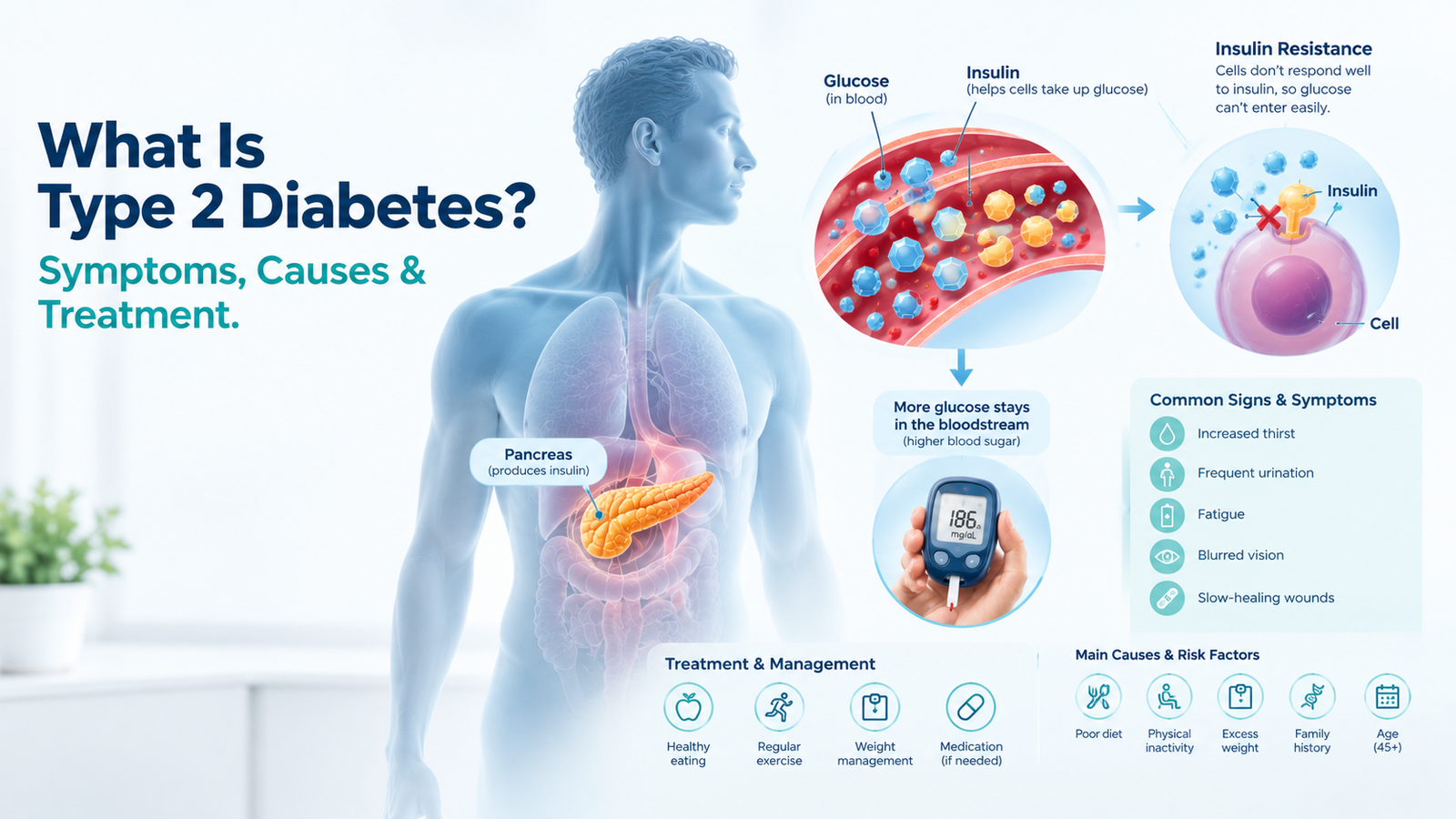

What Is Type 2 Diabetes? Symptoms, Causes & Treatment
Type 2 diabetes is a chronic condition that affects how your body regulates blood glucose, or blood sugar. Over time, the body develops insulin resistance and may eventually stop producing enough insulin to keep blood glucose within a healthy range.
It’s the most common form of diabetes by a wide margin. Some people develop symptoms gradually. Others notice nothing unusual at all, even as blood glucose climbs. Early diagnosis and consistent management genuinely help reduce the risk of complications down the road, which is exactly why understanding this condition matters.
MedlinePlus offers a helpful clinical overview alongside this guide. For a broader look at diabetes as a whole, our guide to what diabetes is covers all three main types.
What is type 2 diabetes?
To understand type 2 diabetes, it helps to understand how blood glucose is normally regulated.
How does type 2 diabetes affect the body?
In a healthy system, food breaks down into glucose, which enters your bloodstream. The pancreas releases insulin, a hormone that acts like a key, letting glucose move out of the blood and into your cells, where it’s used for energy.
With type 2 diabetes, this process breaks down. Cells become less responsive to insulin, a state called insulin resistance. Glucose doesn’t enter cells as effectively, so it builds up in the bloodstream instead.
What happens to insulin production over time
At first, the pancreas compensates by producing more insulin to overcome this resistance. According to NIDDK, over time the pancreas may not be able to keep up with the increased demand, and insulin production can become insufficient. This is when blood glucose levels rise into the diabetes range.
Persistent high blood glucose doesn’t just affect how you feel day to day. Over years, it can affect blood vessels, nerves, and organs throughout the body, which is why ongoing management matters even when symptoms feel minor or absent.
What are the symptoms of type 2 diabetes?
Type 2 diabetes can develop gradually, and some people may not notice symptoms at first. This is one of the most important things to understand about this particular type.
Common symptoms
According to NIDDK, common symptoms of type 2 diabetes include:
- Frequent urination
- Increased thirst
- Increased hunger, even after eating
- Fatigue
- Blurred vision
- Unexplained weight loss
- Slow-healing cuts or wounds
- Frequent infections
- Numbness or tingling in the hands or feet
- Dry or itchy skin
These symptoms can have causes other than diabetes. They aren’t enough for self-diagnosis on their own. If fatigue is your main concern, our guide to what causes fatigue covers the wider range of possible explanations.
Early signs of type 2 diabetes
People often ask what the “first sign” of type 2 diabetes looks like. There isn’t necessarily one specific first symptom. Increased thirst, frequent urination, persistent fatigue, blurred vision, recurrent infections, and slow wound healing are among the earliest signs people tend to notice, when they notice anything at all.
Can you have type 2 diabetes without symptoms?
Yes. Some people have few or no obvious symptoms, particularly in the early stages. Type 2 diabetes is frequently discovered through routine blood testing, sometimes years before someone would have noticed symptoms on their own. This is a major reason routine screening matters for people with known risk factors.
What causes type 2 diabetes?
Type 2 diabetes doesn’t have one single cause. It typically develops from a combination of factors working together.
Insulin resistance
Insulin resistance is the central mechanism behind type 2 diabetes. Cells throughout the body, particularly in muscle, fat, and liver tissue, become less responsive to insulin’s signal. The pancreas initially produces more insulin to compensate for this resistance. Over time, insulin production may no longer be sufficient to maintain healthy blood glucose levels.
Genetics and family history
Genetics play a real role in type 2 diabetes risk. Having a parent or sibling with type 2 diabetes increases your own likelihood of developing it, reflecting inherited susceptibility that researchers are still working to fully understand.
Other contributing factors
Several other factors contribute to type 2 diabetes risk, including:
- Excess body weight
- Physical inactivity
- Increasing age
- History of gestational diabetes
- Prediabetes
- Certain ethnic and genetic backgrounds
- Other underlying health factors
It’s worth being clear here: type 2 diabetes results from a complex mix of factors, many of which aren’t fully within a person’s control. It isn’t a reflection of personal failure or a lack of willpower.
What are the risk factors for type 2 diabetes?
According to the CDC, risk factors for type 2 diabetes include:
- Having prediabetes
- Family history of type 2 diabetes
- Overweight or obesity
- Physical inactivity
- Increasing age, particularly 45 and older
- Previous gestational diabetes
- Certain genetic or ethnic backgrounds
- Certain other medical conditions
Having one or more risk factors doesn’t mean a person will definitely develop type 2 diabetes. It means the likelihood is higher than average, which is exactly why risk factors matter for deciding who should be screened, not for predicting anyone’s individual outcome.
Regular physical activity is one of the more consistently effective ways to reduce this risk. Our guide to the benefits of exercise covers what the research actually shows.
Type 2 diabetes vs. prediabetes
Understanding where prediabetes fits helps clarify what a type 2 diagnosis actually means.
The key distinction
Prediabetes means blood glucose is higher than the normal range but hasn’t reached the diagnostic threshold for diabetes. Type 2 diabetes means blood glucose has reached that diagnostic range.
| Feature | Prediabetes | Type 2 Diabetes |
|---|---|---|
| Blood glucose | Higher than normal | Diabetes-range |
| Symptoms | Often absent | May be absent or develop gradually |
| Diabetes diagnosis | No | Yes |
| Risk of progression | Increased | Established condition |
| Management | Lifestyle changes and monitoring | Lifestyle changes, monitoring, medication and/or insulin as appropriate |
How is type 2 diabetes diagnosed?
Type 2 diabetes is diagnosed using blood glucose testing, not symptoms alone. A home glucose meter cannot independently establish a diabetes diagnosis; that requires laboratory testing interpreted by a healthcare professional.
A1C test
The A1C test estimates your average blood glucose over roughly the past three months. It usually doesn’t require fasting beforehand and can be used to diagnose diabetes.
Fasting plasma glucose
This test measures blood glucose after fasting, typically requiring at least eight hours without food beforehand.
Oral glucose tolerance test
For this test, you drink a glucose solution, and your blood glucose is measured at set intervals afterward to see how your body responds.
Random plasma glucose test
This test can be done at any time, regardless of when you last ate. It’s particularly useful when someone already has symptoms suggesting diabetes.
Current diagnostic thresholds
According to the American Diabetes Association’s Standards of Care, current diagnostic criteria for diabetes in non-pregnant adults are an A1C of 6.5% or higher, a fasting plasma glucose of 126 mg/dL or higher, a 2-hour oral glucose tolerance test result of 200 mg/dL or higher, or a random plasma glucose of 200 mg/dL or higher in someone with symptoms.
In most cases, a diagnosis requires confirmation with a second abnormal result.
How is type 2 diabetes treated?
Treatment for type 2 diabetes is individualized. A healthcare professional may recommend lifestyle changes, medication, insulin, or some combination, depending on blood glucose levels and overall health.
Healthy eating
Nutrition plays a meaningful role in managing type 2 diabetes, though there’s no single “diabetes diet” that’s universally appropriate for everyone. Generally helpful approaches include balanced meals, plenty of vegetables and high-fiber foods, thoughtful carbohydrate choices, attention to portion sizes, and limiting foods high in added sugars when appropriate.
Our guides to what makes a balanced diet and what counts as a healthy diet cover the fundamentals. Our nutrition facts resource and guide to high-fiber foods offer more specific, practical direction. Eating patterns like the Mediterranean diet and choices built around anti-inflammatory foods have research support for metabolic health, and adequate intake from high-protein foods can help support steadier blood glucose and satiety.
Some people explore intermittent fasting as part of managing type 2 diabetes, but this should be discussed with a doctor first, since fasting windows can interact with certain medications and blood glucose patterns. Some research has also looked at ginger’s effect on blood glucose specifically; our guide to ginger’s overall health effects covers where that evidence currently stands.
Physical activity
Regular physical activity can help improve insulin sensitivity and support better blood glucose management. There’s no single exercise program that’s right for everyone; the right amount and type of activity depends on your overall health, fitness level, and any existing complications.
Weight management
For people who are overweight, losing a clinically appropriate amount of weight may improve blood glucose control. Treatment goals here should be individualized rather than based on a fixed number that applies to everyone. Our roundup of 2026 weight loss trends covers current, evidence-based approaches worth discussing with a healthcare provider.
Diabetes medications
Several categories of medication can help manage type 2 diabetes, each working differently:
- Metformin, usually a first-line medication, which reduces how much glucose the liver releases and improves the body’s sensitivity to insulin
- GLP-1 receptor agonists, which help the body release insulin when needed, slow digestion, and can reduce appetite
- SGLT2 inhibitors, which help the kidneys remove excess glucose through urine
- DPP-4 inhibitors, which help the body maintain more of its own naturally occurring insulin-supporting hormones
- Sulfonylureas, which prompt the pancreas to release more insulin
- Thiazolidinediones, which help improve the body’s sensitivity to insulin
- Other glucose-lowering medications, prescribed based on individual needs
Medication selection depends on individual factors, including other health conditions, side effect profiles, and personal preferences. This decision should always be made together with a healthcare professional, not chosen independently.
Insulin
Some people with type 2 diabetes eventually need insulin, and in certain situations, it may be introduced earlier in the disease rather than as a last resort. Needing insulin doesn’t mean someone has “failed” at managing their diabetes. It reflects how the underlying condition has changed over time, which is a normal part of how type 2 diabetes can progress for some people.
Can type 2 diabetes be prevented?
Type 2 diabetes can often be prevented or delayed, particularly for people with prediabetes or other elevated risk factors.
What helps reduce risk
Well-supported prevention strategies include:
- Regular physical activity
- Healthy eating patterns
- Weight management, when appropriate
- Screening for people at increased risk
- Actively managing prediabetes rather than ignoring it
These strategies reduce risk meaningfully, but they don’t guarantee that any individual person will never develop diabetes. Genetics and other factors outside personal control still play a role.
Can type 2 diabetes be reversed?
This is one of the most commonly searched questions about type 2 diabetes, and it deserves a careful, precise answer rather than a simple yes or no.
Remission, reversal, and cure are not the same thing
According to a 2021 consensus report from the American Diabetes Association and international diabetes organizations, some people with type 2 diabetes can achieve remission. This is defined as an A1C below 6.5% that persists for at least three months without taking any glucose-lowering medication.
Remission can happen spontaneously or after interventions like significant weight loss, increased physical activity, or, in some cases, metabolic surgery. It’s an important distinction: remission is not the same as a cure. The underlying tendency toward insulin resistance typically remains, and blood glucose can rise again if the factors that led to remission aren’t sustained.
Why this distinction matters
Continued monitoring with a healthcare team remains important even during remission, since researchers still don’t fully understand how long remission typically lasts or what predicts a relapse. If you’re working toward remission, that’s a reasonable and increasingly well-documented goal, but it’s one to pursue with medical guidance rather than by stopping medication on your own.
What happens if type 2 diabetes isn’t managed?
Persistent high blood glucose can affect multiple parts of the body over time. Good diabetes management and appropriate healthcare meaningfully reduce this risk, which is the main reason ongoing care matters.
Potential long-term complications
Poorly managed type 2 diabetes has been linked to:
- Cardiovascular disease
- Stroke
- Kidney disease
- Nerve damage (neuropathy)
- Eye disease and vision problems
- Foot problems
- Dental problems
- Sexual and bladder problems
Chest discomfort is one symptom worth taking seriously if it develops, given the cardiovascular connection; our guide to chest pain covers when this needs urgent evaluation. Some people with diabetes also experience dizziness related to blood glucose swings, which our guide to what causes dizziness covers in more general terms. Nerve-related pain can sometimes be confused with other causes of discomfort, including back pain, so it’s worth mentioning any new or unusual pain pattern to your care team.
Type 2 diabetes and blood sugar
Understanding blood glucose itself helps make sense of why day-to-day factors matter so much in diabetes management.
What affects blood glucose day to day
Blood glucose isn’t static. It shifts throughout the day based on food, physical activity, medication, illness, stress, and sleep. This is part of why some people with type 2 diabetes are asked to monitor their blood glucose regularly, particularly when starting or adjusting treatment.
Stress and sleep, specifically, have real, documented effects on blood glucose regulation, not just general wellbeing. Our guides to how to reduce stress and how to improve sleep cover practical, evidence-based approaches to both.
Individualized glucose targets should come from your own healthcare provider, since appropriate ranges vary based on age, other health conditions, and treatment plan.
When should you see a doctor?
Consider medical evaluation if you:
- Have symptoms associated with diabetes
- Have multiple risk factors for type 2 diabetes
- Have a history of prediabetes
- Have had abnormal blood glucose results in the past
- Have a history of gestational diabetes
- Are concerned about diabetes based on family history or other factors
Urgent warning
Very high blood glucose combined with serious symptoms, such as vomiting, difficulty breathing, confusion, or severe dehydration, can require urgent medical attention. This information doesn’t replace emergency care. If you or someone else is experiencing these symptoms together, seek immediate medical attention rather than waiting to see if they improve.
Building broader healthy habits supports diabetes prevention and management alike. Our guides to how to improve your health, healthy living tips, and how to live a healthy lifestyle all touch on how nutrition, activity, sleep, and stress work together as a connected system. Diabetes is also one of the most common health issues people face, so you’re far from alone in navigating it.
Frequently asked questions
What is type 2 diabetes in simple terms?
Type 2 diabetes is a condition where your body’s cells stop responding well to insulin, and over time, your pancreas may not make enough insulin to keep up. This causes blood glucose to rise higher than it should.
What are the first signs of type 2 diabetes?
There isn’t one universal first sign. Increased thirst, frequent urination, fatigue, and blurred vision are commonly among the earliest noticed symptoms, though many people notice nothing at all in the early stages.
Can you have type 2 diabetes without symptoms?
Yes. This is common, particularly early on. Many people find out they have type 2 diabetes through routine blood testing rather than through noticeable symptoms.
What causes type 2 diabetes?
Type 2 diabetes results from a combination of insulin resistance, genetics, and contributing factors like excess weight, physical inactivity, and age. It doesn’t have one single cause, and it isn’t the result of any one personal choice.
Can type 2 diabetes be cured?
No. Type 2 diabetes doesn’t currently have a cure. Some people can achieve remission, meaning blood glucose stays in a normal range without medication, but the underlying tendency toward the condition typically remains.
Can type 2 diabetes go away?
Through significant lifestyle changes, weight loss, or in some cases metabolic surgery, some people achieve remission, with blood glucose returning to a non-diabetic range for an extended period without medication. This is different from the condition being permanently gone, and ongoing monitoring is still recommended.
Is type 2 diabetes reversible?
“Reversible” isn’t the preferred clinical term. Medical organizations now use “remission” specifically because it more accurately reflects that the underlying condition can return, rather than implying it’s permanently resolved.
What foods should people with type 2 diabetes eat?
There’s no single required diet, but generally helpful patterns include plenty of vegetables, high-fiber foods, lean protein, and limited added sugar, with attention to portion sizes and carbohydrate choices. A registered dietitian can help tailor this to your specific needs and preferences.
How is type 2 diabetes diagnosed?
Through blood tests, including the A1C test, fasting plasma glucose test, oral glucose tolerance test, or random plasma glucose test, interpreted by a healthcare professional using established diagnostic thresholds.
What is the difference between type 1 and type 2 diabetes?
Type 1 diabetes is an autoimmune condition where the body makes little or no insulin at all, and it isn’t caused by diet or lifestyle. Type 2 diabetes involves insulin resistance and, over time, insufficient insulin production, and it develops from a mix of genetic and lifestyle-related factors. Our full guide to what diabetes is covers both types, along with gestational diabetes, in more depth.
Can type 2 diabetes be prevented?
Often, yes, particularly for people with prediabetes or elevated risk. Regular physical activity, healthy eating, and appropriate weight management meaningfully lower risk, though they can’t guarantee prevention for every individual.
Sources
- National Institute of Diabetes and Digestive and Kidney Diseases (NIDDK). Type 2 Diabetes
- NIDDK. Symptoms & Causes of Diabetes
- Centers for Disease Control and Prevention (CDC). Diabetes Risk Factors
- American Diabetes Association. Standards of Care in Diabetes, Classification and Diagnosis
- Riddle MC, et al. Consensus Report: Definition and Interpretation of Remission in Type 2 Diabetes. Diabetes Care. 2021.
- MedlinePlus, National Library of Medicine. Type 2 Diabetes
Medical disclaimer
This article is for general information and education. It is not medical advice and cannot diagnose type 2 diabetes or any other condition. If you have symptoms or risk factors for type 2 diabetes, talk to a qualified healthcare provider about testing and management options.
Read our full Medical Disclaimer.
3 thoughts on “What Is Type 2 Diabetes? Symptoms, Causes & Treatment”
Comments are closed.