
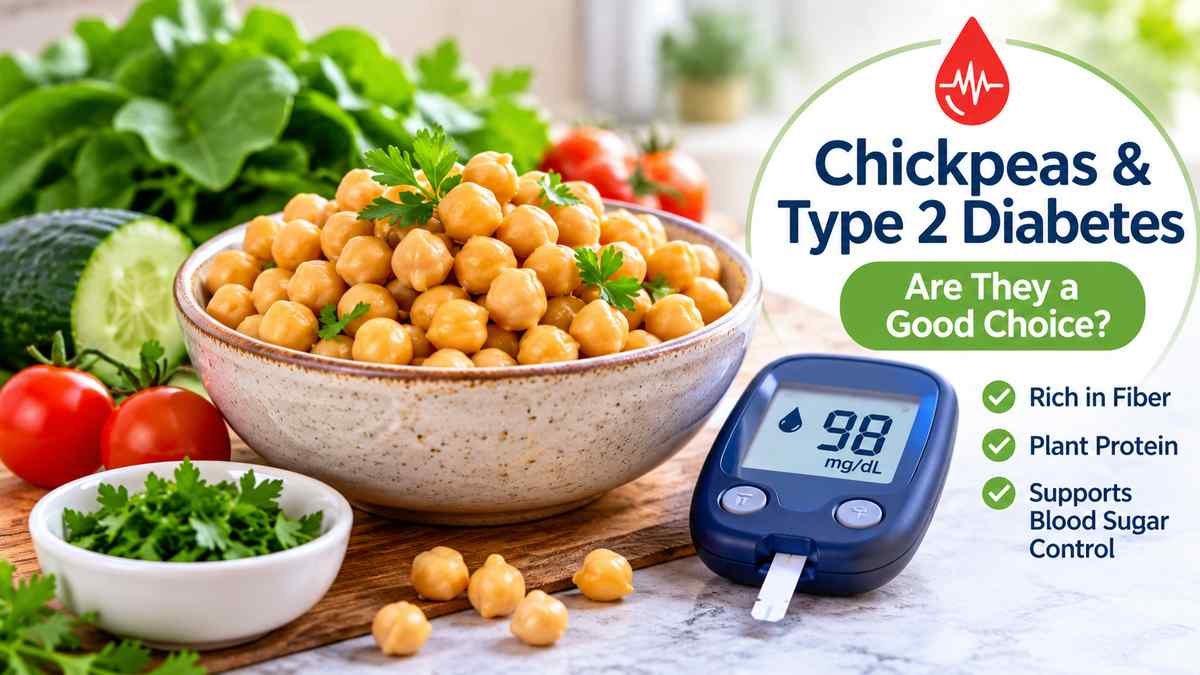

Can people with type 2 diabetes enjoy chickpeas without worrying about their blood sugar? It is one of the most common food questions among adults managing diabetes or prediabetes, and the short answer is encouraging. Chickpeas are a fiber-rich legume that can fit into many diabetes-friendly eating patterns, as long as portions and preparation are kept in mind.
Chickpeas (also called garbanzo beans) provide plant-based protein, fiber, and carbohydrates in one small package. They have a low glycemic index, which means they tend to raise blood sugar more gradually than many refined carbohydrate foods. They still contain carbohydrates, though, so they count toward your daily total and do not act as a treatment for diabetes.
This guide explains how chickpeas affect blood sugar, what the research actually shows, how much to eat, and how to enjoy them in practical ways. It also covers canned chickpeas, hummus, and common safety questions. If you are building a broader diabetes-friendly diet, chickpeas can be one useful part of the plan.
Are Chickpeas Good for Type 2 Diabetes?
Yes, chickpeas can be a good choice for most people with type 2 diabetes when eaten in sensible portions as part of a balanced meal. They offer fiber, plant protein, and slowly digested carbohydrates, which may support a steadier glucose response than refined grains or sugary foods. They are not a medication or a cure, and they do not replace individualized care.
Several features make chickpeas a practical option:
- Fiber: Cooked chickpeas are a strong source of dietary fiber, which slows digestion.
- Plant protein: Protein adds staying power to meals and snacks.
- Low glycemic index: Legumes are among the lower glycemic index foods, according to the Harvard T.H. Chan School of Public Health.
- Versatility: They work in salads, soups, curries, snacks, and spreads.
It is important to stay realistic. Chickpeas do not automatically lower blood glucose. Your overall meal composition, carbohydrate portions, medications, physical activity, and personal glucose responses all matter.
How Do Chickpeas Affect Blood Sugar?
The glycemic index (GI) ranks carbohydrate foods by how quickly they raise blood glucose after eating. Foods with a low GI are generally digested and absorbed more slowly. Chickpeas fall into that lower group, while white bread, many breakfast cereals, and sugary drinks tend to cause faster rises.
Two features explain this slower response. First, chickpeas are rich in fiber, which can slow how quickly carbohydrates leave the stomach and enter the bloodstream. Second, part of their starch is digested slowly or resists digestion, which spreads glucose absorption over a longer period.
Chickpeas still contain carbohydrates, and they can raise blood sugar. A large portion will have a larger effect than a small one, even for a low-GI food. Pairing chickpeas with vegetables, healthy fats, and other protein sources also shapes the response.
Individual results vary. Two people can eat the same portion and see different glucose readings. If you use a glucose meter or continuous glucose monitor, checking your own response (with guidance from your care team) is the most reliable way to know how chickpeas affect you.
For a deeper look at this topic, see our article on whether chickpeas lower blood sugar. You can also review the basics of blood sugar and how it is measured.
What the Research Says About Chickpeas and Blood Sugar
The evidence is encouraging but not as strong as headlines sometimes suggest. It helps to separate three types of evidence: studies on chickpeas themselves, studies on legumes in general, and studies on overall dietary patterns.
Chickpeas themselves. A 2025 systematic review and meta-analysis in Nutrition Journal pooled 28 controlled trials. It found that eating chickpeas lowered the post-meal glucose response compared with carbohydrate-matched foods. The authors did not find significant effects on peak glucose or insulin response, and they rated the certainty of the evidence as low to very low. An earlier 2023 review in Nutrients covered 12 studies with 182 participants, most of whom were healthy or had normal blood sugar. That limits how well the results apply to people with diabetes.
Legumes in general. A randomized trial in JAMA Internal Medicine enrolled 121 people with type 2 diabetes. Participants who followed a low-GI diet that included about one cup of legumes daily saw HbA1c fall by about 0.5 percentage points over three months. The comparison group, which increased wheat fiber, saw a drop of about 0.3 points. This was a legume-focused diet, so it does not prove chickpeas alone would produce the same change. An accompanying editorial also questioned whether the benefit came from the legumes themselves or from their fiber.
Overall diet. A broader meta-analysis in Diabetologia found that pulses lowered fasting glucose and that pulses within low-GI diets lowered longer-term glycemic markers. The authors noted a need for larger, better-designed trials.
In short, chickpeas appear to support a gentler post-meal glucose response, and legume-rich eating patterns show modest benefits. Long-term evidence specific to chickpeas in people with type 2 diabetes remains limited.
Chickpeas Nutrition Facts for Diabetes
Cooked chickpeas are nutrient-dense. They supply protein, fiber, complex carbohydrates, and minerals such as iron, potassium, and magnesium, along with folate and other B vitamins. A scientific review of chickpea nutrition notes that they are also a good source of several vitamins and minerals.
Here is a general look at boiled chickpeas prepared without added salt, based on USDA FoodData Central values. Figures are rounded, and the half-cup column is calculated from the per-cup values.
| Nutrient | ½ cup cooked (about 82 g) | 1 cup cooked (164 g) |
|---|---|---|
| Calories | About 135 | About 270 |
| Protein | About 7 g | About 14.5 g |
| Total carbohydrate | About 22 g | About 45 g |
| Dietary fiber | About 6 g | About 12 g |
| Fat | About 2 g | About 4 g |
Total carbohydrate includes fiber, which your body does not digest into glucose in the same way as starch or sugar. Some meal-planning methods subtract part of the fiber to estimate “net” or available carbohydrate, but this is not a universal rule. If you count carbohydrates, ask your dietitian which method to use. The American Diabetes Association offers a helpful overview of how carbohydrates affect blood sugar.
Minerals such as potassium and magnesium also support general cardiovascular health. For more on the broader nutrition picture, see our guide to the health benefits of chickpeas.
Benefits of Chickpeas for People With Type 2 Diabetes
1. Provide Fiber for Digestive Health
Chickpeas contain both soluble and insoluble fiber. Soluble fiber forms a gel-like substance in the gut that slows digestion, while insoluble fiber adds bulk and supports regular bowel movements. Fiber-rich foods are a core part of most healthy eating patterns, including those recommended for diabetes.
2. Offer Plant-Based Protein
Chickpeas add protein to meals without the saturated fat found in some animal products. They also help diversify protein sources, which is useful if you want to eat more plant-based meals. Pairing them with grains, seeds, or dairy can round out the amino acid profile.
3. Support Heart-Healthy Eating
People with type 2 diabetes have a higher risk of heart disease, so heart-healthy habits matter. Replacing some higher saturated fat foods with legumes fits cardiovascular-friendly patterns such as the Mediterranean diet. The legume trial described above also found a modest drop in estimated heart disease risk, largely related to blood pressure.
4. May Help Moderate Post-Meal Glucose Responses
Research suggests chickpeas may produce a lower post-meal glucose rise than carbohydrate-matched comparison foods. This does not mean they independently lower HbA1c or treat diabetes. The effect depends on portion size, preparation, and what else is on your plate.
5. Help Make Meals More Filling
Fiber and protein both contribute to fullness. Adding chickpeas to a salad, soup, or grain bowl can make a meal more satisfying and may help with portion control. For more on this food group, read about the health benefits of legumes.
How Many Chickpeas Can a Person With Diabetes Eat?
There is no single diabetes-specific serving of chickpeas that fits everyone. A practical starting point is about ½ cup of cooked chickpeas per meal or snack. That provides roughly 22 grams of total carbohydrate, which many people can fit into a meal plan.
Chickpeas should be counted as a carbohydrate-containing food, not as a free food. If you use carbohydrate counting, include them in your meal total along with rice, bread, fruit, or other starches on the same plate. The CDC’s diabetes meal planning guidance describes approaches such as the plate method and carbohydrate counting.
Your ideal portion depends on your carbohydrate targets, medications, activity level, and glucose readings. A registered dietitian or diabetes care and education specialist can help you set a portion that works for you. Learn more about A1C testing to understand how your food choices show up in long-term results.
Are Canned Chickpeas Good for Diabetes?
Yes, canned chickpeas can be a nutritious and convenient choice. They offer similar fiber and protein to home-cooked chickpeas and save a lot of preparation time. One USDA entry for canned chickpeas that are drained and rinsed lists about 10 grams of fiber per cup.
Look for “no salt added” or lower-sodium products when possible. Draining and rinsing the beans can remove a portion of the sodium in the canning liquid. Check the label for sodium, added sugar, and serving size, since some flavored products contain extras.
Neither canned nor home-cooked chickpeas is universally better. Dried chickpeas cooked at home give you full control over salt and texture, while canned chickpeas offer convenience. Choose the option that helps you eat chickpeas more often.
Is Hummus Good for Type 2 Diabetes?
Hummus can be a good option. It is made from chickpeas, tahini, olive oil, lemon, and garlic, so it provides fiber, plant protein, and unsaturated fats. Portion size still matters, because hummus is more calorie-dense than plain chickpeas.
Check store-bought labels for sodium and added ingredients. A small serving, such as a few tablespoons, is a common place to start. Homemade hummus lets you control salt and oil.
What you dip matters just as much. Pair hummus with non-starchy vegetables such as cucumbers, carrots, bell peppers, and celery. Pita bread, crackers, and chips add extra carbohydrates that may push a snack beyond your target. See our list of the best vegetables for diabetes for more dipping ideas.
Best Ways to Eat Chickpeas With Diabetes
The best preparation methods keep portions reasonable and pair chickpeas with other balanced foods. Try these ideas:
- Chickpea and vegetable salad: Combine chickpeas with cucumbers, tomatoes, parsley, and olive oil.
- Chickpea curry: Serve with a measured portion of brown or basmati rice and plenty of vegetables.
- Roasted chickpeas: Season with spices for a crunchy snack, and watch the portion size.
- Homemade hummus: Enjoy with cucumber and carrot sticks.
- Chickpeas with lentils or leafy greens: Add them to stews or sautés for extra fiber and nutrients.
- Vegetable soups: Stir in chickpeas for a more filling bowl.
- Protein pairings: Combine chickpeas with eggs, fish, tofu, or yogurt for a balanced plate.
Chickpea flour is another option for flatbreads and pancakes. These products can vary in carbohydrate content and portion size, so read labels and monitor your response. For more everyday approaches, explore these natural ways to manage type 2 diabetes at home.
Chickpeas vs. Other Foods for Diabetes
Rather than labeling foods as simply good or bad, it helps to compare fiber, carbohydrate quality, and portion size.
- White rice: Chickpeas generally provide more fiber and protein per serving. White rice digests faster and has little fiber. A small portion of rice alongside chickpeas can be a balanced approach.
- Lentils: Lentils and chickpeas are both lower-GI legumes with similar benefits. Eating a variety adds different nutrients.
- Black beans: Black beans are also fiber-rich and similar in carbohydrate content. Either works well.
- Potatoes: Potatoes are a starchy vegetable that tends to raise blood sugar more quickly, especially when mashed or fried. The 2023 Nutrients review found chickpeas produced a lower glucose response than potatoes in some comparisons.
- Refined carbohydrates: White bread, pastries, and sweetened cereals are typically lower in fiber and digested faster.
Portion size and the rest of the meal still play a major role, whichever food you choose.
Are There Any Risks of Eating Chickpeas With Diabetes?
For most people, chickpeas are safe and well tolerated. A few considerations are worth knowing:
- Gas and bloating: Legumes contain fermentable carbohydrates that can cause digestive discomfort. Increase intake gradually and drink enough water. Rinsing canned chickpeas may also help.
- Sodium: Some canned and prepared products are high in sodium. Choose lower-sodium versions and rinse them.
- Carbohydrate load: Large servings can raise blood sugar more than expected. Chickpeas may not fit every carbohydrate target in unlimited quantities.
- Kidney disease and other restrictions: People with diabetes-related kidney disease, or those who have been told to limit potassium or phosphorus, should ask their healthcare team before adding more legumes.
- Medication changes: If you take insulin or medications that lower blood sugar, major changes to your carbohydrate intake can affect your dosing needs. Talk with your care team.
Our article on eating chickpeas every day offers more detail on frequency and tolerance.
Frequently Asked Questions
Can people with type 2 diabetes eat chickpeas every day?
Many people can include chickpeas daily as part of a balanced diet, but portion size and total carbohydrate intake still matter. A moderate serving, such as ½ cup cooked, is a common starting point. Ask your healthcare provider or dietitian what fits your individual plan.
Do chickpeas raise blood sugar?
Chickpeas contain carbohydrates, so they can raise blood sugar. Their fiber and slowly digested starch may lead to a more gradual rise than refined carbohydrate foods, according to a 2025 systematic review. Responses vary from person to person.
Are chickpeas better than rice for diabetes?
Chickpeas generally offer more fiber and protein than white rice and may produce a gentler glucose response. Rice still can fit in a diabetes meal plan in a measured portion. Combining a smaller rice portion with chickpeas and vegetables is a balanced approach.
Can diabetics eat chickpeas at night?
There is no strong evidence that chickpeas are off-limits in the evening. What matters most is the portion, the other foods in the meal, and your own glucose readings afterward. If you notice higher overnight or morning readings, discuss meal timing with your care team.
Is hummus safe for people with diabetes?
Hummus can fit into a diabetes-friendly diet when eaten in modest portions. Serve it with non-starchy vegetables instead of large amounts of pita or crackers. Check labels for sodium and added ingredients.
Are roasted chickpeas good for diabetes?
Roasted chickpeas can be a fiber- and protein-rich snack, but they are easy to overeat. Measure a small portion and avoid versions coated with sugar or heavy salt. Count them as carbohydrate in your meal plan.
Are chickpeas high in carbohydrates?
Chickpeas are a carbohydrate-containing food, with roughly 45 grams of total carbohydrate and 12 grams of fiber in a cup of cooked chickpeas, per USDA FoodData Central. Much of that is slowly digested starch and fiber. Portion control is key.
Are chickpeas good for people with prediabetes?
Chickpeas can be a helpful part of a prediabetes diet because they provide fiber and protein and tend to digest slowly. They are not a treatment, and no single food prevents progression to diabetes. Overall dietary pattern, physical activity, and medical guidance matter most.
The Bottom Line
Chickpeas can be a nutritious addition to a type 2 diabetes-friendly diet. They provide fiber, plant protein, and key nutrients, along with carbohydrates that are generally digested more slowly than many refined foods. Research on chickpeas and diabetes is promising for post-meal glucose, but long-term evidence specific to chickpeas remains limited.
Because chickpeas still contribute carbohydrates, serving size, meal composition, and your own glucose responses matter. Enjoy them in balanced meals rather than treating them as a blood sugar remedy.
For more practical strategies, explore our guide on managing type 2 diabetes at home, and work with your healthcare team on a plan that fits your needs.
Sources
- Harvard T.H. Chan School of Public Health. The Nutrition Source: Chickpeas (Garbanzo Beans).
- Jenkins DJA, et al. Effect of Legumes as Part of a Low Glycemic Index Diet on Glycemic Control and Cardiovascular Risk Factors in Type 2 Diabetes Mellitus: A Randomized Controlled Trial. JAMA Internal Medicine. 2012. News release summary; DOI: 10.1001/2013.jamainternmed.70.
- Wang DD, et al. Chickpea attenuates postprandial blood glucose responses: a systematic review and meta-analysis. Nutrition Journal. 2025.
- Nam T, Kim A, Oh Y. Effectiveness of Chickpeas on Blood Sugar: A Systematic Review and Meta-Analysis of Randomized Controlled Trials. Nutrients. 2023.
- Sievenpiper JL, et al. Effect of non-oil-seed pulses on glycaemic control: a systematic review and meta-analysis. Diabetologia. 2009.
- U.S. Department of Agriculture. FoodData Central: Chickpeas, cooked, boiled, without salt (FDC 173757).
- American Diabetes Association. Understanding Carbs.
- Centers for Disease Control and Prevention. Diabetes Meal Planning.
- Nutritional quality and health benefits of chickpea (Cicer arietinum L.): a review.
Medical Disclaimer: This article is for educational purposes only and is not medical advice. It does not replace guidance from your doctor, registered dietitian, or diabetes care team. Everyone’s body and health needs are different, so talk with a qualified healthcare professional before making changes to your diet, medications, or diabetes management plan.