
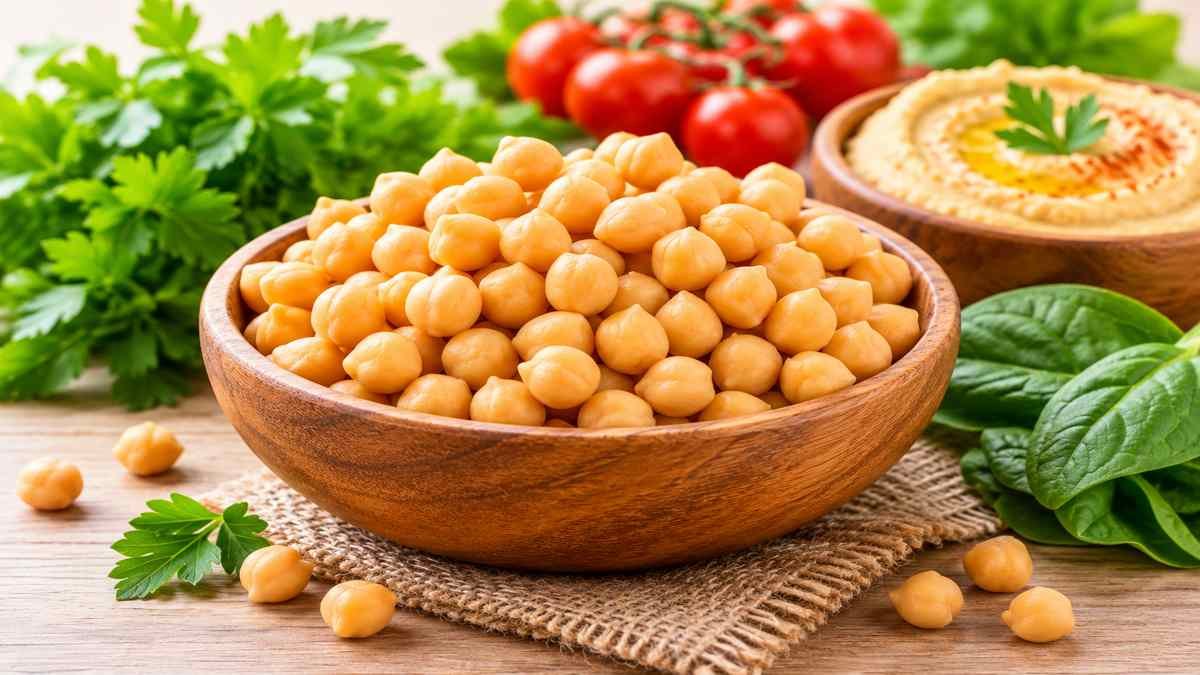

Chickpeas are a nutritious legume rich in plant-based protein, dietary fiber, and essential vitamins and minerals. They can support digestive health, help you feel full after meals, and contribute to a heart-healthy eating pattern. They are not a cure or treatment for any disease, but they are a useful food within a balanced diet.
Chickpeas are also known as garbanzo beans, and they appear in many everyday foods such as hummus, salads, curries, soups, and roasted snacks. They are affordable, shelf-stable, and easy to cook with. This broad popularity is one reason people ask whether chickpeas are healthy and how often to eat them.
This guide covers chickpeas nutrition facts, seven potential health benefits, and their role in weight management and blood sugar. It also explains practical ways to eat chickpeas and who may need to be mindful of their intake. It draws on the Harvard T.H. Chan School of Public Health, USDA FoodData Central, and other authoritative sources. For the bigger picture, see our article on the health benefits of legumes.
What Are Chickpeas?
Chickpeas (Cicer arietinum) are legumes in the Fabaceae family. The name “garbanzo beans” refers to the same food. When the dried edible seeds are discussed as a group, chickpeas are often called pulses.
You can buy chickpeas dried, canned, cooked, or roasted. They are used in cuisines around the world, from Mediterranean and Middle Eastern dishes to South Asian cooking.
Two main types exist, according to the Harvard Nutrition Source:
- Kabuli chickpeas: larger, round, and light-colored. They are common in the United States and are used in hummus, salads, and Mediterranean-style dishes.
- Desi chickpeas: smaller, darker, and irregularly shaped, with a thicker seed coat. They are widely used in India and the Middle East, including in dishes made with Bengal gram and split chickpeas.
The two names, chickpeas and garbanzo beans, are interchangeable. The nutritional value is the same.
Chickpeas Nutrition Facts
Chickpeas provide plant protein, fiber, complex carbohydrates, and several vitamins and minerals. They are a calorie-containing food, so portion size matters. The values below are approximate for one cup (about 164 grams) of cooked, unsalted chickpeas, based on USDA FoodData Central.
| Nutrient | Approximate amount per 1 cup cooked chickpeas |
|---|---|
| Calories | 269 kcal |
| Protein | 14.5 g |
| Dietary fiber | 12.5 g |
| Total carbohydrates | 45 g |
| Total fat | 4.2 g |
| Folate | 282 mcg |
| Iron | 4.7 mg |
| Magnesium | 78 mg |
| Potassium | 477 mg |
Values vary by preparation method and serving size, and canned products may differ.
Protein in Chickpeas
Chickpeas provide a meaningful amount of plant-based protein. Protein supports muscle maintenance and repair, tissue growth, and the production of enzymes and hormones, and it adds to meal satisfaction. Chickpeas alone do not supply every essential amino acid in ideal proportions, so dietary variety matters. Our guide to high-protein foods offers more options.
Fiber in Chickpeas
Chickpeas contain both soluble and insoluble fiber. Soluble fiber dissolves in water and forms a gel, which can slow digestion. Insoluble fiber adds bulk and supports regular bowel movements. Together they help you feel full and nourish gut bacteria. See our list of high-fiber foods for digestive health.
Vitamins and Minerals
Chickpeas contribute several nutrients:
- Folate: supports normal cell growth and DNA production, as explained by the NIH.
- Iron: contributes to oxygen transport. See iron-rich foods.
- Magnesium: supports muscle and nerve function.
- Potassium: contributes to normal muscle function and blood pressure regulation. See potassium-rich vegetables.
- Manganese: supports normal metabolism.
7 Health Benefits of Chickpeas
Evidence varies across these benefits. Much of the research looks at legumes as a group or at overall dietary patterns, not chickpeas alone. Eating chickpeas does not guarantee any particular health outcome.
1. Chickpeas May Support Digestive Health
Chickpeas contain soluble and insoluble fiber that support regular bowel movements. Some of their carbohydrates, including the oligosaccharide raffinose, are fermented in the colon by beneficial bacteria such as Bifidobacterium, according to the Harvard Nutrition Source. Fermentation produces short-chain fatty acids such as butyrate, which help maintain a healthy intestinal environment.
Increasing fiber too quickly can cause gas and bloating, so build up gradually. Chickpeas do not cure constipation or heal the gut. Learn more in our guide on how to improve gut health.
2. Chickpeas May Support Heart Health
Chickpeas provide fiber, folate, potassium, magnesium, and some unsaturated fats. These features fit into a heart-healthy pattern. Fiber may help improve blood cholesterol levels, and potassium contributes to normal blood pressure regulation. Harvard also notes that chickpeas contain sitosterol, a plant sterol that can interfere with cholesterol absorption.
The evidence is stronger for legumes as a food group than for chickpeas as a single intervention. Swapping some foods high in saturated fat for legumes can improve overall diet quality. Chickpeas do not prevent heart attacks or reverse heart disease. See our list of heart-healthy foods.
3. Chickpeas May Help Support Healthy Blood Sugar Levels
Chickpeas contain fiber, protein, and slowly digested carbohydrates. The Harvard Nutrition Source reports that both dried and canned chickpeas have a low glycemic index and glycemic load, and that they contain amylose, a resistant starch that digests slowly.
Responses depend on portion size, preparation, the rest of the meal, and your own metabolism. Clinical findings on legumes and diabetes are mixed. People with diabetes can include chickpeas in a balanced eating pattern, but medication and meal planning should follow individual clinical guidance. See our diabetes diet guide.
4. Chickpeas May Help With Weight Management
The fiber and protein in chickpeas can help you feel full after eating. They also add volume and nutrients to meals and can replace some less nutritious, more refined foods. Their usefulness depends on your overall dietary pattern.
No single food guarantees weight loss, and chickpeas do not burn belly fat. Our guide to weight management covers the bigger picture.
5. Chickpeas Provide Plant-Based Protein
Chickpeas are a practical protein source for people who eat vegetarian or vegan diets. They work well in grain bowls, salads, soups, stews, curries, and hummus. Combining chickpeas with grains, nuts, seeds, and other protein sources across the day helps create a varied diet.
Chickpeas are not a direct replacement for every nutritional feature of meat, fish, eggs, or dairy.
6. Chickpeas Provide Nutrients That Support Normal Body Function
Folate, iron, magnesium, potassium, and manganese each play roles in normal physiology. Chickpeas can contribute to nutrient adequacy, but the amount you eat and the rest of your diet matter. A cup of cooked chickpeas provides a substantial share of daily folate needs, for example, but no one food covers everything.
7. Chickpeas Can Improve the Nutritional Quality of Everyday Meals
This is a practical benefit. Chickpeas make meals more satisfying while adding fiber, protein, and micronutrients. You might:
- Add chickpeas to a vegetable salad
- Replace part of a refined carbohydrate portion with chickpeas
- Stir them into soups and curries
- Use them in hummus or homemade spreads
This does not mean chickpeas independently prevent chronic disease. See our guide to how to eat more vegetables for pairing ideas.
Are Chickpeas Good for Weight Management?
Chickpeas can fit into a weight-management eating pattern because their fiber and protein may help with fullness. Eating chickpeas alone does not guarantee weight loss. Adding them to a vegetable salad may make the meal more filling, but your overall diet and activity still decide the result.
Three practical points help:
- Portion size matters. Chickpeas provide calories as well as nutrients.
- Preparation matters. Added oil, butter, or rich sauces change the nutritional profile.
- Overall patterns matter more than any one food.
Avoid crash diets and rapid weight-loss promises. For related ideas, see our guide to healthy weight management.
Are Chickpeas Good for Blood Sugar?
Chickpeas can be a useful food for many people managing blood sugar because they provide fiber and slowly digested carbohydrates. Their effect depends on portion size, the rest of the meal, and individual glucose responses.
To get the most from them:
- Choose minimally processed chickpeas.
- Pair them with vegetables and other nutrient-rich foods.
- Be mindful of carbohydrate portions.
- Follow your own medical advice for diabetes management.
Canned chickpeas are also fine, particularly when drained and rinsed. Chickpeas do not replace diabetes medication or independently prevent diabetes. For more food ideas, see the best vegetables for diabetes.
Chickpeas vs. Other Foods
Chickpeas are one of many useful staples. These foods are not interchangeable in every recipe, but each can contribute to a balanced diet.
| Food | Main nutritional feature | Practical use |
|---|---|---|
| Chickpeas | Protein and fiber | Salads, curries, hummus |
| Lentils | Protein, fiber, folate | Soups, dal |
| Kidney beans | Fiber and plant protein | Stews, rice dishes |
| Green peas | Fiber and protein | Side dishes, soups |
| White rice | Primarily carbohydrates | Staple grain or meal base |
Chickpeas are not universally healthier than rice, lentils, or other legumes. Portion size, preparation, and your own nutritional needs all matter. Our guide to the health benefits of legumes compares the group.
How to Eat Chickpeas
Chickpeas are easy to add to meals.
Add Chickpeas to Salads
Toss cooked chickpeas with leafy greens, tomatoes, cucumbers, and a simple dressing. Our health benefits of spinach article suggests a good base.
Make Chickpea Curry
Chickpeas work well in tomato-based curries and vegetable stews, including traditional chana masala (chola) and boiled chickpea salads common in South Asian cooking.
Prepare Homemade Hummus
Blend chickpeas with tahini, lemon juice, garlic, and olive oil. See the benefits of olive oil.
Roast Chickpeas for a Snack
Roast cooked chickpeas with spices for a crunchy snack. Added oil and salt change the nutritional profile, so use them in moderation.
Use Canned or Dried Chickpeas
Canned chickpeas are convenient. Drain and rinse them before use. The Harvard Nutrition Source notes that canned chickpeas retain much of their nutritional value and are comparable to cooked dried ones. Dried chickpeas need to be sorted, rinsed, and cooked thoroughly; soaking for at least three hours or overnight shortens cooking time and may be better tolerated by people who feel bloated after eating beans.
You can also keep the liquid, called aquafaba, which cooks use as an egg-white substitute in some recipes.
Chickpeas Side Effects and Precautions
Most people can include chickpeas in a balanced diet, but tolerance and nutritional needs vary.
- Gas and bloating: chickpeas contain fermentable carbohydrates that may cause gas, especially if you are not used to legumes. Soaking dried beans can reduce the oligosaccharides responsible, per Harvard.
- Increasing fiber: raise your intake gradually and drink enough fluids.
- Food allergy: chickpea allergy is possible. People with a known legume allergy should seek advice from an allergy specialist.
- Canned chickpeas: some contain added sodium. Draining and rinsing can reduce it, although the amount varies. Choose lower-sodium products when you can.
- Kidney-related restrictions: some people with kidney disease may need individualized advice about potassium or phosphorus. Chickpeas do not need to be avoided universally. The National Kidney Foundation explains potassium and kidney health.
If digestive symptoms are frequent or severe, see our guide to common digestive problems and talk with a healthcare professional.
Frequently Asked Questions About Chickpeas
Are Chickpeas Healthy?
Yes. Chickpeas provide plant-based protein, fiber, folate, and minerals that can contribute to a balanced diet. See the Harvard Nutrition Source overview.
How Much Protein Is in Chickpeas?
One cup of cooked chickpeas contains about 14.5 grams of protein, according to USDA data.
Are Chickpeas Good for Digestion?
Their fiber can support regular bowel movements and contribute to a healthy gut microbiome. Introduce them gradually to limit gas.
Can I Eat Chickpeas Every Day?
Many people can eat chickpeas regularly. The right amount depends on your dietary needs, tolerance, and the rest of your diet.
Are Canned Chickpeas Healthy?
Yes. Canned chickpeas can be a nutritious, convenient option. Choose lower-sodium products when appropriate and drain and rinse them before use.
Do Chickpeas Cause Gas?
They can. Their fermentable carbohydrates may cause gas or bloating, particularly when fiber intake rises quickly. Soaking dried chickpeas may help.
The Bottom Line
Chickpeas are a versatile, nutrient-dense legume that provides plant-based protein, fiber, and essential minerals. They may support digestive health, fullness, and heart-healthy eating patterns. Whether you add them to salads, curries, soups, or hummus, chickpeas can be a practical part of a balanced diet. For more ideas, explore our guide to what a balanced diet looks like.
Sources
- Harvard T.H. Chan School of Public Health, The Nutrition Source. Chickpeas (Garbanzo Beans).
- U.S. Department of Agriculture. FoodData Central.
- NIH Office of Dietary Supplements. Folate: Fact Sheet for Health Professionals.
- National Kidney Foundation. Potassium and Your CKD Diet.
Medical Disclaimer: This article is for general educational purposes only and is not medical advice. It does not replace the guidance of your doctor, pharmacist, or registered dietitian. Talk with a qualified healthcare professional before changing your diet, especially if you have diabetes, kidney disease, a food allergy, or another medical condition. If you think you are having a medical emergency, call 911 or your local emergency number right away.
2 thoughts on “Chickpeas Health Benefits Explained: Nutrition, Uses & Side Effects”
Comments are closed.