
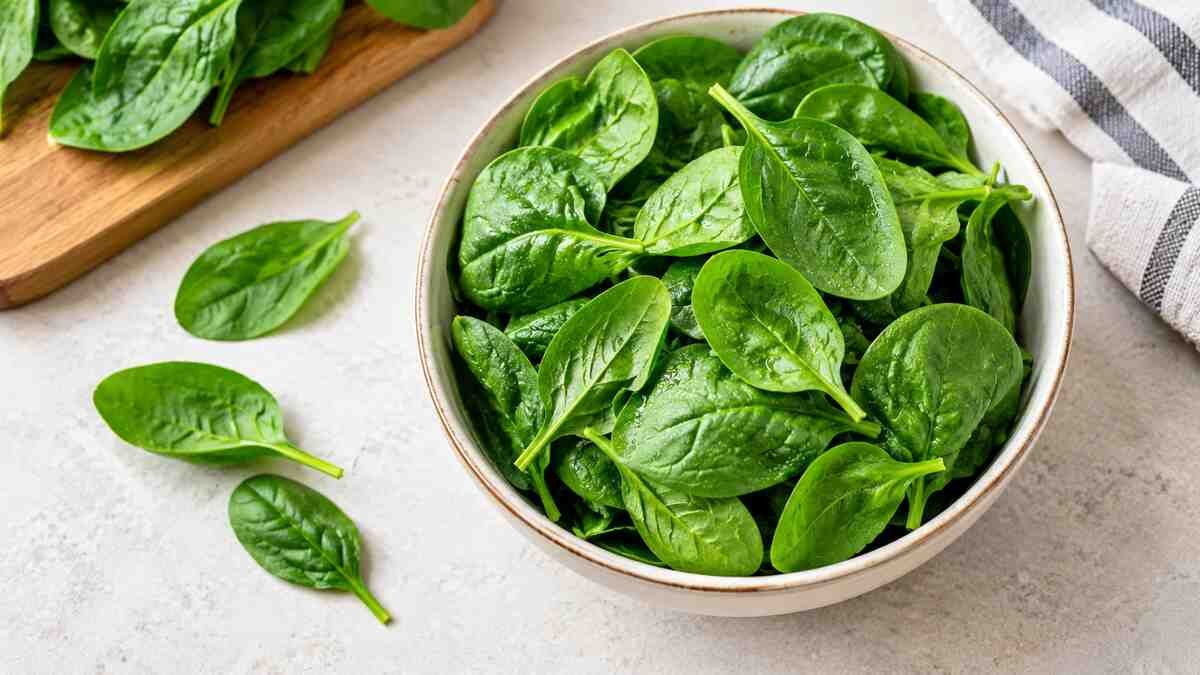

Spinach is a nutrient-rich leafy green that provides vitamins A, C, and K, folate, iron, magnesium, and other beneficial plant compounds. Eating it as part of a balanced diet can contribute to eye health, bone health, normal digestion, and healthy blood pressure while helping you meet your daily vegetable needs.
Is spinach good for you? For most people, yes. It is low in calories, easy to eat raw or cooked, and available fresh, frozen, or canned year-round. It belongs to the dark green vegetable group that the Dietary Guidelines for Americans encourage people to eat regularly.
This guide covers what spinach contains, ten ways it may support health, and how raw and cooked spinach compare. It also explains who should be careful with spinach, including people who take warfarin or are prone to kidney stones. Spinach is nutritious, but it does not replace medical treatment or a varied diet.
What Is Spinach?
Spinach (Spinacia oleracea) is a leafy green vegetable believed to have originated in ancient Persia. It grows in cool weather and is harvested for its tender, dark green leaves. Baby spinach is picked young and has a mild flavor, while mature spinach has larger leaves and a stronger taste.
People use spinach in salads, soups, curries, omelets, pasta, smoothies, and many cooked dishes. Fresh spinach cooks down to a small fraction of its original volume, so a large bag of leaves becomes only a few spoonfuls once wilted. Frozen spinach is usually blanched and frozen soon after harvest, and it keeps well for months.
Spinach is considered nutrient-dense because it provides many vitamins and minerals for very few calories. Nutrient levels vary by variety, freshness, and preparation. For other foods in this category, see our guide to nutrient-dense foods.
Spinach Nutrition Facts
The table below shows approximate amounts for one cup of raw spinach (about 30 grams) and one half cup of boiled, drained spinach (about 90 grams), based on USDA FoodData Central and the NIH Office of Dietary Supplements (ODS) fact sheets. Values are rounded and vary by variety and preparation.
| Nutrient | Raw (1 cup) | Cooked (½ cup) | Why it matters |
|---|---|---|---|
| Calories | 7 kcal | 21 kcal | Very low energy density |
| Vitamin K | 145 mcg | 444 mcg | Normal blood clotting and bone health |
| Vitamin A (as beta-carotene) | 141 mcg RAE | 573 mcg RAE | Vision, immune function, healthy skin |
| Folate | 58 mcg DFE | 131 mcg DFE | DNA synthesis and cell division |
| Vitamin C | 8 mg | 9 mg | Collagen formation and iron absorption |
| Iron | 0.8 mg | 3.2 mg | Hemoglobin production and oxygen transport |
| Magnesium | 24 mg | 78 mg | Muscle, nerve, and energy functions |
| Potassium | 167 mg | 420 mg | Muscle function and blood pressure regulation |
| Fiber | 0.7 g | 2.2 g | Digestive health and bowel regularity |
Cooked spinach shows higher numbers per serving, but cooking does not add nutrients. A half cup of cooked spinach simply contains much more spinach than a cup of raw leaves, because water cooks out and the leaves collapse.
Spinach contains non-heme iron, the form found in plants, which is absorbed less efficiently than heme iron from animal foods. The NIH ODS iron fact sheet explains that vitamin C and other dietary factors affect how much is absorbed.
10 Health Benefits of Spinach
The benefits below connect spinach’s nutrients to established functions in the body. Studies of vegetable-rich diets often show links to better health, but they cannot prove that spinach alone causes any particular outcome.
1. Supports Healthy Eyesight
Spinach is a good source of lutein and zeaxanthin, two carotenoids found in the retina, along with beta-carotene, which the body converts to vitamin A. Vitamin A is essential for normal vision, as described in the NIH vitamin A fact sheet.
Diets rich in lutein and zeaxanthin have been linked to a lower risk of some age-related eye problems, though most of this evidence is observational. The National Eye Institute’s AREDS2 research studied lutein and zeaxanthin as supplements in people already at risk of advanced age-related macular degeneration, so those findings do not directly show that eating spinach prevents eye disease. See an eye care professional about any change in your vision.
2. Helps Maintain Strong Bones
Vitamin K helps the body produce proteins involved in bone metabolism, and spinach provides a large amount of it. Spinach also contains magnesium and small amounts of calcium, both found in bone tissue. The NIH vitamin K fact sheet describes these roles, and notes that evidence linking vitamin K intake to fracture prevention is still limited.
Bone health also depends on adequate calcium, vitamin D, protein, physical activity, and genetics. Spinach is high in oxalate, which binds calcium, so very little of its calcium is absorbed (see the NIH calcium fact sheet). Do not rely on it as a main calcium source. Our list of calcium-rich foods offers better options.
3. Contributes to Heart Health
Spinach provides potassium, folate, magnesium, fiber, and dietary nitrates, which can all play a part in a heart-healthy eating pattern. Fresh and frozen plain spinach is also low in calories, sodium, and saturated fat. The NIH potassium and magnesium fact sheets describe how these minerals support normal heart and muscle function, and the Dietary Guidelines for Americans outline vegetable-rich eating patterns associated with better health outcomes.
No single vegetable can prevent heart disease. Spinach works best as one part of a pattern that includes whole grains, legumes, fish, healthy fats, physical activity, and medical care. Read more in our guide to the best vegetables for heart health.
4. Supports Healthy Digestion
Spinach contributes fiber and water, which support normal bowel function. Fiber helps bowel regularity and digestive health, as the Harvard Nutrition Source explains. Raw spinach is light, so one cup provides only about 0.7 grams of fiber, which is less than many people expect. Cooked spinach provides more per serving because it is more concentrated.
Spinach is best viewed as a helpful addition to a high-fiber diet rather than a main fiber source. For stronger sources, see our guide to high-fiber foods for digestive health and the health benefits of legumes.
5. Provides Nutrients for Healthy Blood
Iron is needed to make hemoglobin, the protein in red blood cells that carries oxygen, and folate is needed to form new red blood cells. Spinach provides both. A half cup of cooked spinach contains about 3 mg of iron. See the NIH ODS fact sheets on iron and folate.
Because plant iron is absorbed less efficiently and spinach contains oxalates that further limit absorption, spinach should not be relied on to treat iron-deficiency anemia. If you suspect low iron, talk with a healthcare professional. See our guides to iron-rich foods and vegetables high in iron.
6. Supports Normal Immune Function
Vitamin A helps maintain the skin and the lining of the airways and gut, which act as barriers to germs, and vitamin C also contributes to normal immune function. Spinach supplies both, though its vitamin C content is modest compared with citrus fruits or peppers. See the NIH fact sheets on vitamin A and vitamin C.
The immune system depends on adequate overall nutrition, sleep, physical activity, and many other factors. Spinach supports these needs but cannot prevent infections on its own.
7. May Support Healthy Blood Pressure
Potassium helps balance sodium in the body and supports normal blood pressure. Spinach is also rich in dietary nitrates, which the body can convert into nitric oxide, a molecule that helps blood vessels relax. Some small studies have found modest blood pressure effects from nitrate-rich vegetables, but results are mixed and more research is needed.
The overall dietary pattern matters most. The DASH eating plan from the National Heart, Lung, and Blood Institute emphasizes vegetables, fruits, whole grains, and low-fat dairy. For more, see our guides to high blood pressure and potassium-rich vegetables.
8. Provides Antioxidants
Spinach contains carotenoids, vitamin C, flavonoids, and other plant compounds that act as antioxidants. In laboratory settings, antioxidants help protect cells from oxidative damage caused by unstable molecules called free radicals.
Laboratory findings do not always translate into proven disease prevention in people. The National Center for Complementary and Integrative Health notes that studies of antioxidants have produced mixed results, and the Harvard Nutrition Source summarizes the broader evidence on vegetables and health. It is more accurate to say that spinach adds variety and nutrients to your diet. To learn more, read our overview of antioxidant-rich foods.
9. Fits Into a Weight-Management Diet
Spinach is very low in calories and adds volume, color, and nutrients to meals. Replacing some higher-calorie ingredients with spinach, such as adding it to pasta, omelets, or sandwiches, can make dishes more filling. The Dietary Guidelines for Americans recommend filling more of your plate with vegetables.
Weight management depends on overall eating patterns, energy balance, activity, sleep, and other factors, not on any single food. See our guide to weight management for more.
10. Supports Healthy Skin and Normal Cell Function
Vitamin A supports normal skin maintenance, and vitamin C is required for collagen formation, which gives skin its structure (see the NIH fact sheets on vitamin A and vitamin C). Folate supports normal cell division and repair throughout the body.
Spinach cannot erase wrinkles or treat skin conditions. Good skin health also depends on sun protection, sleep, hydration, and genetics. Spinach is simply one of many foods that contribute the nutrients skin needs.
Is Raw or Cooked Spinach Healthier?
Both raw and cooked spinach can be nutritious choices, and each has advantages.
- Raw spinach retains more of the heat-sensitive vitamin C and folate. It is convenient for salads, sandwiches, wraps, and smoothies.
- Cooked spinach shrinks dramatically, so you can eat a larger amount in one serving. Cooking can also make some nutrients, such as certain carotenoids, easier for the body to absorb.
- Oxalates: Boiling can reduce the oxalate content of spinach, though some water-soluble vitamins and minerals, including potassium, leach into the cooking water.
- Fat helps absorption: Lightly sautéing spinach with a little olive oil can improve absorption of fat-soluble carotenoids and vitamin K.
- Limiting losses: Steaming, microwaving briefly, or adding the cooking liquid to soups helps limit nutrient losses.
A mix of raw and cooked spinach is a practical approach. Frozen spinach is a good, affordable option; see our article on whether frozen vegetables are healthy. For more comparisons, read about raw vs. cooked vegetables.
Potential Side Effects and Who Should Be Careful
Spinach is safe for most people, and there is no reason for the general public to avoid it. A few situations call for extra attention.
- Kidney stones: Spinach is very high in oxalates, which can bind with calcium and contribute to calcium oxalate kidney stones in people who are prone to them. The NIDDK provides dietary guidance for people with a history of stones, and individual advice depends on your situation and the type of stone.
- Warfarin: Spinach is rich in vitamin K, which affects blood clotting and can interact with the blood thinner warfarin (see the NIH vitamin K fact sheet). People taking warfarin should keep their vitamin K intake consistent from week to week and talk with their clinician before making major dietary changes. They do not need to avoid spinach automatically.
- Iron absorption: Oxalates and other compounds limit how much iron the body absorbs from spinach. Eating spinach with a source of vitamin C, such as tomatoes or lemon juice, can help.
- Food safety: Fresh leafy greens can carry harmful bacteria. The FDA recommends washing produce under running water, refrigerating it promptly, and discarding spoiled leaves. Bagged greens labeled as pre-washed or ready-to-eat do not need rewashing. See our guide to how to wash and store vegetables.
If you have a medical condition, a restricted diet, or unusual symptoms after eating spinach, ask a healthcare professional or registered dietitian for personalized advice.
How to Add More Spinach to Your Diet
Spinach is easy to use in everyday meals and works for many budgets and cooking styles.
- Add it to omelets, lentil dishes, soups, and vegetable curries.
- Mix fresh leaves into salads and sandwiches.
- Stir it into rice dishes, pasta, or cooked vegetables.
- Blend a handful into a smoothie with fruit and yogurt.
- Keep frozen spinach on hand for quick meals.
- Pair spinach with vitamin C foods, such as tomatoes or lemon juice, to help absorb plant-based iron. See our list of vegetables high in vitamin C.
Variety is better than relying on spinach alone, so rotate it with kale, chard, bok choy, and other greens. Our guide on how to eat more vegetables offers more strategies, and the health benefits of broccoli is another good companion read.
How Much Spinach Should You Eat?
There is no single required amount of spinach for everyone. A handful of raw leaves, or about a half cup of cooked spinach, is a practical serving for many adults. Spinach counts toward the dark green vegetable subgroup in the Dietary Guidelines for Americans. On MyPlate, raw leafy greens count at half volume, so 2 cups of raw spinach equal 1 cup-equivalent of vegetables, while 1 cup of cooked spinach equals 1 cup-equivalent.
You can eat spinach several times a week or even daily as part of a varied diet. People who take warfarin or have a history of calcium oxalate kidney stones may need individualized guidance about how much to eat.
Frequently Asked Questions About Spinach
Is spinach good for you?
Yes. Spinach is a nutrient-dense leafy green that provides vitamins, minerals, fiber, and beneficial plant compounds. It can contribute to a balanced diet and support normal body functions. The Harvard Nutrition Source discusses the benefits of eating a variety of vegetables.
What are the main health benefits of spinach?
Spinach supplies nutrients that support eye health, bone health, normal blood pressure, digestion, and red blood cell production. These benefits are best understood as part of an overall healthy eating pattern, not as effects of spinach alone.
Is it better to eat spinach raw or cooked?
Both are nutritious. Raw spinach retains more heat-sensitive nutrients such as vitamin C and folate. Cooking reduces its volume and can improve the availability of certain carotenoids, so a mix of both is a practical choice.
Does spinach contain iron?
Yes. Spinach provides non-heme iron, the form found in plant foods. Absorption is limited by oxalates and other plant compounds, so pairing it with vitamin C-rich foods can help, as noted by the NIH Office of Dietary Supplements.
Can you eat spinach every day?
Many people can enjoy spinach regularly as part of a varied diet. Those taking warfarin or managing kidney stone risk should seek individualized guidance about their intake.
Can spinach help with weight loss?
Spinach is low in calories and can add volume and nutrients to meals. It may support a weight-management plan, but weight loss depends on overall eating patterns, activity, and energy balance.
Is frozen spinach as healthy as fresh?
Frozen spinach is typically processed soon after harvest and retains most of its vitamins and minerals. It may have slightly less vitamin C than very fresh leaves, but it is convenient, affordable, and nutritious.
Final Thoughts
Spinach offers vitamin K, folate, vitamin A precursors, iron, magnesium, potassium, and plant compounds, all for very few calories. Raw or cooked, fresh or frozen, it can fit into many meals. How you prepare it influences nutrient availability, so mix up your methods and eat other leafy greens too.
Enjoy spinach as part of a balanced approach to eating; our guide to a balanced diet can help you build one. If you take warfarin or have a history of kidney stones, follow your healthcare professional’s advice.
Sources
- U.S. Department of Agriculture. FoodData Central
- NIH Office of Dietary Supplements. Iron; Vitamin K; Vitamin A; Vitamin C; Folate; Potassium; Magnesium; Calcium (Fact Sheets for Health Professionals)
- National Heart, Lung, and Blood Institute. DASH Eating Plan
- National Institute of Diabetes and Digestive and Kidney Diseases. Eating, Diet, and Nutrition for Kidney Stones
- National Eye Institute. Age-Related Eye Disease Studies (AREDS/AREDS2)
- U.S. Food and Drug Administration. Selecting and Serving Produce Safely
- U.S. Department of Agriculture and U.S. Department of Health and Human Services. Dietary Guidelines for Americans; USDA MyPlate: Vegetables
- Harvard T.H. Chan School of Public Health, The Nutrition Source. Vegetables and Fruits; Fiber
- National Center for Complementary and Integrative Health. Antioxidants: In Depth
Medical Disclaimer: This article is for general educational purposes only and is not medical advice. It does not diagnose, treat, or replace guidance from a qualified healthcare professional who knows your health history. Talk with your doctor or a registered dietitian before changing your diet, especially if you take blood thinners such as warfarin, have a history of kidney stones, or have a condition that affects what you can eat. If you think you may be having a medical emergency, call 911 or your local emergency number right away.