
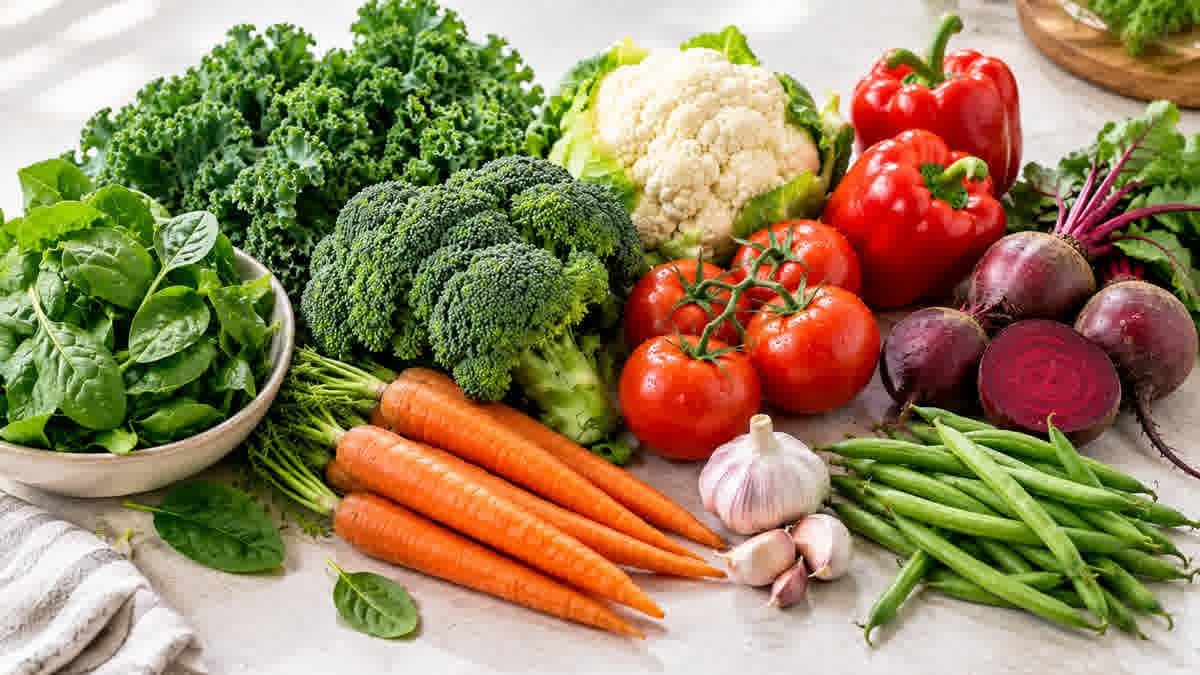

Leafy greens, broccoli, tomatoes, carrots, beets, and many other vegetables can all contribute to a heart-healthy eating pattern. No single vegetable can prevent or reverse heart disease on its own. What matters most is eating a wide variety of vegetables regularly, as part of an overall diet that is also low in excess sodium and rich in other nutritious foods.
Vegetables provide fiber, potassium, folate, vitamins, and other beneficial plant compounds, and most are naturally low in saturated fat and calories. The American Heart Association (AHA) encourages filling half your plate with fruits and vegetables, and notes that fresh, frozen, and canned produce can all count toward your goal. Eating a variety also helps you take in a wider range of nutrients. For a broader look at the whole diet, see our guide to heart-healthy foods.
This guide explains what makes a vegetable a good choice for your heart, profiles 15 practical options (including familiar South Asian favorites like okra, cabbage, and eggplant), and shares tips on blood pressure, cooking methods, and sodium. It is general information, not personal medical advice, so people with heart disease, kidney disease, or special dietary restrictions should follow their healthcare team’s guidance.
What Makes a Vegetable Good for Heart Health?
Vegetables support heart health mainly through the nutrients they provide and the foods they replace in the diet. The sections below cover the main factors researchers and guideline groups discuss.
Fiber and cholesterol
Most vegetables contain dietary fiber, and diets rich in fiber-containing foods are associated with cardiovascular benefits. The evidence is more specific for soluble fiber, which is found in some vegetables, beans, oats, and fruits and can modestly lower LDL (“bad”) cholesterol. Because vegetables differ in the type and amount of fiber they contain, variety is a sensible approach.
Learn more about high-fiber foods and about cholesterol and heart health.
Potassium and blood pressure
Potassium helps the body manage sodium and blood pressure, and many vegetables are good sources. The National Heart, Lung, and Blood Institute (NHLBI) notes that the DASH eating plan is rich in potassium from fruits and vegetables. A caution applies here: people with kidney disease, or those taking medicines that affect potassium levels, may need to limit potassium and should get individualized advice before changing their diet.
Plant compounds and antioxidants
Vegetables contain vitamins, minerals, and naturally occurring plant compounds such as carotenoids and flavonoids. These substances are studied for their roles in overall health. However, research on individual compounds does not prove that they treat or prevent heart disease, and supplements do not replace the benefits of whole foods. You can read more about antioxidant-rich foods on our site.
The importance of dietary patterns
Heart health depends on your whole eating pattern, not just on vegetables. Sodium intake, cooking methods, added fats, and the foods served alongside vegetables all matter. A vegetable dish loaded with salt, butter, or fried batter is very different from the same vegetable steamed with herbs.
15 Best Vegetables for Heart Health
These vegetables are widely available and versatile. The list is not a ranking, and no single item is a cure or a treatment. Aim for variety across the week.
1. Spinach
Spinach provides folate, potassium, magnesium, and fiber with very few calories. Add it to soups, dals, omelets, or lightly cooked side dishes. Cooking reduces its volume, so a small bag can go a long way. For more detail, read about the benefits of leafy green vegetables.
2. Kale and other leafy greens
Kale, collards, mustard greens, and amaranth leaves supply a range of vitamins and minerals, including vitamin K and vitamin C. Choose what is fresh and affordable where you live. Saute lightly with garlic, add to stews, or blend into mixed vegetable dishes.
3. Broccoli
Broccoli is a good source of fiber and vitamin C. Steam, roast, or lightly stir-fry it to keep its texture and color. Try it with lemon juice and spices instead of heavy sauces. See our guide to cruciferous vegetables for related options.
4. Tomatoes
Tomatoes contribute potassium, vitamin C, and lycopene, a carotenoid that gives them their red color. Use fresh tomatoes in salads, soups, and vegetable curries. Check labels on canned tomatoes and sauces, since some contain a lot of added sodium.
5. Carrots
Carrots provide fiber and carotenoids, including beta-carotene. Eat them raw as a snack, steamed as a side, or lightly roasted. They also add natural sweetness to soups and stews, which can help reduce the need for added sugar or salt.
6. Beets
Beets contain dietary nitrates, which researchers study for their effects on blood vessel function and blood pressure. Study results vary, and beets should not replace prescribed treatment. Enjoy them roasted, grated in salads, or cooked in curries. See our articles on beetroot health benefits and beetroot for high blood pressure.
7. Red bell peppers
Red bell peppers are rich in vitamin C and carotenoids. Slice them raw for salads and snacks, or add them to stir-fries and roasted vegetable trays. Their natural sweetness and crunch make low-sodium meals more satisfying.
8. Cauliflower
Cauliflower offers fiber and vitamin C. It works in soups, curries, roasted dishes, and mixed vegetable meals. Season it with turmeric, cumin, or black pepper rather than extra salt. It also keeps well, which helps reduce waste.
9. Cabbage
Cabbage supplies fiber and vitamin C at a low price. Eat it fresh in slaws, steamed, or lightly cooked in stir-fries and soups. Red cabbage adds color and a different mix of plant compounds. Avoid heavy mayonnaise-based dressings if you are watching saturated fat.
10. Garlic
Garlic is valued in cooking, and some studies suggest modest effects on blood pressure or cholesterol in certain groups. The evidence is mixed, and garlic does not replace medication. Use it to add flavor so you can use less salt. See our article on garlic for high blood pressure.
11. Onions
Onions contain plant compounds such as flavonoids and are a flavorful base for many dishes. Cooking with onions, garlic, and spices can help you build taste without relying on salt. Sauteing them in a small amount of unsaturated oil works well.
12. Okra
Okra provides fiber and is common in soups, stews, and vegetable curries. Its sticky texture is natural and can thicken dishes. Lightly saute, roast, or simmer it rather than deep-frying it, which adds fat and calories.
13. Eggplant
Eggplant offers fiber and soaks up spices well. Grill, roast, or saute it with a moderate amount of unsaturated oil, such as olive or canola oil. Because it absorbs oil easily, measuring your oil helps keep the dish heart-friendly.
14. Green beans
Green beans provide fiber and are easy to add to mixed meals or serve as a simple side. Steam or saute them with garlic and lemon. Plain frozen green beans are a convenient year-round option.
15. Sweet potatoes
Sweet potatoes provide fiber and potassium. They are also a source of carbohydrates, so they fit best as one part of a varied meal alongside non-starchy vegetables and protein. They are a nutritious choice, but they are not uniquely superior to other vegetables.
You can find more ideas in our guide to the benefits of eating vegetables daily. If you also manage blood sugar, our list of the best vegetables for diabetes may help.
Which Vegetables May Help Support Healthy Blood Pressure?
Many vegetables can be part of an eating pattern that supports healthy blood pressure, especially when combined with less sodium and an active lifestyle. No single vegetable acts as a treatment. For more on this topic, see our guides on high blood pressure and how to lower blood pressure.
Potassium-rich choices
Spinach, tomatoes, potatoes, sweet potatoes, and many other vegetables contain potassium. The NHLBI’s DASH eating plan is rich in potassium from fruits and vegetables. Getting potassium from food is generally preferred over supplements or salt substitutes unless a healthcare professional advises otherwise.
Vegetables in the DASH eating plan
DASH stands for Dietary Approaches to Stop Hypertension. It emphasizes vegetables (about four to five servings a day on a 2,000-calorie plan), fruits, whole grains, low-fat dairy, fish, poultry, beans, nuts, and vegetable oils. It also limits saturated fat, sweets, and sodium. The NHLBI notes that lowering sodium to 1,500 mg a day lowers blood pressure even further than 2,300 mg a day.
What about beets and leafy greens?
Beets and leafy greens such as spinach are naturally high in dietary nitrates. Researchers are interested in how nitrates affect blood vessel function and blood pressure. Findings from studies on individual foods do not establish a treatment, so think of these vegetables as helpful parts of a balanced diet.
A safety consideration
People with kidney disease, heart failure, or those taking certain medicines (such as some blood pressure medicines that raise potassium levels) may need to limit high-potassium foods. Ask your doctor or dietitian before deliberately eating more potassium-rich vegetables.
How to Prepare Vegetables for a Heart-Healthy Diet
How you cook and season vegetables can change their effect on your overall diet. These tips are general, so adapt them to your preferences and medical needs.
Choose simple cooking methods
Steaming, roasting, grilling, boiling, and light sauteing all work well. Pick methods you enjoy, because you are more likely to keep eating vegetables you like. Raw is not always better than cooked, and our guide to raw vs. cooked vegetables explains why both have a place.
Reduce excess sodium
Season vegetables with herbs, spices, garlic, ginger, lemon juice, or vinegar instead of extra salt. Pickled vegetables, some canned vegetables, and ready-made sauces can contain substantial sodium. Check the Nutrition Facts label and compare products.
Choose fats thoughtfully
When you add fat, choose unsaturated vegetable oils, such as olive, canola, or sunflower oil, in modest amounts. These are generally preferred over butter, ghee, or other fats high in saturated fat. Read more about healthy fats and the Mediterranean diet.
Fresh, frozen, or canned?
All three can be practical. The AHA says canned, fresh, and frozen produce all count toward your daily goal. Choose frozen vegetables without added sauces and canned vegetables labeled low sodium or no salt added, and rinse canned items to remove some sodium. Our article on frozen vegetables covers this in more detail. To reduce waste, see how to wash and store vegetables.
How Many Vegetables Should You Eat for Heart Health?
The AHA suggests filling half your plate with fruits and vegetables, with a general target of about 2 1/2 cups of vegetables per day. Your personal needs may differ based on your age, calorie needs, and health conditions.
Make vegetables a regular part of meals
Add vegetables at lunch and dinner, and look for ways to include them at breakfast and in snacks. Examples include spinach or peppers in eggs, vegetable soup, and carrot or cucumber sticks. Our guide on how to eat more vegetables offers more ideas.
Aim for variety
Rotate leafy greens, cruciferous vegetables, colorful vegetables such as carrots and peppers, and seasonal local options. Different colors tend to provide different nutrients, so variety is more useful than focusing on one “best” vegetable.
Build a balanced plate
A simple example: fill half your plate with vegetables, a quarter with whole grains or another fiber-rich carbohydrate food (such as brown rice, whole wheat roti, or lentils), and a quarter with a protein source such as fish, beans, tofu, eggs, or skinless poultry. Add a small amount of unsaturated oil for cooking.
Adapt to your needs
People with kidney disease, heart failure, or prescribed limits on potassium, sodium, or fluids should follow their healthcare professional’s advice. The right amount and type of vegetables can differ from the general guidance above.
Frequently Asked Questions About Vegetables for Heart Health
What is the best vegetable for heart health?
No single vegetable is best. Leafy greens, broccoli, tomatoes, carrots, and others each provide different nutrients. Eating a variety as part of a balanced diet is the approach recommended by the American Heart Association.
Which vegetables are good for blood pressure?
Potassium-containing vegetables such as spinach, tomatoes, and sweet potatoes can be part of an eating pattern that supports healthy blood pressure. They work best alongside less sodium, as in the DASH eating plan. People with kidney disease should ask their doctor first.
Are leafy greens good for your heart?
Leafy greens are nutrient-dense and low in calories, and they provide folate, potassium, and fiber. They can be a useful part of a heart-healthy diet. They are not a treatment, and people taking warfarin should keep vitamin K intake consistent and ask their doctor.
Are tomatoes good for heart health?
Tomatoes provide potassium, vitamin C, and lycopene, and they fit well into a heart-healthy eating pattern. Choose fresh tomatoes or low-sodium canned products, since some sauces and canned tomatoes contain a lot of added salt.
Are beets good for blood pressure?
Beets contain dietary nitrates, which researchers study for effects on blood vessels and blood pressure. Results vary between studies. Beets can be included in a balanced diet, but they should not replace prescribed treatment for high blood pressure.
Are frozen vegetables as healthy as fresh vegetables?
Frozen vegetables can be just as nutritious and are often more convenient and affordable. The AHA says they count toward your daily goal. Choose plain varieties without added sauces or excess sodium.
Conclusion
The best approach to vegetables for heart health is variety and consistency. Eat a mix of leafy greens, cruciferous vegetables, colorful options, and local seasonal choices, and prepare them with minimal salt and sensible fats.
Start with one or two small changes, such as adding greens to a meal, using herbs instead of extra salt, or trying a new vegetable this week. Food choices complement appropriate medical care and do not replace it. For a full overview, explore our guide to heart-healthy foods.
Sources
- American Heart Association. How to Eat More Fruit and Vegetables
- National Heart, Lung, and Blood Institute. DASH Eating Plan
- U.S. Department of Agriculture. FoodData Central
Medical Disclaimer: This article is for general educational purposes only and is not medical advice. It does not replace guidance from your doctor, dietitian, or other healthcare professional. If you have heart disease, high blood pressure, kidney disease, or take prescription medicines, please talk with your healthcare team before changing your diet. If you have chest pain, trouble breathing, or other urgent symptoms, call emergency services right away.
10 thoughts on “15 Best Vegetables for a Healthy Heart”
Comments are closed.