
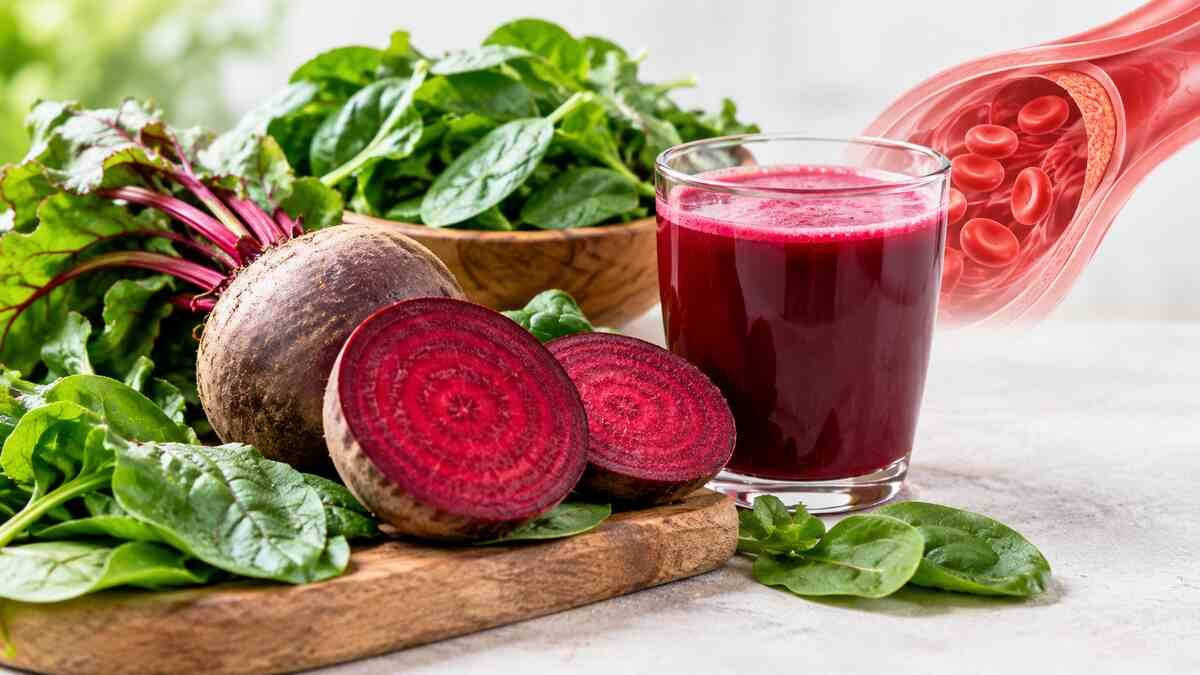

Nitrate-rich vegetables, especially beets and leafy greens like spinach, are drawing growing attention from nutrition and heart health researchers. Studies suggest the nitrate in these foods may help blood vessels relax, which could support healthy blood flow and, on average, slightly lower blood pressure. The idea is promising, but it is also easy to oversell.
Here is how it works in simple terms. Your body can convert dietary nitrate into nitrite and then into nitric oxide, a molecule that helps blood vessel walls relax and widen. This process is well described in laboratory and human physiology research, and it explains why scientists study beetroot juice and leafy greens so closely.
The central question is how much of this promise holds up in human trials. This guide explains what nitrate-rich vegetables are, how the nitrate-to-nitric oxide pathway works, what recent research shows, and where the evidence is still developing. It also offers practical ways to eat more of these vegetables as part of a balanced diet.
Important: This article is for general education and is not personal medical advice. Talk with your healthcare professional before using concentrated beetroot products or changing any blood pressure treatment.
What Are Nitrate-Rich Vegetables?
Nitrate is a naturally occurring compound made of nitrogen and oxygen. Plants absorb it from the soil as they grow and use it to build proteins. According to the U.K. Food Standards Agency, most of the nitrate in our diets comes from vegetables, especially leafy greens such as spinach, lettuce, and arugula (also called rocket), along with beetroot and celery.
These are the vegetables most often discussed as natural sources of nitric oxide precursors. The table below summarizes them in general terms. Exact nitrate amounts are not listed because they vary widely.
| Vegetable | Why it matters for nitrate | Practical note |
|---|---|---|
| Beets | Root vegetable commonly studied in nitrate research | Eat roasted, steamed, or raw; juice is a more concentrated form |
| Spinach | Leafy green that can be a significant source | Easy to add to soups, eggs, and curries |
| Arugula | Peppery leafy green often noted as nitrate-rich | Works well raw in salads and on sandwiches |
| Lettuce | Common leafy vegetable with variable nitrate content | Darker leaf types add more nutrients |
| Celery | Crunchy stalk vegetable listed among nitrate sources | Good raw, in soups, or in stir-fries |
Nitrate content is not fixed. It can differ with the plant variety, growing conditions, which part of the plant is eaten, storage, and preparation. Food-safety researchers note that nitrate tends to accumulate in leaves, roots, and stems of certain plants, which is why leafy vegetables and beets rank high.
It also helps to separate vegetable nitrate from the nitrates and nitrites used to cure processed meats. The two are chemically similar, but their effects in the body can differ because of the other compounds in each food. Harvard Health notes that leafy greens also provide fiber, vitamin B6, and potassium, which may add to their heart benefits.
For more vegetable options, see our guide to the best vegetables for heart health.
How Dietary Nitrate May Improve Blood Flow
The biology starts in your mouth. When you eat nitrate-rich vegetables, some nitrate is absorbed and then concentrated in saliva. Bacteria that live on the tongue convert it to nitrite.
Nitrite is swallowed and can be further converted into nitric oxide in the stomach and in the bloodstream and tissues. A review of the oral microbiome and vascular function describes these bacteria as an important link in this pathway, although it also notes that much remains unknown about differences between individuals. Some research suggests that strong antibacterial mouthwash may reduce nitrite production, as discussed in this review of oral and gut nitrate-reducing bacteria. Ask your dentist or doctor before changing your oral care routine.
Once nitric oxide forms, it signals the smooth muscle in blood vessel walls to relax. This widening is called vasodilation. It can lower resistance to blood flow and may help reduce blood pressure. To learn more, read our explainer on how nitric oxide affects blood vessels.
Nitric oxide is also tied to endothelial function. The endothelium is the thin layer of cells lining your blood vessels, and it helps control vessel tone, clotting, and inflammation. A review of human intervention studies found promising effects of dietary nitrate on blood pressure and endothelial function, while calling for longer trials in people with hypertension or higher cardiovascular risk.
In theory, better vessel relaxation could improve circulation, blood pressure, and oxygen delivery to working muscles. That is why dietary nitrate is also studied in sport. But a plausible mechanism does not guarantee a meaningful clinical benefit for everyone. Age, health status, medications, oral bacteria, and overall diet may all influence how a person responds.
Beets and Beetroot Juice: What the Research Shows
Beetroot is the most studied nitrate source because it is easy to standardize in juice form. Researchers can give participants a measured dose and compare it with a placebo juice that has had its nitrate removed.
A 2017 meta-analysis in Advances in Nutrition pooled 22 randomized trials of beetroot juice. It found average reductions of about 3.55 mm Hg in systolic blood pressure and 1.32 mm Hg in diastolic blood pressure compared with control groups. The effect was larger in longer studies and at higher juice doses. An earlier 2013 meta-analysis in the Journal of Nutrition also reported lower systolic pressure with inorganic nitrate and beetroot juice, but its authors noted that the trials were small and short, and that longer studies in higher-risk people were needed.
Whole beets and beetroot juice are not the same. Juice and concentrated shots deliver a larger, faster dose of nitrate with less fiber. Whole beets provide fiber and a lower amount per serving, so study results on juice may not translate directly to a plate of roasted beets. Our article on the health benefits of beets covers whole-food options, and beetroot for high blood pressure looks closer at that question.
Exercise performance is a related but separate outcome. Some studies suggest nitrate may improve exercise efficiency or certain performance measures, but results depend on the population, the dose, and the type of activity. Better exercise results do not automatically mean better long-term heart health.
Beets should not be presented as a treatment for hypertension, and they have not been shown to prevent heart attacks on their own. Study protocols, doses, and participants vary widely, so averages hide a lot of individual variation.
Spinach and Other Leafy Greens: An Overlooked Source
Leafy greens often get less attention than beetroot juice, yet they are among the largest contributors of nitrate in typical diets. Spinach, arugula, lettuce, and other greens can all contribute, and celery adds a crunchy option.
Greens bring more than nitrate. Spinach provides folate, fiber, potassium, magnesium, and other micronutrients. The nitrate in a whole leafy vegetable arrives along with these nutrients and with plant compounds that may influence how nitrate is handled in the body.
Large observational studies have linked higher leafy green intake with lower cardiovascular risk. A 2024 systematic review in Nutrients noted that analyses of the Nurses’ Health Study and the Health Professionals Follow-up Study showed a particularly strong inverse association between green leafy vegetable intake and cardiovascular disease risk. That kind of evidence shows an association, not proof that nitrate is the reason.
It is also wise not to treat whole vegetables as interchangeable with isolated nitrate supplements. A spinach salad and a concentrated nitrate shot differ in dose, speed of absorption, and nutrient package. Whole foods fit more easily into everyday eating.
You can explore more in our guides to the health benefits of spinach and leafy greens and heart health.
Emerging Research: What Scientists Are Discovering
The strongest recent summary of trial evidence is a 2025 systematic review and dose-response meta-analysis in Nutrition Journal. It included 75 randomized controlled trials with 1,823 participants and examined dietary nitrate, plasma nitrate and nitrite, blood pressure, and vascular health markers.
The analysis found dose-dependent rises in plasma nitrate and nitrite, along with small reductions in blood pressure for each additional millimole of nitrate. For systolic pressure, the pooled changes were roughly 0.24 to 0.48 mm Hg per millimole across acute, short-term, and medium-term periods. The review also reported modest improvements in some vascular measures, including pulse wave velocity (a marker of arterial stiffness) and flow-mediated dilation (a marker of endothelial function) in medium-term trials.
These are average effects, and they are small per unit of nitrate. The authors called for further high-quality, population-specific studies with optimized dosing to strengthen the certainty of the evidence. A 2024 umbrella review in the Journal of Functional Foods reached a similar conclusion: dietary nitrate may reduce blood pressure and enhance vascular health, but dose-response, long-term safety, and adherence need more study.
A 2026 randomized trial of acute beetroot doses shows how nuanced the findings can be. Arterial stiffness markers improved at all doses tested, but endothelial function improved only at the middle dose, and brachial (upper arm) blood pressure did not change.
Observational research adds context. The 2024 Nutrients review included five studies with 63,155 participants and found inverse associations between vegetable nitrate intake and most cardiovascular outcomes. Reported risk reductions tended to plateau at moderate intakes, which hints at a possible ceiling effect. The authors said further randomized trials were needed to confirm the findings.
Remember the difference between association and causation. People who eat more vegetables also tend to differ in other healthy habits. The honest summary is this: short-term improvements in blood pressure and vascular markers are encouraging, but long-term protection against heart attack or stroke from nitrate-rich vegetables alone is not established.
| Research area | How to interpret it |
|---|---|
| Nitric oxide production | A well-established biological pathway linking dietary nitrate to vascular function |
| Blood pressure | Trials and meta-analyses suggest modest average reductions; individual responses vary |
| Endothelial function | Promising findings, including improvements in some vascular measures |
| Exercise performance | Possible benefits for efficiency and some outcomes; depends on population and activity |
| Long-term cardiovascular outcomes | Observational links are encouraging; definitive proof is limited |
How to Add More Nitrate-Rich Vegetables to Your Diet
You do not need a special protocol. The goal is to eat a variety of vegetables regularly, including nitrate-rich ones, within a balanced pattern. Nitrate content differs by food and preparation, and there is no proven universal therapeutic dose, so avoid chasing a specific number.
Easy ways to eat more spinach and greens
- Stir spinach into soups, omelets, lentil dishes, and curries near the end of cooking.
- Blend a handful into a smoothie with fruit.
- Use arugula as a base for salads, or add it to sandwiches, pasta, and pizza.
- Add lettuce and celery to wraps, salads, and stir-fries.
Easy ways to enjoy beets
- Roast beets with a little olive oil and herbs.
- Grate raw beets into salads and slaws.
- Blend cooked beets into smoothies or dips.
- Pair beet salads with beans, whole grains, or nuts for a more filling meal.
Preparation tips
- Nitrate dissolves in water, so boiling vegetables and discarding the water can lower nitrate content. Steaming, roasting, or using the cooking liquid in soups keeps more.
- Refrigerate cooked greens and purees promptly. Our guide to washing and storing vegetables explains safe handling, and raw vs. cooked vegetables compares preparation methods.
Variety matters more than any single vegetable. Our guides on how many vegetables you should eat a day and how to eat more vegetables can help you plan. For blood pressure, see vegetables that support healthy blood pressure and potassium-rich vegetables.
For a wider view of eating for your heart, explore heart-healthy foods and the Mediterranean diet. Vegetables also help with cholesterol, as our article on vegetables and cholesterol explains.
Safety, Limitations, and Who Should Seek Advice
Eating ordinary servings of vegetables is very different from using concentrated supplements. Whole vegetables are widely recommended, and naturally nitrate-rich vegetables are not considered inherently dangerous. Concentrated beetroot juice, powders, and shots deliver far more nitrate at once and have been studied less in everyday use.
Talk with a clinician before using concentrated beetroot products if:
- You take blood pressure medication, since additive effects on blood pressure are possible.
- You take nitrate-based heart medications or other drugs that widen blood vessels.
- You have significant kidney disease, a history of kidney stones, or other complex medical conditions. Beets and spinach also contain oxalates, which some people are advised to limit.
- You take a blood thinner such as warfarin. Leafy greens are rich in vitamin K, and clinicians generally advise keeping intake consistent.
Beeturia is a harmless, temporary pink or red tint in urine or stool after eating beets. It can look alarming, but it is common and usually not a sign of a problem. If you notice red urine and have not eaten beets, or if it comes with pain or other symptoms, contact a healthcare professional.
Finally, vegetables should complement prescribed treatment, not replace it. If you have high blood pressure, our guides on high blood pressure and how to lower blood pressure explain the broader picture.
Conclusion
Nitrate-rich vegetables such as beets, spinach, arugula, lettuce, and celery supply a compound that the body can convert into nitric oxide, which helps blood vessels relax. Human trials suggest modest average improvements in blood pressure and some vascular measures, though effects vary and long-term outcomes are not settled.
The best takeaway is practical. Include a variety of nitrate-rich vegetables in a balanced, heart-healthy pattern, along with regular activity, good sleep, and any treatment your clinician recommends. Talk to a healthcare professional if you have high blood pressure or take medication, especially before trying concentrated beetroot products.
Frequently Asked Questions
What vegetables are highest in nitrates?
Leafy greens such as spinach, arugula, and lettuce are typically among the highest, along with beetroot and celery. Nitrate content varies with growing conditions, variety, and storage, so exact amounts differ from one batch to the next. The U.K. Food Standards Agency lists these vegetables as the main dietary sources.
Do nitrate-rich vegetables improve blood circulation?
They may help blood vessels relax and widen, and trials show modest average improvements in blood pressure and some vascular measures. The effect varies from person to person, and it should not be viewed as a treatment for circulation problems. See a clinician about symptoms such as leg pain, numbness, or swelling.
Is spinach as good as beetroot for blood flow?
Both contain nitrate, but researchers have studied beetroot juice more closely because it is easy to dose in trials. Spinach and other leafy greens are a practical, nutrient-rich source, and large observational studies link leafy green intake with lower cardiovascular risk. Eating both gives you variety.
How long does beetroot juice take to affect blood pressure?
In acute studies, changes in nitrite and blood pressure can appear within hours. A meta-analysis of beetroot juice trials found somewhat larger reductions in studies lasting two weeks or longer. Timing and size of the effect vary with the dose and the person.
Can you eat nitrate-rich vegetables every day?
For most people, yes. Vegetables like spinach, lettuce, celery, and beets can be part of a normal daily diet. If you have kidney disease, a history of kidney stones, or take blood thinners or blood pressure medication, ask your healthcare professional what is right for you.
Are vegetable nitrates different from nitrates in processed meat?
They are chemically similar, but the foods they come in differ. According to Harvard Health, the body cannot tell the source apart, but other components in each food matter. Vegetables supply fiber, potassium, and other nutrients, while the U.K. Food Standards Agency points to processed meat itself, not nitrate alone, as the factor linked to higher bowel cancer risk.
Sources
- Norouzzadeh M, et al. Plasma nitrate, dietary nitrate, blood pressure, and vascular health biomarkers: a GRADE-assessed systematic review and dose-response meta-analysis of randomized controlled trials. Nutrition Journal. 2025.
- Tan L, et al. Associations between vegetable nitrate intake and cardiovascular disease risk and mortality: a systematic review. Nutrients. 2024.
- Norouzzadeh M, et al. The effects of dietary nitrate on blood pressure and vascular health: an umbrella review and updated meta-analysis. Journal of Functional Foods. 2024.
- James LJ, Clifford T, Bailey SJ. The dose-response effects of nitrate-rich beetroot ingestion on cardiovascular and endothelial function: a randomised controlled trial. Food & Function. 2026.
- Bahadoran Z, et al. The nitrate-independent blood pressure-lowering effect of beetroot juice: a systematic review and meta-analysis. Advances in Nutrition. 2017.
- Siervo M, et al. Inorganic nitrate and beetroot juice supplementation reduces blood pressure in adults: a systematic review and meta-analysis. Journal of Nutrition. 2013.
- Hobbs DA, George TW, Lovegrove JA. The effects of dietary nitrate on blood pressure and endothelial function: a review of human intervention studies. Nutrition Research Reviews. 2013.
- The role of dietary nitrate and the oral microbiome on blood pressure and vascular tone. Nutrition Research Reviews.
- Role of nitrate-reducing bacteria in the oral and gut microbiomes. Frontiers in Cellular and Infection Microbiology. 2025.
- U.K. Food Standards Agency. Nitrates and nitrites: the science explained. 2025.
- Harvard Health Publishing. Nitrates in food and medicine: what’s the story?
Medical Disclaimer: This article is for general information and education only. It is not medical advice and does not diagnose, treat, or prevent any condition. Blood pressure and circulation needs differ from person to person, so please talk with your doctor or another qualified healthcare professional before changing your diet, supplements, or medications. If you think you may be having a medical emergency, call 911 or your local emergency number.