
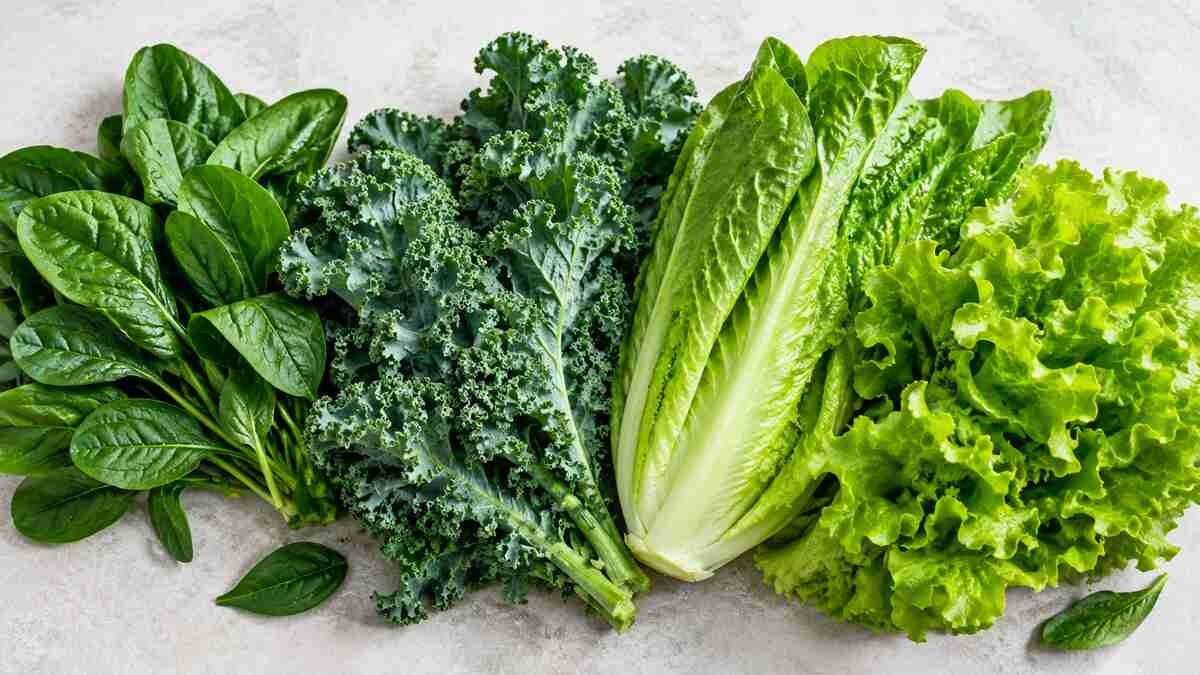

Leafy greens and heart health are linked in most nutrition guidance, and for good reason. Spinach, lettuce, kale, and similar vegetables supply potassium, folate, fiber, and plant compounds while adding very few calories to a meal. Major heart organizations encourage people to eat a wide variety of vegetables, and leafy greens are an easy place to start.
The research, however, is more nuanced than many headlines suggest. Large observational studies link higher leafy green intake with lower cardiovascular risk, but short randomized trials have not shown clear improvements in blood pressure or blood vessel function. That gap matters, because it separates what studies can suggest from what they can prove.
This guide explains how leafy greens might support the heart, what a 2026 systematic review found, and where the evidence remains uncertain. You will also find practical tips for choosing and preparing greens, plus safety notes for people who take warfarin or follow a potassium-restricted diet. Leafy greens are a smart part of a heart-healthy diet, but they are not a stand-alone treatment.
What Counts as a Leafy Green?
Leafy greens are vegetables eaten mainly for their edible leaves. Common examples include spinach, lettuce, romaine, Swiss chard, collard greens, mustard greens, amaranth leaves, and kale. Some, such as kale and collards, belong to the cabbage family (see our guide to cruciferous vegetables).
Researchers do not always define the group the same way. The 2026 review discussed below counted spinach, lettuce, mustard and collard greens, and cruciferous vegetables such as broccoli (Kaewpradup et al., 2026). For a closer look at one popular option, see the health benefits of spinach, or browse our overview of the health benefits of leafy greens.
How Might Leafy Greens Benefit the Heart?
Scientists have proposed several biological mechanisms that could explain why vegetable-rich diets are linked to better heart outcomes. These are plausible explanations, not proof that any single vegetable protects the heart.
- Dietary nitrate: Some leafy greens contain nitrate, which the body can convert into nitric oxide. This molecule helps blood vessels relax and supports blood flow. Beetroot is another nitrate-rich vegetable; see our guide to beetroot health benefits.
- Potassium: This mineral helps regulate blood pressure and supports normal muscle and nerve function, according to the NIH Office of Dietary Supplements. Our list of potassium-rich vegetables offers more options.
- Folate: Folate supports normal cell function and helps the body process homocysteine, an amino acid (see the NIH folate fact sheet). However, lowering homocysteine alone does not establish that a food prevents cardiovascular events.
- Fiber: Fiber contributes to overall diet quality and may help improve certain cardiovascular risk factors. Leafy greens provide modest amounts, so pair them with other high-fiber foods and legumes.
- Carotenoids and polyphenols: These plant compounds have antioxidant and other biological activities. Laboratory findings do not automatically translate into proven clinical benefits.
Leafy greens may also help simply by replacing less healthy foods on the plate. That makes it hard to separate the effect of the greens from the effect of the overall diet.
What Does the Research Actually Show?
Different study designs answer different questions. Observational studies follow large groups of people over time and compare health outcomes with reported eating habits. They can reveal associations but cannot prove cause and effect.
Randomized controlled trials (RCTs) assign people to eat a food or a comparison diet, which makes cause easier to test. However, food trials are often small and short. Systematic reviews and meta-analyses combine results across studies, which helps, but they cannot fix weaknesses in the studies they include.
A 2026 systematic review and meta-analysis in the journal Foods pooled 13 observational studies (717,782 participants, average follow-up of about 14 years) and 7 RCTs (396 participants, average duration of about 13 days). Higher leafy green intake was associated with about 11% lower relative risk of cardiovascular disease and about 21% lower relative risk of cardiovascular death. The pooled RCTs found no significant improvement in vascular function, and no significant effect on systolic or diastolic blood pressure (Kaewpradup et al., 2026).
The authors reported several limitations. Results varied widely between studies, the possible range of true effects crossed “no effect,” and signs of publication bias appeared. They concluded that the findings support an association but do not establish causality.
Why might the observational link overstate the effect? People who eat more greens often differ in other ways: they may exercise more, smoke less, and eat better overall. Statistical adjustment helps, but residual confounding is hard to rule out. Food questionnaires also rely on memory.
Short trials have a different limit. Blood pressure and vascular function are intermediate markers measured over days or weeks, while heart attacks and strokes develop over decades. A trial that finds no short-term change cannot show whether long-term risk changes either way.
A 2024 systematic review of five observational studies (63,155 participants) also found inverse associations between vegetable nitrate intake and most cardiovascular outcomes. Risk reductions tended to plateau at moderate intakes, and the authors called for more randomized trials (Tan et al., 2024).
| Research question | What the evidence suggests |
|---|---|
| Are leafy greens associated with lower cardiovascular risk? | Observational studies suggest a lower risk, but association does not establish causation. |
| Do leafy greens lower blood pressure? | Nitrate and potassium make it plausible, but pooled trials found no significant effect, and certainty was rated low. |
| Do leafy greens improve blood vessel function? | Pooled trials did not show a significant overall improvement, though they were small, short, and varied. |
| Should people eat leafy greens for heart health? | Yes, as part of a varied heart-healthy dietary pattern, not as a stand-alone treatment. |
The balanced conclusion: the evidence supports including leafy greens in a heart-healthy diet, but the specific cardiovascular effects of leafy greens alone are not fully established.
What Do Heart Health Guidelines Say?
The American Heart Association (AHA) published updated dietary guidance in March 2026. It emphasizes heart-healthy dietary patterns rather than single foods or nutrients, and it lists nine features of such a pattern (AHA, 2026). One feature is to eat plenty of vegetables and fruits and choose a wide variety, including different colors and types. The AHA also notes that canned and frozen produce can be nutritious and affordable (AHA news release).
Other features include choosing whole grains, healthy protein sources, unsaturated fats, minimally processed foods, and foods low in added sugar and sodium. The statement builds on the earlier 2021 AHA guidance. The AHA describes scientific statements as informing guidelines rather than making treatment recommendations.
For practical ideas, see our guides to heart-healthy foods and the best vegetables for heart health.
Which Leafy Greens Should You Eat?
No single green is best for everyone. Choosing a mix gives you a wider range of nutrients and keeps meals interesting.
- Spinach: Provides folate, potassium, vitamin K, and dietary nitrates. It works in salads, curries, soups, and cooked dishes.
- Kale: Supplies vitamins K and C, carotenoids, and other plant compounds. It can be eaten cooked, or raw when properly prepared (for example, finely chopped or massaged).
- Lettuce and romaine: Provide water, folate, and varying amounts of other vitamins and minerals. They are easy to add to salads, sandwiches, and wraps.
- Amaranth leaves and other local greens: Offer practical, accessible ways to increase variety. Nutrient content varies by species and preparation.
Budget matters too. Seasonal and local greens are often affordable; see our list of cheap vegetables.
How to Prepare and Enjoy Leafy Greens
Both raw and cooked greens can fit a heart-healthy diet. Raw greens retain more heat-sensitive nutrients such as vitamin C and folate, while cooking can make some carotenoids easier to absorb. Our article on raw vs. cooked vegetables compares the options.
Preparation matters as much as the vegetable. Heavy salt, creamy dressings, and fatty toppings can offset the benefits, and the AHA advises choosing foods low in sodium and cooking with little or no salt. Sautéing greens in a small amount of olive oil, then seasoning with garlic, lemon, or spices, is a simple alternative.
Frozen greens are a practical choice (see are frozen vegetables healthy?). If you buy canned greens, look for low-sodium or no-salt-added versions. The FDA recommends washing fresh produce under running water and refrigerating it promptly. Our guide to washing and storing vegetables has more detail.
How much is enough? On USDA’s MyPlate, 2 cups of raw leafy greens count as 1 cup-equivalent of vegetables, while 1 cup of cooked greens counts as 1 cup-equivalent. The 2024 nitrate review found that benefits tended to level off at moderate intakes, so more is not always better. See how many vegetables you should eat a day and how to eat more vegetables for tips.
Who Should Be Careful With Leafy Greens?
Leafy greens are safe for most people, but a few situations need individual guidance.
- Warfarin: Many greens are rich in vitamin K, which affects blood clotting. People taking warfarin should keep their vitamin K intake consistent and talk with their clinician before making big changes (NIH vitamin K fact sheet). They do not need to avoid greens automatically.
- Kidney disease: Some people with kidney disease must limit potassium and should follow their care team’s advice (NIH potassium fact sheet).
- Kidney stones: Spinach is high in oxalate, which may matter for people prone to calcium oxalate stones. See our spinach guide for details.
Final Thoughts
Leafy greens are nutritious, versatile, and consistent with every major heart-healthy eating pattern. Observational research is encouraging, but randomized trials have not yet confirmed that greens alone improve blood pressure, vascular function, or long-term outcomes.
The most practical takeaway is to eat a variety of vegetables, including leafy greens, as part of a broader pattern with whole grains, legumes, healthy fats, less sodium, and regular activity.
For next steps, explore our guides to heart-healthy foods, lowering blood pressure, and ways to lower your risk of heart disease.
Frequently Asked Questions
Are leafy greens good for heart health?
Yes. Leafy greens provide nutrients and plant compounds that fit into a heart-healthy dietary pattern, which the AHA encourages. Observational research links higher intake with lower cardiovascular risk, although the direct effects of leafy greens alone remain uncertain.
Which leafy greens are best for heart health?
Spinach, kale, lettuce, and other leafy vegetables can all contribute to a healthy diet. No single option is universally best. Choosing a variety provides a wider range of nutrients.
Can leafy greens lower blood pressure?
Some leafy greens contain potassium and dietary nitrate, which may support normal blood pressure regulation. However, pooled clinical trials have not shown a significant blood pressure reduction from leafy greens alone (Kaewpradup et al., 2026). See our guide to vegetables and blood pressure.
How often should you eat leafy greens?
Include them regularly as part of a varied diet, adjusting portions to your preferences and nutritional needs. They can be eaten raw or cooked, and frozen varieties can also be nutritious choices.
Are raw or cooked leafy greens better for your heart?
Both can contribute to a heart-healthy diet. Cooking can improve the availability of certain nutrients, while raw greens retain some heat-sensitive ones. Added salt, fats, and sauces also matter.
Can leafy greens prevent heart attacks?
No single food can guarantee prevention. Eating leafy greens within an overall healthy dietary pattern may contribute to lower cardiovascular risk. Blood pressure, cholesterol, smoking, physical activity, and medical care also play major roles.
Sources
- Kaewpradup T, et al. Dietary Green Leafy Vegetables and Cardiovascular Disease Risk: A Systematic Review and Meta-Analysis. Foods. 2026;15(15):2678.
- Lichtenstein AH, et al. 2026 Dietary Guidance to Improve Cardiovascular Health: A Scientific Statement From the American Heart Association. Circulation. 2026.
- American Heart Association. Following 9 key steps for a lifetime of eating well can support heart health (news release). March 31, 2026.
- Lichtenstein AH, et al. 2021 Dietary Guidance to Improve Cardiovascular Health: A Scientific Statement From the American Heart Association. Circulation. 2021;144:e472-e487.
- Tan L, et al. Associations Between Vegetable Nitrate Intake and Cardiovascular Disease Risk and Mortality: A Systematic Review. Nutrients. 2024;16(10):1511.
- NIH Office of Dietary Supplements. Potassium, Folate, and Vitamin K (Fact Sheets for Health Professionals).
- U.S. Food and Drug Administration. Selecting and Serving Produce Safely.
- U.S. Department of Agriculture. MyPlate: Vegetables.
Medical Disclaimer: This article is for general educational purposes only and is not medical advice. It does not diagnose, treat, or replace guidance from a qualified healthcare professional who knows your health history. Talk with your doctor or a registered dietitian before changing your diet, especially if you take blood thinners such as warfarin, have kidney disease, or have a condition that affects what you can eat. If you think you may be having a medical emergency, call 911 or your local emergency number right away.