
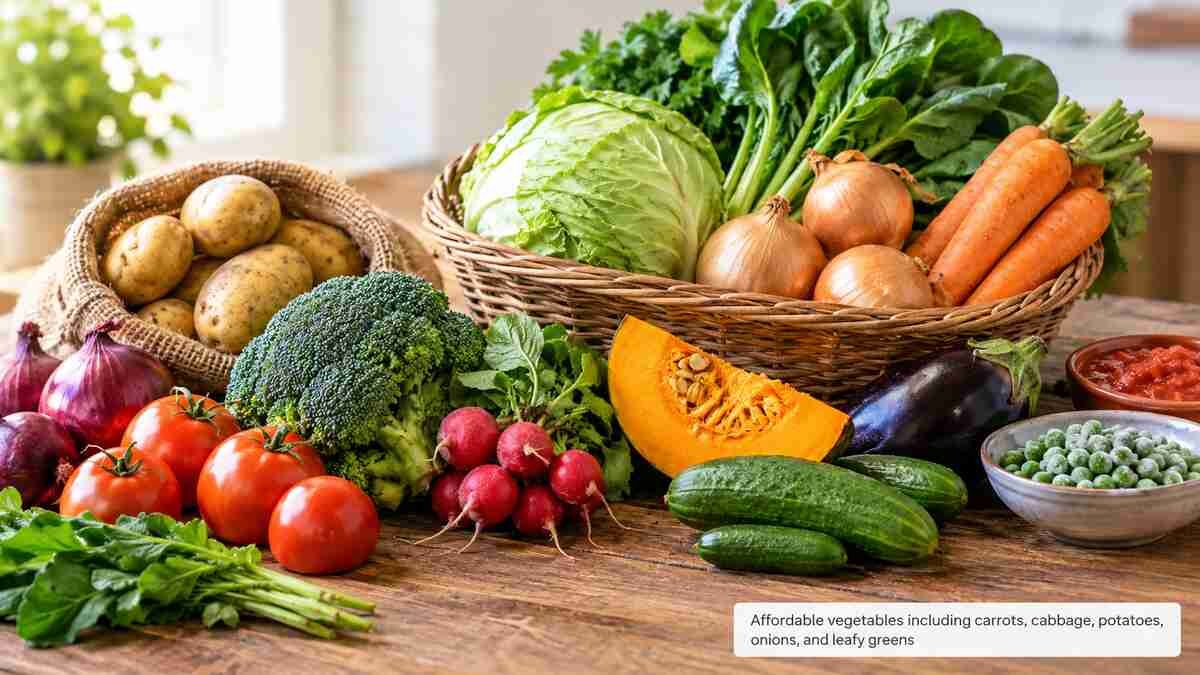

A healthy plate can start with a bag of carrots, a head of cabbage, a few potatoes, or a bunch of leafy greens. It does not need a cart full of expensive specialty produce. Many cheap vegetables are nutritious, versatile, and easy to cook, which makes them a smart foundation for everyday meals.
Still, grocery costs, limited time, and food waste can make eating more vegetables feel difficult. The good news is that a few simple habits go a long way: choosing affordable staples, using frozen and canned options wisely, planning meals around overlapping ingredients, and storing food so it lasts. None of this requires perfection.
This guide covers 15 affordable vegetable choices, how to get more nutrition for your money, and how fresh, frozen, and canned vegetables compare. It also offers shopping strategies, budget meal ideas, storage tips, and a sample shopping plan. Prices vary by region, season, and store, so treat the list as a starting point and adapt it to what is affordable where you live.
15 Cheap Vegetables That Offer Great Value
These vegetables are commonly affordable in many markets, but no list is the cheapest everywhere. Value depends on usable portions, storage life, and versatility, not just the lowest price per pound. Check your local prices and swap in what is cheaper near you.
Carrots
Carrots provide fiber and beta-carotene, a plant pigment the body can convert to vitamin A. They keep well in the refrigerator and work raw as a snack, in soups, or roasted with a little oil.
Cabbage
Cabbage is versatile and stores for a long time. Use it in stir-fries, slaws, soups, and curries. Our guide to cruciferous vegetables covers cabbage and its relatives in more detail.
Potatoes
Potatoes are filling and supply carbohydrates, potassium, and vitamin C. Bake, boil, or roast them, and leave the skin on when you can for extra fiber. Many guides classify potatoes as a starchy vegetable, which is explained in our comparison of starchy and non-starchy vegetables.
Onions
Onions build flavor in curries, soups, sauces, and stir-fries. They store well in a cool, dry, ventilated place, so one bag can last many meals.
Sweet potatoes
Sweet potatoes offer fiber and beta-carotene and taste naturally sweet. Bake them, mash them, or cube and roast them for a hearty side or the base of a meal.
Seasonal leafy greens
Spinach, kale, collards, amaranth leaves, and other greens contribute folate and other micronutrients, and they cook in minutes. Choose whichever is in season and affordable. See our guide to the health benefits of leafy green vegetables for more.
Pumpkin or winter squash
Pumpkin and winter squash provide fiber and carotenoids. They work well in soups, roasted dishes, and curries, and a whole squash can feed a household for several meals. Read more in our article on pumpkin health benefits.
Radishes
Radishes add crunch to salads and sandwiches, and they can be quick-pickled or cooked. They are often inexpensive when in season.
Turnips
Turnips are a useful root vegetable alternative for soups and stews. They can be roasted, mashed, or added to one-pot meals.
Eggplant
Eggplant absorbs spices well, so it works in curries, stews, and oven-roasted dishes. Choose firm, glossy ones and use them within a few days.
Cucumbers
Cucumbers are refreshing in salads and simple sides, and they are very high in water. Our article on hydrating vegetables explains how water-rich vegetables fit into a summer routine.
Tomatoes
Tomatoes provide vitamin C and lycopene, a plant pigment, and they work in sauces, soups, and salads. They are often cheapest in season, when you can cook down extras into a sauce.
Frozen peas
Frozen peas supply fiber and a modest amount of plant protein. They are convenient, you can use only what you need, and they stir easily into rice, soups, and pasta.
Frozen mixed vegetables
Frozen mixed vegetables are a quick way to add variety with almost no preparation. Add them to fried rice, soups, omelets, and casseroles.
Canned tomatoes
Canned tomatoes have a long shelf life and make a base for sauces, stews, and lentil dishes. Look for low-sodium or no-salt-added versions when you can.
No single vegetable is essential. Variety, availability, and what you will actually eat matter more than chasing one supposed superfood.
How to Get More Nutrition for Your Money
Affordable vegetables can contribute meaningfully to a balanced diet. A few habits help you get the most from every purchase.
Look beyond price alone
Compare the price per edible portion, not just the package price. Consider how much you will discard during preparation, how likely the item is to spoil, and how many meals it can support. A cheap vegetable that rots in the refrigerator is not a bargain.
Mix colors and types
Combine leafy greens, orange vegetables, and other produce across the week. Different vegetables supply different fiber, vitamins, minerals, and plant compounds, so variety matters more than relying on one food. Our overview of the health benefits of eating vegetables daily explains why.
Make vegetables part of complete meals
Pair vegetables with beans, lentils, eggs, whole grains, or other available protein foods. Vegetables contribute important nutrients, but a balanced diet needs more than vegetables alone. The World Health Organization recommends a varied diet rich in vegetables, fruits, whole grains, and legumes. For a wider view, see what makes a balanced diet.
Fresh vs. Frozen vs. Canned Vegetables: Which Is Best on a Budget?
No form is universally best. Each has strengths, and the right choice depends on cost, availability, how you plan to use it, and your needs.
| Type | Main advantages | What to consider |
|---|---|---|
| Fresh | Flexible; good for salads and many recipes | Seasonal prices and spoilage |
| Frozen | Long storage life, convenient portions, little preparation | Freezer access and package price |
| Canned | Pantry-friendly and ready to use | Sodium, added ingredients, and drained weight |
When fresh vegetables make sense
Buy fresh produce when it is in season, reasonably priced, and likely to be used before it spoils. Fresh vegetables are also best for raw dishes such as salads and slaws.
When frozen vegetables are the smarter buy
Plain frozen peas, spinach, mixed vegetables, and similar products let you take only what you need and keep the rest frozen. That reduces waste. Our article on whether frozen vegetables are healthy explains how they compare with fresh. Canada’s food guide also lists frozen and canned vegetables as healthy options.
How to choose canned vegetables
Check labels for sodium and added ingredients. Where practical, choose no-added-salt or lower-sodium products, and drain or rinse vegetables when it suits the recipe. The WHO advises keeping total salt intake below 5 grams a day.
Fresh, frozen, and canned vegetables can all contribute to a healthy diet. The best mix is the one you can afford and will actually use.
7 Smart Ways to Buy Cheap Vegetables
These strategies are practical and flexible. Many are echoed in the Health Canada guidance on healthy eating on a budget and in CDC tips for eating healthy on a budget.
Buy vegetables in season
Seasonal produce is often less expensive because it is abundant locally. Staying flexible lets you take advantage of whatever is being harvested nearby.
Shop at local markets
Compare local produce sellers, supermarkets, and discount shops rather than assuming one source is always cheapest. Prices and quality can differ from week to week.
Compare unit prices
Check the price per pound, kilogram, or 100 grams where it is shown. Comparing unit prices helps you see which size or brand offers better value.
Choose loose produce when practical
Buying loose vegetables lets you take only the amount you need, which can reduce both cost and waste. Pre-cut and single-serve packages often cost more.
Buy imperfect produce
Oddly shaped or slightly bruised vegetables are often discounted. As long as they are sound and suitable for your recipe, they are just as healthy, and buying them helps reduce food waste.
Plan meals around deals
Choose a few recipes based on what is affordable that week instead of shopping for a fixed list of expensive ingredients. Sales flyers and store apps can help.
Keep a flexible shopping list
Have substitutes ready. If broccoli is expensive, for example, use cabbage, seasonal greens, or another suitable vegetable in a similar dish.
Cheap Vegetable Meal Ideas for Breakfast, Lunch, and Dinner
These ideas show how to turn the ingredients above into satisfying meals. For more ways to add produce to your day, see our guide on how to eat more vegetables.
Breakfast ideas
- Eggs with sauteed spinach or other leafy greens.
- Potato and onion hash.
- A leftover vegetable-stuffed flatbread or omelet.
Lunch ideas
- Cabbage and carrot slaw with beans.
- Lentil soup with carrots and onions.
- Rice with mixed vegetables and an egg or another protein.
Dinner ideas
- Seasonal vegetable curry with rice.
- Baked potatoes topped with beans and vegetables.
- Cabbage, carrot, and frozen-pea stir-fry.
- Tomato-based lentil stew.
Stretch one purchase across multiple meals
A head of cabbage might go into a cooked dish one day and a slaw the next. Carrots can show up as a snack, in soup, and in rice dishes. Repeating ingredients across recipes reduces the number of items you need in a weekly shop, and varying seasonings and cooking methods keeps meals interesting.
How to Store Cheap Vegetables and Reduce Food Waste
Reducing waste saves money only when food is stored and handled safely. Our guide on how to wash and store vegetables to reduce waste covers the details.
Store vegetables according to their needs
Refrigerate vegetables that need it, such as leafy greens and cut produce. Keep potatoes and onions in a cool, dry, ventilated place, and store them separately when practical. Follow package instructions for frozen and canned products, and put cut vegetables in clean, covered containers in the refrigerator promptly. The FoodKeeper tool from foodsafety.gov offers storage times for many foods.
Use older vegetables first
Move produce that needs to be used soon to a visible spot, and plan your next meal around it. Soups, stir-fries, and curries are good places for vegetables that are past their best but still safe.
Freeze suitable vegetables
Many vegetables can be frozen for later use, though preparation depends on the type. Some need blanching first, and others can go straight into a freezer-safe container.
Reduce unnecessary trimming
Edible stems, leaves, and scraps, such as broccoli stems or carrot tops, can often be used when they are clean, fresh, and safe to eat. When in doubt about spoilage, throw it out.
A Simple Budget-Friendly Vegetable Shopping Plan
This sample framework is a starting point, not a price estimate. Adjust it to your household size, local prices, dietary needs, and kitchen equipment.
Example shopping basket
- One versatile root vegetable, such as carrots.
- One long-lasting vegetable, such as cabbage.
- Onions for flavor.
- One seasonal leafy green.
- Potatoes or sweet potatoes.
- One frozen vegetable.
- Canned tomatoes, if economical and available.
- Beans or lentils to help build filling meals.
How to use it
- Day 1: Vegetable and lentil curry.
- Day 2: Leftover curry with rice.
- Day 3: Potato and vegetable hash.
- Day 4: Cabbage and carrot stir-fry.
- Day 5: Tomato and bean stew.
If you are not sure how much to buy, our article on how many vegetables to eat each day can help you set a realistic target.
Frequently Asked Questions About Cheap Vegetables
What are the cheapest vegetables to buy?
Common staples such as cabbage, carrots, potatoes, and onions are often affordable. The best deals depend on your location and the season, so compare local prices.
Are frozen vegetables as healthy as fresh vegetables?
Frozen vegetables can be nutritious alternatives to fresh, especially when you buy them plain and store them correctly. They are also useful for reducing waste.
Can you eat healthy vegetables on a very tight budget?
Yes. Prioritize affordable seasonal produce, frozen or canned alternatives, versatile staples, and simple balanced meals. Pairing vegetables with beans, lentils, or eggs helps stretch them into full meals.
How can I make vegetables last longer?
Store each vegetable the way it needs, use older produce first, and plan meals ahead. Freezing suitable vegetables can extend their life further.
Is canned food a healthy choice?
Canned vegetables can fit into a healthy diet. Check the label for sodium and other added ingredients, and choose lower-sodium or no-salt-added options where possible, as advised by the WHO.
Conclusion: Healthy Eating on a Budget Is Possible
Eating well on a tight budget comes down to consistent, realistic choices, not expensive produce or a perfect meal plan. Start with three actions: choose a few affordable vegetables that are in season or easy to find, plan several meals around overlapping ingredients, and store produce correctly so you use what you already have before buying more.
A mix of affordable fresh, frozen, and canned vegetables can make nutritious eating more accessible for you and your family. For more practical ideas, explore our healthy habits guide.
Sources
- World Health Organization: Healthy diet fact sheet
- Health Canada, Canada’s food guide: Healthy eating on a budget
- Centers for Disease Control and Prevention: Tips for eating healthy on a budget
- U.S. Department of Health and Human Services: FoodKeeper
Medical Disclaimer
This article is for general educational purposes only and is not medical advice. It does not diagnose, treat, or replace guidance from a qualified healthcare professional. Nutrition needs, budgets, and food access vary from person to person, so talk with your doctor or a registered dietitian before making major changes to your diet, especially if you have a medical condition, food allergy, or take medication.