
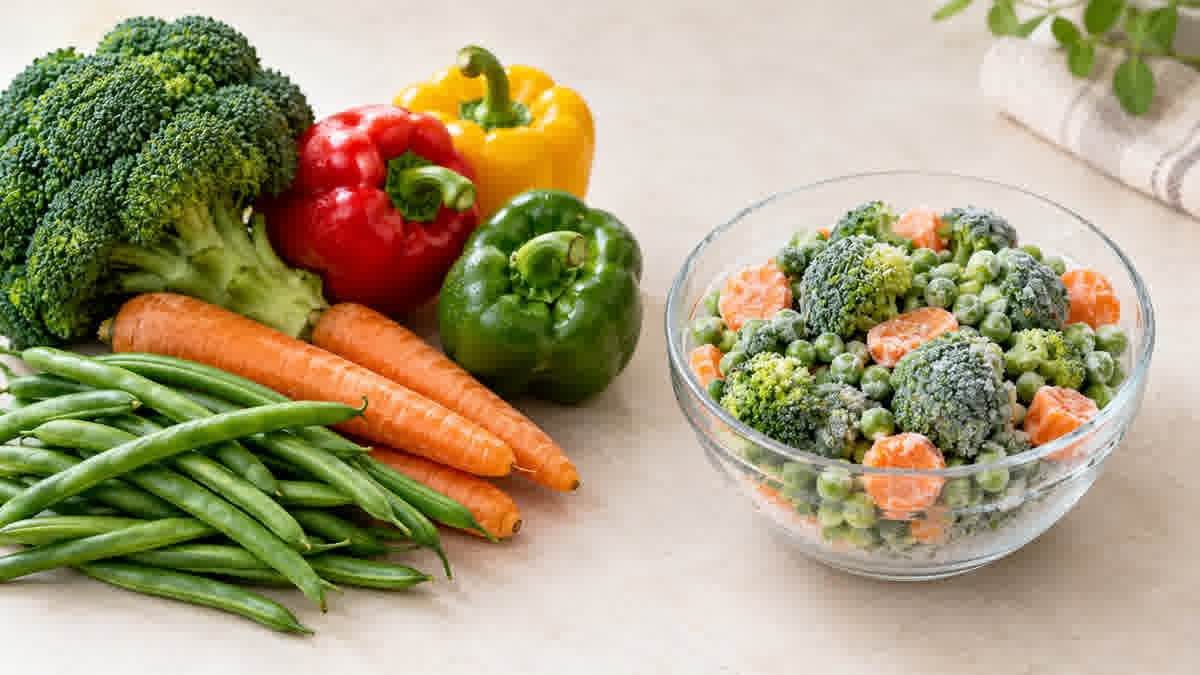

Frozen vegetables are a healthy choice for most people, and plain frozen varieties can be as nutritious as fresh ones. They are usually harvested at maturity and frozen soon afterward, which helps preserve many nutrients. Fresh vegetables are also excellent, especially when they are in season and eaten soon after harvest.
Neither option is automatically better in every situation. Nutrient levels depend on the vegetable, how long it was stored, how it was processed, and how you cook it. Fresh produce that sits in a refrigerator for several days can lose some vitamins, while frozen vegetables stay stable in the freezer.
This guide compares fresh and frozen vegetables, explains how freezing affects nutrients, and shows which frozen vegetables are worth buying. You will also find tips on choosing, cooking, and storing them, plus common myths and answers to frequently asked questions. This article is general information, not personal medical advice.
Frozen vs. Fresh Vegetables: What’s the Nutritional Difference?
Research generally shows that the nutritional gap between fresh and frozen vegetables is small. What matters most is how long fresh produce has been stored and how both types are cooked. Understanding the process helps explain why.
How Freezing Helps Preserve Nutrients
Commercial freezing is designed to lock in quality quickly. Vegetables are typically harvested, cleaned, and often blanched, which means briefly heated in water or steam. Blanching slows enzyme activity that would otherwise cause flavor, color, and nutrient changes during storage. The vegetables are then frozen, which greatly slows further deterioration.
Blanching can cause some loss of heat-sensitive or water-soluble vitamins, such as vitamin C and certain B vitamins. These losses are usually modest and are comparable to what happens when you cook fresh vegetables at home. Fiber and minerals are largely unaffected by freezing itself.
Do Fresh Vegetables Lose Nutrients Over Time?
Yes, some nutrients decline after harvest. Heat, light, oxygen, and long transport times can all reduce vitamin content in fresh produce. Vegetables eaten within a day or two of picking are likely to be at their best, while those stored for several days may have lost some vitamins.
A two-year study from the University of Georgia, published in the Journal of Food Composition and Analysis, compared fresh, frozen, and “fresh-stored” produce (refrigerated for five days to mimic home storage). It tested broccoli, cauliflower, corn, green beans, green peas, spinach, blueberries, and strawberries for vitamin C, beta-carotene, and folate. In most comparisons, the researchers found no significant differences, and where differences did appear, frozen produce outperformed fresh-stored produce more often than the reverse.
Which Nutrients Are Affected by Freezing?
- Vitamin C: Sensitive to storage time and heat, and losses vary by vegetable and processing.
- B vitamins: Some water-soluble vitamins can be lost during blanching or cooking.
- Fiber: Generally remains available in frozen vegetables.
- Minerals: Freezing preserves minerals well, though some can leach into cooking water.
- Plant compounds: Levels differ by vegetable, storage, and preparation.
Percentages of nutrient loss vary widely, so no single number applies to all vegetables. The Harvard T.H. Chan School of Public Health’s Nutrition Source offers broader guidance on getting enough vegetables and fruit in any form.
Fresh vs. Frozen Vegetables Comparison
| Factor | Fresh vegetables | Frozen vegetables |
|---|---|---|
| Vitamins | May be high when recently harvested | Often retain many vitamins |
| Fiber | Generally well preserved | Generally well preserved |
| Storage | Perishable; refrigeration often needed | Longer storage in a freezer |
| Preparation | May require washing and chopping | Often prewashed and cut |
| Convenience | Depends on the vegetable | Usually convenient |
| Food waste | Can spoil before use | Can be portioned as needed |
Health Benefits of Frozen Vegetables
The health value of frozen vegetables comes from their nutrients and their role in a varied diet, not from freezing itself. They are not a special treatment. They are simply an easy way to get more vegetables into your meals.
They Provide Essential Vitamins and Minerals
Different vegetables supply different nutrients. Broccoli and peas provide vitamin C and fiber, while spinach contributes folate and other micronutrients. Our guides to vegetables high in vitamin C and vegetables high in iron explain what to look for.
They Support Digestive Health
Vegetables contain dietary fiber, which supports normal bowel function and helps feed beneficial gut bacteria. Eating a variety of vegetables is more useful than relying on one. Frozen vegetables will not prevent or cure digestive conditions, but they can contribute to your daily fiber intake. See our list of high-fiber foods for more ideas.
They Make Balanced Eating Easier
Keeping frozen vegetables on hand means you can build a balanced meal even when fresh produce is not available or convenient. They are already washed and cut, which saves time on busy days. That convenience can make healthy eating more realistic.
They Can Be Budget-Friendly
A longer shelf life can reduce waste, and frozen vegetables are available all year. They are not always cheaper, since prices vary by region, brand, season, and package size. Comparing the price per usable serving, not just the package price, gives a better picture.
Are Frozen Vegetables Healthy to Eat Every Day?
Plain frozen vegetables can be part of a healthy daily diet. The Dietary Guidelines for Americans recommend that most adults eat roughly 2 to 3 cups of vegetables a day, depending on age, sex, and activity level. Eating a variety across the week provides a wider range of vitamins, minerals, fiber, and plant compounds. Our article on the benefits of vegetables explains why this matters.
Are Fresh Vegetables Better Than Frozen?
Not necessarily. Each has situations where it fits best.
When Fresh Vegetables May Be the Better Choice
Fresh vegetables are a good pick when they are in season, locally grown, and eaten soon after harvest. They are also better for salads, raw snacks, and dishes where a crisp texture matters. Some vegetables, such as lettuce, cucumbers, and tomatoes, do not freeze well.
When Frozen Vegetables Are a Better Fit
Frozen vegetables work well for out-of-season produce, busy schedules, limited access to fresh vegetables, meal prep, and reducing food waste. They are also useful for soups, stir-fries, casseroles, and smoothies, where texture matters less.
Does One Option Have More Nutrients Than the Other?
There is no universal winner. The type of vegetable, time since harvest, storage temperature, blanching, and cooking method all affect the final nutrient content. A sensible approach is to choose fresh vegetables when they are accessible and convenient, and frozen when they help you eat vegetables more consistently. A mix of both is a good plan. Our guide to raw vs. cooked vegetables covers how preparation changes nutrient availability.
Which Frozen Vegetables Are the Healthiest to Buy?
No single vegetable is the healthiest for everyone, and eating different colors and types matters more than focusing on one “superfood.” These frozen options are versatile and nutritious.
1. Broccoli and Cauliflower
These provide fiber and a range of vitamins and plant compounds. They work well steamed, roasted, or added to curries and stir-fries. Our guide to cruciferous vegetables explains more about this family.
2. Spinach and Other Leafy Greens
Frozen spinach is a useful source of folate and other micronutrients. Add it to soups, eggs, lentil dishes, and sauces. Our article on the benefits of leafy green vegetables covers more options.
3. Green Peas
Peas provide fiber, plant protein, and several vitamins. They are easy to add to rice dishes, soups, and pasta.
4. Carrots, Green Beans, and Mixed Vegetables
These offer different nutrients and are easy to add to everyday meals. Mixed vegetables can increase variety with little preparation.
How to Choose, Cook, and Store Frozen Vegetables
A few simple habits help you get the most from frozen vegetables.
How to Choose Healthy Frozen Vegetables
- Pick plain vegetables or simple mixes. These give you the most control over what you eat.
- Read the ingredient list. Look for added sauces, butter, cheese, and seasonings.
- Compare sodium. Seasoned products can contain much more sodium than plain ones, and our guide to reading nutrition facts can help.
- Check the package. Choose intact bags without signs of thawing and refreezing, such as large ice clumps.
- Compare price per serving. This shows the true cost of what you will use.
Should You Thaw Frozen Vegetables Before Cooking?
Usually not. Most frozen vegetables can be cooked straight from the freezer, which also helps them keep their texture. Thawing can be useful in recipes where extra moisture would affect the result, such as some baked dishes. Always follow the package directions, since some products are not meant to be eaten without cooking.
What Is the Healthiest Way to Cook Frozen Vegetables?
Steaming, microwaving, roasting, and quick stir-frying with a small amount of oil are all good choices. Boiling for a long time can cause water-soluble vitamins to leach into the water. If you make soup or stew, using the cooking liquid keeps those nutrients in the meal.
How Should Frozen Vegetables Be Stored?
Keep them frozen according to the package instructions, and return them to the freezer promptly after opening. The USDA Food Safety and Inspection Service explains that food kept frozen stays safe, though quality can decline over time. Avoid leaving vegetables at room temperature for long periods, and avoid repeated thawing and refreezing, which can affect texture and quality.
Easy Ways to Add Frozen Vegetables to Meals
- Add spinach or peas to eggs.
- Mix broccoli into rice or noodles.
- Stir mixed vegetables into lentil soup.
- Roast frozen cauliflower with spices.
- Add vegetables to pasta, curries, or casseroles.
Common Myths About Frozen Vegetables
Several misconceptions make people hesitant to buy frozen vegetables. Here is what the evidence suggests.
Myth 1: Frozen Vegetables Contain No Vitamins
Freezing does not eliminate vitamins. Many nutrients remain, although blanching and cooking can reduce some of them. Studies such as the University of Georgia analysis found similar vitamin levels in many fresh and frozen vegetables.
Myth 2: Fresh Vegetables Are Always Healthier
Freshness, storage, and preparation matter. Freshly harvested produce can be excellent, but frozen vegetables may retain more of certain nutrients than fresh vegetables stored for several days.
Myth 3: All Frozen Vegetables Are Unhealthy Processed Foods
Plain frozen vegetables are minimally processed and can be very nutritious. Concerns about salt, sauces, and seasonings apply to certain products, not to frozen vegetables as a category.
Myth 4: Frozen Vegetables Must Be Thawed First
Many frozen vegetables can go directly into a pan, steamer, microwave, or oven. Check the package for specific directions.
How to Eat More Vegetables Every Day
Eating enough vegetables is easier with a few habits you can repeat.
- Keep two or three versatile frozen vegetables in the freezer.
- Add a vegetable to both lunch and dinner.
- Alternate fresh seasonal vegetables with frozen staples.
- Pair vegetables with whole grains, legumes, eggs, fish, or other protein.
- Use herbs, spices, garlic, ginger, and lemon for flavor instead of extra salt.
For more ideas, see our guide on how to eat more vegetables and our overview of what makes a balanced diet. The goal is to make healthy eating easier, not to create strict rules.
Frequently Asked Questions
Are frozen vegetables healthy to eat every day?
Yes. Plain frozen vegetables can be part of a healthy daily diet. Eating a variety of vegetables across the week provides a wider range of vitamins, minerals, fiber, and plant compounds.
Do frozen vegetables lose nutrients?
Some nutrients may be lost during blanching, storage, or cooking, but freezing also slows deterioration. In the University of Georgia study, most vitamin comparisons showed no significant difference between fresh and frozen produce.
Are frozen vegetables good for weight loss?
They can support a weight-management eating pattern because many vegetables provide fiber and volume for relatively few calories. Portion sizes, cooking ingredients, and overall eating habits also matter. Our guide to weight management covers the broader picture.
Are frozen vegetables as healthy as fresh vegetables?
Often, yes. Differences depend on the vegetable, harvest timing, storage, processing, and cooking method. Both fresh and frozen vegetables can be nutritious choices.
Are frozen vegetables with added butter or sauce healthy?
They can fit into a balanced diet, but sauces and seasonings may add sodium, saturated fat, or calories. Plain vegetables give you more control over these additions.
The Bottom Line
Frozen vegetables are a nutritious, convenient option, and fresh produce is also valuable. Choose whichever form helps you eat a greater variety of vegetables regularly, with simple ingredients and sensible cooking methods.
For more foods to include, browse our list of healthy foods and our guide to nutrient-dense foods.
Sources
- Journal of Food Composition and Analysis: Selected Nutrient Analyses of Fresh, Fresh-Stored, and Frozen Fruits and Vegetables (University of Georgia, 2017)
- Harvard T.H. Chan School of Public Health: The Nutrition Source, Vegetables and Fruits
- U.S. Department of Health and Human Services and USDA: Dietary Guidelines for Americans
- USDA Food Safety and Inspection Service: Freezing and Food Safety
Medical Disclaimer: This article is for educational purposes only and is not a substitute for professional medical advice, diagnosis, or treatment. Always talk with a doctor, registered dietitian, or other qualified healthcare provider before changing your diet, starting a supplement, or if you have questions about your health. If you think you are having a medical emergency, call 911 or your local emergency number right away.
2 thoughts on “Are Frozen Vegetables as Healthy as Fresh? What Science Says”
Comments are closed.