
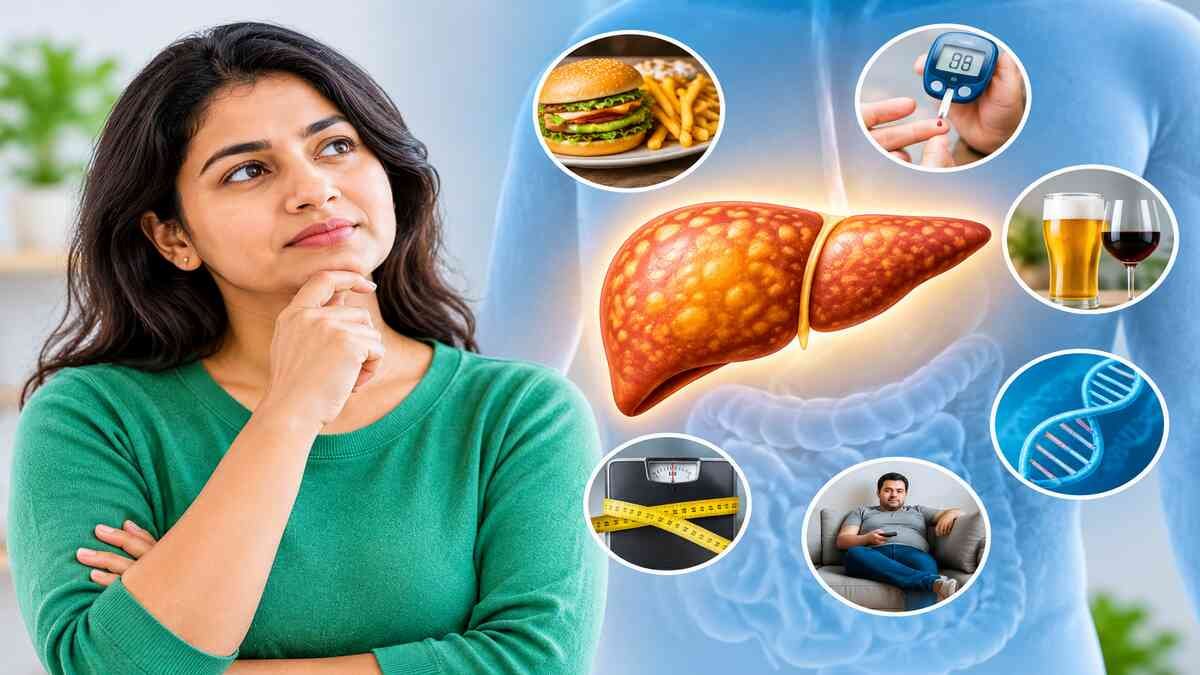

Why does fat build up in the liver, even in people who feel healthy? It is a fair question, and one that many people ask after a routine blood test or ultrasound picks up a surprise finding. Fatty liver is a condition in which excess fat accumulates in liver cells, and it is far more common than most people realize.
There is rarely a single cause. Metabolic health problems, alcohol use, certain medications, genetic factors, and other medical conditions can each play a part, and they often overlap. Many people have no noticeable symptoms, so the first clue is often an incidental test result rather than how they feel.
Understanding what is behind your fatty liver matters because the underlying cause shapes how it is managed. This article explains the main types of fatty liver disease, the most common causes and risk factors, and when to talk with a doctor. It is general education, not a diagnosis.
What Is Fatty Liver Disease?
Fatty liver disease, medically called hepatic steatosis, means that fat (mostly triglycerides) has built up inside liver cells. The liver normally handles fats, sugars, and other nutrients. It takes them in from the blood, stores some, converts some to energy, and sends the rest out to the body.
A small amount of fat in the liver is normal and does not by itself mean disease. Doctors generally consider it fatty liver when fat makes up a larger share of the liver, often seen on imaging or other testing. You can read more about how common fatty liver is on CollectedMed.
In 2023, an international group of experts introduced the umbrella term steatotic liver disease (SLD). It includes several subtypes, which are described below. Older names such as nonalcoholic fatty liver disease (NAFLD) are still widely used and appear in many sources.
For some people, liver fat leads to inflammation, then scarring (fibrosis), and in some cases cirrhosis (advanced scarring). This is not inevitable. Many people with fatty liver never develop advanced disease.
What Are the Main Types of Fatty Liver Disease?
Fatty liver does not have just one cause, so doctors group it into categories. Knowing which one applies to you helps your care team choose the right approach.
1. Metabolic Dysfunction-Associated Steatotic Liver Disease (MASLD)
MASLD was formerly called NAFLD. According to the EASL-EASD-EASO clinical practice guidelines, it is defined as excess liver fat in the presence of at least one cardiometabolic risk factor and no other discernible cause. These risk factors include insulin resistance, type 2 diabetes, abdominal obesity, and abnormal blood fats. MASLD can occur in people of different body sizes.
2. Alcohol-Related Liver Disease (ALD)
Heavy alcohol use can cause fat to build up in the liver and, over time, lead to inflammation and damage. Alcohol-related fatty liver is different from MASLD, although the two can coexist in the same person.
3. Mixed or Other Causes of Fatty Liver
Sometimes metabolic dysfunction and increased alcohol intake contribute together. This category is called MetALD. Less commonly, fatty liver has secondary causes, such as certain medications, nutritional problems, or rare genetic disorders.
10 Common Causes and Risk Factors of Fatty Liver
None of the factors below is guaranteed to cause fatty liver on its own. Most people with fatty liver have more than one. For a broader overview, see our guide to fatty liver risk factors.
1. Insulin Resistance
Insulin helps cells use glucose for energy. In insulin resistance, cells respond less well to insulin, so the body produces more of it. This disrupts how the body handles both sugar and fat.
When the body is insulin resistant, more fat can be released from fat tissue and delivered to the liver. The liver may also begin making more fat from sugars. Because of this link, insulin resistance is closely tied to MASLD. Learn more about insulin resistance.
2. Obesity and Excess Abdominal Fat
Excess body fat, especially around the waist, is one of the strongest risk factors. Abdominal fat tends to contribute to insulin resistance and low-grade inflammation throughout the body, which can promote fat buildup in the liver.
Obesity is a risk factor, not a requirement. Fatty liver can also affect people who are not classified as overweight or obese, as discussed later in this article.
3. Type 2 Diabetes
Type 2 diabetes and fatty liver often go hand in hand, largely because both involve insulin resistance and abnormal glucose metabolism. NIDDK notes that health conditions such as obesity, metabolic syndrome, and type 2 diabetes make people more likely to develop the condition.
Because of this link, people with diabetes are often encouraged to have their liver health checked. See type 2 diabetes and metabolic syndrome for background.
4. High Cholesterol and Elevated Triglycerides
Abnormal blood fats, especially high triglycerides, frequently occur alongside fatty liver. Both reflect changes in how the body makes, stores, and clears fat. The liver sits at the center of that process, so problems in blood lipids and liver fat tend to travel together.
Having high cholesterol does not mean you will develop fatty liver, but it is one of the markers doctors look at when assessing metabolic risk.
5. Unhealthy Dietary Patterns
Diets high in sugar-sweetened beverages, foods with a lot of added sugar, refined carbohydrates, and energy-dense processed foods are associated with a higher risk. Fructose, a sugar found in many sweetened drinks and processed foods, has received particular research attention for its role in liver fat production.
Overall dietary quality matters more than blaming a single food. Eating fat alone does not directly cause fatty liver. For positive eating patterns, see the Mediterranean diet and what makes a healthy diet.
6. Excessive Alcohol Consumption
The liver breaks down most of the alcohol a person drinks. Repeated heavy exposure can cause fat to accumulate and liver cells to become injured. Over years, alcohol-related liver damage can progress to inflammation, fibrosis, and cirrhosis.
Metabolic risk factors, such as obesity or diabetes, may increase the overall risk of liver damage when combined with alcohol. If you drink and have fatty liver, tell your healthcare professional honestly so they can interpret your results correctly.
7. Physical Inactivity and Sedentary Habits
Limited physical activity and long periods of sitting are linked with insulin resistance and weight gain. Regular movement helps the body use glucose and fat more effectively.
Inactivity is a contributing risk factor rather than the only direct cause. People who are active can still develop fatty liver, particularly if other factors apply. Explore the benefits of exercise for ideas.
8. Genetic and Family History Factors
Genes can influence who develops fatty liver. NIDDK explains that certain genes may make a person more likely to develop the condition and may help explain why it is more common in some racial and ethnic groups. Variants in genes such as PNPLA3 and TM6SF2 have been associated with fat accumulation in the liver and with disease progression.
A family history can matter even when someone has healthy habits. Genetic risk does not guarantee that fatty liver will develop, and researchers are still studying how genes interact with lifestyle.
9. Certain Medications and Medical Treatments
Some medicines can contribute to fat buildup in the liver. Examples include corticosteroids, amiodarone, tamoxifen, methotrexate, and certain cancer treatments. MedlinePlus also lists medicines as a possible factor in some people.
Whether a drug causes problems depends on the specific medication, the dose, how long it is used, and the person’s overall health. Do not stop a prescribed medication on your own. Talk with your healthcare professional, who can weigh the benefits and risks and monitor your liver if needed.
10. Nutritional Problems and Other Medical Conditions
Less common causes include rapid weight loss, severe malnutrition, and some nutritional deficiencies. Rare conditions can also be responsible, such as lipodystrophy, Wilson disease, other inherited metabolic disorders, celiac disease, and some endocrine conditions.
These causes are much less common than metabolic dysfunction or alcohol. They require individual medical assessment, which is one reason a doctor may look beyond the obvious explanations when liver fat is found.
Can You Get Fatty Liver Without Being Overweight?
Yes. Fatty liver can occur in people with a normal body weight, sometimes called lean MASLD. Possible contributors include insulin resistance, genetic susceptibility, the way body fat is distributed (especially around the abdomen), and other metabolic abnormalities.
Body weight alone cannot determine liver health. Blood sugar, triglycerides, cholesterol, and blood pressure can give a fuller picture of risk. If fatty liver is suspected, medical evaluation is worthwhile regardless of body size.
Does Eating Too Much Sugar Cause Fatty Liver?
Excess added sugar can contribute, but it is rarely the only cause. The liver converts fructose, a sugar common in sweetened drinks and many processed foods, into fat quite readily. Frequent intake of sugary drinks may therefore add to liver fat and to broader metabolic problems.
Whole fruits are different from sugar-sweetened beverages. Fruit contains fiber and is digested more slowly, so it is not considered the same concern. Fatty liver usually develops through several interacting factors, such as diet, activity, genetics, and insulin resistance, rather than from one ingredient.
Why Does Fat Accumulate in the Liver? Understanding the Science
The liver receives fatty acids from the bloodstream, makes new fat from sugars, and stores fat as triglycerides. It also burns some fat for energy and packages the rest into particles that are exported to the body.
Fatty liver develops when this balance tips. More fat may arrive than the liver can handle, more may be produced, or less may be burned or exported. Insulin resistance plays a central role by increasing both fat delivery and fat production.
In some people, the extra fat triggers inflammation and cellular stress, including oxidative stress. These processes may contribute to progression from simple fat buildup to liver injury. Researchers are still working out why this happens in some people and not others.
What Increases the Risk of Fatty Liver Becoming More Serious?
Developing fatty liver and progressing to advanced disease are not the same thing. Factors linked to progression include type 2 diabetes, abdominal obesity, multiple metabolic risk factors, persistent metabolic dysfunction, excessive alcohol exposure, genetic susceptibility, and older age. Identifying fibrosis is especially important, since scarring is what most strongly predicts future liver problems.
A simplified possible progression looks like this:
- Fat accumulation in the liver (hepatic steatosis)
- Liver inflammation (MASH in metabolic disease)
- Liver fibrosis (development of scar tissue)
- Cirrhosis (advanced liver scarring in some cases)
Not everyone with fatty liver develops inflammation, fibrosis, or cirrhosis. For ways to support long-term health, see living with fatty liver.
Can Fatty Liver Develop Without Symptoms?
Yes, and this is common. NIDDK describes the condition as usually a silent disease with few or no symptoms. Some people feel tired or notice discomfort in the upper right abdomen, but these signs are nonspecific.
Symptoms alone cannot tell you the cause or the severity. Fatty liver is often found when imaging or abnormal liver blood tests are done for another reason. Rather than waiting for symptoms, talk with a healthcare professional if you have risk factors.
When Should You See a Doctor About Fatty Liver Risk?
Consider a medical evaluation if any of the following apply:
- You have type 2 diabetes, prediabetes, or several metabolic risk factors
- You have abnormal liver blood test results
- You have a family history of relevant liver conditions
- You take a medication that may affect the liver
- Imaging has suggested fatty liver
Seek prompt care for jaundice (yellowing of the skin or eyes), abdominal swelling, or unusual confusion. A healthcare professional can look for the likely cause, assess how much your liver is affected, and recommend appropriate testing. Learn about treatment options for fatty liver and managing fatty liver at home.
Frequently Asked Questions About the Causes of Fatty Liver
What is the biggest cause of fatty liver?
It depends on the type. Metabolic dysfunction, including insulin resistance, excess abdominal fat, and type 2 diabetes, is a major contributor to MASLD. Excessive alcohol use is a major cause of alcohol-related fatty liver.
Can fatty liver be caused by stress?
Stress is not considered a direct, established cause. However, stress can influence sleep, eating, and activity, which may affect metabolic health. See our tips on reducing stress.
Can fatty liver happen in thin people?
Yes. Lean MASLD occurs in people with a normal body weight, often linked to insulin resistance, abdominal fat distribution, or genetic factors. A healthy weight does not rule out fatty liver.
Does fatty liver come from eating oily foods?
Not simply. Fatty liver is not caused by eating oily foods alone. Overall dietary patterns, especially added sugars and refined carbohydrates, along with metabolic health, play a larger role. Unsaturated healthy fats can be part of a balanced diet.
Can diabetes cause fatty liver?
Type 2 diabetes does not guarantee fatty liver, but the two are closely related because of shared insulin resistance. People with type 2 diabetes are more likely to have MASLD, as EASL-EASD-EASO guidance notes.
Is fatty liver always caused by alcohol?
No. Many people have fatty liver without heavy drinking, most often MASLD. Alcohol-related liver disease is a separate type, although a person can have both.
Final Thoughts on What Causes Fatty Liver
Fatty liver can develop for several reasons. Metabolic dysfunction, alcohol, genetics, certain medications, and other health conditions can all contribute, often in combination. Not everyone with fatty liver has obesity or drinks alcohol, and no single habit explains every case.
Finding the underlying cause is important for appropriate management, so speak with a qualified healthcare professional if fatty liver is suspected or diagnosed. Understanding what causes fatty liver is an important first step toward protecting long-term liver health.
Sources
- National Institute of Diabetes and Digestive and Kidney Diseases (NIDDK). Symptoms & Causes of NAFLD & NASH
- National Institute of Diabetes and Digestive and Kidney Diseases (NIDDK). Nonalcoholic Fatty Liver Disease & NASH
- European Association for the Study of the Liver, European Association for the Study of Diabetes, and European Association for the Study of Obesity. EASL-EASD-EASO Clinical Practice Guidelines on the Management of MASLD: Executive Summary. Diabetologia, 2024.
- MedlinePlus. Nonalcoholic fatty liver disease
Medical Disclaimer: This article is for general educational purposes only and is not medical advice. It does not diagnose, treat, or replace care from a qualified healthcare professional. Always talk with your doctor about your own health, test results, medications, and supplements. If you have symptoms such as yellowing of the skin or eyes, abdominal swelling, or confusion, seek medical care promptly.
1 thought on “What Causes Fatty Liver? Common Risk Factors, Health Conditions, and Lifestyle Habits”
Comments are closed.