
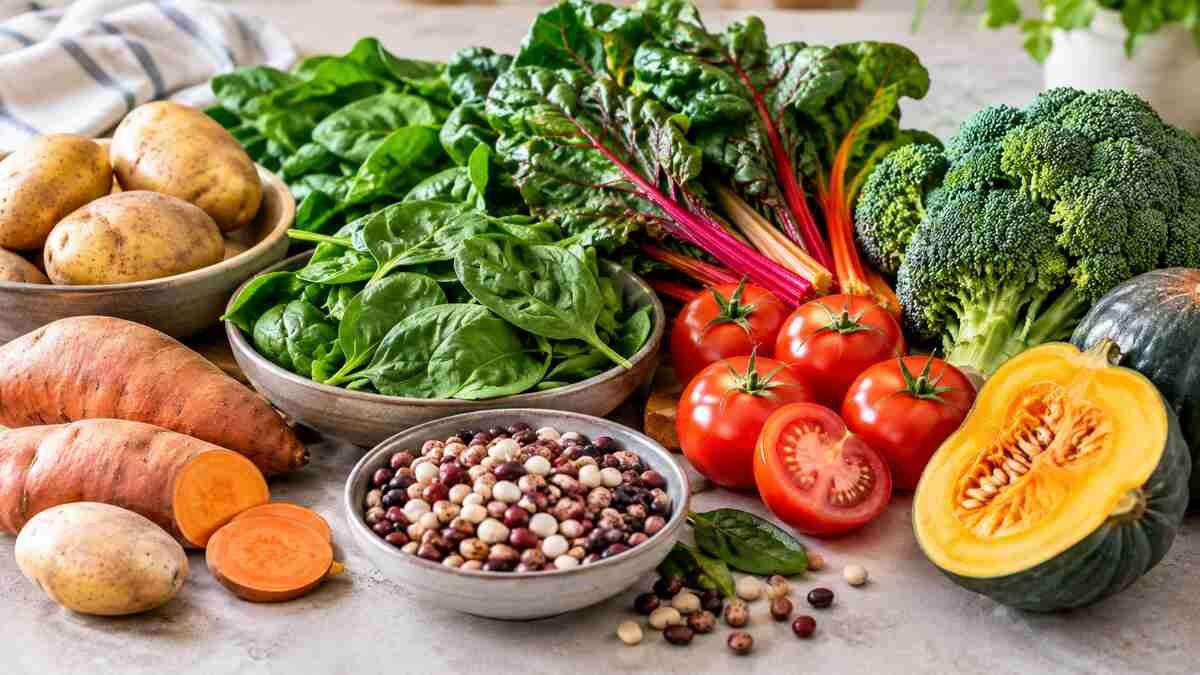

Potatoes, sweet potatoes, cooked spinach, beet greens, Swiss chard, and winter squash are among the most useful vegetable sources of potassium. Exact amounts depend on serving size, variety, and preparation, so a medium baked potato or a half cup of cooked spinach can each supply a meaningful share of daily needs.
Potassium is an essential mineral that helps your nerves send signals, your muscles contract, and your heart keep a steady rhythm. It also works alongside sodium to help regulate fluid balance and blood pressure. Most American adults take in less potassium than recommended, which is one reason health organizations encourage more potassium-containing foods (see the NIH Office of Dietary Supplements potassium fact sheet).
This guide explains how potassium supports the cardiovascular system, which vegetables are good sources, and how to add them to everyday meals. It also covers who needs to be careful with potassium, because it is not the right choice for everyone. No single food prevents heart disease, but a varied eating pattern rich in vegetables is a practical way to support heart health. For a broader look, see our guide to vegetables for heart health.
How Potassium Supports Heart Health
Every heartbeat depends on electrical signals moving in and out of heart cells. Potassium is one of the key electrolytes that make those signals possible. It also supports normal muscle contraction throughout the body, including the muscle of the heart itself.
Potassium also plays a role in blood pressure. Sodium tends to cause the body to hold on to water and can raise blood pressure in many people. Potassium helps the kidneys remove excess sodium through urine and may help relax blood vessel walls. The American Heart Association describes this balance between potassium and sodium as one reason a diet rich in potassium can help support healthy blood pressure.
Research generally supports this link, although results vary between individuals and depend on overall diet. Studies suggest that higher potassium intake is associated with lower blood pressure, especially in people who also eat a lot of sodium. The World Health Organization recommends increasing potassium intake from food for most adults without kidney problems.
A good example of this approach is the DASH eating plan from the National Heart, Lung, and Blood Institute. DASH emphasizes vegetables, fruits, whole grains, low-fat dairy, and legumes, while limiting sodium and saturated fat. Because it is naturally rich in potassium, magnesium, and fiber, it has been shown to lower blood pressure in clinical trials. To learn more about blood pressure itself, read our overview of high blood pressure and our tips on how to lower blood pressure.
Best Potassium-Rich Vegetables to Include in Your Diet
Many vegetables contribute potassium, and the best strategy is to eat a variety. The vegetables below are consistently listed as strong sources by the NIH Office of Dietary Supplements and in the USDA FoodData Central database. Amounts are approximate and change with size, variety, and cooking method.
Potatoes
Potatoes are one of the most commonly eaten potassium sources in the United States. A medium baked potato (flesh only) provides roughly 610 mg of potassium, and leaving the skin on adds more. Despite their reputation, potatoes can fit into a heart-healthy diet when baked, roasted, or boiled rather than fried or loaded with salty toppings.
Try a baked potato topped with plain yogurt, chives, and black pepper. Roasting cubed potatoes with olive oil, garlic, and rosemary also adds flavor without extra salt. If you are comparing different types of produce, our article on starchy vs. non-starchy vegetables explains how potatoes fit into a balanced plate.
Sweet Potatoes
Sweet potatoes provide about 286 mg of potassium in a half cup of cooked sweet potato, along with fiber and beta-carotene, which the body converts to vitamin A. They are versatile and easy to prepare in bulk.
Bake them whole, mash them with a little cinnamon, or cube and roast them for grain bowls. Eating the skin boosts fiber, so scrub them well before cooking.
Spinach and Other Leafy Greens
Cooked spinach is among the richest vegetable sources of potassium, supplying about 420 mg in a half cup. Cooking reduces the volume of leafy greens, so a half cup of cooked spinach contains much more spinach than a half cup of raw leaves.
Add spinach to soups, omelets, pasta sauces, and lentil dishes. You can learn more about this group in our guide to the benefits of leafy green vegetables. Note that spinach is also high in oxalates, which matters for people prone to certain kidney stones, so ask your clinician if that applies to you.
Beet Greens and Swiss Chard
Beet greens and Swiss chard are often overlooked, yet they are strong potassium sources. A half cup of cooked beet greens provides roughly 650 mg, and cooked Swiss chard provides roughly 480 mg, according to USDA data.
Sauté them with garlic and a squeeze of lemon, or stir them into stews near the end of cooking. If you buy whole beets, do not discard the tops. Our article on beetroot health benefits covers the root itself.
Tomatoes and Tomato Products
A medium raw tomato provides about 292 mg of potassium. Tomato products such as paste, puree, and sauce are more concentrated, so a small amount can add a lot of potassium.
The catch is sodium. Many canned sauces, soups, and juices contain added salt, so look for products labeled low sodium or no salt added. Fresh tomatoes in salads, sandwiches, and homemade sauces are an easy way to benefit without the extra sodium.
Winter Squash
Winter squash varieties such as acorn, butternut, and kabocha are good potassium sources. Cooked acorn squash provides roughly 450 mg per half cup, and other varieties offer similar amounts. Our guide to pumpkin health benefits covers a close relative.
Roast squash wedges with a little olive oil, puree them into soup, or stuff halves with grains and vegetables. The seasonings you choose, such as cinnamon, smoked paprika, or sage, can replace much of the salt.
Broccoli
Cooked broccoli provides about 229 mg of potassium per half cup, plus vitamin C, vitamin K, and fiber. It is not the highest potassium vegetable, but it contributes steadily when eaten often. It also belongs to the group covered in our guide to cruciferous vegetables.
Steam it lightly, roast it until the edges brown, or add it to stir-fries. Frozen broccoli works just as well; our article on whether frozen vegetables are healthy explains why.
Beans and Legumes
Beans and lentils are not botanically vegetables, but they are plant foods that can contribute substantial potassium. A half cup of cooked lentils provides roughly 365 mg, and many cooked beans offer similar or higher amounts. They also supply fiber and plant protein.
Use them in soups, salads, curries, and grain bowls. If you use canned beans, rinse and drain them to remove some of the added sodium. Our list of high-fiber foods for digestive health includes more legume ideas.
Potassium Content of Common Vegetables
The table below gives approximate potassium values for common vegetables. It is a quick reference, not a complete ranking of every vegetable. Beet greens, Swiss chard, winter squash, and legumes also provide large amounts but are listed in the section above.
| Vegetable | Serving | Approximate potassium |
|---|---|---|
| Baked potato, flesh only | 1 medium | 610 mg |
| Cooked spinach | ½ cup | 420 mg |
| Cooked broccoli | ½ cup | 229 mg |
| Raw tomato | 1 medium | 292 mg |
| Cooked sweet potato | ½ cup | 286 mg |
| Cooked zucchini | ½ cup | 280 mg |
Values are approximate and may vary with vegetable size, variety, and preparation. Sources: NIH Office of Dietary Supplements and USDA FoodData Central.
Serving size matters as much as the food itself. A large baked potato contains more potassium than a medium one, and a cup of raw spinach contains far less than a cup of cooked spinach. Cooking methods also affect content: boiling can move some potassium into the cooking water, while steaming, roasting, and microwaving tend to retain more. For more on this, see our comparison of raw vs. cooked vegetables.
How to Add More Potassium-Rich Vegetables to Your Meals
Small, repeatable habits work better than dramatic changes. Start by adding one potassium-rich vegetable to meals you already eat. Our guide on how to eat more vegetables offers more ideas.
Here are some simple combinations to try:
- Spinach with lentils: Stir cooked spinach into a lentil soup or stew.
- Baked potatoes: Top with beans, salsa, or plain yogurt instead of salty cheese sauces.
- Vegetable curries: Combine sweet potatoes, tomatoes, and chickpeas with a spice blend.
- Tomato-based soups: Use no-salt-added tomatoes and finish with fresh basil.
- Steamed greens: Serve chard or beet greens with garlic and lemon juice.
Sodium and potassium work together, so it helps to lower salt while you raise potassium. Season with herbs, spices, garlic, onion, citrus juice, or vinegar instead of relying on the salt shaker. Our article on garlic for high blood pressure discusses one flavorful option.
To build full meals around these ingredients, browse our list of heart-healthy foods and the Mediterranean diet, which naturally emphasizes vegetables and legumes.
Who Should Be Careful With Potassium Intake?
For most healthy adults, getting potassium from food is safe and beneficial. However, increasing potassium is not appropriate for everyone. People with chronic kidney disease may not be able to remove potassium efficiently, which can cause hyperkalemia (high blood potassium). Hyperkalemia can lead to dangerous heart rhythm problems.
Certain medicines can also raise potassium levels. These include some blood pressure medicines, such as ACE inhibitors, angiotensin receptor blockers, and potassium-sparing diuretics. Potassium supplements and potassium-based salt substitutes can add significant amounts quickly, so they should not be used without medical guidance.
If you have kidney disease, heart failure, diabetes, or take any of these medicines, ask your healthcare professional or a registered dietitian about your potassium needs before changing your diet. The National Kidney Foundation provides more information on potassium and kidney health. Contact a medical professional promptly if you experience muscle weakness, an irregular heartbeat, or unusual fatigue, and seek emergency care for chest pain or severe symptoms. Our guide on when chest pain is an emergency can help you recognize urgent warning signs.
Frequently Asked Questions
Which vegetables are highest in potassium?
Potatoes, sweet potatoes, cooked spinach, beet greens, Swiss chard, and some winter squash are among the best vegetable sources. The amount you get depends on serving size and preparation. The NIH Office of Dietary Supplements lists values for many common foods.
Why is potassium important for heart health?
Potassium helps heart cells conduct electrical signals and helps muscles, including the heart, contract normally. It also helps the body balance sodium, which affects blood pressure. Adequate intake supports normal heart function but does not prevent heart disease on its own.
Are potatoes good sources of potassium?
Yes. A medium baked potato provides roughly 610 mg of potassium, more than many other vegetables. Baking, roasting, or boiling them with the skin on and limiting salty toppings keeps them heart-friendly.
Does cooking reduce potassium in vegetables?
It can. Potassium dissolves in water, so boiling vegetables and discarding the water may lower the amount you eat. Steaming, roasting, and microwaving usually retain more, and you can reuse cooking liquid in soups and sauces.
Can potassium-rich vegetables help blood pressure?
They may help support healthy blood pressure as part of an overall pattern like the DASH eating plan. Results vary from person to person, and vegetables work best alongside less sodium, regular activity, and any prescribed treatment. See our article on vegetables and blood pressure for more.
How much potassium should I get each day?
The National Academies set an Adequate Intake of 3,400 mg per day for adult men and 2,600 mg per day for adult women, as summarized by the NIH Office of Dietary Supplements. Needs differ with age, pregnancy, health conditions, and medicines, so ask your clinician what is right for you.
Can people with kidney disease eat potassium-rich vegetables?
It depends on the stage of kidney disease and lab results. Some people must limit potassium, while others do not. A nephrologist or renal dietitian can give personalized guidance; the National Kidney Foundation offers background information.
Are potassium supplements better than vegetables?
For most people, no. Food sources provide fiber, vitamins, and other nutrients, and they are less likely to cause excess potassium. Over-the-counter supplements are limited in dose for safety reasons, and high doses can be risky, so use them only under medical supervision.
Conclusion
Potassium-rich vegetables such as potatoes, sweet potatoes, spinach, Swiss chard, tomatoes, winter squash, and broccoli make it easier to support healthy blood pressure and normal heart function through everyday meals. Variety, sensible portions, and low-sodium cooking matter more than any single food.
Pair these choices with other heart-healthy foods for lasting benefit. If you have kidney disease or take medicines that affect potassium, follow your healthcare professional’s advice before making changes.
Sources
- National Institutes of Health, Office of Dietary Supplements. Potassium: Fact Sheet for Health Professionals
- National Institutes of Health, Office of Dietary Supplements. Potassium: Fact Sheet for Consumers
- National Heart, Lung, and Blood Institute. DASH Eating Plan
- American Heart Association. How Potassium Can Help Control High Blood Pressure
- U.S. Department of Agriculture. FoodData Central
- World Health Organization. Guideline: Potassium Intake for Adults and Children
- National Kidney Foundation. Potassium and Your CKD Diet
Medical Disclaimer: This article is for general educational purposes only and is not medical advice. It does not diagnose, treat, or replace guidance from a qualified healthcare professional who knows your health history. Talk with your doctor or a registered dietitian before changing your diet, especially if you have kidney disease or take medicines that affect potassium. If you think you may be having a medical emergency, call 911 or your local emergency number right away.