
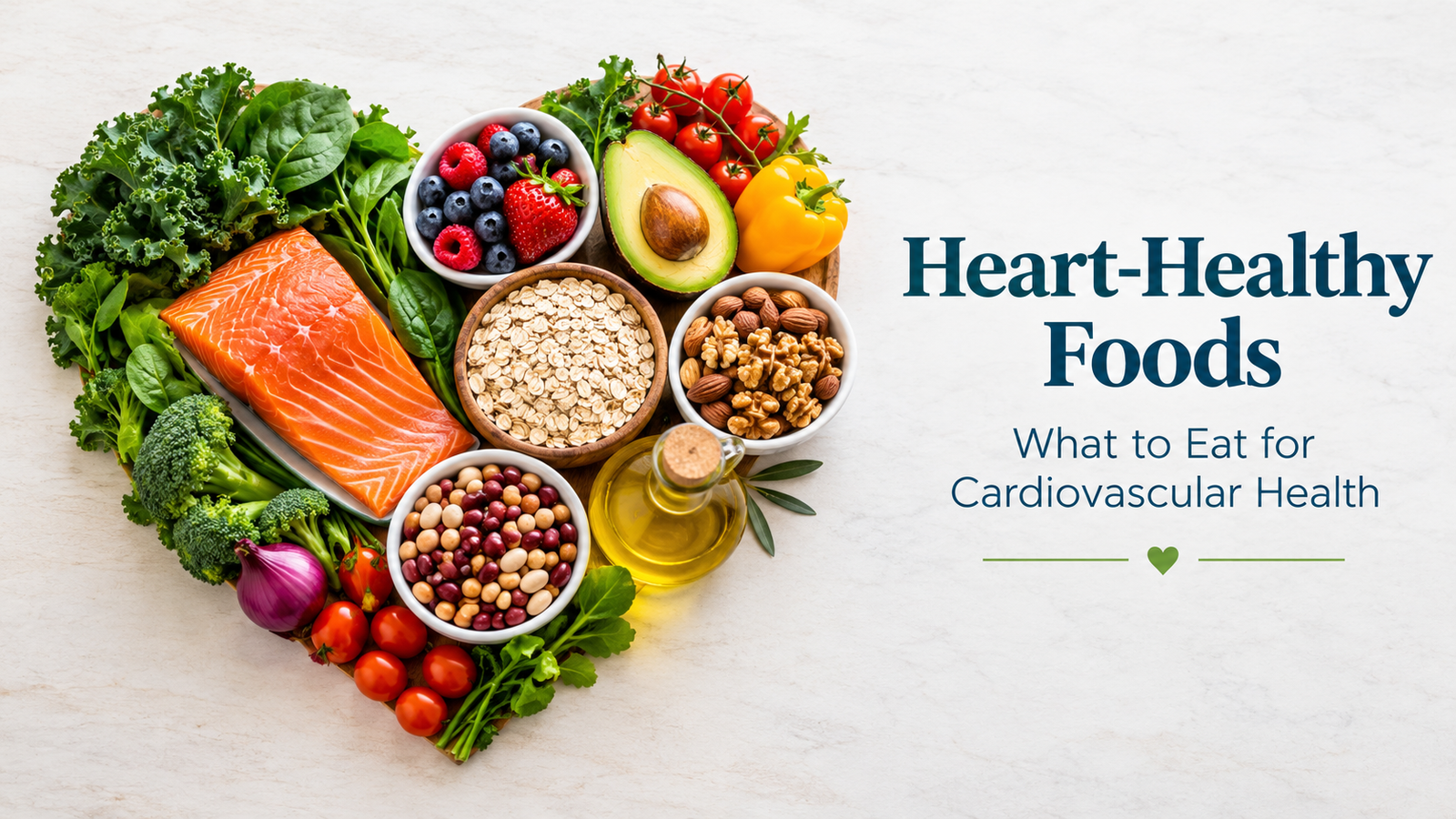

Heart health isn’t about finding one miracle food. It’s shaped by your overall eating pattern — the mix of vegetables, fruits, whole grains, legumes, nuts and seeds, fish, and healthy fats you eat most days.
The American Heart Association’s current dietary guidance centers on exactly this kind of pattern: plenty of vegetables and fruits, whole grains, healthy protein sources, unsaturated fats, minimally processed foods, and lower amounts of sodium and added sugar.
Instead of suggesting a full diet overhaul, this guide focuses on foods to add, smart substitutions, and practical ways to build heart-healthy habits day to day.
Important: This article is for general information and is not a substitute for professional medical advice.
What Makes a Food Heart-Healthy?
A few shared characteristics show up across most heart-supportive foods and eating patterns:
- High in fiber
- Rich in vegetables and fruits
- Built around whole grains rather than refined ones
- Includes plant-based proteins
- Features fish and seafood
- Emphasizes unsaturated fats over saturated fats
- Lower in sodium
- Little or no added sugar
- Minimally processed
No single food checks every box, and that’s fine. What matters most is your overall eating pattern over weeks and months, not any one meal or ingredient.
10 Heart-Healthy Foods to Add to Your Diet
1. Leafy Green Vegetables
Spinach, kale, collard greens, cabbage, and other leafy greens are rich in fiber, vitamins, and minerals. They’re easy to fold into salads, soups, smoothies, or simple sautés.
2. Berries and Other Fruits
Berries, apples, oranges, bananas, and grapes provide fiber and natural sweetness. Whole fruit makes an easy swap for desserts or highly processed snacks when a craving hits.
3. Whole Grains
Oatmeal, brown rice, whole-grain bread, whole-wheat pasta, and barley provide more fiber and nutrients than their refined counterparts. The NHLBI’s DASH eating plan recommends whole grains like these as part of a heart-healthy pattern, in place of white bread or white rice.
4. Fatty Fish
Salmon, trout, tuna, and sardines are good protein sources that also provide omega-3 fatty acids. These fats are associated with cardiovascular benefits, though no single food guarantees a specific health outcome on its own.
5. Beans and Legumes
Lentils, chickpeas, black beans, kidney beans, and peas offer fiber and plant-based protein in one package. They’re also versatile — soups, salads, and grain bowls all work well with them.
6. Nuts and Seeds
Walnuts, almonds, chia seeds, flaxseeds, and sunflower seeds provide healthy fats and fiber. Choose minimally processed, unsalted varieties when possible, and keep portions modest since nuts are calorie-dense.
7. Avocados
Avocados are a good source of unsaturated fat and can replace higher-saturated-fat spreads or toppings, like butter or mayonnaise, in many recipes.
8. Olive and Other Unsaturated Vegetable Oils
Cooking with olive oil or other nontropical vegetable oils in place of butter or other saturated fats is one of the simplest changes to make. The idea is substitution, not addition — swapping the type of fat rather than just adding more.
9. Low-Fat or Fat-Free Dairy
Plain yogurt, low-fat milk, and reduced-fat dairy products provide protein and calcium while generally containing less saturated fat than full-fat versions.
10. Vegetables Rich in Potassium
Sweet potatoes, tomatoes, potatoes, beans, and spinach are good potassium sources. Potassium-rich foods are part of a broader blood-pressure-friendly eating pattern like DASH, though no individual food treats high blood pressure on its own. If you’re managing high blood pressure, talk with your doctor about how diet fits into your overall care plan.
Foods to Limit for Cardiovascular Health
Rather than sorting foods into strict “good” and “bad” categories, it helps to think about what’s worth limiting — and what you can swap in instead.
Foods High in Saturated Fat
Fatty cuts of meat, butter, full-fat dairy, certain processed meats, and tropical oils (like coconut and palm oil) are common sources. The American Heart Association notes that saturated fats can raise LDL cholesterol, and recommends replacing them with unsaturated fat sources rather than simply cutting fat altogether.
Processed and Cured Meats
Bacon, sausage, ham, hot dogs, and deli meats tend to be high in sodium and saturated fat. Enjoying these occasionally is different from making them a daily habit.
High-Sodium Foods
Processed meals, salty snacks, some canned foods, processed meats, and certain sauces and condiments can add up quickly. The NHLBI’s DASH guidance recommends limiting sodium to around 2,300 mg per day for most people, noting that 1,500 mg may lower blood pressure further for some.
Foods and Drinks High in Added Sugar
Sugary drinks, candy, sweetened desserts, and heavily sweetened breakfast foods contribute calories with little nutritional value.
Highly Processed Foods
The goal isn’t to eliminate every packaged food from your kitchen. It’s to make minimally processed foods — vegetables, whole grains, legumes, fresh proteins — the foundation of most meals, with packaged convenience foods filling in around the edges.
Simple Food Swaps for a Healthier Heart
Small substitutions add up over time.
| Instead of | Try |
|---|---|
| White bread | Whole-grain bread |
| Sugary cereal | Oatmeal with fruit |
| Processed meat | Beans, fish, or lean protein |
| Butter | Unsaturated vegetable oils |
| Salty chips | Unsalted nuts or vegetables |
| Sugary drinks | Water or unsweetened beverages |
| Refined grains | Whole grains |
| Full-fat dairy | Low-fat or fat-free options |
Focus on substitution rather than simply adding more food on top of your current habits — it’s a more sustainable way to shift your overall pattern.
What Does a Heart-Healthy Day of Eating Look Like?
This is an illustrative example, not a medically prescribed meal plan.
Breakfast: Oatmeal, berries, unsalted nuts, and plain low-fat yogurt
Lunch: Bean and vegetable salad with whole-grain bread and fresh fruit
Snack: An apple with a small portion of unsalted nuts
Dinner: Grilled salmon or another fish, brown rice or another whole grain, steamed vegetables, and a salad with an unsaturated-oil-based dressing
Dessert/sweet option: Fresh fruit, or plain yogurt with fruit
Adjust portions and ingredients to fit your preferences, calorie needs, and any conditions your doctor is helping you manage.
Which Eating Patterns Support Heart Health?
A few well-studied eating patterns share many of the same principles covered above.
DASH Diet
DASH (Dietary Approaches to Stop Hypertension) emphasizes vegetables, fruits, whole grains, low-fat dairy, fish, poultry, beans, and nuts, while limiting saturated fat, sodium, and added sugars. The NHLBI developed DASH specifically to support healthy blood pressure alongside broader cardiovascular health.
Mediterranean-Style Eating
This pattern emphasizes vegetables, fruits, whole grains, legumes, nuts, fish, and unsaturated fats like olive oil. Our full guide to the Mediterranean diet covers how to get started.
Plant-Forward Eating
You don’t need to eliminate animal products to eat more plant-forward. Simply increasing vegetables, legumes, nuts, seeds, and whole grains — while keeping fish, poultry, or lean meats in smaller portions — is a practical, flexible approach for many people.
These patterns overlap significantly with the foods and swaps covered earlier in this guide. If you’re managing risk factors related to heart disease, any of these approaches can be a reasonable starting point to discuss with your doctor.
Frequently Asked Questions About Heart-Healthy Foods
What is the best food for heart health? There isn’t one single best food. Overall dietary patterns — rich in vegetables, whole grains, legumes, and unsaturated fats — matter far more than any individual ingredient.
Are eggs heart-healthy? Eggs can fit into a heart-healthy diet for many people as part of a balanced overall pattern. If you have specific cholesterol concerns, ask your doctor how eggs fit into your individual plan.
Is oatmeal good for your heart? Yes, as a whole grain, oatmeal provides fiber that supports a heart-healthy eating pattern. Watch for added sugar in flavored or instant varieties.
Are bananas good for heart health? Bananas are a fruit and a source of potassium, both of which fit well into a heart-healthy diet. They don’t independently prevent cardiovascular disease, but they’re a reasonable everyday choice.
What foods help lower cholesterol? Dietary patterns that emphasize soluble fiber — found in oats, beans, and fruits — and that replace saturated fats with unsaturated fats can support healthier cholesterol levels over time.
What foods should you avoid for heart health? Foods high in saturated fat, sodium, and added sugars, along with heavily processed foods, are generally worth limiting rather than making a daily habit.
Is fish good for your heart? Yes. Fish, especially fatty fish like salmon and sardines, is a recommended protein source in most heart-healthy eating patterns, partly due to its omega-3 content.
Can diet help lower blood pressure? Yes, dietary approaches such as DASH can help lower blood pressure, particularly alongside other lifestyle measures like regular physical activity and sodium reduction. The NHLBI reports that DASH can lower blood pressure and improve lipid profiles for many people.
When to Talk With a Healthcare Professional
Diet is one part of a bigger picture. Speak with a doctor or registered dietitian before making significant dietary changes if you have heart disease, high blood pressure, high cholesterol, diabetes, kidney disease, or another medical condition. A professional can help tailor these general principles to your specific health needs.
If you’re building a broader understanding of cardiovascular risk, our overview of heart health is a good place to start, along with our guide to what causes shortness of breath if you’re evaluating symptoms alongside dietary changes.
Key Takeaways
- Heart health depends on overall dietary patterns, not single “superfoods.”
- Vegetables, fruits, whole grains, legumes, nuts, seeds, and fish form the foundation of most heart-healthy diets.
- Choosing unsaturated fats over saturated fats supports healthier cholesterol levels.
- Limiting sodium, added sugar, and highly processed foods matters as much as what you add.
- DASH and Mediterranean-style eating are two well-studied patterns that reflect these same principles.
- Small, sustainable swaps tend to work better long term than dramatic overhauls.
This article is for educational purposes only and is not a substitute for personalized medical advice. If you have heart disease, high blood pressure, high cholesterol, diabetes, kidney disease, or another medical condition, speak with your healthcare professional before making significant dietary changes.
Sources:
- American Heart Association — AHA Diet and Lifestyle Recommendations
- National Heart, Lung, and Blood Institute (NHLBI, NIH) — DASH Eating Plan
10 thoughts on “Heart-Healthy Foods: What to Eat for Cardiovascular Health”
Comments are closed.