

Important: This article is for general information only and is not a substitute for professional medical advice, diagnosis, or treatment.
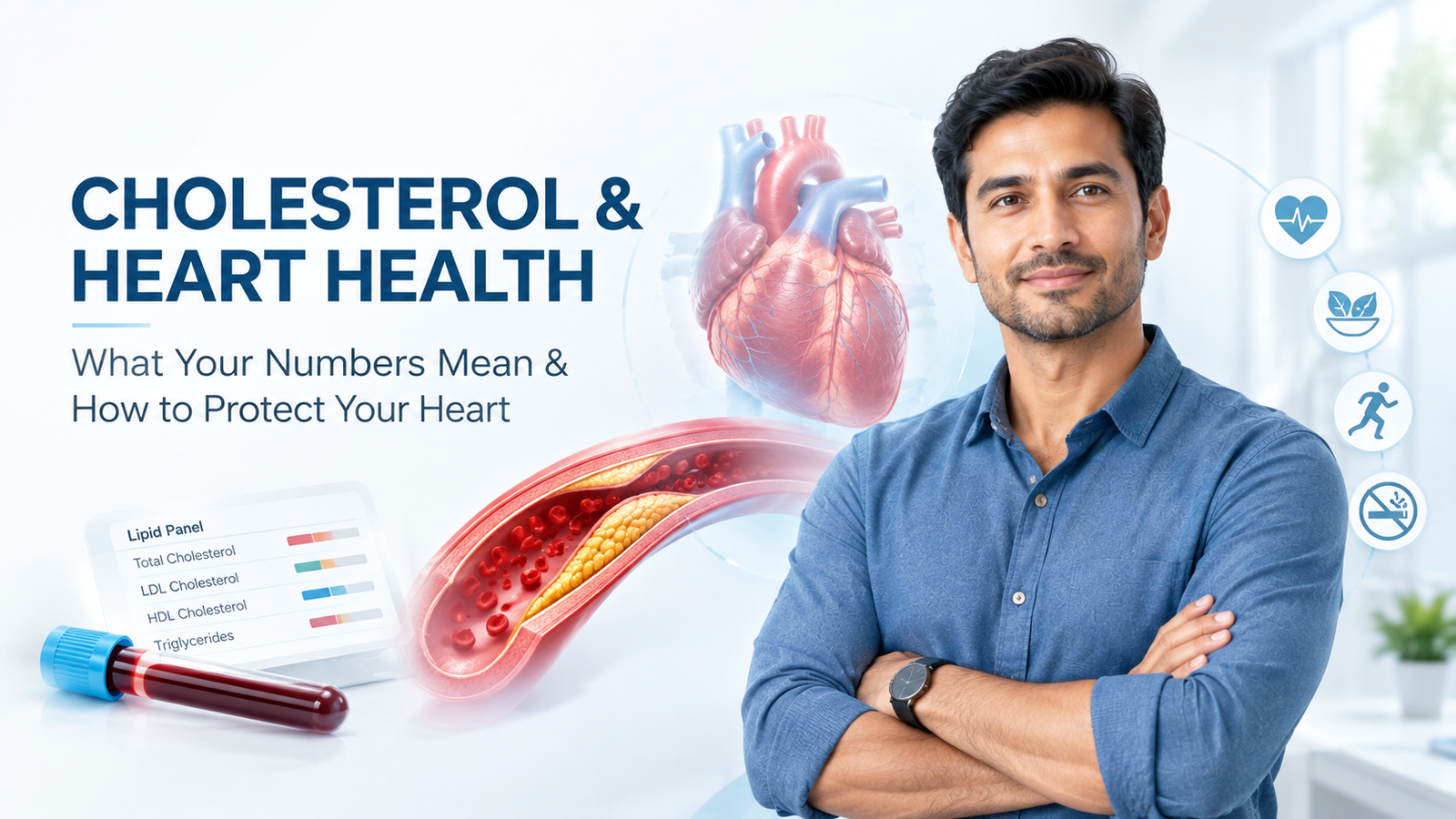
Cholesterol is a waxy substance your body needs, but persistently high levels of certain blood lipids, especially LDL cholesterol, can contribute to plaque buildup in your arteries and raise cardiovascular risk. A lipid panel measures cholesterol and triglycerides and helps healthcare professionals assess your overall heart-health risk.
Many people with high cholesterol have no symptoms at all. That’s exactly why understanding your numbers, rather than waiting to feel something, matters so much.
This guide covers what cholesterol actually is, how LDL, HDL, and triglycerides differ, what a lipid panel shows, and what you can realistically do to protect your heart, drawing on the newly updated 2026 ACC/AHA Guideline on the Management of Dyslipidemia, which replaced the previous 2018 cholesterol guideline.
What is cholesterol?
Cholesterol is a waxy, fat-like substance your body produces naturally and uses for several essential functions.
Why does your body need cholesterol?
According to the American Heart Association, cholesterol helps build new cells, produces certain hormones, and supports substances that help digest food. It’s also involved in vitamin D production. Cholesterol isn’t inherently harmful; your body genuinely can’t function without it.
Where does cholesterol come from?
Cholesterol comes from two sources. Your liver makes all the cholesterol your body needs on its own. The rest comes from foods derived from animals. Because your liver already produces what you need, blood cholesterol isn’t simply a direct, one-to-one reflection of how much cholesterol you eat; genetics, overall diet pattern, and individual metabolism all play significant roles too.
How does cholesterol affect heart health?
The connection between cholesterol and cardiovascular disease centers on a process called atherosclerosis, the gradual buildup of plaque inside artery walls.
LDL cholesterol and plaque buildup
LDL (low-density lipoprotein) cholesterol contributes to fatty deposits forming in artery walls over time. The AHA identifies LDL as a major contributor to this buildup, and it’s associated with an increased risk of heart attack, stroke, and peripheral artery disease.
How atherosclerosis can affect the heart
The general progression looks like this: elevated atherogenic lipids circulate in the blood, contribute to plaque buildup in artery walls, and that plaque can narrow or damage arteries over time, which can eventually lead to cardiovascular events like heart attack or stroke. It’s worth being clear that this isn’t an inevitable progression for every single person with elevated cholesterol. Overall risk depends on many factors working together, not cholesterol in isolation.
Cholesterol and heart attack risk
The 2026 ACC/AHA guideline places particular emphasis on reducing prolonged exposure to unhealthy lipoproteins over a person’s lifetime, rather than only addressing cholesterol once it’s already elevated later in life. Long-term exposure, not just a single high reading, is part of what drives cumulative cardiovascular risk.
Cholesterol and stroke risk
The same atherosclerotic process that affects the heart’s arteries can affect the blood vessels supplying the brain. When plaque buildup restricts or blocks blood flow to the brain, it can contribute to ischemic stroke, the most common type of stroke.
Understanding LDL, HDL, and triglycerides
A lipid panel reports several distinct measurements, and each one tells you something different.
What is LDL cholesterol?
LDL, or low-density lipoprotein, is commonly called “bad” cholesterol because of its direct role in artery plaque buildup. Lower LDL-C is generally associated with lower cardiovascular risk, particularly for people who are already at elevated risk for heart disease.
What is HDL cholesterol?
HDL, or high-density lipoprotein, is traditionally called “good” cholesterol because it helps carry excess cholesterol away from the arteries and back to the liver for processing. That said, according to the AHA, HDL is not itself a treatment target for lowering heart disease or stroke risk, and it shouldn’t be interpreted in isolation. A high HDL number is one piece of your overall risk picture, not a guarantee that offsets other risk factors.
What are triglycerides?
Triglycerides are the most common type of fat in your body, and they store excess energy from the food you eat. According to the AHA, elevated triglycerides, particularly when combined with high LDL or low HDL, are associated with plaque buildup in artery walls. Very high triglyceride levels can also raise concerns beyond cardiovascular risk, including a risk of pancreatitis.
What is a lipid panel?
A lipid panel is the standard blood test used to evaluate your cholesterol and related lipid levels.
What does a lipid panel measure?
A typical lipid panel reports:
- Total cholesterol
- LDL-C
- HDL-C
- Triglycerides
- Non-HDL cholesterol, when included
Do you need to fast before a cholesterol test?
Fasting requirements depend on the specific test and your individual clinical situation. Some labs and providers now allow non-fasting lipid panels for general screening, while others still prefer fasting samples, particularly when triglycerides are a specific concern. Follow the instructions given by your healthcare professional or testing facility rather than assuming one rule applies universally.
How often should cholesterol be checked?
There’s no single schedule that fits everyone. Testing frequency depends on your age, existing risk factors, previous results, whether you’re on treatment, and your broader medical history. The 2026 dyslipidemia guidance expands attention to lipid screening and risk assessment across the lifespan, including earlier screening recommendations for children and young adults in appropriate circumstances. Your healthcare provider is the right source for a personalized testing schedule.
What do cholesterol numbers mean?
Understanding your specific numbers requires context, not just comparing them to one fixed chart.
Understanding your LDL number
The 2026 ACC/AHA guideline reintroduced specific LDL-C treatment goals after the 2018 guideline had moved toward percentage-based reduction targets instead. Current goals include an LDL-C target below 100 mg/dL for people at borderline or intermediate cardiovascular risk, below 70 mg/dL for those at high risk, and below 55 mg/dL for people with existing atherosclerotic cardiovascular disease who are at very high risk, as part of secondary prevention. Which target applies to you depends on your overall cardiovascular risk, not on your LDL number in isolation.
Understanding HDL
HDL is considered as part of your overall lipid profile rather than interpreted on its own. Your healthcare provider factors it into a broader risk assessment rather than treating it as an independent target to chase.
Understanding triglycerides
Elevated triglycerides can indicate several things, including diet, physical inactivity, excess weight, or an underlying metabolic condition. The degree of elevation matters; mildly elevated triglycerides carry different implications than severely elevated levels.
Why there isn’t one “perfect” cholesterol number
The 2026 guideline’s risk-based approach reflects an important reality: the appropriate cholesterol target for any individual depends on their overall cardiovascular risk profile, not a single number that applies to everyone equally. Someone with no other risk factors and someone with diabetes or existing heart disease may have meaningfully different appropriate targets, even with identical LDL numbers.
What causes high cholesterol?
High cholesterol doesn’t have one universal cause. Several factors, often overlapping, contribute to elevated levels.
Diet and lifestyle
Dietary patterns high in saturated fat, physical inactivity, excess alcohol intake, and carrying excess body weight can all contribute to unfavorable cholesterol levels.
Genetics and family history
Some people have a genetic condition called familial hypercholesterolemia, which causes significantly elevated LDL cholesterol from a young age, regardless of diet or lifestyle. A family history of premature cardiovascular disease is also an important risk factor. It’s entirely possible to have elevated cholesterol despite an otherwise healthy lifestyle; genetics plays a real, independent role.
Medical conditions
Several medical conditions can affect lipid levels, including diabetes, kidney disease, and thyroid disorders. Managing these underlying conditions is often part of managing cholesterol effectively.
Medications and other factors
Certain medications and medical circumstances can also affect cholesterol and triglyceride levels. It’s worth being clear that diet isn’t the explanation for every case of elevated cholesterol; genetics and underlying health conditions frequently play a bigger role than people expect.
Lipoprotein(a): the cholesterol-related risk factor you may not know
This is one of the more significant updates in the 2026 dyslipidemia guideline, and it’s worth understanding even though it’s less commonly discussed than LDL or HDL.
What is lipoprotein(a)?
Lipoprotein(a), often written as Lp(a), is a distinct, LDL-like particle in your blood that carries its own cardiovascular risk, separate from standard cholesterol measurements.
Why does Lp(a) matter for heart health?
Elevated Lp(a) is associated with meaningfully increased cardiovascular risk. According to expert commentary on the 2026 guideline published via HCPLive, Lp(a) values above roughly 125 nmol/L are associated with a notable increase in risk, with even higher levels carrying risk comparable to inherited conditions like familial hypercholesterolemia.
Is Lp(a) included in a standard cholesterol test?
No. Lp(a) is a separate blood measurement, not automatically part of a routine lipid panel. It needs to be specifically ordered.
How often should Lp(a) be tested?
The 2026 ACC/AHA guideline recommends measuring Lp(a) at least once in adulthood as part of overall cardiovascular risk assessment, given a Class I recommendation, the guideline’s strongest level. Because Lp(a) levels are largely determined by genetics and stay relatively stable across a lifetime, a single measurement is generally sufficient. This also means Lp(a) isn’t something lifestyle changes dramatically alter, unlike LDL cholesterol, which does respond to diet, activity, and medication.
What is apolipoprotein B (ApoB)?
ApoB is another lipid-related measurement gaining more attention in current cardiovascular guidance.
What ApoB represents
Apolipoprotein B is a protein found on the surface of LDL and other atherogenic lipoprotein particles. Rather than measuring the amount of cholesterol these particles carry, ApoB measures the actual number of potentially artery-damaging particles circulating in your blood.
Why it can provide additional information
For some people, standard LDL-C measurements can underrepresent true lipid-related risk. ApoB can offer a more complete picture in these cases, since particle number sometimes tells a different story than particle cholesterol content alone.
Who may benefit from having it measured
The 2026 guideline identifies ApoB as potentially useful for refining risk assessment, particularly in people with diabetes, elevated triglycerides, or very low LDL cholesterol, situations where standard LDL estimation may not fully capture underlying risk.
How to improve cholesterol and heart health
Lifestyle changes remain foundational to cardiovascular prevention, even as newer risk markers and medications expand the toolkit available to healthcare providers.
Eat a heart-healthy diet
Rather than chasing individual “miracle foods,” focus on an overall dietary pattern. Helpful choices include vegetables and fruits, whole grains, beans and legumes, nuts and seeds, unsaturated fats, and lean or plant-based protein sources, while limiting foods high in saturated fat, added sugars, and excess sodium. Our guide to heart-healthy foods covers specific choices in more depth, and our overview of the Mediterranean diet covers one of the most researched heart-healthy eating patterns available. Healthy fats and omega-3 fatty acids deserve particular attention for their cardiovascular benefits.
Exercise regularly
Regular aerobic activity and strength training both support healthier lipid levels and cardiovascular function overall, alongside reducing sedentary time throughout the day. Our dedicated guide to exercise and heart health covers how much activity you actually need and how to build a routine safely.
Maintain a healthy weight
Excess weight is associated with less favorable lipid and metabolic health, though this is best approached as one factor among several rather than the sole focus. Our guide to weight management covers sustainable approaches to this goal.
Don’t smoke or use tobacco
Avoiding tobacco supports cardiovascular health broadly, including its relationship with cholesterol and blood vessel function.
Get adequate sleep
Sleep is an increasingly recognized part of overall cardiovascular health strategy, not a separate, unrelated habit. Our guide to how to improve sleep covers practical, evidence-based approaches.
Manage other heart-risk factors
The 2026 guideline emphasizes comprehensive risk reduction rather than treating cholesterol in isolation. This means managing blood pressure, blood glucose, diabetes, physical activity, and tobacco exposure together, since these factors interact rather than existing independently. Our guides to what diabetes is and how to lower blood pressure cover these related risk factors in more depth.
Cholesterol-lowering medications
For some people, lifestyle changes alone aren’t enough to reach an appropriate cholesterol target, and medication becomes part of the picture.
Statins
Statins are the most widely used cholesterol-lowering medication and remain central to lipid-lowering treatment in the 2026 guideline. They work by reducing the liver’s cholesterol production, which lowers LDL levels. Statins are used both for primary prevention, in people who haven’t yet had a cardiovascular event but are at elevated risk, and for secondary prevention, in people who already have cardiovascular disease.
Other cholesterol-lowering medications
Beyond statins, several other medication classes are available for selected patients, including ezetimibe, PCSK9-targeting therapies, and bempedoic acid, among others. The 2026 guideline incorporates these additional therapies for people who need more than statin therapy alone, or who can’t tolerate statins.
When might medication be recommended?
The decision to start medication depends on multiple factors together: your LDL-C level, overall cardiovascular risk, whether you have existing cardiovascular disease, diabetes and other medical conditions, family history, and other risk-enhancing factors. This is fundamentally a conversation between you and your healthcare provider, not a decision to make from a general article. Never start, stop, or change a cholesterol medication without talking to your healthcare professional first.
Can you lower cholesterol without medication?
For many people, yes, at least to some degree. For others, lifestyle changes alone aren’t sufficient.
What lifestyle changes can help?
Diet, physical activity, weight management, and avoiding tobacco can all meaningfully improve cholesterol levels for many people, sometimes substantially.
When lifestyle changes may not be enough
Genetics and baseline cardiovascular risk both matter here. Some people, particularly those with familial hypercholesterolemia or other strong genetic contributors, need medication even while following a genuinely heart-healthy lifestyle. The current ACC/AHA guidance emphasizes optimizing lifestyle factors while also supporting earlier consideration of lipid-lowering medication for people in appropriate risk categories, recognizing that lifestyle and medication aren’t an either-or choice for many people.
Cholesterol and heart health at different ages
Cardiovascular risk accumulates over a lifetime, which is part of why age-specific context matters.
Cholesterol in young adults
Long-term exposure to elevated lipids matters more than many young adults realize. Family history of premature heart disease is a particularly important consideration at this stage, since it can signal a need for earlier evaluation than routine screening might otherwise suggest.
Cholesterol in middle age
This is often when cumulative cardiovascular risk becomes more clinically relevant, and comprehensive risk assessment, incorporating cholesterol alongside blood pressure, blood sugar, and other factors, becomes increasingly important.
Cholesterol in older adults
Treatment decisions for older adults should consider overall health status, cardiovascular risk, existing disease, current medications, and individual circumstances, rather than applying the same approach used for younger adults automatically.
Children and familial hypercholesterolemia
Inherited high cholesterol can appear in childhood. A strong family history of early heart disease or very high cholesterol can warrant earlier evaluation in children than routine screening would otherwise call for.
Cholesterol and heart disease: common myths
A few persistent misconceptions are worth addressing directly.
Myth 1: “All cholesterol is bad.”
Your body needs cholesterol to function. The issue isn’t cholesterol’s presence; it’s persistently elevated levels of specific atherogenic lipoproteins over time.
Myth 2: “If I feel healthy, my cholesterol must be normal.”
Many people with high cholesterol have no symptoms at all. Feeling fine doesn’t tell you anything about your lipid levels; only a blood test can.
Myth 3: “Only older adults need to worry about cholesterol.”
Cardiovascular risk accumulates over decades, and inherited cholesterol disorders can affect people from childhood. Cholesterol is relevant across the entire lifespan, not just later in life.
Myth 4: “HDL cancels out high LDL.”
A favorable HDL number doesn’t simply erase LDL-related risk. HDL is one piece of a larger picture, not a counterbalance that offsets everything else.
Myth 5: “Diet is the only reason cholesterol is high.”
Genetics and medical conditions frequently play a larger role than diet alone. Someone can eat a genuinely healthy diet and still have elevated cholesterol due to factors outside their control.
Myth 6: “If I take a cholesterol medication, lifestyle no longer matters.”
Medication and lifestyle changes work together, not as substitutes for one another. Continuing healthy habits alongside medication generally produces better overall cardiovascular outcomes than relying on medication alone.
When should you talk to a healthcare professional about cholesterol?
Consider bringing up cholesterol at your next appointment, or scheduling one specifically, if:
- You haven’t had a lipid panel in a while
- Your results come back unexpectedly high
- You have a family history of premature heart disease or high cholesterol
- You have diabetes, kidney disease, or other cardiovascular risk factors
- You’ve been previously diagnosed with cardiovascular disease
- You’re concerned about medication or treatment options
- You want to understand whether additional testing, like Lp(a), ApoB, or coronary artery calcium scoring, is appropriate for you
A specific cholesterol number doesn’t automatically require a particular treatment; the right approach always depends on your broader risk profile and clinical context, determined together with your healthcare provider.
Frequently asked questions
Does high cholesterol cause heart disease?
Persistently elevated LDL cholesterol and other atherogenic lipids contribute to plaque buildup in the arteries, which raises the risk of heart disease and stroke over time. Cholesterol is one significant, well-documented risk factor among several, not the sole cause on its own.
What cholesterol level is considered healthy?
There isn’t one universal number. Healthy targets depend on your overall cardiovascular risk. Current guidance uses LDL-C goals ranging from below 100 mg/dL to below 55 mg/dL depending on individual risk level, rather than a single target for everyone.
What is the difference between LDL and HDL?
LDL is often called “bad” cholesterol because it contributes to plaque buildup in artery walls. HDL is called “good” cholesterol because it helps carry excess cholesterol away from the arteries back to the liver. Both are considered together as part of your overall risk picture.
Is high cholesterol dangerous if I have no symptoms?
Yes, it can still raise your cardiovascular risk. High cholesterol frequently causes no symptoms, which is exactly why a lipid panel, not how you feel, is the reliable way to know your levels.
Can exercise lower cholesterol?
Regular physical activity is associated with improved lipid levels for many people, alongside its other cardiovascular benefits. It’s a genuine, evidence-based part of cholesterol management, though it may not be sufficient on its own for everyone.
Can diet lower LDL cholesterol?
Yes, for many people. Reducing saturated fat intake and following an overall heart-healthy eating pattern can meaningfully lower LDL cholesterol, though the degree of improvement varies by individual.
How quickly can cholesterol levels change?
Lifestyle changes can begin affecting cholesterol within several weeks to a few months, though meaningful, sustained improvement typically takes longer. Medication effects on LDL are often seen within four to six weeks of starting treatment.
Can you have high cholesterol and still be healthy?
You can feel generally healthy while having elevated cholesterol, since it typically causes no symptoms. That said, “feeling healthy” and having optimal cardiovascular risk factors aren’t the same thing; only testing reveals your actual numbers.
What is a normal LDL level?
There’s no single normal LDL level that applies to everyone. Appropriate targets depend on your overall cardiovascular risk, with lower targets recommended for people at higher risk.
What are triglycerides?
Triglycerides are the most common type of fat in your blood, storing excess energy from food. Elevated triglycerides, especially alongside high LDL or low HDL, are associated with increased cardiovascular risk.
What is lipoprotein(a)?
Lipoprotein(a), or Lp(a), is a distinct, largely genetically determined particle that carries its own cardiovascular risk separate from standard cholesterol measurements. It isn’t included in a routine lipid panel and needs to be tested specifically.
Should everyone get an Lp(a) test?
Current guidance recommends measuring Lp(a) at least once in adulthood for everyone, since it’s a strong, stable, genetically determined risk marker that a standard lipid panel doesn’t capture.
What is ApoB?
ApoB is a protein on the surface of LDL and other atherogenic particles. Measuring it reflects the actual number of potentially artery-damaging particles in your blood, which can add useful information beyond standard LDL-C, particularly for people with diabetes or elevated triglycerides.
Do I need cholesterol medication?
This depends on your LDL level, overall cardiovascular risk, existing health conditions, and other individual factors. It’s a decision to make with your healthcare provider, not something to determine from general information alone.
Can cholesterol be lowered without medication?
Yes, for many people, through diet, physical activity, weight management, and avoiding tobacco. Some people, particularly those with genetic conditions like familial hypercholesterolemia, need medication even alongside a healthy lifestyle.
Key takeaways
- Cholesterol is essential to the body, but persistently elevated atherogenic lipoproteins can contribute to plaque buildup and cardiovascular disease.
- LDL-C, non-HDL-C, triglycerides, HDL-C, and newer markers can each provide different pieces of the cardiovascular-risk picture.
- High cholesterol often causes no symptoms, so blood testing is essential for knowing your actual numbers.
- Diet, physical activity, weight management, tobacco avoidance, and other healthy habits are foundational to cardiovascular prevention.
- Some people need cholesterol-lowering medication in addition to lifestyle changes.
- The appropriate cholesterol target depends on your overall cardiovascular risk, not one number alone.
- Newer risk markers like Lp(a) and ApoB may provide additional information for select people, per the 2026 ACC/AHA guideline.
Sources
- American College of Cardiology, American Heart Association, and 9 additional medical associations. ACC/AHA Issue Updated Guideline for Managing Lipids, Cholesterol (March 2026)
- American Heart Association. Understanding Cholesterol and Lipids: Your Complete Guide to LDL, HDL, Triglycerides and Lipoprotein(a)
- American Heart Association. HDL (Good), LDL (Bad) Cholesterol and Triglycerides
- HCPLive. Expert Insights: Lp(a) and ApoB in the 2026 Dyslipidemia Guidelines
- Pharmacy Times. Earlier Intervention, Lower Cholesterol: ACC/AHA Release Updated Dyslipidemia Management Guidelines
Medical disclaimer
This article is for general information and education. It is not medical advice and cannot diagnose or treat any condition. Cholesterol targets and treatment decisions should be made with a qualified healthcare provider based on your individual risk profile.
Read our full Medical Disclaimer.
3 thoughts on “Cholesterol and Heart Health: What Your Numbers Mean & How to Protect Your Heart”
Comments are closed.