
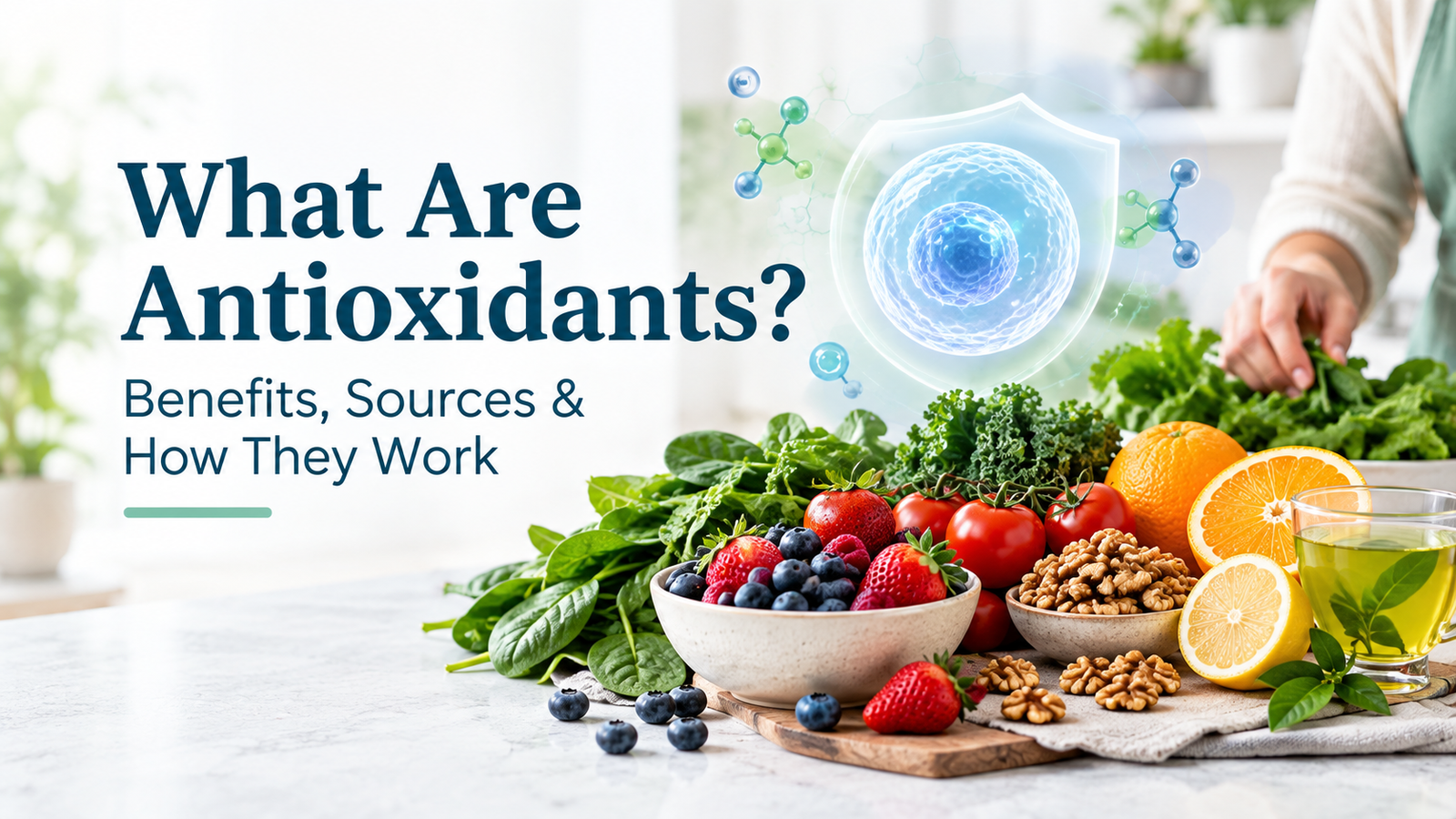

Antioxidants are substances that help protect your cells from damage caused by unstable molecules called free radicals. You’ll find them naturally in many foods — especially fruits, vegetables, nuts, and whole grains — and your body also produces some antioxidants on its own.
Antioxidants get a lot of attention in health and wellness marketing, and some of that attention is well earned. But the full picture is more nuanced than “more antioxidants equals better health.”
This article explains what antioxidants actually are, how they work, where to find them, what the evidence does and doesn’t support, and why food sources and supplements aren’t necessarily interchangeable.
Important: This article is for general information only and is not a substitute for professional medical advice. Talk with your healthcare provider before starting any new supplement.
What Are Antioxidants?
Antioxidants are substances that may prevent or delay some types of cell damage. During normal bodily processes — and in response to things like pollution, cigarette smoke, and other environmental exposures — your cells produce highly reactive molecules that contain oxygen. When these molecules build up faster than your body can manage them, the result is a condition called oxidative stress.
Your body has its own defense and repair systems to help regulate this process. Antioxidant enzymes made by your body are the most important part of that defense system, and plant compounds that act as antioxidants — commonly found in food — may also help support these pathways.
What Is Oxidative Stress?
Oxidative stress is an imbalance between free radicals and antioxidants in the body that can damage cells and tissues. Free radicals aren’t inherently bad — in small, normal amounts, they actually serve useful biological functions, including helping immune cells fight off infections. Problems arise when free radical production outpaces the body’s antioxidant defenses.
Several factors are associated with increased oxidative stress, including:
- Cigarette smoke
- Air pollution
- Excessive alcohol intake
- High blood sugar levels
- Certain toxin exposures
- Intense, prolonged physical exertion without adequate recovery
Over time, unmanaged oxidative stress has been linked to the development of several chronic conditions, which is part of why antioxidants attract so much research interest.
How Do Antioxidants Work?
Antioxidants work by neutralizing free radicals — essentially donating an electron to stabilize the unstable molecule before it can damage important cellular components like DNA, proteins, or fats. This is a normal, ongoing process in a healthy body, not something that only kicks in when you eat a particular food.
Different antioxidants work in different ways and in different parts of the body, which is one reason researchers emphasize getting antioxidants from a varied diet rather than relying on a single compound in isolation.
Common Types of Antioxidants
Some of the most well-studied antioxidants include:
- Vitamin C — found in citrus fruits, peppers, strawberries, and broccoli
- Vitamin E — found in nuts, seeds, and vegetable oils
- Beta-carotene — a carotenoid found in carrots, sweet potatoes, and other orange and dark-leafy vegetables
- Selenium — a mineral found in Brazil nuts, fish, and whole grains
- Flavonoids and other polyphenols — plant compounds found in berries, tea, and cocoa
- Lycopene — found in tomatoes and watermelon
- Lutein — found in leafy greens like spinach and kale
- Coenzyme Q10 — produced naturally by the body and found in small amounts in meat and fish
NCCIH notes that examples of antioxidants include anthocyanins, beta-carotene, catechins, coenzyme Q10, flavonoids, lipoic acid, lutein, lycopene, selenium, and vitamins C and E, and that these compounds are available both in foods and as dietary supplements.
Food Sources of Antioxidants
Whole foods remain the best-documented way to get antioxidants, largely because foods deliver many different antioxidant compounds together, along with fiber, healthy fats, and other nutrients that appear to work in combination.
Fruits and Vegetables
Brightly colored produce tends to be rich in antioxidants:
- Berries (blueberries, strawberries, raspberries)
- Citrus fruits
- Tomatoes
- Carrots and sweet potatoes
- Leafy greens like spinach and kale
- Bell peppers
- Broccoli and other cruciferous vegetables
CollectedMed’s guide to healthiest foods to eat every day covers many of these in more depth.
Nuts, Seeds, and Whole Grains
- Almonds and walnuts
- Sunflower seeds
- Brazil nuts (a notable source of selenium)
- Whole grains
Other Sources
- Green and black tea
- Dark chocolate and cocoa
- Extra virgin olive oil
- Legumes, including beans and lentils
A Mediterranean-style diet, which emphasizes many of these foods together, is one of the most well-studied dietary patterns associated with better long-term health outcomes.
Potential Health Benefits of Antioxidants
It’s worth being precise here, because this is where a lot of marketing overstates the science. Population-level studies consistently show that people who eat more antioxidant-rich fruits and vegetables tend to have lower rates of several chronic conditions, including cardiovascular disease. However, this kind of observational evidence shows an association — it doesn’t prove that antioxidants themselves are the reason for the benefit, since people who eat more produce often have other healthy habits too.
With that caveat in mind, antioxidant-rich eating patterns are associated with:
- Supporting heart health — see CollectedMed’s guide to heart-healthy foods
- Supporting overall cellular health by helping manage oxidative stress
- Complementing an anti-inflammatory way of eating
- Contributing to a balanced diet rich in fruits, vegetables, and whole grains
Do Antioxidant Supplements Work?
This is the single most important question to get right, because the evidence for supplements is quite different from the evidence for food.
The current evidence does not support the idea that antioxidant supplements can prevent cancer. Large, long-term clinical trials — many funded by the National Institutes of Health — have tested whether antioxidant supplements could help prevent diseases like cardiovascular disease and cancer. In most cases, the supplements didn’t reduce disease risk.
More specifically:
- High doses of beta-carotene may increase the risk of lung cancer, particularly in smokers.
- A systematic review and meta-analysis found that beta-carotene supplementation was associated with an increased risk of cancer and cancer mortality among smokers, while vitamin E supplementation showed no effect on cancer risk overall.
- In 2022, the U.S. Preventive Services Task Force recommended against using beta-carotene or vitamin E supplements for cancer prevention, and concluded there wasn’t enough evidence to make recommendations about other single-nutrient or paired-nutrient antioxidant supplements.
Why Don’t Supplements Match Food?
Researchers have proposed a few possible explanations:
- Dosing: Supplements often deliver much higher concentrations of a single antioxidant than you’d get from food, and large amounts of antioxidants may interfere with important cellular functions, including the body’s own defense mechanisms and normal cell signaling.
- Isolation: A single antioxidant taken alone may not behave the same way it does when consumed as part of a food matrix alongside dozens of other interacting compounds.
- Confounding in observational studies: People who eat the most fruits and vegetables often have other healthy habits — more physical activity, less smoking, better sleep — that may explain some of the benefit typically attributed to antioxidants specifically.
The bottom line supported by current evidence: eating antioxidant-rich foods is well supported, but taking high-dose antioxidant supplements specifically to prevent disease is not — and in some cases, may carry real risk.
Antioxidants and Specific Health Areas
Antioxidants and Heart Health
A diet rich in antioxidant foods is a component of the broader dietary patterns — like the Mediterranean diet — associated with better cardiovascular health. This connects to related topics like cholesterol and heart health and the benefits of omega-3 fatty acids, which are often found in similar food sources.
Antioxidants and Blood Sugar
Chronically high blood sugar is one of the factors associated with increased oxidative stress, which is part of why a nutrient-dense, antioxidant-rich diet is often discussed alongside strategies to prevent diabetes and support healthy blood sugar levels.
Antioxidants and Exercise
Intense, prolonged exercise without adequate recovery is one contributor to oxidative stress, but this doesn’t mean exercise is bad for you — regular physical activity has well-documented benefits that outweigh this consideration for almost everyone. A balanced approach means fueling your body with antioxidant-rich foods while also staying active.
Should You Take Antioxidant Supplements?
For most people who eat a varied diet, the answer based on current evidence is: probably not necessary, and not automatically safe just because a supplement is derived from something naturally found in food.
Consider these points before starting any antioxidant supplement:
- Talk with your healthcare provider first, especially if you smoke, have a chronic health condition, or take other medications.
- High-dose supplements are not the same as the antioxidants naturally found in food.
- Some antioxidant supplements can interact with medications, including certain blood thinners and chemotherapy drugs.
- More is not automatically better — and in specific cases (like beta-carotene in smokers), high doses may be actively harmful.
If you’re looking to support your overall antioxidant intake, focusing on food is the strategy with the strongest evidence behind it.
How to Get More Antioxidants From Your Diet
A few practical, evidence-based steps:
- Eat a variety of colorful fruits and vegetables. Different colors generally reflect different antioxidant compounds, so variety matters more than any single “superfood.”
- Choose whole foods over isolated extracts. Whole foods provide antioxidants together with fiber and other nutrients that appear to work synergistically.
- Incorporate nuts and seeds regularly, as part of a broader healthy diet.
- Consider a Mediterranean-style eating pattern, which naturally emphasizes many antioxidant-rich foods.
- Limit habits that increase oxidative stress, such as smoking and excessive alcohol intake, alongside — not instead of — eating well.
Frequently Asked Questions
What do antioxidants actually do in the body?
Antioxidants help neutralize free radicals — unstable molecules that can damage cells, proteins, and DNA when they build up faster than the body can manage them. This helps regulate a process called oxidative stress.
What foods are highest in antioxidants?
Berries, leafy greens, citrus fruits, tomatoes, nuts (especially Brazil nuts and almonds), green tea, and extra virgin olive oil are among the foods most commonly cited as antioxidant-rich.
Are antioxidant supplements safe?
Not automatically. While antioxidants from food are generally well tolerated, high-dose supplements — particularly beta-carotene in smokers — have been linked to increased health risks in clinical trials. Talk with a healthcare provider before starting any antioxidant supplement.
Can antioxidants prevent cancer?
Current evidence does not support the idea that antioxidant supplements prevent cancer, and some, like high-dose beta-carotene, may increase risk in certain populations, such as smokers. Eating antioxidant-rich foods as part of an overall healthy diet is a different matter and is associated with better long-term health outcomes.
Is it better to get antioxidants from food or supplements?
Based on current evidence, food is the better-supported source. Whole foods provide antioxidants alongside fiber and other nutrients that may work together, while high-dose supplements have not consistently shown the same benefits in clinical trials.
Do antioxidants slow aging?
Antioxidants help manage oxidative stress, which has been linked to aspects of aging and various chronic diseases. However, there isn’t strong clinical evidence that antioxidant supplements meaningfully slow the aging process in humans.
How many antioxidants do I need per day?
There’s no single official “antioxidant” requirement, since antioxidants aren’t one nutrient — they’re a broad category of compounds. Instead, most health organizations recommend eating a varied diet with multiple servings of fruits and vegetables daily rather than targeting a specific antioxidant number.
Can you have too many antioxidants?
Yes, particularly from supplements. Large doses of certain antioxidants may interfere with the body’s normal cell signaling and defense mechanisms. This risk is much lower with food sources, since it’s difficult to reach harmful antioxidant doses through diet alone.
Related Reading on CollectedMed
- Heart-Healthy Foods
- Anti-Inflammatory Foods
- Mediterranean Diet
- What Is a Balanced Diet?
- What Is a Healthy Diet?
- Healthiest Foods to Eat Every Day
- Omega-3 Fatty Acids
- Cardiovascular Disease
- How to Prevent Diabetes
- Benefits of Exercise
Medical disclaimer
This article draws on publicly available guidance from the National Center for Complementary and Integrative Health (NCCIH), part of the National Institutes of Health; the Cleveland Clinic; and peer-reviewed research published via PubMed. Medical claims are linked to their original source at the point they are made. This content is intended for general education and does not replace personalized medical advice.
Read our full Medical Disclaimer.
Sources
- National Center for Complementary and Integrative Health. Antioxidants: In Depth
- Cleveland Clinic. Oxidative Stress
- Bjelakovic G, et al. Antioxidant supplements for prevention of mortality in healthy participants and patients with various diseases
5 thoughts on “What Are Antioxidants? Benefits, Sources & How They Work”
Comments are closed.