
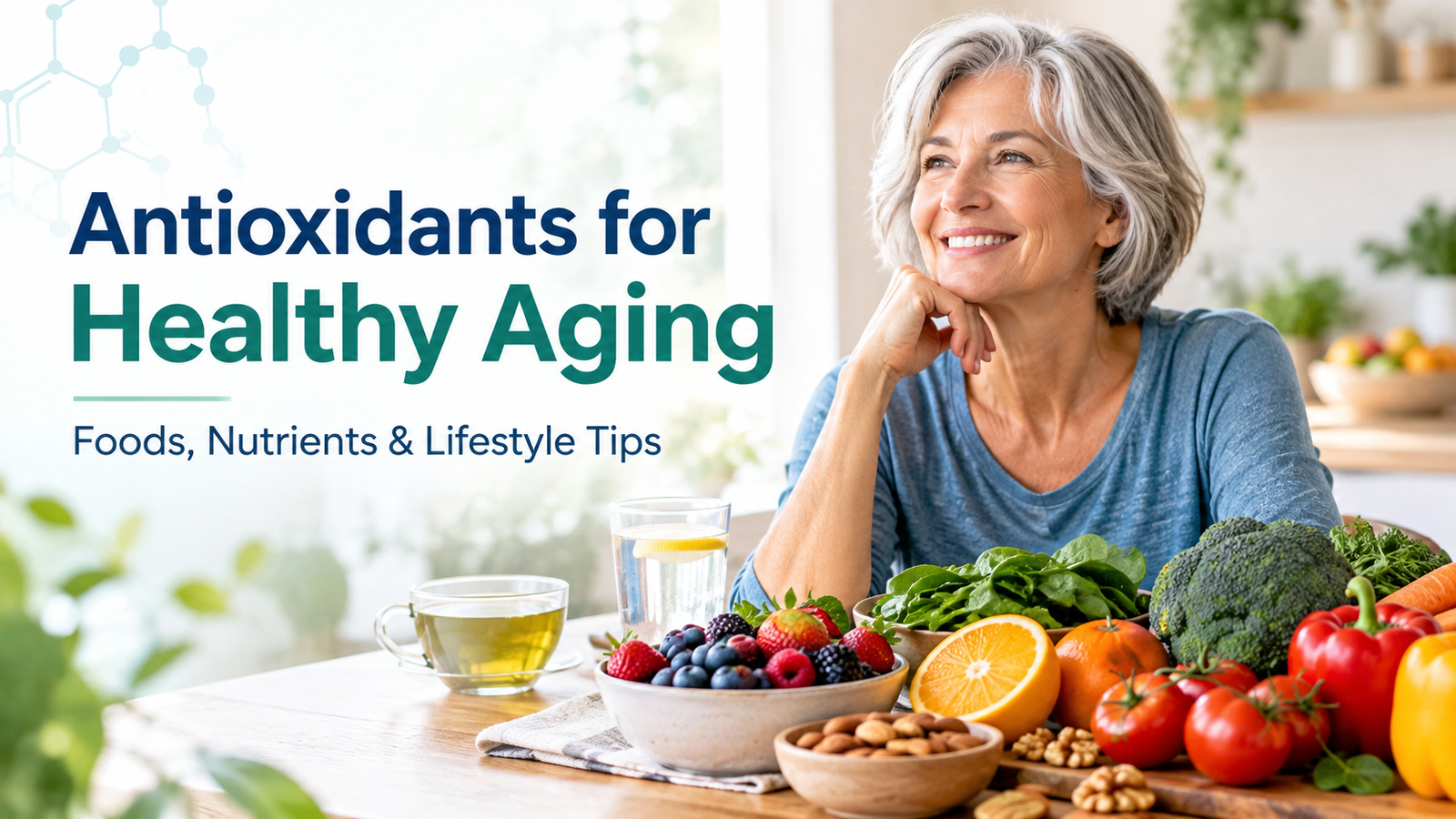
Can antioxidants help you age well? It’s a fair question — antioxidants show up constantly in wellness marketing aimed at older adults, often with big promises attached.
Here’s a more grounded way to think about it. Aging naturally involves changes in your cells and tissues over time, and oxidative stress — an imbalance between reactive molecules and the body’s defenses — is one of several biological processes researchers study in relation to aging. Your body has its own antioxidant defense systems, and food supplies additional antioxidant compounds and nutrients that support those systems.
But a single “anti-aging” antioxidant doesn’t exist. A varied, nutrient-dense diet matters far more than chasing one specific nutrient, and lifestyle habits — physical activity, sleep, avoiding tobacco — play just as large a role in healthy aging as diet does.
Important: This article is for general information only and is not a substitute for professional medical advice. Talk with your healthcare provider before starting any new supplement.
What Are Antioxidants?
Antioxidants are substances involved in protecting your cells from reactive, oxygen-containing molecules produced during normal metabolism. When these reactive molecules build up faster than your body’s defenses can manage, the result is oxidative stress, which may damage cells over time.
It’s worth being precise here: not all reactive molecules are harmful. Some have genuinely useful biological functions — including helping your immune cells fight off infections. The goal isn’t to eliminate them entirely; it’s to keep them in balance.
Your body produces some antioxidants on its own through antioxidant enzymes, and it also obtains antioxidants from foods such as fruits, vegetables, and grains. CollectedMed’s guide to what antioxidants are covers this science in more depth.
What Is Oxidative Stress?
In simple terms: reactive molecules plus inadequate regulation can lead to oxidative stress, which may contribute to cellular damage over time. That said, oxidative stress is only one factor among many involved in aging and disease — it’s not the sole explanation for either.
How Do Antioxidants Relate to Healthy Aging?
The connection is real, but it’s easy to overstate. Cellular damage and oxidative stress are studied as part of the broader biology of aging, and antioxidant defense systems — both the ones your body makes and the ones you get from food — help regulate these processes. Antioxidants from food contribute to normal, everyday nutrition.
But healthy aging involves much more than antioxidant intake alone. NCCIH specifically cautions that larger-than-usual amounts of antioxidants aren’t necessarily better, and that different antioxidants aren’t interchangeable with one another — each performs a somewhat different biological role.
The goal isn’t to stop aging. It’s to support health, function, independence, and quality of life as you get older.
Important Antioxidant Nutrients for Healthy Aging
Rather than ranking these as “best,” it’s more useful to understand their different roles and food sources.
Vitamin C
Vitamin C is a water-soluble antioxidant nutrient found abundantly in citrus fruits, berries, peppers, broccoli, and tomatoes. It plays a role in normal tissue maintenance and immune function. The food-first message here: reach for vitamin-C-rich foods rather than assuming a high-dose supplement is necessary.
Vitamin E
Vitamin E is a fat-soluble antioxidant nutrient found in nuts, seeds, vegetable oils, and some vegetables. It helps protect cells from oxidative damage — but taking extra vitamin E beyond what your diet provides doesn’t automatically promote longevity.
Carotenoids
This family includes beta-carotene, lycopene, lutein, and zeaxanthin, found in carrots, sweet potatoes, tomatoes, spinach, kale, and peppers. These compounds have different biological roles from one another and shouldn’t be treated as interchangeable — lutein and zeaxanthin, for example, are particularly relevant to eye health, while lycopene has been studied more in relation to cardiovascular health.
Selenium
Selenium is a mineral, not an antioxidant itself — it’s required for proteins involved in the body’s antioxidant defense system. Food sources include seafood, meat, eggs, dairy, legumes, and nuts (selenium content in plant foods varies by growing conditions). As with the other nutrients here, more isn’t necessarily better.
Polyphenols and Flavonoids
Polyphenols are a large family of plant compounds — not a single nutrient — found in berries, grapes, tea, cocoa, vegetables, and herbs and spices. Researchers continue to study how different polyphenols behave in the body, and it’s inaccurate to describe them as one uniform substance with one uniform effect.
Antioxidant-Rich Foods to Include as You Age
1. Berries
Blueberries, strawberries, blackberries, and raspberries provide polyphenols (including anthocyanins) and vitamin C. Add them to oatmeal, yogurt, or smoothies for an easy daily habit.
2. Leafy Greens
Spinach, kale, and collard greens offer carotenoids, vitamin C, vitamin E, and folate, along with fiber. See CollectedMed’s guide to high-fiber foods for digestive health for more.
3. Tomatoes
Tomatoes are a well-known source of lycopene and vitamin C, and they’re versatile enough to work into salads, soups, sauces, and other cooked meals.
4. Colorful Vegetables
Bell peppers, carrots, sweet potatoes, broccoli, and Brussels sprouts all contribute different antioxidant compounds. The value here is in the variety of colors, not any single “superfood.” NIA recommends a varied eating pattern that includes fruits, vegetables, whole grains, protein foods, dairy or alternatives, and healthy fats as part of healthy aging.
5. Nuts and Seeds
Walnuts, almonds, sunflower seeds, flaxseeds, and chia seeds provide vitamin E, healthy fats, minerals, fiber, and plant compounds together.
6. Beans and Legumes
Lentils, chickpeas, black beans, and kidney beans offer fiber, plant protein, and polyphenols. These foods are particularly useful because they support the broader dietary pattern rather than supplying antioxidants in isolation.
7. Whole Grains
Oats, barley, brown rice, and whole-wheat foods provide fiber, minerals, and various plant compounds alongside their antioxidant content.
8. Green and Black Tea
Green tea contains catechins and other polyphenols. Unsweetened tea is a reasonable beverage choice — though it’s not a guarantee against cancer, heart disease, or aging itself.
9. Cocoa and Dark Chocolate
Cocoa contains flavanols, but chocolate products often carry significant added sugar and calories too. Small portions can fit into an overall healthy diet without treating chocolate as a required health food.
Eat a Variety of Colors for Healthy Aging
| Color | Examples | Notable Compounds/Nutrients |
|---|---|---|
| Red | Tomatoes, watermelon, red peppers | Lycopene, vitamin C |
| Orange | Carrots, sweet potatoes, citrus | Carotenoids, vitamin C |
| Yellow | Yellow peppers, citrus | Vitamin C, carotenoids |
| Green | Spinach, kale, broccoli | Carotenoids, vitamin C, folate |
| Blue/Purple | Blueberries, blackberries, grapes | Anthocyanins, polyphenols |
| Brown/White | Beans, onions, garlic, whole grains | Polyphenols and other plant compounds |
The point here is dietary diversity — not assigning a specific disease-prevention claim to each color.
Can Antioxidants Slow or Reverse Aging?
Here’s a direct answer: antioxidants shouldn’t be described as a way to stop or reverse normal aging.
Aging is influenced by many biological and lifestyle factors working together. Oxidative stress is one area of aging research, and antioxidant-rich foods are genuinely associated with healthy dietary patterns. But evidence does not establish that taking large amounts of antioxidant supplements extends lifespan or reverses the aging process — despite the fact that higher fruit and vegetable intake is associated with lower risks of some chronic diseases.
Are Antioxidant Supplements Necessary for Healthy Aging?
Why Food Comes First
Whole foods deliver combinations of vitamins, minerals, fiber, protein, healthy fats, and polyphenols together — components that appear to work in concert rather than in isolation. NIA states that most, if not all, of your daily vitamins and minerals should come from food, and notes that supplements may be appropriate specifically when people aren’t getting enough of particular nutrients from their diet alone.
Why More Isn’t Always Better
Different antioxidants perform different functions in the body, and high-dose supplements can behave differently from the same antioxidants consumed through food. Some supplements can also interact with medications. High-dose supplementation isn’t automatically safer, and it isn’t automatically more effective than a nutrient-dense diet — NCCIH specifically advises against using antioxidant supplements as a substitute for a healthy diet or for conventional medical care.
Important Exception: Age-Related Macular Degeneration
There is one well-documented exception worth knowing about. A specific antioxidant-and-zinc formulation — studied in the large NIH-funded AREDS and AREDS2 trials — has been shown to slow disease progression in people who already have intermediate or advanced age-related macular degeneration (AMD), a condition affecting central vision. This is a meaningfully different scenario from taking antioxidants generally to try to prevent aging or disease in a healthy person — it’s a targeted intervention studied in a specific patient population with an existing diagnosis, and it should be used under an eye care professional’s guidance rather than adopted independently.
Lifestyle Tips for Healthy Aging Beyond Antioxidants
Stay Physically Active
Aerobic activity, muscle-strengthening exercise, and balance activities all matter. NIA describes physical activity as essential for healthy aging, with benefits for physical function, independence, and quality of life. CollectedMed’s guides to best exercises for beginners and walking for health are good starting points.
Prioritize Sleep
Consistent, adequate sleep supports overall health as you age. NIA recommends about 7 to 9 hours of sleep per night for older adults. See CollectedMed’s guide on how to improve sleep for practical strategies.
Don’t Smoke
Smoking is a significant contributor to oxidative stress and a major risk factor for numerous chronic diseases. The right approach is avoiding tobacco directly — not attempting to counteract its effects with antioxidant supplements.
Maintain a Healthy Dietary Pattern
This means consistently including fruits, vegetables, whole grains, beans and legumes, nuts and seeds, fish or other healthy protein sources, and appropriate amounts of healthy fats. CollectedMed’s guide to what a healthy diet looks like covers this in more depth.
Stay Hydrated
Water and other unsweetened beverages are an easy-to-overlook part of daily nutrition, especially as thirst signals can become less reliable with age.
Maintain Social Connection
Healthy aging isn’t exclusively about nutrition. Meaningful social activity and engagement contribute meaningfully to overall well-being as well.
A Simple One-Day Healthy Aging Meal Plan
Breakfast: Oatmeal with blueberries and walnuts
Lunch: Spinach and chickpea salad with tomatoes, colorful peppers, and olive oil
Snack: An orange or other seasonal fruit
Dinner: Grilled fish or beans with broccoli, a whole grain, and roasted sweet potato
Beverage: Water and/or unsweetened tea
Keep in mind that individual calorie, protein, sodium, and nutrient needs vary — particularly with age and existing medical conditions — so this is a starting template, not a one-size-fits-all prescription.
Common Mistakes to Avoid
Looking for one “best” antioxidant. No single antioxidant handles every biological function your body needs.
Taking high-dose supplements without guidance. More isn’t automatically better, and some combinations carry real risk.
Treating antioxidants as anti-aging medicine. Antioxidant-rich foods support a healthy dietary pattern, but they don’t stop biological aging.
Ignoring protein and other nutrients. Healthy aging requires adequate nutrition well beyond antioxidants alone.
Focusing on supplements instead of lifestyle. Exercise, sleep, diet quality, tobacco avoidance, and preventive healthcare all matter — often more than any single nutrient.
When to Ask Your Doctor About Antioxidant Supplements
Professional guidance is especially worth seeking if you:
- Take multiple medications
- Have chronic medical conditions
- Have a diagnosed nutrient deficiency
- Are considering a high-dose supplement
- Have age-related macular degeneration
- Have kidney or liver problems
- Are undergoing cancer treatment
- Have been advised to restrict or increase intake of certain nutrients
NCCIH notes that dietary supplements can interact with medications, and that healthcare professionals can help assess whether a particular supplement makes sense for your situation.
Frequently Asked Questions
What are the best antioxidants for healthy aging?
There isn’t one “best” antioxidant. Vitamin C, vitamin E, carotenoids, selenium-dependent antioxidant systems, and plant polyphenols all play different roles, and getting a variety through food is more useful than focusing on any single nutrient.
Which foods are high in antioxidants?
Berries, leafy greens, colorful vegetables, tomatoes, nuts, seeds, legumes, whole grains, tea, and cocoa are all commonly cited sources of various antioxidant compounds.
Can antioxidants slow aging?
Antioxidants help support the body’s cellular defense systems, but current evidence doesn’t show that antioxidant supplements slow or reverse the biological aging process itself.
Do antioxidant supplements help you live longer?
Evidence doesn’t establish broad longevity benefits from antioxidant supplementation. Large clinical trials of antioxidant supplements have generally not shown the chronic-disease-prevention benefits some people expect.
Is vitamin C good for healthy aging?
Vitamin C is an essential nutrient with an important antioxidant role in the body, and it’s worth getting enough through diet. That said, it isn’t an anti-aging treatment on its own.
Is vitamin E an antioxidant?
Yes. Vitamin E is a fat-soluble antioxidant nutrient found in nuts, seeds, and vegetable oils.
Are berries good for healthy aging?
Yes. Berries contribute vitamin C and various polyphenols, including anthocyanins, as part of a varied, nutrient-dense diet.
Should older adults take antioxidant supplements?
It depends on individual diet, nutritional status, and medical conditions — there’s no universal yes-or-no answer. This is a decision best made with a healthcare provider rather than based on general marketing claims.
How can I get more antioxidants naturally?
Focus on a variety of colorful fruits and vegetables, nuts, seeds, legumes, and whole grains, rather than a single food or supplement.
What lifestyle habits matter most for healthy aging?
Nutritious eating, regular physical activity, adequate sleep, avoiding tobacco, maintaining social connections, and staying current with preventive healthcare all contribute meaningfully to healthy aging — often more than any single dietary factor.
Related Reading on CollectedMed
- What Are Antioxidants?
- Top Antioxidant-Rich Foods to Add to Your Diet
- What Is a Healthy Diet?
- High-Fiber Foods for Digestive Health
- Benefits of Exercise
- Best Exercises for Beginners
- Walking for Health
- How to Improve Sleep
- How to Live a Healthy Lifestyle
- Heart-Healthy Foods
Sources
This article draws on publicly available guidance from the National Institute on Aging (NIA) and the National Center for Complementary and Integrative Health (NCCIH), both part of the National Institutes of Health. Medical claims are linked to their original source at the point they are made. This content is intended for general education and does not replace personalized medical advice.
- National Center for Complementary and Integrative Health. Antioxidant Supplements: What You Need to Know
- National Institute on Aging. Healthy Eating, Nutrition, and Diet
- National Institute on Aging. Health Benefits of Exercise and Physical Activity
- National Institute on Aging. Sleep and Older Adults
2 thoughts on “Best Antioxidants for Healthy Aging: Foods, Nutrients & Lifestyle Tips”
Comments are closed.