
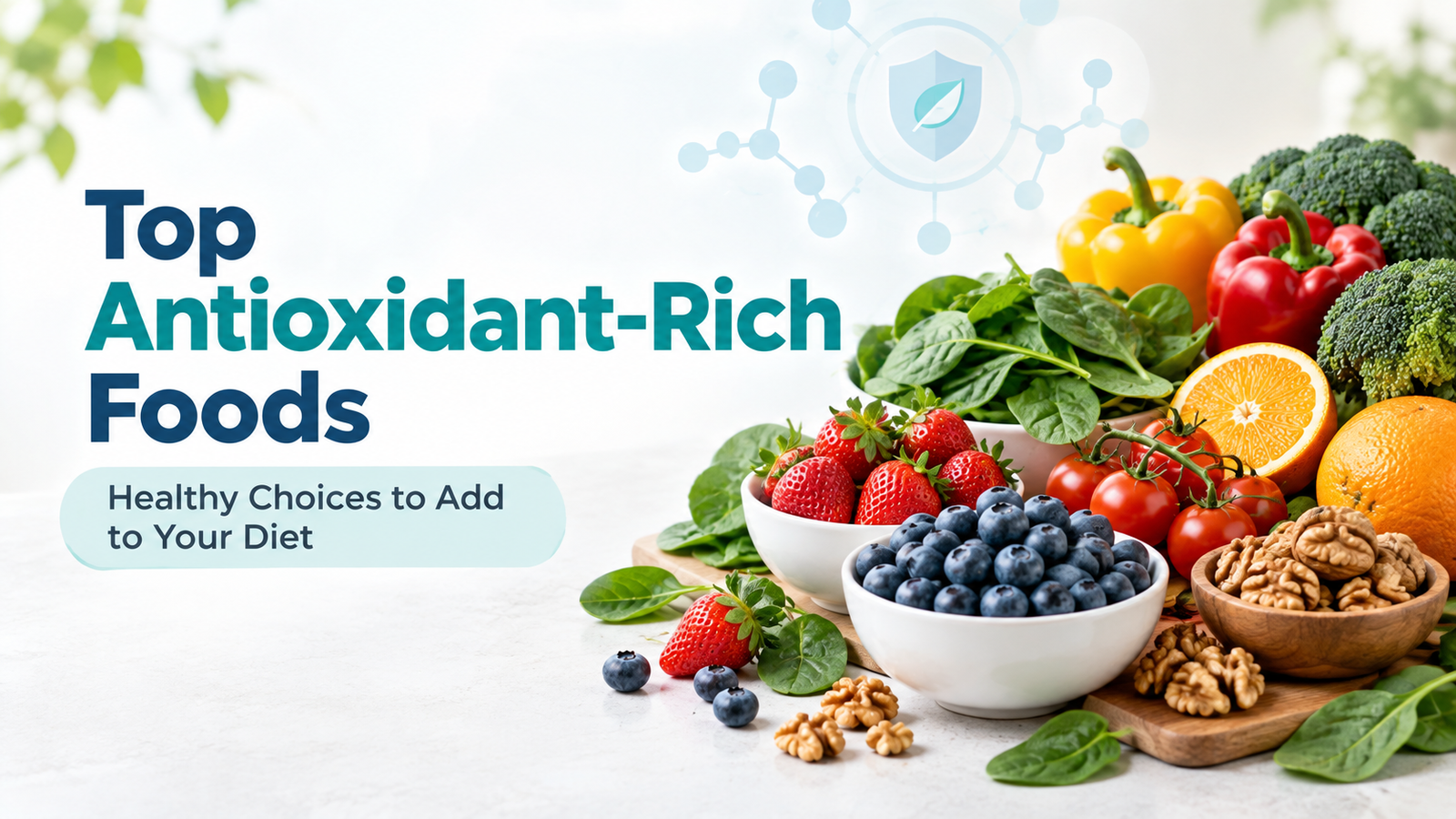

Antioxidant-rich foods get a lot of attention — and for good reason. These foods supply compounds that help your body manage everyday cellular wear and tear, and they show up again and again in the dietary patterns linked to better long-term health.
Antioxidants aren’t one single nutrient. They’re a broad category of substances — including certain vitamins, minerals, and plant compounds — that interact with and help neutralize free radicals, the unstable molecules that can damage cells over time. CollectedMed’s guide to what antioxidants are covers the science in more depth; this article focuses on the practical side — which foods to reach for, and simple ways to work them into your everyday meals.
One thing worth saying up front: no single food is a “miracle” antioxidant source, and eating more of any one food won’t prevent or cure disease on its own. What the evidence does support is variety — a mix of colorful fruits, vegetables, whole grains, nuts, seeds, and legumes gives you a much broader range of antioxidant compounds than fixating on any single “superfood.”
Important: This article is for general information only and is not a substitute for professional medical advice. Talk with your healthcare provider about your individual nutrition needs.
What Are Antioxidant-Rich Foods?
Antioxidant-rich foods are foods that contain notable amounts of nutrients or plant compounds with antioxidant activity. These include:
- Vitamin C
- Vitamin E
- Carotenoids (like beta-carotene and lycopene)
- Polyphenols
- Flavonoids
- Other plant compounds
It’s worth noting that “antioxidant-rich” isn’t a standardized nutritional ranking — there’s no single official scale that crowns one food as having the objectively highest antioxidant content. Different foods are rich in different compounds, which is exactly why variety matters more than chasing one specific food.
How Antioxidants Help the Body
In simple terms: normal metabolism and everyday environmental exposures (like pollution or sun exposure) generate reactive molecules in your body. Antioxidants help neutralize these molecules before they can cause damage. For a fuller explanation of this process, see CollectedMed’s guide to what antioxidants are.
15 Antioxidant-Rich Foods to Add to Your Diet
1. Berries
Blueberries, strawberries, blackberries, and raspberries are packed with anthocyanins and other polyphenols, and many berries also provide a good amount of vitamin C.
Easy ways to use them: add to oatmeal or yogurt, blend into smoothies, toss into salads, or eat as a simple snack.
2. Leafy Green Vegetables
Spinach, kale, collard greens, and other dark leafy greens provide carotenoids, vitamin C, vitamin E, and a range of other nutrients and plant compounds. See CollectedMed’s guide to high-fiber foods for digestive health for more on the fiber these greens also bring to the table.
3. Tomatoes
Tomatoes are a well-known source of lycopene, along with vitamin C. Interestingly, cooked tomato products (like sauces and soups) can make lycopene more available to the body than raw tomatoes — one example of how preparation method can actually help, not just hurt, nutrient availability.
4. Citrus Fruits
Oranges, grapefruit, lemons, and limes are classic sources of vitamin C and flavonoids. They’re an easy addition to breakfast, snacks, or even as a flavoring for water and tea.
5. Nuts
Walnuts, almonds, and pecans provide vitamin E and polyphenols, along with healthy fats. A small handful is typically plenty — nuts are calorie-dense, so portion size matters if you’re mindful of overall intake.
6. Seeds
Sunflower seeds, chia seeds, flaxseeds, and pumpkin seeds add antioxidant compounds along with fiber, healthy fats, and minerals. They’re an easy sprinkle-on addition to oatmeal, yogurt, or salads.
7. Broccoli and Other Cruciferous Vegetables
Broccoli, Brussels sprouts, cauliflower, cabbage, and bok choy provide carotenoids, vitamins, minerals, fiber, and glucosinolates — plant compounds unique to this vegetable family.
8. Sweet Potatoes
Sweet potatoes, particularly orange-fleshed varieties, are rich in carotenoids and also provide fiber and a range of vitamins and minerals. Roasting, baking, or mashing are all simple, minimal-prep options.
9. Red and Orange Peppers
Bell peppers contribute vitamin C, carotenoids, and other plant compounds — and they’re a great example of the “eat a rainbow” idea in action, since different pepper colors reflect somewhat different nutrient profiles.
10. Beans and Legumes
Black beans, kidney beans, lentils, and chickpeas provide polyphenols and other plant compounds, along with fiber and protein. They’re a versatile way to bulk up soups, salads, and grain bowls — see CollectedMed’s guide to high-protein foods for more.
11. Grapes
Grapes, especially darker varieties, contain polyphenols, flavonoids, and anthocyanins. It’s worth being clear that whole grapes are nutritionally different from concentrated grape extracts or supplements — the fiber and overall food matrix matter.
12. Green Tea
Green tea contains catechins and other polyphenols. Unsweetened green tea is a simple beverage swap for people looking to cut back on sugary drinks — though it’s not a guaranteed way to prevent any specific disease.
13. Cocoa and Dark Chocolate
Cocoa flavanols are genuinely antioxidant-rich, but cocoa percentage alone doesn’t tell the whole nutritional story — many chocolate products also carry significant added sugar and calories. Small portions of dark chocolate can fit into a healthy diet without needing to be treated as a daily health food.
14. Whole Grains
Oats, brown rice, whole-wheat foods, and barley are dietary sources of antioxidant compounds and also contribute fiber and other nutrients. CollectedMed’s guide to what a balanced diet looks like covers how whole grains fit into the bigger picture.
15. Herbs and Spices
Cinnamon, turmeric, ginger, and oregano contain antioxidant compounds too. They’re best thought of as small, flavorful additions to an already healthy eating pattern — not major antioxidant sources that could replace fruits and vegetables. CollectedMed’s guide on ginger and health covers one of these in more depth.
Antioxidant-Rich Foods by Nutrient or Compound
This table is illustrative, not an exhaustive ranking — many foods overlap across categories.
| Antioxidant/Nutrient | Food Examples |
|---|---|
| Vitamin C | Citrus fruits, berries, peppers, broccoli |
| Vitamin E | Almonds, sunflower seeds, nuts |
| Beta-carotene | Sweet potatoes, carrots, leafy greens |
| Lycopene | Tomatoes, watermelon |
| Anthocyanins | Blueberries, blackberries, strawberries |
| Flavanols/Catechins | Cocoa, tea |
| Polyphenols | Berries, grapes, tea, cocoa, legumes |
Why Eating a Variety of Colors Matters
Using color as a simple mental shortcut can help you naturally diversify your antioxidant intake:
Red: Tomatoes, red peppers, watermelon
Orange and Yellow: Sweet potatoes, carrots, citrus fruits, yellow peppers
Green: Spinach, kale, broccoli
Blue and Purple: Blueberries, blackberries, purple cabbage, grapes
White and Brown: Onions, garlic, mushrooms, beans, whole grains
The point isn’t that any single color guarantees a specific health outcome. Rather, different colors generally reflect different underlying plant compounds, so variety broadens the overall range of nutrients in your diet.
Easy Ways to Eat More Antioxidant-Rich Foods
Breakfast
- Add berries to oatmeal or yogurt.
- Blend chia or flaxseed into a smoothie.
- Choose a whole-grain cereal topped with fruit.
Lunch
- Add spinach or kale to sandwiches and salads.
- Toss tomatoes and peppers into a salad.
- Include beans or lentils in a soup or bowl.
Dinner
- Add broccoli or Brussels sprouts as a side dish.
- Use tomatoes as the base for a sauce.
- Add a mix of colorful vegetables to a stir-fry.
Snacks
- Fresh berries or other fruit
- Unsalted nuts
- Seeds
Drinks
- Unsweetened green tea
- Water infused with citrus or berries
For more everyday nutrition ideas, see CollectedMed’s guide to healthiest foods to eat every day.
Are Fresh or Frozen Antioxidant-Rich Foods Better?
There’s no need to create an unnecessary hierarchy here:
- Fresh foods can be excellent choices, especially when in season.
- Frozen fruits and vegetables can be just as nutritious and are often more convenient and budget-friendly.
- Canned options can fit into a healthy diet too — just look for versions with minimal added sugar or excess sodium.
- Storage time and preparation method can influence nutrient levels somewhat, but this is rarely the deciding factor for overall diet quality.
The most useful takeaway: choose whichever form helps you actually eat more variety, consistently, over time.
Does Cooking Reduce Antioxidants?
The effect of cooking varies by food, nutrient, and method — there’s no single rule that applies universally.
- Some nutrients are sensitive to heat or water and may be somewhat reduced by certain cooking methods.
- Cooking can also make certain compounds — like lycopene in tomatoes — more available to the body, not less.
- Steaming, roasting, sautéing, and other common cooking methods can all fit into a healthy diet.
There isn’t one universally “best” cooking method for every antioxidant compound, so this shouldn’t stop you from cooking your vegetables the way you actually enjoy eating them.
Should You Take Antioxidant Supplements?
This distinction matters for medical accuracy. Antioxidant-rich foods provide antioxidants alongside fiber, vitamins, minerals, and other food components that appear to work together. Supplements, by contrast, deliver concentrated amounts of specific isolated compounds — and the evidence supporting fruit- and vegetable-rich diets doesn’t automatically apply to high-dose supplements.
Nine randomized controlled trials of dietary antioxidant supplements for cancer prevention, many sponsored by the National Cancer Institute, did not provide evidence that these supplements are beneficial for primary cancer prevention. In fact, one trial found an increased incidence of lung cancer among male smokers who took beta-carotene supplements. NCCIH similarly notes that current evidence does not support antioxidant supplements for preventing cancer, and that high doses of beta-carotene may increase lung cancer risk.
When Supplements May Be Appropriate
Supplementation may make sense in specific situations, such as when:
- A healthcare professional identifies an actual nutrient deficiency
- A specific medical condition creates increased nutritional needs
- A clinician recommends a particular supplement for a defined purpose
If you’re taking medications or undergoing medical treatment, talk with your healthcare provider before adding any antioxidant supplement — some can interact with medications or medical treatments.
Can Antioxidant-Rich Foods Prevent Disease?
It’s worth being precise about what the evidence actually shows.
Association: People who eat more fruits and vegetables often have lower risks of certain chronic diseases, including cardiovascular disease.
Causation: This doesn’t prove that antioxidants in those foods, by themselves, caused the lower risk. People who eat more produce often have other healthy habits too — and researchers have proposed that differences between purified antioxidant compounds and the complex mixtures found in whole foods may help explain why supplement trials haven’t matched the benefits seen with food-based diets.
The practical takeaway: eating antioxidant-rich foods as part of an overall healthy diet is well supported by the evidence. Treating any single food or supplement as a guaranteed way to prevent a specific disease is not.
Common Mistakes When Choosing Antioxidant Foods
- Focusing on one “superfood” instead of eating a variety of foods
- Buying expensive antioxidant powders or extracts unnecessarily
- Assuming more antioxidants are always better
- Replacing balanced meals with juices
- Treating supplements as substitutes for a healthy diet
- Ignoring the added sugar and sodium in processed “antioxidant” products
- Assuming raw food is always more nutritious than cooked
- Expecting antioxidant foods to treat an existing disease
A Simple Day of Antioxidant-Rich Foods
Breakfast: Oatmeal with berries and walnuts
Lunch: Spinach salad with tomatoes, chickpeas, and colorful peppers
Snack: An orange with a small handful of almonds
Dinner: Lentils or beans with broccoli, brown rice, and a tomato-based sauce
Beverage: Unsweetened green tea
This kind of day doesn’t require expensive products or exotic ingredients — just a consistent mix of colorful, whole foods.
Frequently Asked Questions
What are antioxidant-rich foods?
Antioxidant-rich foods are foods containing meaningful amounts of nutrients or plant compounds — like vitamin C, vitamin E, carotenoids, and polyphenols — that help the body manage oxidative stress. Common examples include berries, leafy greens, nuts, and colorful vegetables.
What food has the most antioxidants?
There’s no single universally accepted “highest antioxidant” food, since antioxidant content varies by compound and measurement method. Rather than searching for one best food, aim for variety across colorful fruits, vegetables, nuts, seeds, and whole grains.
What are the top antioxidant-rich foods?
Berries, colorful vegetables, leafy greens, nuts, seeds, legumes, tea, cocoa, whole grains, and herbs and spices are all commonly cited as strong sources of various antioxidant compounds.
Are berries high in antioxidants?
Yes. Berries like blueberries, strawberries, and blackberries contain polyphenols, including anthocyanins, along with vitamin C.
Are vegetables better than fruit for antioxidants?
Neither is universally “better” — both provide different nutrients and plant compounds. A diet including a wide variety of both fruits and vegetables is the most well-supported approach.
Are antioxidant supplements better than antioxidant-rich foods?
No, based on current evidence. Whole foods deliver antioxidants alongside fiber and other beneficial components, while several large clinical trials of antioxidant supplements have not shown the same benefits — and some, like high-dose beta-carotene in smokers, have shown potential harm.
Does cooking destroy antioxidants?
It depends on the specific food, nutrient, and cooking method. Some compounds are reduced by heat, while others — like lycopene in cooked tomatoes — actually become more available to the body after cooking.
Are frozen fruits and vegetables still nutritious?
Yes. Frozen fruits and vegetables can be a practical, nutritious, and often more affordable way to include a variety of antioxidant-rich foods in your diet.
How many antioxidant-rich foods should I eat per day?
There’s no official antioxidant target, since antioxidants aren’t a single nutrient with an established daily requirement. Instead, aim for a varied diet with multiple servings of fruits and vegetables daily, following general dietary guidance.
Can antioxidant-rich foods prevent cancer?
Eating a diet rich in fruits and vegetables is associated with lower rates of certain chronic diseases, but this doesn’t mean any specific food or antioxidant compound prevents cancer on its own. Large clinical trials of antioxidant supplements specifically have not shown a cancer-prevention benefit.
Related Reading on CollectedMed
- What Are Antioxidants?
- What Is a Balanced Diet?
- What Is a Healthy Diet?
- Healthiest Foods to Eat Every Day
- High-Fiber Foods for Digestive Health
- High-Protein Foods
- Anti-Inflammatory Foods
- Mediterranean Diet
- Is Ginger Good for Health?
- Heart-Healthy Foods
Sources
This article draws on publicly available guidance from the National Cancer Institute (NCI) and the National Center for Complementary and Integrative Health (NCCIH), both part of the National Institutes of Health. Medical claims are linked to their original source at the point they are made. This content is intended for general education and does not replace personalized medical advice.
- National Cancer Institute. Antioxidants and Cancer Prevention
- National Center for Complementary and Integrative Health. Antioxidants: In Depth
4 thoughts on “Top Antioxidant-Rich Foods to Add to Your Diet”
Comments are closed.