
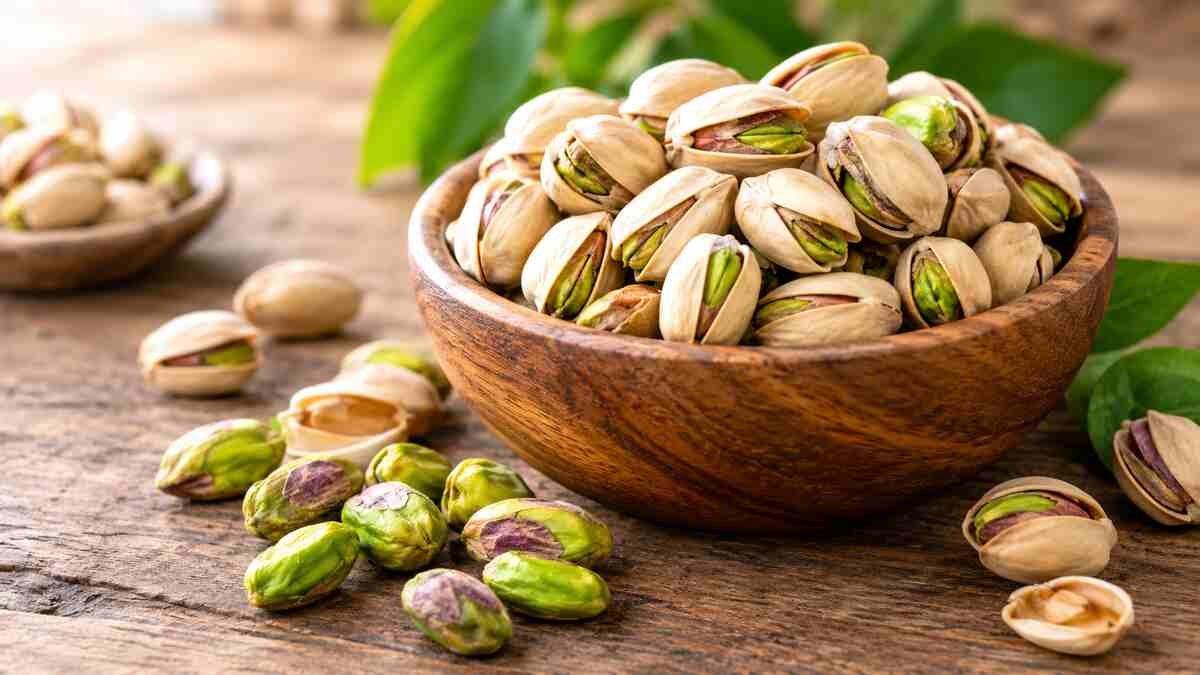

Pistachios are nutrient-dense nuts that provide plant-based protein, fiber, unsaturated fats, potassium, vitamin B6, and antioxidant compounds. They can contribute to a balanced eating pattern and may support heart and digestive health. Plain or unsalted pistachios are practical choices, while people with pistachio allergies should avoid them.
With their pale green kernels and mildly sweet, buttery flavor, pistachios are among the most recognizable nuts in the world. They are enjoyed as a snack, ground into pastes and pesto, and used in both sweet and savory dishes from Mediterranean to South Asian cuisines. Cracking the shells also slows you down, which many people find makes snacking more mindful.
This guide covers pistachio nutrition facts, eight potential health benefits, and what research says about heart health and digestion. It also compares raw, roasted, and salted pistachios, explains serving sizes, and describes precautions, including allergy. Pistachios are a nutritious food, not a treatment or cure for any condition, and the research on their effects is still developing. For a broader look at the category, see our guide to the health benefits of nuts.
What Makes Pistachios a Nutritious Food?
Pistachios are the edible seeds of the pistachio tree (Pistacia vera), which grows in warm, dry climates. They are generally classified as tree nuts for food labeling. Inside the shell, the kernel is covered by a thin skin that ranges from purple to tan.
They provide a useful combination of plant-based protein, dietary fiber, and mostly unsaturated fats. Their green and purple colors come partly from naturally occurring plant pigments, including carotenoids and anthocyanins. Pistachios also supply potassium, vitamin B6, copper, and other micronutrients.
Like all nuts, pistachios are energy-dense, meaning a small serving contains a fair number of calories. That does not make them unhealthy; it means portions matter. They fit well into a varied eating pattern such as the Mediterranean diet.
What Nutrients Make Pistachios Different?
- Protein and fiber: Pistachios provide more of both than many other nuts per serving.
- Monounsaturated and polyunsaturated fats: These make up most of the fat in pistachios.
- Potassium and magnesium: Minerals involved in muscle, nerve, and heart function.
- Vitamin B6 and thiamin: B vitamins involved in energy metabolism.
- Lutein, zeaxanthin, and other plant compounds: Pigments and antioxidants that give pistachios their color. Pistachios contain more lutein and zeaxanthin than most other nuts, according to the review in the journal Plants.
Pistachio Nutrition Facts: What Does One Serving Provide?
A commonly used serving is one ounce (28 grams), which is about 49 kernels. The table below shows approximate values for plain pistachios. Values depend on whether the nuts are raw or roasted and on the database used, so verify final figures in USDA FoodData Central.
| Nutrient | Approximate amount per 1 oz (28 g) |
|---|---|
| Calories | 160 kcal |
| Protein | 6 g |
| Total fat | 13 g |
| Saturated fat | 1.5 g |
| Carbohydrates | 8 g |
| Fiber | 3 g |
| Potassium | 290 mg |
| Magnesium | 30 to 35 mg |
| Vitamin B6 | 0.4 mg |
| Thiamin | 0.2 mg |
For context, the NIH Office of Dietary Supplements lists the recommended vitamin B6 intake for most adults at 1.3 to 1.7 mg per day, so a serving provides a meaningful share.
Protein in Pistachios
Pistachios provide about 6 grams of protein per ounce. Protein supports tissue maintenance, enzyme function, and many other processes in the body. Pistachios can complement other protein sources, such as beans, eggs, fish, yogurt, or whole grains. For more ideas, see our guide to high-protein foods.
Fiber in Pistachios
An ounce provides roughly 3 grams of fiber, about 10 percent of the Daily Value of 28 grams. Fiber supports normal bowel function, and the Harvard Nutrition Source explains its broader role in health. Pistachios are one contributor, and it helps to get fiber from many foods, including vegetables, fruits, legumes, and whole grains.
Healthy Fats in Pistachios
Most of the fat in pistachios is unsaturated. Replacing some foods high in saturated fat, such as processed meats or fried snacks, with sources of unsaturated fat can support a heart-conscious eating pattern, as noted in the Dietary Guidelines for Americans. Learn more in our guide to healthy fats.
8 Potential Health Benefits of Pistachios
Many of the findings below come from controlled trials and observational studies that examine risk factors or biomarkers, not disease outcomes. Research findings differ by study design, and the language here is intentionally careful.
1. May Support Heart Health
Pistachios are rich in unsaturated fats, fiber, potassium, and plant compounds. Several clinical studies suggest that eating pistachios in place of some other snack foods may improve certain blood lipid measures, such as LDL (“bad”) cholesterol. Pistachios are not a treatment for cardiovascular disease, and we discuss the evidence further below. The American Heart Association includes nuts as part of a heart-healthy eating pattern.
2. Provide Antioxidant Plant Compounds
Pistachios contain lutein, zeaxanthin, polyphenols, and anthocyanins, which contribute to their color and have antioxidant activity in laboratory studies. Lutein and zeaxanthin are also found in the retina of the eye. A 2021 review of pistachio bioactives published in Plants discusses these compounds in detail.
Laboratory antioxidant findings do not automatically prove a specific disease-prevention benefit in people. For more background, see our article on what antioxidants are.
3. Contribute to Digestive Health
The fiber in pistachios supports normal bowel function and provides material that gut bacteria can ferment. Small studies have examined how pistachio consumption may change the composition of gut bacteria, including increases in some beneficial bacterial groups.
Gut microbiome research is developing, and results should not be overstated. A varied diet that includes vegetables, fruits, legumes, and whole grains is more important than any single nut. See our guide on how to improve gut health and the Harvard Nutrition Source fiber overview.
4. Provide Plant-Based Protein
Pistachios provide protein along with fiber and unsaturated fats, which makes them a useful part of a plant-forward diet. They can be added to snacks and meals to boost protein in a simple way. A serving provides about 6 grams, roughly the same as a large egg. Check USDA FoodData Central for protein values for other nuts and seeds, and compare them in our guide to the health benefits of peanuts.
5. Supply Important Vitamins and Minerals
Pistachios provide vitamin B6, thiamin, potassium, copper, and magnesium. These nutrients help with normal energy metabolism, nerve function, and muscle function. The NIH Office of Dietary Supplements describes the roles of vitamin B6, thiamin, potassium, and copper in detail.
Pistachios alone cannot meet all daily nutrient requirements. They work best alongside a variety of other nutrient-dense foods, as described in our guide to nutrient-dense foods.
6. May Fit Into a Balanced Blood Sugar Eating Pattern
Pistachios contain carbohydrates, protein, fat, and fiber, and they have a low glycemic impact. Small studies have found that eating pistachios with a carbohydrate-rich meal may lead to a smaller rise in blood sugar after eating than the same meal without them. Findings are not consistent across all studies.
Pistachios do not treat diabetes or replace prescribed care. People with diabetes can ask their care team how nuts fit into their meal plans; the American Diabetes Association offers general guidance. See also our article on the best nuts for type 2 diabetes.
7. May Contribute to a Satisfying Snack
Protein, fiber, and fat all slow digestion and promote fullness. A handful of pistachios can be more satisfying than a similar number of calories from refined snacks. In-shell pistachios also leave a pile of empty shells, which makes the amount you have eaten more visible, a strategy examined in some small studies.
This is not a weight-loss promise. Nuts are energy-dense, and weight depends on overall eating patterns, activity, and other factors. Our guide on whether nuts are good for weight management covers the research in more depth, and the Harvard Nutrition Source offers general advice on balanced plates.
8. Add Nutritional Variety to Everyday Meals
Pistachios work in sweet and savory dishes, from salads and yogurt to oatmeal, roasted vegetables, and homemade sauces. Rotating different nuts and seeds gives you a wider range of nutrients. You can compare options in our articles on the health benefits of walnuts and almonds vs. walnuts. The Dietary Guidelines for Americans include nuts and seeds in the protein foods group and encourage variety.
Are Pistachios Good for Heart Health?
Pistachios provide unsaturated fats, fiber, potassium, and plant compounds, all of which can fit into a heart-conscious eating pattern. Replacing some foods high in saturated fat with nuts is a common recommendation.
The USDA’s Nutrition Evidence Systematic Review reports moderate evidence that eating unsalted peanuts and certain tree nuts, including pistachios, can favorably affect cardiovascular risk factors, especially blood lipid levels, when part of an appropriate eating pattern. Some studies also suggest effects on blood pressure and blood vessel function, but results vary.
Improving a risk marker is not the same as proving that a food prevents heart disease. Pistachios are one helpful food among many, and they do not replace medical care. For more, see our guides to the best nuts for heart health, heart-healthy foods, and high cholesterol.
Are Pistachios Good for Digestion?
Pistachios contribute to daily fiber intake, which supports normal bowel function and regularity. Research is exploring how pistachios may influence gut bacteria. A review in Plants notes that pistachio fiber and plant compounds may feed beneficial bacteria, but the evidence in humans is still early.
Tolerance varies. Some people feel bloated or uncomfortable after eating large amounts of nuts, especially if they are not used to a high-fiber diet. Add pistachios gradually and drink enough fluids. Rely on a mix of fiber-rich foods rather than one nut; see our guide to high-fiber foods for digestive health.
Raw vs. Roasted vs. Salted Pistachios: Which Should You Choose?
No single preparation is best for everyone. The right choice depends on taste, budget, and health needs.
Raw Pistachios
Raw pistachios have a mild, slightly sweet flavor and a softer texture. They work well in salads, yogurt, and homemade dishes. Store them in a cool, dry place or in the refrigerator or freezer to maintain freshness, because the fats in nuts can turn rancid.
Dry-Roasted Pistachios
Dry roasting deepens the flavor and adds crunch. Plain dry-roasted pistachios are a convenient option. Heat may reduce the levels of some heat-sensitive compounds, but the overall nutrient profile remains similar.
Salted Pistachios
Salt adds flavor but increases sodium. People who need to limit sodium, such as those with high blood pressure, should compare labels and consider unsalted varieties. The American Heart Association provides sodium guidance.
Flavored and Sweetened Pistachios
Flavored products may contain added sugar, salt, coatings, or other ingredients, which changes their nutritional profile. Read the ingredient list and nutrition label.
Which Type Is Best?
Plain or unsalted pistachios, raw or dry-roasted, are practical everyday choices. Choose whichever you enjoy and will eat in reasonable portions.
How Many Pistachios Should You Eat?
One ounce (28 grams) is a commonly used reference serving, equal to about 49 kernels. The number varies with kernel size. This is a serving-size reference, not a required daily target.
Your ideal amount depends on your total diet, calorie needs, and health goals. Many dietary patterns include a small handful of nuts most days. For more detail on portions across nuts, see our guide on how many nuts to eat daily. Always cross-check serving and nutrient values in USDA FoodData Central.
Easy Ways to Include Pistachios in Everyday Meals
Pistachios add texture and flavor without complicated preparation. Try these ideas:
- Breakfast: Sprinkle chopped pistachios over oatmeal or cereal.
- Snack: Pair pistachios with fresh fruit.
- Lunch: Add chopped pistachios to vegetable or grain salads.
- Dinner: Use crushed pistachios as a topping for cooked vegetables or fish.
- Yogurt: Add pistachios to plain yogurt with fruit.
- Homemade sauces: Blend pistachios into pesto or other savory sauces.
- Baking: Use chopped pistachios in homemade breads or muffins.
Pistachios work especially well alongside other nutrient-dense foods. For more ideas, see our list of 15 nutrient-dense foods to add to your diet.
Possible Side Effects and Who Should Be Careful
Pistachios are safe for most people, but a few precautions apply.
Pistachio allergy: Pistachios are tree nuts and can cause serious allergic reactions, including anaphylaxis. People with a known pistachio allergy should avoid them completely and follow their clinician’s advice. Do not try small amounts to test tolerance. The FDA and Food Allergy Research & Education provide more information.
Cashew cross-reactivity: Pistachios and cashews belong to the same botanical family, and some people with a cashew allergy also react to pistachios. A qualified allergist can give personal advice.
Sodium: Salted and flavored pistachios may contain considerable sodium.
Digestive discomfort: Eating large amounts may cause bloating or discomfort in some people.
Food quality: Buy properly stored nuts, and discard any that smell musty, taste bitter or sour, or show mold, since moldy nuts can contain harmful toxins.
Frequently Asked Questions About Pistachios
Are pistachios healthy to eat every day?
Pistachios can be included regularly in a balanced eating pattern for people who are not allergic. The amount and frequency depend on individual needs and the rest of the diet. Many people use about one ounce as a reference serving.
How many pistachios are in one serving?
A commonly used one-ounce serving contains approximately 49 pistachio kernels, although the exact number varies with kernel size. Check the package and USDA FoodData Central for specifics.
Are pistachios good for heart health?
Pistachios provide unsaturated fats and other nutrients that can fit into a heart-conscious eating pattern. Research, including the USDA Nutrition Evidence Systematic Review, suggests potential benefits for some blood lipid measures. They are not a treatment for heart disease.
Do pistachios contain protein?
Yes. A one-ounce serving provides approximately 6 grams of protein, along with fiber and unsaturated fats.
Are pistachios good for digestion?
Pistachios provide dietary fiber, which contributes to normal digestive function. Research into their effects on gut bacteria is still developing, and individual tolerance varies.
Are salted pistachios healthy?
They provide many of the same nutrients as plain pistachios, but they contain added sodium. Unsalted varieties are useful for people who want to limit sodium, as recommended by the American Heart Association.
Are pistachios a good choice for people with diabetes?
They can fit into many balanced eating patterns. Their carbohydrate content and the rest of the meal should be considered, and they are not a substitute for diabetes treatment. The American Diabetes Association offers general nutrition guidance.
Are pistachios tree nuts?
Yes. Pistachios are edible seeds from a tree and are generally classified as tree nuts for food-allergy labeling, according to the FDA.
Conclusion: Enjoy Pistachios as Part of a Balanced Diet
Pistachios offer plant-based protein, fiber, unsaturated fats, vitamins, minerals, and plant compounds in a small, flavorful package. Plain or unsalted versions fit easily into snacks and meals, alongside other nutritious foods. Watch your portions, choose products that suit your needs, and avoid pistachios if you have a tree nut allergy.
For more on healthy eating, see our guide to the best foods for healthy aging.
Sources
- U.S. Department of Agriculture. FoodData Central
- U.S. Department of Agriculture. Nutrition Evidence Systematic Review
- U.S. Department of Agriculture and U.S. Department of Health and Human Services. Dietary Guidelines for Americans
- National Institutes of Health, Office of Dietary Supplements. Vitamin B6: Fact Sheet for Health Professionals
- National Institutes of Health, Office of Dietary Supplements. Thiamin: Fact Sheet for Health Professionals
- National Institutes of Health, Office of Dietary Supplements. Potassium: Fact Sheet for Health Professionals
- National Institutes of Health, Office of Dietary Supplements. Copper: Fact Sheet for Health Professionals
- Harvard T.H. Chan School of Public Health, The Nutrition Source. Fiber
- American Heart Association. Nuts and Your Heart: Eating Nuts for Heart Health
- American Diabetes Association. Food and Nutrition
- U.S. Food and Drug Administration. Food Allergies
- Food Allergy Research & Education. Tree Nuts
Medical Disclaimer: This article is for general educational purposes only and is not medical advice. It does not diagnose, treat, or replace guidance from a qualified healthcare professional who knows your health history. Talk with your doctor or a registered dietitian before changing your diet, especially if you have diabetes, high blood pressure, or a food allergy. If you have a known or suspected nut allergy, avoid pistachios and ask an allergist for guidance. If you think you may be having a medical emergency or a severe allergic reaction, call 911 or your local emergency number right away.
1 thought on “Health Benefits of Pistachios: Nutrition Facts, Benefits, and How to Eat Them”
Comments are closed.