
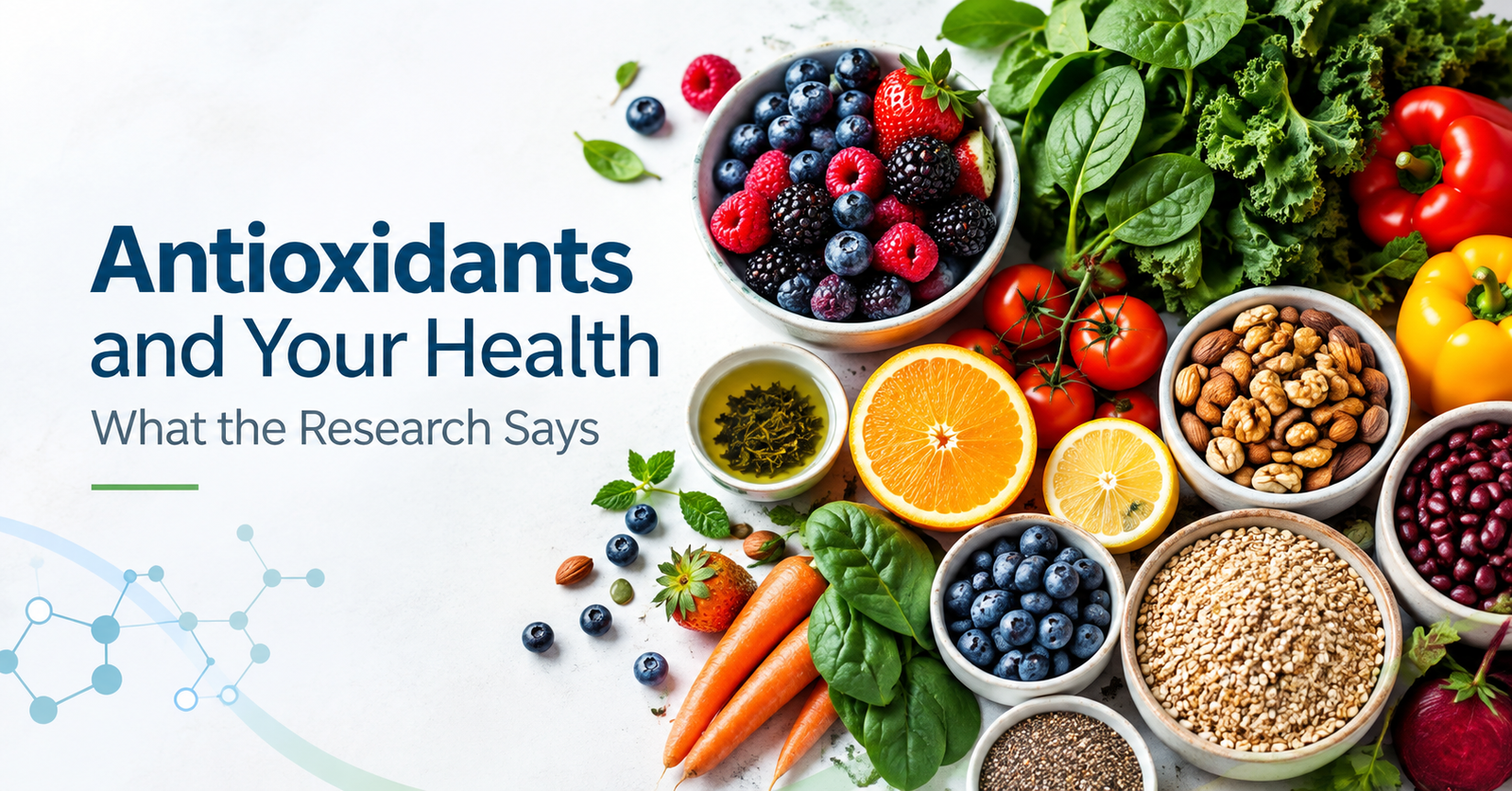

Antioxidants and Your Health: What the Research Says
Antioxidants show up on food labels, supplement bottles, and skincare products alike. The word gets used so often that it’s easy to assume more antioxidants must always mean better health.
The real picture is more nuanced. Antioxidants are genuinely important biological compounds, but research doesn’t support the idea that piling on more of them, especially through supplements, automatically improves your health. In some cases, high doses have caused real harm.
Important: This article is for general information and isn’t a substitute for professional medical advice. Talk to a doctor before starting any new supplement, especially if you take medication or manage a chronic condition.
This guide covers what antioxidants actually do, where they come from, what the research shows across specific health outcomes, and how to think about food versus supplements.
What Are Antioxidants?
Antioxidants are compounds that help regulate unstable molecules in your body called free radicals, or more broadly, reactive oxygen species.
Free Radicals and Oxidative Stress
Your body produces free radicals naturally, as a normal byproduct of processes like metabolism. Free radicals aren’t automatically bad. They also play normal roles in cell signaling and immune defense.
Problems arise when free radicals build up faster than your body can regulate them. Scientists call this imbalance oxidative stress, and it’s been linked to cell damage over time.
Antioxidants Don’t Just “Destroy” Free Radicals
It’s tempting to picture antioxidants as tiny soldiers wiping out every free radical in sight. That’s an oversimplification. The National Center for Complementary and Integrative Health (NCCIH) notes that different antioxidants have different properties, and they aren’t interchangeable. Your body also produces its own antioxidant enzymes as part of its natural defense system, working alongside antioxidants you get from food.
How Antioxidants Work in the Body
Antioxidants work through several overlapping mechanisms rather than one single action.
Supporting the Body’s Own Defenses
Some antioxidants support enzyme systems your body already uses to manage oxidative stress. Selenium, for example, is required for certain antioxidant enzymes to function properly.
Antioxidants vs. Oxidative Stress: What’s the Difference?
Oxidative stress isn’t simply “having free radicals present.” It’s an imbalance between reactive molecules and your body’s capacity to regulate them. A healthy body constantly generates and manages free radicals without issue. Oxidative stress happens when that balance tips, whether from illness, environmental exposures, or other factors.
Common Antioxidant Compounds
A few categories come up repeatedly in nutrition science:
- Vitamin C
- Vitamin E
- Carotenoids, including beta-carotene and lycopene
- Polyphenols, a large family of plant compounds
- Selenium, a mineral required for certain antioxidant enzymes
Where Do Antioxidants Come From?
Whole foods, particularly plant foods, are the main dietary source of antioxidants.
Food Categories Rich in Antioxidants
- Fruits, especially berries and citrus
- Vegetables, including leafy greens, tomatoes, carrots, and bell peppers
- Legumes and beans
- Whole grains
- Nuts and seeds
- Tea and coffee
- Herbs and spices
Why Variety Matters More Than Any Single Food
No single fruit or vegetable deserves the “superfood” label here. Our guide to the healthiest foods to eat every day emphasizes exactly this point: dietary variety consistently outperforms relying on one standout ingredient.
Important Types of Antioxidants and Where to Find Them
Different antioxidants come from different foods and play different roles in the body.
| Antioxidant/Nutrient | Common Food Sources | General Role |
|---|---|---|
| Vitamin C | Citrus, peppers, berries | Supports antioxidant defenses and collagen formation |
| Vitamin E | Nuts, seeds, vegetable oils | Helps protect cell membranes |
| Beta-carotene | Carrots, sweet potatoes, leafy greens | Carotenoid and a precursor to vitamin A |
| Lycopene | Tomatoes, watermelon | Carotenoid found in red and pink foods |
| Selenium | Seafood, eggs, meat, grains | Required for certain antioxidant enzymes |
| Polyphenols | Berries, tea, cocoa, vegetables | A diverse family of plant compounds |
These compounds aren’t interchangeable. Their effects can vary depending on dose, whether they come from food or a concentrated supplement, and individual health circumstances.
What Does the Research Say About Antioxidants and Health?
This is where the evidence gets more specific, and more nuanced, than most antioxidant marketing suggests.
Antioxidants and Heart Health
Observational research often links higher fruit and vegetable intake with better cardiovascular outcomes. A systematic review and dose-response meta-analysis of prospective studies found associations between higher dietary intake or blood levels of vitamin C, carotenoids, and alpha-tocopherol and lower risk of several cardiovascular outcomes, cancer, and all-cause mortality.
That doesn’t prove antioxidants alone are responsible. Whole foods contain many nutrients and plant compounds that likely work together. The review’s authors pointed to increasing fruit and vegetable intake, not antioxidant supplements, as the practical takeaway.
Antioxidants and Cancer
Oxidative stress has been studied extensively in cancer research, and observational studies link higher fruit and vegetable intake with lower cancer risk in some populations. But antioxidant supplements haven’t consistently reproduced that same benefit in clinical trials. NCCIH states plainly that current evidence does not support the idea that antioxidant supplements can prevent cancer, and in some cases, high-dose supplementation has increased risk rather than lowered it.
Antioxidants and Eye Health
Eye health is one area where antioxidants have a genuinely specific, evidence-backed role, but it’s narrower than general marketing suggests. NCCIH reports that antioxidant supplements haven’t been shown to prevent age-related macular degeneration (AMD) in healthy people. Certain antioxidant-plus-zinc formulations, however, can slow progression in people who already have AMD. That’s a targeted clinical intervention for an existing condition, not a general recommendation for everyone.
Antioxidants and Brain and Cognitive Health
Research on antioxidants and cognitive aging is mixed. Some studies suggest associations between diet quality and cognitive outcomes, but the evidence doesn’t currently support antioxidant supplementation as a general strategy for preventing cognitive decline.
Antioxidants and Healthy Aging
Oxidative stress is a genuine area of interest in aging research, but association isn’t causation. Overall diet quality and lifestyle habits appear to matter more than chasing any single antioxidant compound. Our guide to anti-inflammatory foods covers a related angle, since oxidative stress and inflammation are closely connected processes in the body.
Antioxidant Foods vs. Antioxidant Supplements
This distinction matters more than almost anything else in this article.
How Foods and Supplements Compare
| Antioxidant-Rich Foods | Antioxidant Supplements |
|---|---|
| Provide multiple nutrients together | Often provide a concentrated, isolated dose |
| Include fiber and other plant compounds | May contain only one or two isolated nutrients |
| Fit naturally into a balanced diet | Can lead to excessive intake of a single compound |
| Generally the preferred, food-first approach | Benefits depend heavily on the specific nutrient and situation |
| Supported as part of healthy dietary patterns | Not generally recommended for disease prevention alone |
NCCIH notes that research has generally not shown antioxidant supplements to prevent major chronic diseases like cardiovascular disease and cancer, even though antioxidant-rich foods are consistently associated with lower disease risk. That gap between food and supplement outcomes is one of the more important, and more often overlooked, findings in this entire area of research.
Can Too Many Antioxidants Be Harmful?
Yes, in specific, well-documented circumstances. This is a genuine myth worth correcting directly.
Beta-Carotene and Lung Cancer Risk
NCCIH points to large randomized controlled trials showing that high-dose beta-carotene supplementation increased lung cancer risk in people already at high risk, particularly smokers. Based on this evidence, the U.S. Preventive Services Task Force recommends against using beta-carotene or vitamin E supplements for cancer prevention.
Other Documented Risks
- High-dose vitamin E has been linked to an increased risk of bleeding and can interact with certain medications
- High-dose vitamin C can cause gastrointestinal side effects in some people
- Concentrated supplements can interact with prescription medications more than food sources typically do
Why This Happens
The high doses found in supplements can behave differently in the body than the smaller amounts naturally present in food. A compound that’s protective at typical dietary levels isn’t automatically safe, or beneficial, at many times that amount.
Common Myths About Antioxidants
A few persistent myths are worth addressing directly.
Myth: More Antioxidants Are Always Better
Reality: Dose matters. High-dose supplementation has caused real harm in specific populations, as the beta-carotene research shows clearly.
Myth: Antioxidants Prevent Cancer
Reality: Evidence for antioxidant supplements doesn’t support a general cancer-prevention claim, and some supplements have increased risk in at-risk groups.
Myth: You Need Supplements If Your Diet Isn’t Perfect
Reality: Supplements can’t fully substitute for a varied, nutrient-dense diet. Whole foods deliver antioxidants alongside fiber and other compounds that don’t come in a pill.
Myth: Every Antioxidant Works the Same Way
Reality: Different antioxidant compounds have different properties, sources, and effects in the body.
Myth: Antioxidants Eliminate Oxidative Stress Completely
Reality: Reactive molecules serve normal physiological functions. The goal is balance, not elimination.
How to Get More Antioxidants From Your Diet
A food-first approach is both simpler and better supported by evidence than chasing supplements.
Practical Steps
- Eat several servings of vegetables every day.
- Include a range of colors across fruits and vegetables.
- Choose whole grains regularly instead of refined versions.
- Add nuts and seeds to meals as a simple boost.
- Include beans and other legumes throughout the week.
- Choose minimally processed plant foods when possible.
- Drink tea or coffee if they already fit your routine.
- Focus on variety rather than searching for one “superfood.”
Our guide to what is a healthy diet covers how these habits fit into a broader, sustainable eating pattern.
Do You Need an Antioxidant Supplement?
For most people, the honest answer is no.
A Food-First Approach Works for Most People
Most people can meet their antioxidant needs through a varied diet without any supplement at all. Supplements may be appropriate in specific medical situations, like the antioxidant-plus-zinc formulations used for existing AMD, but that’s a targeted clinical use, not a general wellness strategy.
When to Talk to a Doctor First
If you’re managing a medical condition or taking regular medications, check with a doctor or pharmacist before starting any antioxidant supplement. Some antioxidants interact with medications or carry risks specific to certain health conditions.
Key takeaway: Antioxidant supplements are not a substitute for a healthy dietary pattern.
The Bottom Line: What the Evidence Actually Shows
Antioxidants are a genuine, important part of how your body manages oxidative stress. But the marketing around them has outpaced what research actually supports.
- Antioxidants are part of the body’s natural defense systems, working alongside enzymes your body produces itself.
- Fruits and vegetables provide antioxidant compounds alongside fiber and other beneficial nutrients.
- Higher fruit and vegetable intake is consistently associated with better health outcomes.
- This doesn’t mean antioxidant compounds alone explain those benefits.
- High-dose antioxidant supplements haven’t generally been shown to prevent chronic disease, and some have caused harm in specific populations.
- A varied, nutrient-dense diet remains the most practical, evidence-supported approach for most people.
This kind of food-first thinking fits into the bigger picture of overall health. Our guides to healthy living tips and how to improve your health cover how nutrition works alongside sleep, activity, and stress management as part of a complete approach.
Frequently Asked Questions About Antioxidants
What are antioxidants?
Antioxidants are compounds that help regulate free radicals, unstable molecules produced naturally in your body. They come from both your body’s own systems and from foods like fruits, vegetables, nuts, and whole grains.
Why are antioxidants important for your health?
They help manage oxidative stress, an imbalance that’s been linked to cell damage over time. That said, antioxidants work best as part of an overall healthy diet rather than as an isolated fix for any single health problem.
What foods are highest in antioxidants?
Berries, citrus fruits, leafy greens, tomatoes, nuts, beans, and whole grains are all strong sources. Variety across these food groups matters more than focusing on any single “top” food.
Can antioxidants reduce oxidative stress?
Yes, antioxidants play a role in helping regulate oxidative stress. However, your body’s own enzyme systems also do much of this work, and eliminating oxidative stress entirely isn’t the goal, since reactive molecules serve normal biological functions too.
Do antioxidant supplements actually work?
For general disease prevention, the evidence is weak to negative. Research hasn’t shown antioxidant supplements prevent major chronic diseases, and some high-dose supplements have caused harm in specific populations, such as beta-carotene in smokers.
Can you get enough antioxidants from food?
Yes, for most people. A varied diet rich in fruits, vegetables, whole grains, nuts, and legumes provides antioxidants alongside fiber and other nutrients that supplements can’t replicate.
Can too many antioxidants be harmful?
Yes, particularly from high-dose supplements. Beta-carotene supplements have increased lung cancer risk in smokers, and high-dose vitamin E has been linked to increased bleeding risk.
What is the best way to increase antioxidant intake?
Focus on eating more vegetables, fruits, whole grains, nuts, and legumes across a variety of colors and types, rather than relying on a single food or a supplement.
Sources
- National Center for Complementary and Integrative Health (NCCIH). Antioxidant Supplements: What You Need To Know
- Aune D, et al., published via PubMed. Dietary Intake and Blood Concentrations of Antioxidants and the Risk of Cardiovascular Disease, Total Cancer, and All-Cause Mortality: A Systematic Review and Dose-Response Meta-Analysis of Prospective Studies
Related Reading
- What Are the Healthiest Foods to Eat Every Day? 15 Nutritious Choices
- What Is a Healthy Diet?
- Anti-Inflammatory Foods
- Healthy Living Tips: 15 Simple Habits for Better Health
- How to Improve Your Health: A Step-by-Step Approach
Medical Disclaimer
This article is for general information and education. It is not personalized medical advice. Talk to a doctor or registered dietitian before starting any new supplement, especially if you take medication or manage a chronic health condition.
Read our full Medical Disclaimer.