

If you think you or someone else may be having a heart attack, call 911 immediately. Don’t wait to see if symptoms go away, and don’t drive yourself to the hospital if you can avoid it.
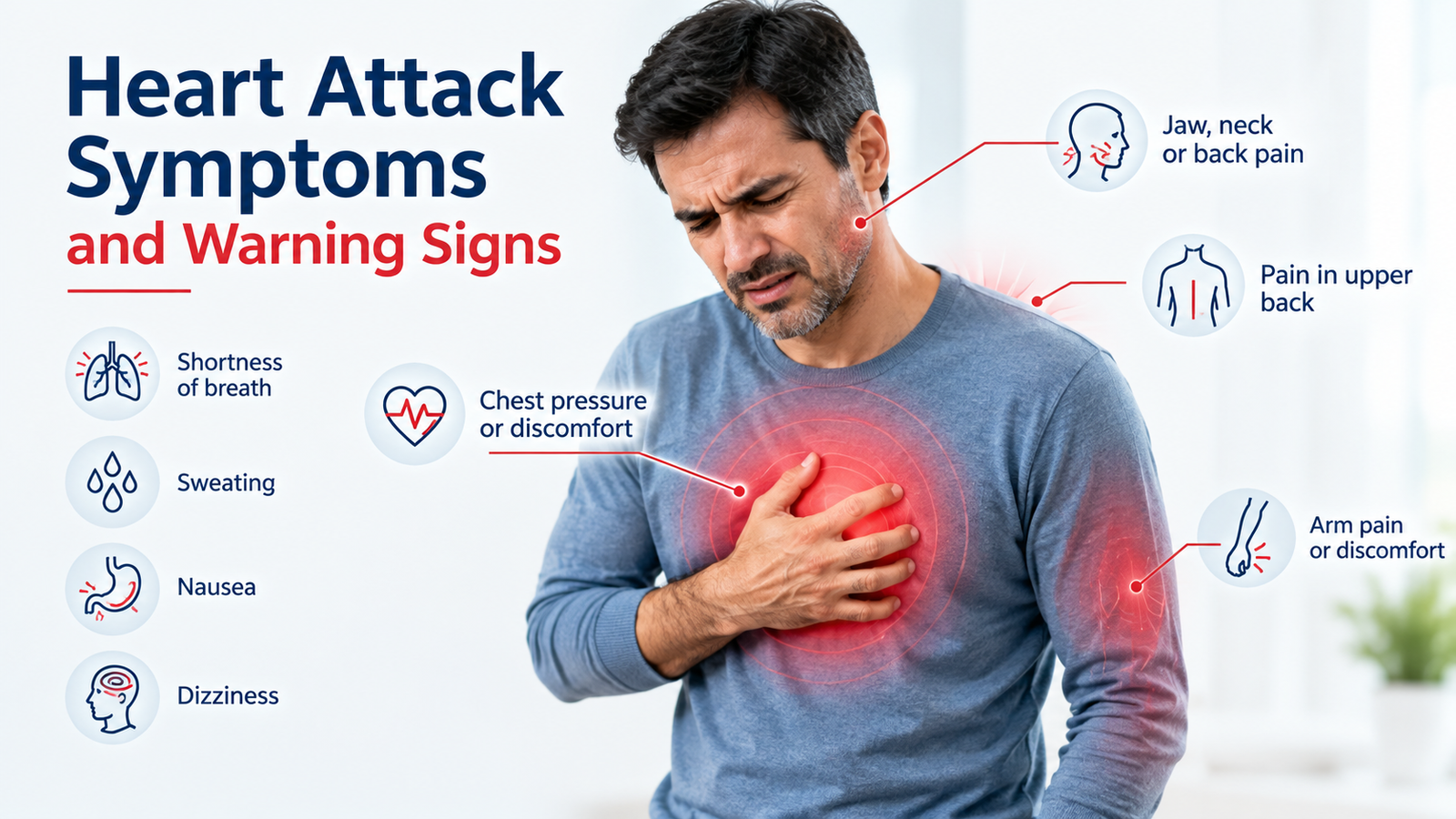
A heart attack doesn’t always start with dramatic, movie-style chest pain. It can begin with pressure or tightness in the chest, shortness of breath, cold sweats, nausea, lightheadedness, unusual fatigue, or discomfort in the arm, back, neck, jaw, or upper stomach. Symptoms vary from person to person, and some people — especially women — may have little or no chest pain at all.
Important: This article is for general information only and is not a substitute for professional medical advice, diagnosis, or treatment. If you think you may be having a medical emergency, call 911 right away.
What Are the Symptoms of a Heart Attack?
Most heart attacks don’t come on like a lightning strike. According to the American Heart Association (AHA), some heart attacks are sudden and intense, but many start slowly with mild discomfort that builds over time. Here’s what to watch for.
Chest pain or discomfort
Chest discomfort is the most widely recognized symptom. It typically centers in the middle of the chest and can feel like:
- Pressure
- Tightness
- Squeezing
- Fullness
- Aching
- Pain
This discomfort often lasts more than a few minutes, or it may fade and then return. It’s this pattern — persistent or recurring central chest discomfort — that the AHA identifies as one of the clearest warning signs of a heart attack.
Pain or discomfort in the upper body
Heart attack pain doesn’t stay confined to the chest. It can radiate — or sometimes appear only — in other parts of the upper body, including the:
- Arms (one or both)
- Shoulder
- Back
- Neck
- Jaw
- Stomach or upper abdomen
Shortness of breath
You can experience shortness of breath with chest discomfort, without it, or even before it starts. The AHA notes that shortness of breath can occur with or without chest discomfort, which is part of why this symptom is easy to dismiss as simply being out of shape or anxious.
Cold sweat
Breaking out in a cold sweat for no obvious reason — especially alongside any of the other symptoms on this list — is a recognized heart attack warning sign.
Nausea or vomiting
Feeling queasy or actually vomiting can accompany a heart attack. This symptom is often mistaken for a stomach bug or food poisoning, which can delay someone from seeking help.
Lightheadedness or dizziness
A sudden feeling of faintness or dizziness, particularly combined with chest discomfort or shortness of breath, deserves prompt attention. If dizziness happens on its own, it can have many other causes, but when it appears with other heart attack symptoms, treat it as an emergency.
Unusual fatigue or weakness
Sudden, unexplained exhaustion — the kind that isn’t tied to poor sleep or a hard workout — can be a sign of reduced blood flow to the heart. If persistent fatigue shows up without other explanation, it’s worth reviewing the common causes of fatigue and discussing it with a doctor.
Rapid or irregular heartbeat
A heart that suddenly races, flutters, or beats unevenly can signal that something is wrong with blood flow or the heart’s electrical activity.
What Does a Heart Attack Feel Like?
In short: a heart attack can feel like pressure, squeezing, tightness, fullness, aching, or pain in the center of the chest. It can also cause discomfort in the arm, shoulder, back, neck, jaw, or upper abdomen, along with shortness of breath, nausea, sweating, dizziness, or unusual fatigue.
Not everyone experiences the same combination of symptoms. Mayo Clinic explains that heart attack symptoms vary widely — some people have mild symptoms, some have severe symptoms, and some have no noticeable symptoms at all. That range is exactly why it’s dangerous to wait for “classic” symptoms before acting.
What Are the Early Warning Signs of a Heart Attack?
Some heart attacks strike without any buildup. Others give warning hours, days, or even weeks in advance. Mayo Clinic points out that chest pain or pressure (angina) that keeps happening and doesn’t ease with rest can be an early warning sign of reduced blood flow to the heart, since angina is caused by a temporary decrease in blood supply to the heart muscle.
Possible early warning patterns include:
- Recurring chest pressure that comes and goes
- Increasing shortness of breath during everyday activity
- Unusual fatigue that doesn’t improve with rest
- Intermittent discomfort in the chest, arm, back, neck, or jaw
- Unexplained nausea or weakness
These patterns are worth paying attention to, but they aren’t a reliable countdown clock. Someone can have zero warning signs and still have a heart attack, and someone else can have all of these signs on and off for weeks. If anything on this list feels new, worsening, or out of character for you, it’s worth talking to a doctor promptly — and calling 911 immediately if you have any doubt about whether you’re having a heart attack right now.
Heart Attack Symptoms in Women
Chest pain or discomfort remains the most common heart attack symptom in women, just as it is in men. But women are somewhat more likely than men to also experience symptoms that aren’t traditionally associated with heart attacks, according to the AHA’s guidance on heart attack symptoms in women. These can include:
- Shortness of breath
- Nausea or vomiting
- Upset stomach
- Pain in the shoulder, back, or arm
- Unusual tiredness or weakness
- Anxiety
Because these symptoms can resemble acid reflux, the flu, or ordinary stress, women sometimes delay seeking care — which can allow more time for heart damage to occur. If something feels different or “off” in your body, especially alongside any classic warning sign, don’t talk yourself out of calling for help.
Heart Attack Symptoms in Men
Men most commonly experience the same core symptoms: chest discomfort, arm or shoulder pain, shortness of breath, sweating, nausea, and lightheadedness. The CDC and AHA describe these as the general recognized warning signs of a heart attack rather than presenting a separate list exclusively for men — the biggest difference isn’t the type of symptoms but how often men versus women report the less typical ones.
That said, symptoms still vary from person to person regardless of sex. A man who feels only mild jaw discomfort and fatigue can be having a heart attack just as much as a man with severe chest pain. When in doubt, treat any combination of these symptoms seriously and call 911.
Can You Have a Heart Attack Without Chest Pain?
Yes. Some people — particularly women, older adults, and people with diabetes — may have a heart attack with minimal or no chest pain. Mayo Clinic notes that symptoms in these groups may be limited to nausea or a brief, sharp pain in the neck, arm, or back, rather than the more obvious chest pressure most people expect. If you live with diabetes or insulin resistance, nerve changes associated with the condition can sometimes blunt typical pain signals, making atypical or “silent” symptoms more likely.
What Is a Silent Heart Attack?
A silent heart attack causes mild, unusual, or barely noticeable symptoms — sometimes so subtle that the person doesn’t realize what happened until a later checkup or test reveals it. Possible less-obvious symptoms include fatigue, indigestion-like discomfort, and back or jaw pain that doesn’t seem connected to the heart. Because these symptoms overlap so closely with everyday complaints, silent heart attacks are one of the reasons routine checkups and awareness of personal risk factors matter, even when nothing feels dramatically wrong.
How Long Do Heart Attack Symptoms Last?
There’s no fixed timeline that applies to everyone. Symptoms can:
- Persist continuously for many minutes
- Come and go, easing up and then returning
- Start out mild and gradually intensify
The AHA describes chest discomfort during a heart attack as often lasting more than a few minutes or fading and then coming back. Mayo Clinic adds that heart attack-related chest pain typically lasts more than 15 minutes, though some people have no chest pain at all.
The key point is this: do not wait for symptoms to become unbearable before seeking help. Mild, intermittent, or “probably nothing” symptoms can still add up to a heart attack. Time lost waiting is time the heart muscle spends without enough oxygen.
Heart Attack vs. Heartburn: How Can You Tell?
Heartburn and heart attacks can feel surprisingly similar, because the esophagus sits close to the heart and both organs can cause pain in a similar area of the chest. That overlap is exactly why so many people second-guess themselves before calling for help.
| Symptom or pattern | Possible heart attack | Possible heartburn |
|---|---|---|
| Chest discomfort | Pressure, squeezing, fullness, or pain | Burning sensation |
| Location | Chest, and possibly arm, jaw, back, or neck | Usually behind the breastbone |
| Shortness of breath | Can occur | Less typical |
| Cold sweat | Possible | Less typical |
| Nausea | Possible | Possible |
| Radiating pain | Arm, shoulder, back, neck, or jaw | Less typical |
Symptoms alone can’t reliably rule a heart attack in or out. If you’re unsure whether what you’re feeling could be a heart attack, seek emergency medical help rather than trying to self-diagnose. This is especially true if the discomfort is new, severe, or paired with shortness of breath, sweating, or pain radiating outward from the chest. For more on chest discomfort and its many possible causes, see CollectedMed’s guide to chest pain.
What Should You Do If You Think You’re Having a Heart Attack?
Step 1: Call 911
This is the single most important action. Don’t wait to see whether the symptoms pass on their own.
Step 2: Follow the emergency operator’s instructions
Dispatchers are trained to walk you through what to do while help is on the way, including whether it’s appropriate to take aspirin.
Step 3: Don’t drive yourself if emergency transport is available
An emergency medical services (EMS) crew can begin treatment the moment they arrive and are trained to respond if the person’s heart stops. People who arrive by ambulance often receive faster treatment at the hospital than those who arrive by car.
Step 4: Be careful with aspirin
Aspirin can help prevent blood clotting, and taking it during a heart attack may reduce heart damage. But Mayo Clinic advises against taking aspirin unless a healthcare professional or the 911 operator tells you to, and stresses that you should never delay the 911 call in order to take it. Call first, then follow instructions.
Step 5: If the person becomes unresponsive
If someone loses consciousness and isn’t breathing or doesn’t have a pulse, hands-only CPR can help keep blood moving until emergency responders arrive. If an automated external defibrillator (AED) is nearby, use it — these devices are designed to walk you through the process with voice instructions.
When Should You Call 911 for Heart Attack Symptoms?
Call 911 immediately if you experience any of the following, alone or in combination:
- Chest pressure, squeezing, fullness, or pain
- Shortness of breath
- Unexplained pain in the arm, shoulder, back, neck, or jaw
- Cold sweating
- Nausea
- Lightheadedness
- Unusual weakness or fatigue
You don’t need to be certain it’s a heart attack to call. Emergency responders would rather be called for a false alarm than arrive too late.
What Causes a Heart Attack?
Most heart attacks are caused by coronary artery disease, a condition in which fatty deposits called plaques build up inside the arteries that supply blood to the heart. Mayo Clinic describes a heart attack as occurring when blood flow to the heart is severely reduced or blocked, most often because a plaque ruptures and triggers a blood clot that completes the blockage.
In short, the chain of events usually looks like this:
- Plaque builds up inside a coronary artery over time (atherosclerosis)
- A plaque ruptures
- A blood clot forms at the rupture site
- The clot blocks or severely reduces blood flow
- The part of the heart muscle fed by that artery is damaged from lack of oxygen
Managing risk factors such as high blood pressure and supporting overall heart health through diet and lifestyle can help slow or prevent this process.
Who Is at Risk of a Heart Attack?
Several factors raise the likelihood of a heart attack, including:
- High blood pressure
- High cholesterol
- Diabetes
- Smoking
- Obesity
- Coronary artery disease
- Family history of heart disease
- Increasing age
Many of these risk factors are modifiable. Eating more heart-healthy foods, getting regular physical activity, and working with a healthcare provider on how to lower blood pressure can meaningfully reduce risk over time.
Heart Attack vs. Cardiac Arrest
These terms are often used interchangeably, but they describe two different problems. According to the American Heart Association:
- Heart attack is a circulation problem. A blocked artery stops blood from reaching part of the heart muscle, and the heart usually keeps beating.
- Cardiac arrest is an electrical problem. A malfunction in the heart’s electrical signals causes an irregular heartbeat, and the heart stops pumping blood effectively. The person loses consciousness and has no pulse within seconds.
A heart attack can trigger cardiac arrest, particularly when a large area of heart muscle loses blood supply, but most heart attacks do not lead to cardiac arrest. The two conditions are related but distinct, and both require an immediate call to 911.
Frequently Asked Questions
What are the first signs of a heart attack?
The first signs are often mild chest discomfort, pressure, or tightness that may come and go, sometimes paired with shortness of breath, fatigue, or nausea. Symptoms can build gradually rather than appearing all at once, which is why they’re easy to dismiss early on.
What does a heart attack feel like?
It can feel like pressure, squeezing, fullness, or aching in the center of the chest, sometimes spreading to the arm, shoulder, back, neck, or jaw. Shortness of breath, cold sweat, nausea, and lightheadedness often accompany the chest discomfort, though some people have little or no chest pain.
Can you have a heart attack without chest pain?
Yes. Some people, especially women, older adults, and people with diabetes, may experience a heart attack with minimal or no chest pain. Symptoms in these cases may be limited to nausea, fatigue, or brief pain in the neck, arm, or back.
Can heart attack symptoms come and go?
Yes. Chest discomfort and other symptoms can ease up and then return over the course of minutes or hours. This pattern doesn’t mean the danger has passed — it still warrants an immediate call to 911.
What are heart attack symptoms in women?
Women commonly experience chest pain, but are also somewhat more likely than men to have shortness of breath, nausea or vomiting, upset stomach, unusual fatigue, and pain in the back, shoulder, or jaw without prominent chest pain.
What are heart attack symptoms in men?
Men most often experience chest discomfort along with arm or shoulder pain, shortness of breath, sweating, nausea, and lightheadedness. These are the same core warning signs recognized for both sexes.
Can indigestion be a sign of a heart attack?
Yes. Heartburn-like discomfort or a feeling of indigestion can sometimes be a heart attack symptom rather than a digestive issue, particularly if it’s accompanied by shortness of breath, sweating, or pain radiating to the arm or jaw.
How long do heart attack symptoms last?
Symptoms often last more than a few minutes and may come and go rather than staying constant. There’s no fixed duration, so don’t wait for symptoms to become severe or continuous before calling 911.
What should I do if I think I’m having a heart attack?
Call 911 right away, follow the dispatcher’s instructions, and avoid driving yourself if an ambulance is available. Only take aspirin if a healthcare professional or the 911 operator advises it, and never delay the call to take it.
Should I call 911 for chest pain?
If chest pain is new, unexplained, severe, or accompanied by shortness of breath, sweating, nausea, or pain spreading to the arm, back, neck, or jaw, call 911 immediately rather than waiting to see if it passes.
Related Reading on CollectedMed
- What Is Heart Health?
- High Blood Pressure
- How to Lower Blood Pressure
- Heart Disease
- Heart-Healthy Foods
- Chest Pain
- What Causes Fatigue?
- What Causes Dizziness?
- What Is Diabetes?
- Insulin Resistance
How We Reviewed This Article
This article draws on publicly available guidance from the American Heart Association, the Centers for Disease Control and Prevention, and Mayo Clinic. Medical claims are linked to their original source at the point they are made. This content is intended for general education and does not replace personalized medical advice.
Read our full Medical Disclaimer.
Sources
- American Heart Association. Warning Signs of a Heart Attack.
- American Heart Association. Heart Attack Symptoms in Women.
- American Heart Association. Heartburn or Heart Attack?.
- American Heart Association. Heart Attack and Sudden Cardiac Arrest Differences.
- Centers for Disease Control and Prevention. About Heart Attack Symptoms, Risk, and Recovery.
- Mayo Clinic. Heart Attack – Symptoms and Causes.
- Mayo Clinic. Heart Attack: First Aid.
10 thoughts on “Heart Attack Symptoms: Warning Signs You Should Know”
Comments are closed.