
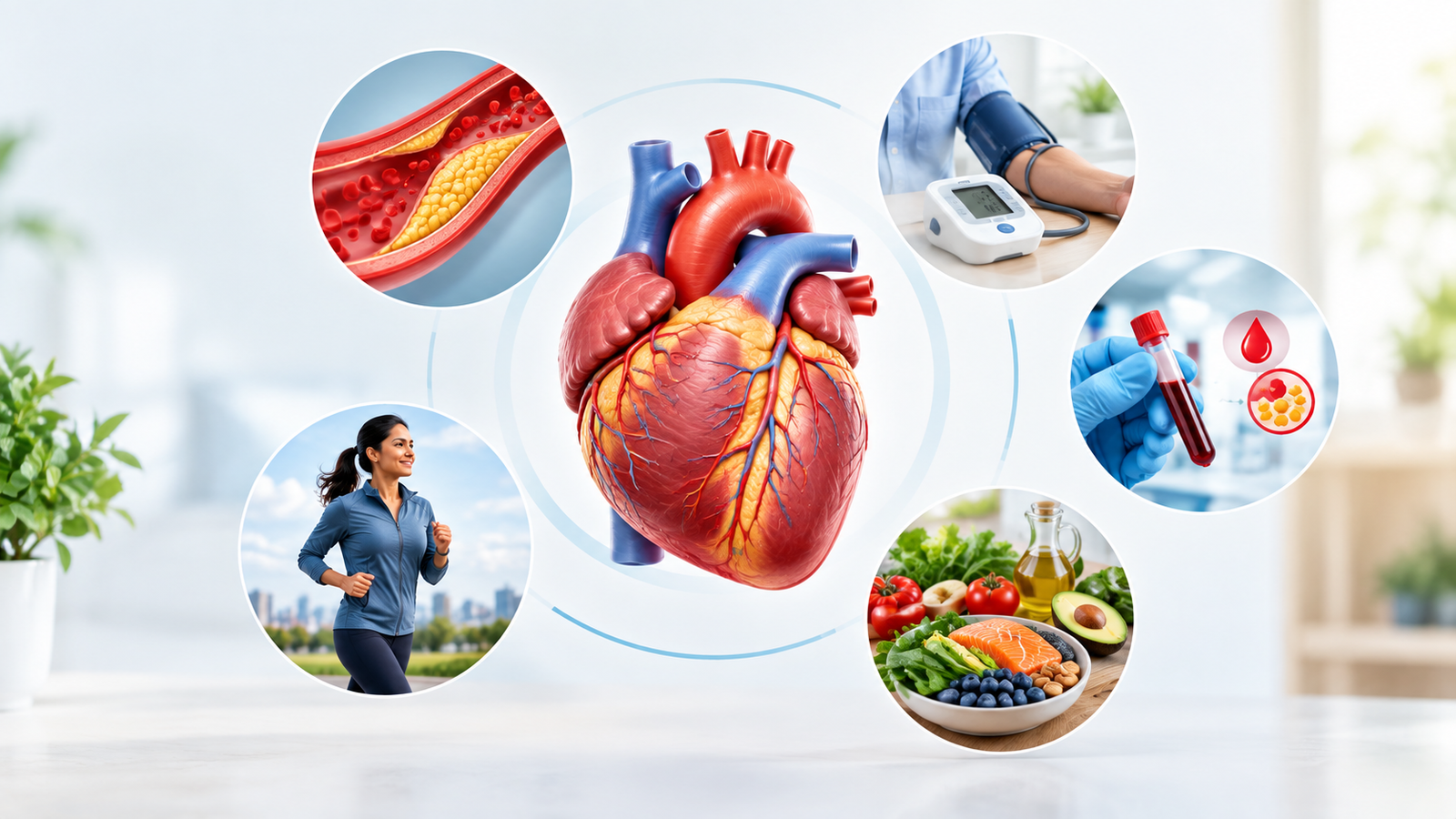

Heart disease refers to a group of conditions that affect the heart, including diseases of the heart muscle, heart valves, heart rhythm, and the blood vessels that supply the heart. Some types develop gradually and may cause few or no symptoms at first, while others can cause sudden or serious symptoms.
Important: This article is for general information and is not a substitute for professional medical advice. Please talk with a qualified healthcare provider about your own heart health and any symptoms you’re experiencing.
Because heart disease covers so many different conditions rather than one single diagnosis, it helps to start with the big picture before narrowing in on specific types. This guide walks through what heart disease means, what causes it, the major types, warning signs, risk factors, and evidence-based ways to lower your risk.
What Is Heart Disease, Exactly?
“Heart disease” is a broad term, not a single condition. It’s easy to confuse it with related terms, so here’s how they differ:
- Heart disease – conditions that affect the heart muscle, valves, rhythm, or the arteries supplying the heart
- Cardiovascular disease – a wider category that includes heart disease plus conditions affecting blood vessels throughout the body, such as stroke
- Coronary artery disease (CAD) – the most common individual type of heart disease, caused by plaque buildup in the arteries that supply the heart
- Heart attack – a sudden, acute event, usually caused by a blocked coronary artery, that damages heart tissue
- Heart failure – a chronic condition in which the heart can’t pump or fill with blood as well as it should
- Arrhythmias – disorders of the heart’s electrical rhythm that cause it to beat too fast, too slow, or irregularly
Understanding these distinctions matters because a person might be told they have “heart disease” in general, or a much more specific diagnosis — and the two conversations look quite different. The CDC states that heart disease is the leading cause of death in the United States, which is part of why understanding these terms clearly is so important.
What Causes Heart Disease?
The causes of heart disease vary considerably depending on the specific condition. That said, several underlying mechanisms show up again and again across different types:
- Plaque buildup narrowing the arteries (atherosclerosis)
- Reduced blood flow to the heart muscle
- High blood pressure sustained over time
- Abnormal electrical signals causing irregular heart rhythms
- Problems with the heart valves opening or closing properly
- Damage or disease affecting the heart muscle itself
- Structural abnormalities present from birth
- Inflammation or infection affecting the heart, in certain conditions
- Genetic or inherited factors
For coronary artery disease specifically, the CDC explains that plaque made of cholesterol and other substances builds up inside the coronary arteries, and that this buildup — called atherosclerosis — narrows the arteries and can reduce blood flow to the heart.
An important distinction: a risk factor is not the same as a direct cause. Having one or more risk factors raises the probability of developing heart disease, but it doesn’t guarantee it — and plenty of people with several risk factors never develop the condition, while others with few known risk factors still do.
Types of Heart Disease
Because heart disease is really a family of conditions, it helps to look at each major type individually.
Coronary Artery Disease (CAD)
CAD is the most common type of heart disease in the United States. It develops when plaque builds up inside the coronary arteries, gradually narrowing them and reducing blood flow to the heart muscle. As the narrowing worsens, it can cause angina (chest pain from reduced blood flow) and, if an artery becomes suddenly blocked, a heart attack.
Heart Arrhythmias
An arrhythmia is an abnormal heart rhythm — the heart may beat too fast, too slow, or irregularly. Common examples include:
- Atrial fibrillation (AFib) – the most common type of treated arrhythmia, in which the heart’s upper chambers beat out of coordination with the lower chambers
- Bradycardia – an abnormally slow heart rate
- Tachycardia – an abnormally fast heart rate
Symptoms like palpitations, dizziness, or fainting can occur with an arrhythmia, but these same symptoms have many other possible causes, so they don’t automatically point to a rhythm problem.
Heart Failure
Despite the name, heart failure doesn’t mean the heart has stopped working. Instead, it means the heart can’t pump or fill with blood as efficiently as the body needs. Common symptoms include shortness of breath, fatigue, and swelling in the legs, ankles, feet, or abdomen. Heart failure often develops gradually as a consequence of other conditions, such as long-standing coronary artery disease or high blood pressure — which is different from a heart attack, a sudden event caused by a blocked artery.
Heart Valve Disease
The heart has four valves that keep blood flowing in the right direction. Valve disease occurs when one or more valves don’t open or close properly:
- Valve narrowing (stenosis) restricts how much blood can pass through
- Valve leakage (regurgitation) allows blood to flow backward
Any of the heart’s four valves can be affected, and severity ranges widely from mild, monitored conditions to those requiring surgical repair or replacement.
Cardiomyopathy
Cardiomyopathy refers to diseases of the heart muscle itself, which can make it harder for the heart to pump blood effectively. It can result from genetic factors, prior heart damage, certain infections, or other underlying causes, and it varies significantly in severity and treatment approach.
Congenital Heart Disease
Some heart conditions are present at birth, ranging from minor structural differences that need no treatment to complex defects that require early surgical intervention. Advances in detection and treatment mean many people with congenital heart disease now live long, active lives.
Other Heart Conditions
A few additional conditions fall under the broader heart disease umbrella, including pericardial disease (affecting the sac around the heart), inflammatory heart conditions, and aortic conditions such as an aortic aneurysm. These are less common but are worth knowing about, since they’re sometimes discovered incidentally during imaging for other reasons.
What Are the Symptoms of Heart Disease?
Symptoms differ significantly depending on the type and severity of heart disease, and importantly, some conditions may be present with no obvious symptoms at all — especially in earlier stages. That said, possible symptoms across various types of heart disease include:
- Chest pain or discomfort
- Shortness of breath
- Unusual fatigue
- Dizziness or lightheadedness
- Palpitations (a fluttering or racing feeling in the chest)
- Reduced ability to exercise or increased breathlessness with activity
- Swelling in the legs, ankles, or feet
- Fainting
- Persistent weakness
This list isn’t a diagnostic checklist — having one or more of these symptoms doesn’t confirm heart disease, and a healthcare provider is needed to properly evaluate what’s going on. For related symptoms that can overlap with heart conditions, see our guides to what causes dizziness, shortness of breath, and what causes fatigue.
Heart Attack Symptoms: When Is It an Emergency?
Because some readers searching for “heart disease symptoms” may actually be experiencing an acute event right now, this section deserves special attention. According to the CDC, possible heart attack symptoms include chest pain or discomfort, weakness, light-headedness, nausea, or a cold sweat, pain or discomfort in the arms or shoulder, and shortness of breath.
Symptoms can vary considerably between individuals, and women in particular are somewhat more likely to experience symptoms beyond classic chest pain, such as shortness of breath, back or jaw discomfort, and nausea, according to the CDC’s guidance on women and heart disease.
New, severe, or concerning symptoms that could indicate a heart attack require emergency medical attention. Call 911 right away — don’t rely on an online article to determine whether your symptoms are serious, and don’t attempt to drive yourself to the hospital.
For related symptom guidance, see our guides to chest pain and what causes back pain.
What Are the Risk Factors for Heart Disease?
Risk factors for heart disease generally fall into two groups.
Modifiable Risk Factors
- High blood pressure
- High cholesterol
- Smoking or tobacco exposure
- Physical inactivity
- Unhealthy dietary patterns
- Diabetes
- Excess alcohol use
- Overweight or obesity
- Poorly managed metabolic health
The CDC identifies high blood pressure, high cholesterol, and smoking as key risk factors for heart disease, while noting that diabetes, physical inactivity, an unhealthy diet, and several other factors can also increase risk.
Nonmodifiable (or Less-Modifiable) Risk Factors
- Age
- Family history
- Genetics
- Certain inherited conditions
- A personal history of previous cardiovascular disease
A strong family history — particularly early heart disease in close relatives — can sometimes point toward an inherited condition such as familial hypercholesterolemia, a genetic cause of very high cholesterol. In cases like this, a healthcare provider may recommend earlier or more targeted screening. The CDC’s coronary artery disease guidance notes that a family history of heart disease at an early age (50 or younger) increases CAD risk specifically.
How Do High Blood Pressure and Heart Disease Connect?
High blood pressure means the force of blood against your artery walls is consistently too high. Over time, this places extra strain on the heart and blood vessels, which can contribute to several types of heart disease, including coronary artery disease and heart failure.
One of the trickiest aspects of high blood pressure is that it typically causes no symptoms — many people don’t know they have it until it’s measured during a routine visit. That’s exactly why regular blood pressure checks matter so much, even when you feel completely well.
How Does High Cholesterol Increase Heart Disease Risk?
Cholesterol travels through the bloodstream in a few different forms:
- LDL cholesterol can contribute to plaque buildup within artery walls
- HDL cholesterol helps clear cholesterol away from the arteries
- Triglycerides are another blood fat associated with cardiovascular risk when elevated
The CDC explains that excess cholesterol contributes to plaque buildup within the artery walls, potentially narrowing the arteries and reducing blood flow to the heart. Even so, cholesterol numbers are best interpreted in context, alongside your other risk factors, rather than in isolation.
Diabetes and Heart Disease
Diabetes is an established heart-disease risk factor, and the relationship generally follows this pattern:
Diabetes → elevated blood glucose over time → damage to blood vessels → increased cardiovascular risk
Because of this connection, managing several factors together tends to matter more than focusing on blood glucose alone:
- Blood glucose
- Blood pressure
- Cholesterol
- Physical activity
- Nutrition
- Tobacco exposure
If you’re managing blood sugar concerns, related CollectedMed resources include what is diabetes, what is prediabetes, diabetes diet strategies, how to prevent diabetes, insulin resistance, and metabolic syndrome.
How Is Heart Disease Diagnosed?
Diagnosis depends heavily on the specific condition a healthcare provider suspects, and may involve some combination of:
- A review of medical and family history
- A physical examination
- Blood pressure measurement
- Blood tests, such as a cholesterol panel
- An electrocardiogram (ECG/EKG) to check the heart’s electrical activity
- An echocardiogram to visualize the heart’s structure and function
- Exercise (stress) testing
- Cardiac imaging, such as CT or MRI
- Other specialized tests, depending on the situation
The CDC lists several tools doctors use to diagnose coronary artery disease specifically, including ECG, echocardiogram, exercise stress testing, chest X-ray, cardiac catheterization, coronary angiogram, and coronary artery calcium scan. Not everyone with possible heart disease needs every one of these tests — a healthcare professional determines which evaluation is appropriate based on your symptoms, history, physical exam, and overall risk profile.
Can Heart Disease Be Prevented?
Many cases of heart disease are best framed as risk that can be reduced, rather than a guarantee that can be eliminated entirely. Still, the following evidence-based habits, drawn from CDC guidance on preventing heart disease, can meaningfully lower cardiovascular risk over time.
Eat a Heart-Supportive Diet
Emphasize vegetables and fruits, whole grains, beans and legumes, nuts and seeds, appropriate protein sources, and fiber-rich foods, while limiting excess sodium, highly processed foods, and less healthy sources of fat. For ideas, see our guides to the healthiest foods to eat every day, the Mediterranean diet, high-fiber foods, and high-protein foods.
Stay Physically Active
Regular physical activity supports cardiovascular health by helping to manage blood pressure, cholesterol, blood glucose, and body weight. Learn more about the benefits of exercise.
Don’t Smoke
Tobacco use increases cardiovascular risk substantially, and quitting — at any age — can meaningfully reduce that risk over time.
Manage Existing Health Conditions
Appropriately managing blood pressure, cholesterol, blood glucose, and diabetes, as advised by a healthcare provider, is one of the most effective ways to lower cardiovascular risk.
Prioritize Sleep and Manage Stress
Healthy, consistent sleep and constructive stress-management strategies support overall cardiovascular health, though it’s worth noting that stress alone isn’t considered a direct cause of heart disease — it’s one factor among many. For practical strategies, see our guides to how to improve sleep and how to reduce stress.
Can Heart Disease Be Reversed?
This is a common — and understandably hopeful — question, but the honest answer is nuanced. It’s more accurate to think in terms of several related but distinct goals:
- Preventing progression of existing disease
- Lowering risk through lifestyle changes and treatment
- Treating underlying causes, when identifiable
- Managing symptoms to improve day-to-day function
- Reversing certain risk factors, such as high cholesterol or elevated blood glucose, through sustained changes
- Treating established structural heart disease, which may require medication, procedures, or surgery rather than lifestyle change alone
In short, while risk factors and early-stage changes can often improve significantly, it’s misleading to suggest that heart disease can simply be “reversed” across the board. Your healthcare provider can explain what’s realistic for your specific diagnosis.
Heart Disease in Men and Women
Heart disease affects people of all sexes, and outdated stereotypes suggesting it’s primarily “an older man’s disease” don’t hold up. The CDC’s guidance on women and heart disease notes that it can affect women at any age, and identifies high blood pressure as an important risk factor for women specifically. Symptom patterns and risk profiles can differ somewhat between men and women — for instance, women are more likely to report symptoms beyond classic chest pain during a heart attack — which is one more reason not to rely on stereotypes when evaluating symptoms.
Heart Disease and Age
Cardiovascular risk generally increases with age, but younger people can absolutely develop heart disease too. Several factors can affect risk at any age, including:
- Family history and genetics
- Congenital heart conditions
- Diabetes
- Blood pressure and cholesterol levels
- Tobacco exposure
- Overall lifestyle factors
Because of this, it’s a misconception to think of heart disease as exclusively an older person’s condition — prevention and awareness are valuable starting in early adulthood.
When Should You Talk to a Healthcare Professional?
Consider scheduling an evaluation for:
- New or unexplained chest discomfort
- Recurrent shortness of breath
- Unexplained fainting
- New or persistent palpitations
- Unusual swelling in the legs, ankles, or abdomen
- Reduced exercise tolerance
- Multiple cardiovascular risk factors
- A strong family history of early heart disease
If your symptoms could indicate a heart attack or another emergency — as described earlier in this article — seek urgent or emergency care immediately rather than waiting for a routine appointment.
Everyday Heart Health Checklist
- Eat a varied, nutrient-rich diet, including vegetables, fruits, whole grains, and fiber-rich foods
- Stay physically active
- Avoid tobacco exposure
- Get your blood pressure checked regularly
- Know your cholesterol numbers
- Manage blood glucose when appropriate
- Prioritize adequate sleep
- Follow prescribed treatment plans
- Attend recommended preventive-care visits
Common Myths About Heart Disease
Myth 1: Heart disease only affects older adults. Fact: Heart disease can occur at different ages, and prevention matters well before symptoms typically appear.
Myth 2: You would always know if you had heart disease. Fact: Some heart conditions, including early coronary artery disease and high blood pressure, can have few or no obvious symptoms.
Myth 3: Heart disease is only caused by diet. Fact: Diet is one factor among several, including blood pressure, cholesterol, diabetes, tobacco exposure, physical activity, age, genetics, and family history.
Myth 4: Heart disease and heart attack mean the same thing. Fact: Heart disease is a broad category of conditions, while a heart attack is a specific, acute event.
Myth 5: Having one risk factor means you will develop heart disease. Fact: Risk factors influence probability rather than guarantee an outcome — many people with risk factors never develop heart disease, and vice versa.
Frequently Asked Questions
What is heart disease? Heart disease is a general term for a group of conditions affecting the heart, including problems with the heart muscle, valves, rhythm, and the arteries that supply the heart.
What is the most common type of heart disease? Coronary artery disease is the most common type of heart disease in the United States, caused by plaque buildup narrowing the arteries that supply the heart.
What are the main causes of heart disease? Causes vary by condition but commonly involve plaque buildup, sustained high blood pressure, abnormal heart rhythms, valve problems, muscle damage, or inherited and structural factors.
What are the early signs of heart disease? Early signs can include chest discomfort, shortness of breath, unusual fatigue, palpitations, or swelling — though some heart disease causes no early symptoms at all.
Can you have heart disease without symptoms? Yes. Conditions like early coronary artery disease and high blood pressure often develop silently, without causing noticeable symptoms until later stages.
What are the biggest risk factors for heart disease? High blood pressure, high cholesterol, and smoking are considered key risk factors, alongside diabetes, physical inactivity, unhealthy diet, and excess alcohol use.
Does high blood pressure cause heart disease? Persistently high blood pressure places extra strain on the heart and arteries over time, making it one of the most significant risk factors for several types of heart disease.
Does diabetes increase the risk of heart disease? Yes. Diabetes is an established cardiovascular risk factor, partly because elevated blood glucose over time can damage blood vessels.
Can heart disease be prevented? Many cases can have their risk meaningfully reduced through healthy lifestyle habits and appropriate management of related health conditions, though prevention can’t be guaranteed for everyone.
Can heart disease be cured? Some risk factors and early changes can improve significantly with lifestyle change and treatment, but established structural heart disease usually requires ongoing management rather than a simple cure.
Is heart disease the same as cardiovascular disease? Not exactly. Cardiovascular disease is the broader term, encompassing heart disease as well as conditions affecting blood vessels elsewhere in the body, such as stroke.
When should I see a doctor about heart symptoms? Schedule an evaluation for new or persistent symptoms like chest discomfort, shortness of breath, palpitations, or swelling — and seek emergency care immediately for symptoms that could indicate a heart attack.
Key Takeaways
- Heart disease refers to a group of conditions affecting the heart, not a single diagnosis.
- Coronary artery disease is the most common form in the United States.
- Symptoms vary by condition, and some heart disease can be silent for years.
- High blood pressure, high cholesterol, smoking, diabetes, physical inactivity, and other factors can increase risk.
- Age and family history also influence risk, though heart disease isn’t exclusive to older adults.
- Healthy habits and appropriately managing related medical conditions can meaningfully reduce cardiovascular risk.
- Symptoms that could indicate a heart attack require urgent medical attention — never wait to find out.
This article is for general education and is not a substitute for personalized medical advice, diagnosis, or treatment. Speak with a qualified healthcare professional about your individual symptoms, risk factors, medications, and test results.
Sources
- Centers for Disease Control and Prevention. Heart Disease
- Centers for Disease Control and Prevention. About Coronary Artery Disease (CAD)
- Centers for Disease Control and Prevention. Heart Disease Risk Factors
- Centers for Disease Control and Prevention. Preventing Heart Disease
- Centers for Disease Control and Prevention. Heart Attack Symptoms, Risk, and Recovery
- Centers for Disease Control and Prevention. Women and Heart Disease
- Centers for Disease Control and Prevention. Atrial Fibrillation
- Centers for Disease Control and Prevention. About Cholesterol
11 thoughts on “What Is Heart Disease? Causes, Symptoms, Types & Risk Factors”
Comments are closed.