
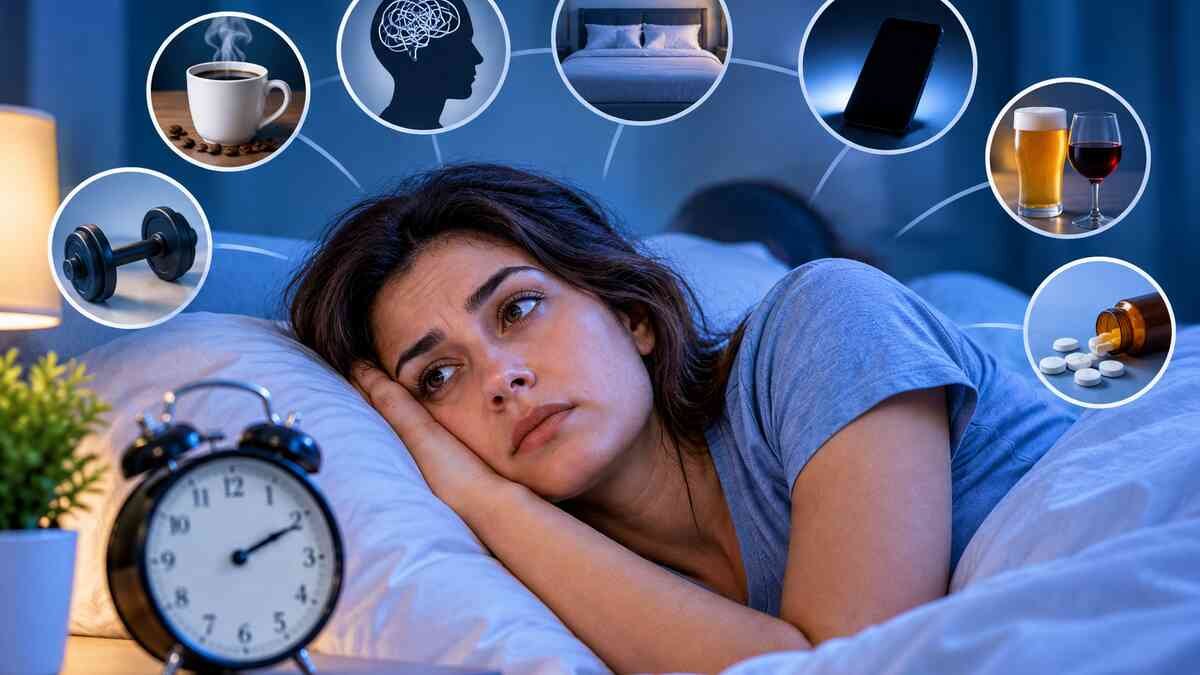

Many people know the feeling of lying awake long after the lights go out, waking several times during the night, or getting up feeling as tired as when they went to bed. Poor sleep can leave you foggy, irritable, and low on energy the next day. When it keeps happening, it is natural to ask why.
Poor sleep rarely comes from a single cause. Daily habits, stress, medical conditions, age, medications, and the sleeping environment can all play a part, and they often overlap. Understanding these poor sleep risk factors can help you spot patterns in your own life and decide what to address first.
This guide explains the main causes of poor sleep and the factors that raise the risk, from lifestyle and mental health to medical conditions, hormones, work schedules, and medications. It also covers who may be more vulnerable, when to seek medical advice, and how to lower your risk. For a deeper look at solutions, see our companion guide on poor sleep treatment options. This article is general information and cannot diagnose your situation.
What Is Poor Sleep and How Does It Affect Your Health?
Poor sleep refers to insufficient, disrupted, or unrefreshing sleep that affects a person’s ability to function well during the day. It may be associated with lifestyle habits, stress, medical conditions, medications, and environmental factors.
A single bad night is not unusual and does not mean something is wrong. Poor sleep becomes more of a concern when it happens regularly or begins to affect daily life. Common signs include:
- Difficulty falling asleep
- Waking repeatedly during the night
- Waking too early and being unable to return to sleep
- Sleeping for too short a time
- Unrefreshing sleep
- Feeling tired or unfocused during the day
Sleep quantity and sleep quality are related but different. You can spend enough hours in bed and still wake up unrested if your sleep is repeatedly interrupted. The Centers for Disease Control and Prevention (CDC) and sleep medicine groups recommend that adults ages 18 to 60 sleep at least seven hours per night, though individual needs vary.
Persistent poor sleep may contribute to daytime fatigue, trouble concentrating, mood changes, and reduced productivity. It can also raise the risk of accidents, such as drowsy driving. The National Heart, Lung, and Blood Institute (NHLBI) notes that ongoing sleep deficiency is also linked with long-term health effects. If tiredness is your main concern, our guide on what causes fatigue explains other possibilities.
Lifestyle Habits That Increase the Risk of Poor Sleep
Everyday behavior has a strong influence on sleep quality. The good news is that many of these factors can be adjusted.
Irregular Sleep Schedules
Your body runs on an internal clock, known as the circadian rhythm, that helps time sleep and wakefulness. Going to bed and waking up at very different times from day to day can throw that clock off. Large weekend shifts in bedtime can make it harder to fall asleep on Sunday night.
Excessive Caffeine Consumption
Caffeine is a stimulant found in coffee, tea, energy drinks, and some soft drinks. It can make it harder to fall asleep, especially when consumed later in the day. Sensitivity varies, so the same afternoon cup may bother one person and not another.
Alcohol and Nicotine Use
Alcohol may make you feel sleepy at first, but it can disrupt sleep later in the night. Nicotine is also a stimulant, so using it close to bedtime may make falling asleep more difficult.
Too Much Screen Time Before Bed
Evening screen use can keep your mind active and expose you to bright light when your body is trying to wind down. Stimulating content, such as work email or upsetting news, can add to the problem.
Lack of Physical Activity
Regular physical activity is generally associated with better sleep, although studies differ on how large the benefit is. Some people feel more alert after intense exercise close to bedtime, so timing may matter. Our guides on the benefits of exercise and sleep and exercise explore this further.
Psychological and Emotional Risk Factors for Poor Sleep
Sleep and mental well-being influence each other. Our overview of sleep and mental health looks at this two-way relationship in more detail.
Chronic Stress
Ongoing pressure from work, finances, family, or health can make it hard to relax at bedtime. Stress keeps the body in a more alert state, which can lead to trouble falling asleep or staying asleep. Learning how to reduce stress can be a useful part of improving sleep.
Anxiety and Excessive Worrying
Racing thoughts, tension, and persistent worry can interfere with falling asleep or returning to sleep after waking. Some people begin to worry about sleep itself, which can make bedtime feel stressful. You can learn more in our guide to what anxiety is.
Depression and Mood Disorders
Depression is closely linked with sleep disturbances. Some people with depression have insomnia, while others sleep much more than usual or notice changes in their normal sleep pattern.
Emotional Distress and Major Life Changes
Bereavement, relationship difficulties, job changes, moving, and other stressful events can disrupt sleep for a time. For many people, sleep improves as the situation settles. If it does not, it is worth discussing with a healthcare professional.
Keep in mind that poor sleep does not automatically mean a person has a mental health disorder. Sleep problems and mental health conditions can influence each other, but they are not the same thing.
Medical Conditions That May Increase the Risk of Poor Sleep
Certain health conditions can make restful sleep more difficult. The relationship varies from person to person, and having one of these conditions does not guarantee that you will have poor sleep.
Sleep Apnea
Obstructive sleep apnea involves repeated interruptions in breathing during sleep. Possible signs include loud snoring, gasping or choking at night, and daytime sleepiness. The NHLBI describes sleep apnea as a condition that needs medical evaluation, since effective treatments are available.
Chronic Pain
Arthritis, back pain, headaches, and other painful conditions can make it hard to get comfortable and can wake people during the night. Our guide to what causes back pain covers one common source.
Respiratory Conditions
Asthma, chronic breathing difficulties, and nasal congestion can interfere with comfortable sleep. Symptoms such as coughing or breathlessness may be more noticeable at night.
Restless Legs Syndrome
Restless legs syndrome causes uncomfortable sensations and an urge to move the legs, usually during rest or in the evening. These sensations can delay sleep and cause awakenings.
Other Chronic Health Conditions
Other conditions may also affect sleep, either through symptoms or treatment. Examples include gastroesophageal reflux disease (GERD), also called acid reflux, as well as heart disease, diabetes, and thyroid disorders. Frequent nighttime urination, reflux symptoms, or blood sugar changes may interrupt sleep in some people.
Age, Sex, and Hormonal Changes as Risk Factors
Sleep patterns and sleep-related risks can shift over a lifetime. These patterns are averages, not rules.
Age-Related Sleep Changes
Older adults often notice earlier bedtimes, lighter sleep, and more frequent nighttime waking. The National Institute on Aging (NIA) notes that older adults generally need about the same amount of sleep as other adults, and that factors such as insomnia, menopause, sleep apnea, medications, and health conditions can get in the way.
Persistent poor sleep should not automatically be dismissed as a normal part of aging. If sleep problems are new or disruptive, a healthcare professional can look for a treatable cause.
Sleep Problems in Women
Hormonal changes can affect sleep at different stages of life. These include menstrual cycles, pregnancy, the postpartum period, and perimenopause and menopause. Hot flashes, physical discomfort, frequent urination during pregnancy, and hormonal shifts may all disrupt sleep in some women.
Chronic insomnia is also diagnosed more often in women, according to the American College of Physicians (ACP). Not every woman will have these experiences.
Sleep Changes in Men
In men, sleep can be affected by aging, stress, health conditions, and sleep apnea, which may go unrecognized. Loud snoring or daytime sleepiness is worth mentioning to a clinician. As with women, individual experiences vary widely, and sex-based patterns are not universal.
Environmental and Occupational Factors That Affect Sleep
Your surroundings and work life can strongly influence how well you sleep.
Noise and Light Exposure
Traffic, neighbors, household noise, streetlights, and bright bedroom lighting can fragment sleep, even if you do not fully wake up. A dark, quiet room generally supports better sleep.
Temperature and Bedroom Comfort
A bedroom that is too hot or too cold can make sleep harder. Uncomfortable bedding, an unsuitable mattress or pillow, and poor ventilation may also contribute.
Shift Work and Night Shifts
The body is biologically set for activity by day and sleep at night. The National Institute for Occupational Safety and Health (NIOSH) explains that working at night or on irregular schedules can disrupt sleep and the body’s circadian rhythm.
In a nationally representative NIOSH analysis, night-shift workers reported more trouble falling asleep and more daytime sleepiness than daytime workers. Rotating shifts can be especially hard to adjust to.
Travel and Changing Time Zones
Jet lag happens when your internal clock is out of step with a new time zone. It is usually temporary, but frequent travel across time zones can make sleep less predictable.
Work-Related Pressure
Long hours, irregular schedules, and difficulty separating work from personal time can all cut into sleep. Taking work worries to bed may also make it harder to switch off.
Medications and Substances That May Affect Sleep
Some medications and substances can influence sleep. Examples include:
- Some stimulant medications
- Certain antidepressants
- Some corticosteroids
- Certain decongestants
- Caffeine-containing products
- Nicotine and alcohol
Effects vary depending on the person, the dose, the timing, and the specific drug. Some medications cause trouble falling asleep, while others cause daytime drowsiness. The MedlinePlus overview of sleep disorders is a helpful starting point for general information.
If you suspect a medication is affecting your sleep, do not stop or change it on your own. Talk with your healthcare professional or pharmacist, who may be able to adjust the dose, change the timing, or suggest an alternative.
Who Is More Likely to Experience Poor Sleep?
Several groups may face a higher risk, mainly because several of the factors above overlap. These include:
- People who work rotating or overnight shifts
- Individuals under ongoing stress
- Older adults experiencing changes in sleep patterns
- People with chronic pain or long-term medical conditions
- People with diagnosed sleep disorders
- Women who are pregnant or going through menopause
- People with irregular routines or frequent caffeine and alcohol use
Risk factors do not guarantee that someone will develop a sleep problem. Many people with one or more of them sleep well. Still, multiple factors can add up, so addressing even one or two may help.
When Should You Seek Medical Advice About Poor Sleep?
Self-care is a good first step, but it is not always enough. Consider speaking with a healthcare professional if:
- Sleep difficulties happen regularly or persist over time
- Daytime fatigue interferes with normal activities
- You regularly wake up gasping or choking
- You have loud snoring along with excessive daytime sleepiness
- Sleep problems occur alongside significant pain or other concerning symptoms
- You suspect a medication is affecting your sleep
A healthcare professional can review your symptoms, medical history, and medications, and screen for possible sleep disorders. The ACP describes chronic insomnia as sleep difficulty that occurs at least three nights a week for at least three months and causes daytime problems, but only a clinician can make a diagnosis. If you feel drowsy while driving, avoid driving and seek care promptly.
How Can You Reduce Your Risk of Poor Sleep?
Small, consistent changes can make a difference. These steps may help:
- Keep a consistent sleep and wake schedule.
- Reduce caffeine later in the day.
- Avoid nicotine and limit alcohol.
- Create a quiet, dark, comfortable bedroom.
- Follow a relaxing bedtime routine.
- Exercise regularly.
- Manage stress with relaxation techniques.
- Seek medical advice for persistent sleep problems.
Improving sleep habits may help, but underlying medical or psychological conditions may need additional treatment. For practical guidance, see our articles on how to improve sleep and the best foods for better sleep.
Frequently Asked Questions About Poor Sleep
What are the most common risk factors for poor sleep?
Common factors include stress, irregular sleep schedules, caffeine, alcohol, medical conditions, certain medications, and environmental disturbances such as noise or light. Often several factors overlap, so it can help to look at your sleep from more than one angle.
Does age increase the risk of poor sleep?
Sleep patterns can change with age, and some older adults have lighter sleep and more nighttime waking. The National Institute on Aging notes that older adults still need a similar amount of sleep. Persistent problems should be evaluated rather than assumed to be normal aging.
Can stress cause poor sleep?
Yes. Ongoing stress and worry can make it harder to fall asleep, stay asleep, or feel rested. Poor sleep can also raise stress levels, which can create a cycle.
Can medical conditions increase the risk of poor sleep?
Yes. Conditions such as sleep apnea, chronic pain, respiratory problems, and restless legs syndrome can interfere with sleep. Treating the underlying condition often helps, so it is worth discussing symptoms with a healthcare professional.
When should I worry about poor sleep?
Consider seeing a clinician if poor sleep lasts for weeks, affects daily life, or comes with loud snoring, gasping, or significant daytime sleepiness. These signs may point to a treatable sleep disorder.
Conclusion
Poor sleep can be influenced by many overlapping risk factors, including lifestyle habits, mental health, medical conditions, age, hormones, work schedules, medications, and the sleep environment. Identifying which ones apply to you is a useful first step.
If problems continue despite healthy habits, seek professional guidance. A clinician can help find the cause and recommend suitable next steps, which you can read more about in our guide to poor sleep treatment options.
Sources
- National Heart, Lung, and Blood Institute: Sleep Deprivation and Deficiency
- National Heart, Lung, and Blood Institute: Sleep Apnea
- Centers for Disease Control and Prevention: 1 in 3 Adults Don’t Get Enough Sleep
- National Institute on Aging: Sleep and Older Adults
- NIOSH: Sleep and Work
- NIOSH: Shift Work and Sleep
- American College of Physicians: ACP Recommends Cognitive Behavioral Therapy as Initial Treatment for Chronic Insomnia
- MedlinePlus: Sleep Disorders
Medical Disclaimer
This article is for general educational purposes only and is not a substitute for professional medical advice, diagnosis, or treatment. Risk factors do not mean you will develop a sleep problem, and sleep needs differ from person to person. Talk with a qualified healthcare professional about persistent sleep problems or concerns about your health, and do not stop or change any prescribed medication without medical advice.
1 thought on “Poor Sleep Risk Factors Explained: What Increases Your Risk of Sleep Problems?”
Comments are closed.