
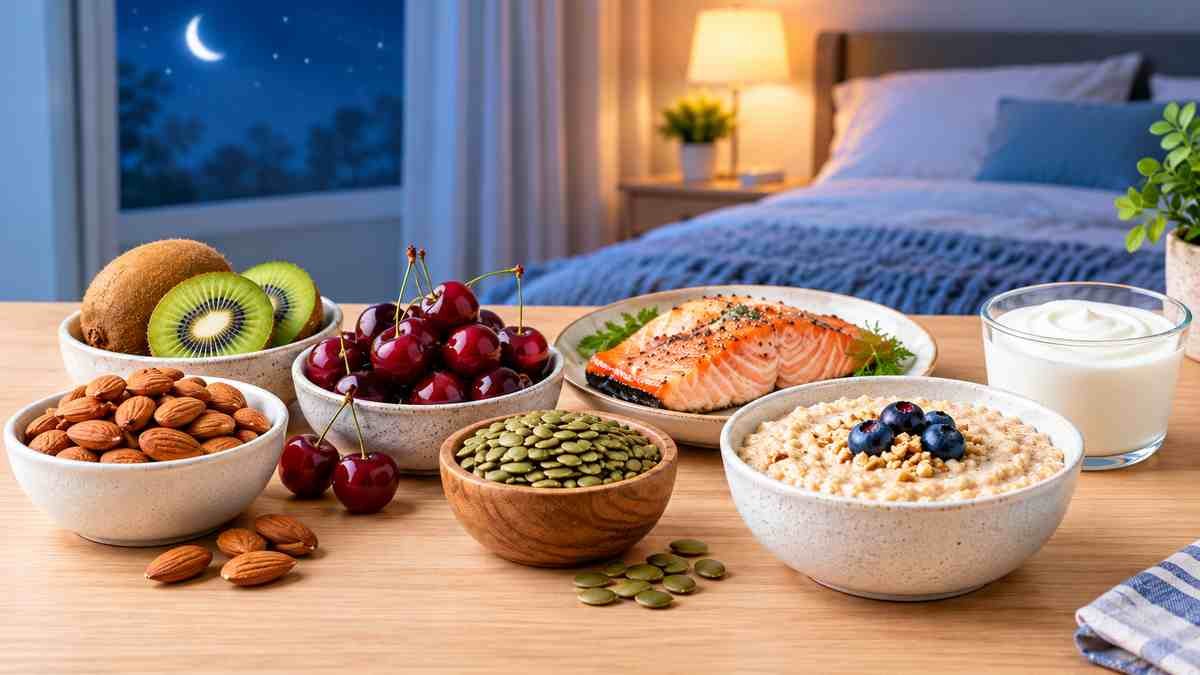

Sleep isn’t determined by diet alone, but what you eat can influence some of the biological pathways involved in falling asleep and staying asleep. Several nutrients, including tryptophan, magnesium, and omega-3 fatty acids, are involved in processes related to sleep regulation. A few foods also naturally contain small amounts of melatonin.
This guide walks through seven foods with some research behind them, what the evidence actually shows, and how they fit into an overall approach to better sleep. None of these foods are a guaranteed fix. Current research is still developing, and most studies are small, so the findings should be viewed as promising rather than definitive.
Can Food Really Help You Sleep Better?
A few nutritional pathways are relevant to sleep:
- Tryptophan is an amino acid your body uses to make serotonin, which is then converted into melatonin, the hormone most associated with regulating the sleep-wake cycle.
- Magnesium plays a role in normal nervous-system function, and some research has explored its relationship with sleep quality.
- Omega-3 fatty acids and vitamin D have been studied for their association with sleep outcomes, particularly through fatty fish consumption.
- Melatonin occurs naturally in small amounts in a handful of foods, including tart cherries.
A review of the research on sleep and diet describes this as a two-way relationship: diet can influence sleep, and sleep quality can in turn influence eating patterns. With that foundation in mind, here are seven foods worth knowing about.
7 Best Foods for Better Sleep
1. Tart Cherries
Tart cherries, particularly the Montmorency variety, are one of the few food sources that naturally contain melatonin. A small pilot study in older adults with insomnia found that drinking tart cherry juice twice daily for two weeks was associated with reduced insomnia severity and less time spent awake after falling asleep, compared with a placebo drink.
This study involved only 15 participants and was funded by a cherry juice manufacturer, so it’s worth treating the results as preliminary rather than conclusive. If you want to try tart cherries, whole fruit or unsweetened juice is a better choice than sweetened cherry products, which add extra sugar without the same research behind them.
2. Kiwi
Kiwi has drawn research interest for its antioxidant content and a proposed effect on serotonin pathways. In one small study, adults with self-reported sleep problems who ate two kiwifruits an hour before bed for four weeks showed improvements in sleep onset, duration, and sleep efficiency compared with their own baseline.
As with the tart cherry research, this was a small study without a placebo-controlled comparison group, so larger trials would help confirm the finding. A simple serving of fresh kiwi, rather than juice or sweetened kiwi products, is the most practical way to try this.
3. Almonds and Other Nuts
Almonds and other tree nuts provide magnesium along with healthy unsaturated fats and protein, which together can support satiety. Magnesium is involved in normal nerve and muscle function, and some research has looked at its relationship with sleep quality.
That said, evidence on magnesium and insomnia specifically remains mixed. The National Center for Complementary and Integrative Health notes that the research on magnesium supplementation for sleep is limited and inconsistent. It’s more accurate to think of nuts as a nutrient-dense food that may support general health, rather than a proven sleep treatment. A small handful, roughly a quarter cup, is a reasonable portion given how calorie-dense nuts are.
4. Pumpkin Seeds
Pumpkin seeds offer a combination of magnesium and tryptophan, which makes them a popular choice for an evening snack. Like other seeds, they’re fairly calorie-dense, so portion control matters here too.
Tryptophan is relevant because it sits early in the pathway that eventually produces melatonin, as research on sleep and nutrient interactions explains. A small serving of pumpkin seeds, on their own or mixed into oatmeal or yogurt, is an easy way to work this nutrient into an evening routine.
5. Fatty Fish
Fatty fish like salmon, sardines, trout, and mackerel are rich in omega-3 fatty acids and vitamin D. Research on nutritional elements in sleep notes that both nutrients have been associated with positive sleep outcomes, and that vitamin D deficiency in particular has been linked with sleep disturbances.
This doesn’t mean fatty fish treats sleep disorders directly, and more research is still needed to clarify the relationship. What’s clearer is that fatty fish fits well into an overall healthy eating pattern, with sleep-related benefits as a reasonable bonus rather than a guaranteed outcome.
6. Oatmeal and Whole Grains
Whole grains like oats provide complex carbohydrates along with magnesium and B vitamins. When paired with a protein source, whole grains can also support tryptophan availability, since carbohydrates help tryptophan cross into the brain more easily.
A simple evening combination, such as oats with milk and a small piece of fruit, is a reasonable way to use this food group without overloading on calories close to bedtime. The goal here is a balanced, modest portion, not a large late-night meal.
7. Milk or Plain Yogurt
Dairy products like milk and plain yogurt provide both tryptophan and protein, along with calcium. The traditional idea of a warm glass of milk before bed has some basis in this nutrient combination, even though dedicated clinical trials on dairy and sleep specifically are limited.
Choosing unsweetened or minimally sweetened dairy products keeps the focus on the nutrients themselves, rather than adding unnecessary sugar close to bedtime.
What to Eat Before Bed for Better Sleep
A few practical combinations that draw on the foods above:
- Plain yogurt with kiwi
- Oatmeal with milk and pumpkin seeds
- A small handful of almonds with fruit
- Whole-grain toast with nut butter
- A modest portion of tart cherry juice
A light snack can be reasonable if you’re genuinely hungry before bed. A large meal right before sleep, on the other hand, can interfere with comfort and digestion. Our guide on how to improve sleep covers meal timing and other sleep habits in more depth.
Foods and Drinks That May Interfere With Sleep
Caffeine
Coffee, energy drinks, caffeinated tea, and chocolate all contain caffeine, which can make it harder to fall asleep, especially when consumed in the afternoon or evening.
Alcohol
Alcohol can create an initial feeling of drowsiness, but it tends to disrupt sleep later in the night and can reduce overall sleep quality.
Heavy or High-Fat Meals
Large, fatty meals close to bedtime can cause digestive discomfort, which may make it harder to fall asleep or stay asleep.
Very Sugary Foods
Highly processed, sugary snacks aren’t an ideal choice before bed, partly because they don’t offer the same nutrient profile as the foods described above.
Spicy Foods
Spicy foods can be a problem for people who are prone to nighttime heartburn or reflux. If this applies to you, our guides on common digestive problems and whether ginger helps with acid reflux may be useful starting points.
Does Eating Right Before Bed Help or Hurt Sleep?
It depends on the person and the meal. Being hungry can make it harder for some people to fall asleep, so a small snack isn’t necessarily a bad idea. At the same time, a large meal eaten too close to bedtime can cause discomfort that works against good sleep.
Individual tolerance varies quite a bit here. When practical, finishing larger meals a few hours before bed, and reaching for a small, balanced snack if you’re genuinely hungry later, is a reasonable general approach.
How Much Should You Eat Before Bed?
A few practical points to keep in mind:
- Keep bedtime snacks small
- Combine a protein or fiber source with a nutrient-dense carbohydrate
- Avoid very large portions close to bedtime
- Consider your own digestive tolerance
- Don’t rely on food alone as a treatment for chronic insomnia
Can These Foods Cure Insomnia?
No. These foods may support healthy sleep as part of an overall diet, but they are not a treatment for chronic insomnia.
Persistent insomnia often has multiple contributing factors, including stress, medications, underlying medical conditions, sleep disorders, and long-standing sleep habits. For ongoing sleep difficulties, it’s worth discussing symptoms with a healthcare professional. Our guide on how to improve sleep also covers cognitive behavioral therapy for insomnia (CBT-I), which is generally considered a first-line treatment for chronic insomnia.
Simple 7-Day Sleep-Supportive Food Ideas
| Day | Evening Food Idea |
|---|---|
| Monday | Oatmeal, milk, and pumpkin seeds |
| Tuesday | Plain yogurt and kiwi |
| Wednesday | Salmon, vegetables, and whole grains |
| Thursday | Almonds and fruit |
| Friday | Tart cherries and plain yogurt |
| Saturday | Whole-grain toast with nut butter |
| Sunday | Oatmeal, berries, and seeds |
This is an example to adapt to your own preferences, not a medical diet plan.
The Bottom Line
A handful of nutrient-dense foods, including tart cherries, kiwi, nuts, seeds, fatty fish, whole grains, and dairy, have some research behind their relationship with sleep. Tryptophan, magnesium, omega-3 fatty acids, and naturally occurring melatonin are the main nutrients involved, though the supporting studies are often small and preliminary.
Meal timing and portion size matter alongside which foods you choose. None of these foods replace good sleep habits or appropriate treatment for a diagnosed sleep disorder; they’re better thought of as a reasonable complement to an overall healthy diet and sleep routine.
Frequently Asked Questions
What is the best food to eat before bed?
There isn’t one universal best option. A small, balanced snack combining a protein source with a nutrient-dense carbohydrate, such as yogurt with fruit or oatmeal with milk, is a reasonable choice for most people.
What foods help you fall asleep faster?
Foods containing tryptophan, magnesium, or natural melatonin, such as kiwi, tart cherries, nuts, and dairy, have been studied for their relationship with sleep onset. Individual responses vary, and these foods work best as part of an overall healthy routine rather than a quick fix.
Are bananas good for sleep?
Bananas contain magnesium, potassium, and carbohydrates, which may support overall nutrition relevant to sleep. They haven’t been as extensively studied for sleep specifically as foods like kiwi or tart cherries, but they’re a reasonable, low-effort snack option.
Is milk good for sleep?
Milk provides tryptophan and protein, which is part of why warm milk before bed has long been a traditional sleep remedy. Dedicated research on milk and sleep specifically is limited, though the nutrient profile fits the broader pattern seen in other tryptophan-containing foods.
What fruit is best for sleep?
Kiwi and tart cherries are the two fruits with the most direct research behind them, each studied in small trials for their relationship with sleep onset and quality. Both are reasonable choices, and neither has been shown to be clearly superior to the other.
What foods should you avoid before bed?
Caffeine, alcohol, very heavy or high-fat meals, and foods that trigger reflux or digestive discomfort are generally worth limiting close to bedtime. Individual sensitivity varies, so paying attention to your own patterns is useful.
Does eating late at night affect sleep?
It can for some people. Large meals eaten close to bedtime may cause digestive discomfort that interferes with falling asleep or staying asleep, while a small, balanced snack is less likely to cause problems.
Sources
- Pigeon WR, Carr M, Gorman C, Perlis ML. Effects of a Tart Cherry Juice Beverage on the Sleep of Older Adults With Insomnia: A Pilot Study. Journal of Medicinal Food. 2010.
- Lin HH, Tsai PS, Fang SC, Liu JF. Effect of Kiwifruit Consumption on Sleep Quality in Adults With Sleep Problems. Asia Pacific Journal of Clinical Nutrition. 2011.
- National Center for Complementary and Integrative Health: Sleep Disorders and Complementary Health Approaches
- Sleep and Diet: Mounting Evidence of a Cyclical Relationship
- Nutritional Elements in Sleep
- Sleep and Nutrition Interactions: Implications for Athletes
Medical Disclaimer
This article is for general educational purposes and does not provide individualized medical or nutrition advice. The foods discussed here may support healthy sleep as part of a balanced diet, but they are not a proven treatment for insomnia or other sleep disorders. Anyone with persistent sleep difficulties should speak with a qualified healthcare professional.
Read our full Medical Disclaimer.