
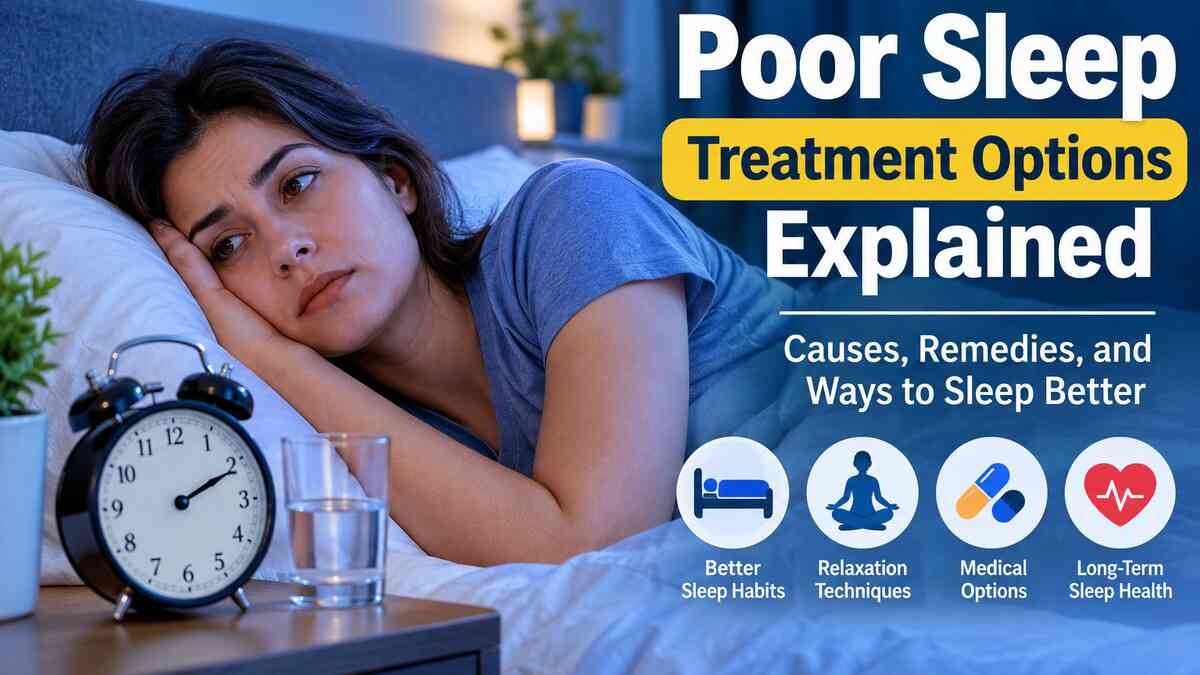

Poor sleep can affect almost every part of daily life, from concentration and mood to energy and physical health. Many adults know the pattern well: lying awake for hours, waking repeatedly during the night, or getting out of bed feeling as tired as when they went to sleep. In a large 2014 national survey, about 35 percent of U.S. adults reported getting less than the recommended seven hours of sleep, according to the Centers for Disease Control and Prevention (CDC).
Poor sleep is not a diagnosis on its own. It is a symptom with many possible causes, including stress, daily habits, medical conditions, medications, and a noisy or uncomfortable bedroom. That is why the right treatment depends on what is driving the problem, and why a remedy that worked for a friend may not work for you.
This guide explains what poor sleep means, what commonly causes it, and which treatment options have the best evidence behind them. These range from healthy sleep habits and cognitive behavioral therapy for insomnia (CBT-I) to medications and treatment of underlying conditions. You will also learn when it is time to talk with a healthcare professional. This article offers general information and cannot diagnose your situation.
What Is Poor Sleep?
Poor sleep means sleep that is too short, too fragmented, or not refreshing, so you still feel tired, foggy, or irritable during the day. It may involve trouble falling asleep, waking often, or waking too early. Occasional poor sleep is common, while ongoing problems may point to insomnia or another sleep disorder.
Understanding Poor Sleep Quality
Sleep quantity is how many hours you spend asleep. Sleep quality is how continuous and restorative those hours are. You can spend eight hours in bed and still wake up unrefreshed if your sleep is repeatedly interrupted by noise, pain, worry, or a breathing problem.
Sleep is an active period of recovery for the brain and body. When it is cut short or broken up, people often notice trouble with memory, mood, and concentration. The National Heart, Lung, and Blood Institute (NHLBI) explains that ongoing sleep loss is also linked with broader health effects, although sleep is only one of many factors that shape health.
Doctors use the term chronic insomnia for sleep difficulty that causes daytime distress or impairment, occurs at least three nights a week, and lasts at least three months, as described by the American College of Physicians (ACP). Only a clinician can tell you whether your sleep problem meets that definition.
Common Signs and Symptoms of Poor Sleep
Poor sleep can look different from person to person. Common signs include:
- Difficulty falling asleep
- Frequent awakenings during the night
- Waking up too early and being unable to fall back asleep
- Feeling tired after a full night in bed
- Daytime sleepiness
- Trouble concentrating or remembering things
- Irritability and mood changes
Persistent tiredness can have causes beyond sleep. Our guide on what causes fatigue covers other possibilities to discuss with a clinician.
How Much Sleep Do Adults Need?
The CDC, along with the American Academy of Sleep Medicine (AASM) and the Sleep Research Society, recommends that adults ages 18 to 60 sleep at least seven hours per night. Individual needs vary, so the best gauge is whether you feel rested and function well during the day. If you regularly sleep seven hours or more but still feel exhausted, a sleep quality problem may be involved.
What Causes Poor Sleep?
Poor sleep rarely has a single cause. The most common contributors fall into a few groups:
- Stress, worry, and anxiety
- Irregular schedules and lifestyle habits
- Medical conditions and sleep disorders
- Certain medications
- Environmental factors in the bedroom
Keep in mind that poor sleep is a symptom, not a single medical condition. Identifying the likely cause is what allows treatment to be targeted.
Stress and Anxiety
Stress keeps the brain and body in an alert state, which makes it harder to wind down at bedtime. Racing thoughts, replaying the day, or worrying about the next one are common. Poor sleep can also raise next-day stress, which creates a cycle that can become self-reinforcing.
If this sounds familiar, our guides on how to reduce stress and what anxiety is are good starting points. The link between sleep and mental health runs in both directions.
Poor Sleep Habits and Lifestyle Choices
Daily choices can quietly undermine sleep. Common culprits include:
- Irregular bedtimes and wake times
- Caffeine, especially in the afternoon or evening
- Alcohol and nicotine
- Heavy meals close to bedtime
- Low physical activity
- Bright screens and stimulating content late at night
Alcohol may make some people feel drowsy at first, but it can fragment sleep later in the night.
Medical Conditions and Sleep Disorders
Many health conditions can disrupt sleep, including:
- Chronic pain
- Depression (see our overview of depression)
- Sleep apnea
- Restless legs syndrome
- Gastroesophageal reflux disease (GERD), sometimes called acid reflux
- Hormonal changes
Some medications can also affect sleep, so it is worth reviewing your prescriptions and supplements with a clinician or pharmacist.
Environmental Factors
Your bedroom matters. Noise, bright light, a room that is too warm or too cold, and an uncomfortable mattress or pillow can all interfere with sleep. So can an inconsistent sleep setting, such as falling asleep on the couch some nights and in bed on others.
Poor Sleep Treatment Options Explained
Treatment for poor sleep generally falls into three categories: behavioral and lifestyle approaches, medical treatments, and treatment of underlying conditions. Most people do not need all three.
There is no single best treatment for everyone. For chronic insomnia specifically, both the ACP and the AASM point to CBT-I as the preferred starting point. The sections below explain each option, its limits, and when it may fit.
1. Improving Sleep Hygiene
Sleep hygiene means the daily habits and bedroom conditions that support sleep. Helpful steps include keeping a consistent bedtime and wake time, making the bedroom comfortable, limiting caffeine later in the day, avoiding nicotine near bedtime, dimming lights in the evening, and following a relaxing pre-bed routine.
These steps are low risk and worth trying. They are also not always enough. The AASM suggests that clinicians not rely on sleep hygiene alone to treat chronic insomnia, and recommends combining it with other therapies.
For a deeper walkthrough, see our guide on how to improve sleep.
2. Cognitive Behavioral Therapy for Insomnia (CBT-I)
CBT-I is a structured, evidence-based program that targets the thoughts and behaviors that keep insomnia going. The ACP recommends it as the first-line treatment for adults with chronic insomnia, and the AASM strongly recommends multicomponent CBT-I as well.
CBT-I usually includes several parts:
- Stimulus control: Using the bed only for sleep, and getting up when you cannot sleep, so the bed becomes linked with sleep again.
- Sleep restriction or sleep scheduling: Limiting time in bed to match your actual sleep, then adjusting it gradually. A trained clinician should guide this, because it can cause temporary daytime sleepiness.
- Cognitive restructuring: Challenging unhelpful beliefs, such as “I will be useless tomorrow if I do not sleep eight hours.”
- Relaxation techniques: Methods that lower tension before bed.
- Sleep education: Learning how sleep works and what helps or hurts it.
CBT-I is often delivered over several weeks. According to the ACP, it can be offered through individual or group sessions, telephone or web-based programs, or self-help books. Many people keep their gains after treatment ends.
3. Natural Approaches and Relaxation Techniques
Relaxation practices may help you feel calmer at bedtime. Options include meditation, deep breathing, progressive muscle relaxation, gentle yoga or stretching, and mindfulness. A calming bedtime routine that you repeat nightly can also signal that it is time to wind down.
The National Center for Complementary and Integrative Health (NCCIH) notes that relaxation techniques may help some people with insomnia, especially alongside other sleep habits. These approaches support relaxation, but they are not guaranteed cures for sleep disorders. Herbal products also lack strong support; the AASM suggests against using valerian for insomnia.
4. Exercise and Physical Activity
Regular physical activity is generally associated with better sleep, although studies differ on how large the benefit is and who gains the most. Walking, swimming, cycling, and other moderate activities are reasonable options. Consistency matters more than intensity.
Some people feel more alert after vigorous exercise close to bedtime, so you may prefer to finish hard workouts earlier. Pay attention to how your own body responds. For ideas, see our pages on the benefits of exercise, sleep and exercise, and walking for health.
5. Dietary Changes and Nutrition
Food and drink habits can help or hurt sleep. It often helps to limit caffeine, cut back on alcohol, avoid large meals right before bed, and keep overall nutrition balanced. Staying hydrated during the day is helpful, but drinking a lot right before bed may lead to nighttime bathroom trips.
No specific food or drink is a proven universal treatment for poor sleep. If you want ideas, our list of best foods for better sleep explains what is known and what is still uncertain.
6. Managing Underlying Sleep Problems
Sometimes poor sleep will not improve until the underlying issue is treated. Examples include:
- Sleep apnea: This may need evaluation and treatment such as positive airway pressure therapy. Some research suggests that treating coexisting insomnia with CBT-I may help people use CPAP more consistently.
- Restless legs syndrome: This needs assessment and targeted treatment.
- Chronic pain: This may call for appropriate pain management.
- Anxiety or depression: These may need professional mental health care, such as therapy.
- Medication-related sleep problems: These may need a medication review.
Effective poor sleep treatment depends on finding the underlying cause and choosing an approach that fits it.
Lifestyle Changes That Can Help Improve Sleep Quality
If you want to know how to improve sleep quality, these everyday changes are a practical place to start.
Establish a Consistent Sleep Schedule
Go to bed and wake up at about the same time every day. Try to avoid big swings on weekends, since they can make it harder to fall asleep on Sunday night. A steady daily routine gives your body clearer timing cues.
Create a Sleep-Friendly Bedroom
A bedroom that supports sleep is usually dark, quiet, and comfortably cool. Consider blackout curtains, earplugs, or a white noise machine if outside sounds bother you. A comfortable mattress and pillow also matter, and so does keeping the room a calm space rather than a work area.
Reduce Screen Time Before Bed
Bright light and stimulating content can make it harder to wind down. Try limiting phone use before bedtime and avoiding emotionally charged content, such as work email or upsetting news. Reading a paper book, listening to calm music, or stretching can replace late-night scrolling.
Build Healthy Daytime Habits
What you do during the day shapes how you sleep at night. Helpful habits include:
- Getting natural daylight, especially in the morning
- Staying physically active
- Managing daytime stress
- Avoiding long or late-afternoon naps
- Keeping a balanced routine
Our guide to healthy habits offers more ideas for building a routine you can maintain.
A Sample Evening Routine
Here is one example of a wind-down routine. Adjust it to fit your life.
- Early evening: Finish caffeine earlier in the day and keep dinner on the lighter side.
- One hour before bed: Dim the lights, set your phone aside, and write down tomorrow’s to-do list so it stays out of your head.
- Thirty minutes before bed: Take a warm shower, stretch gently, or practice slow breathing.
- In bed: Lie down when you feel sleepy. If you are still awake after what feels like 20 minutes, get up, do something quiet in low light, and return when sleepy. This is a common stimulus control technique used in CBT-I.
Medical Treatments for Poor Sleep
Some people need professional treatment in addition to, or instead of, lifestyle changes. A clinician can help weigh the options based on your diagnosis, health history, and other medications.
Prescription Sleep Medications
Healthcare professionals may prescribe certain medications for selected sleep problems. Examples include zolpidem, eszopiclone, and temazepam. Other options exist depending on the diagnosis, and the AASM pharmacologic guideline reviews many of them.
The ACP advises that, when CBT-I alone is not enough, clinicians and patients should discuss the benefits, harms, and costs of medication together. The ACP also says medications are best used for short periods.
Safety matters with these drugs. In 2019 the FDA added a boxed warning for eszopiclone, zaleplon, and zolpidem because of rare but serious complex sleep behaviors, such as sleepwalking and sleep driving. Other concerns can include daytime drowsiness, tolerance, and dependence, especially with benzodiazepines such as temazepam.
If you take a sleep medication, follow the prescribed dose and duration, and avoid alcohol or other sedating substances unless your clinician says otherwise.
Over-the-Counter Sleep Aids
Many nonprescription sleep aids contain sedating antihistamines. They may cause daytime drowsiness and other side effects, and the AASM suggests against using diphenhydramine to treat chronic insomnia. Regular use without medical guidance is generally not a good idea, so check with a pharmacist or clinician first.
Melatonin Supplements
Melatonin is a hormone your body makes that helps regulate the sleep-wake cycle. The NCCIH reports that melatonin may help with some circadian rhythm problems, such as jet lag or delayed sleep-wake phase disorder. It is not a universal treatment for chronic insomnia, and the AASM suggests against routine use for that purpose.
Supplement labels can be inaccurate, and some people should use extra caution, including those who are pregnant, breastfeeding, taking blood thinners, or living with epilepsy. Talk with a healthcare professional before starting any supplement.
When Should You See a Doctor About Poor Sleep?
Self-care is a reasonable first step, but it is not always enough. Consider medical evaluation if:
- Poor sleep continues for several weeks
- Sleep problems interfere with daily activities
- Daytime fatigue affects your work or driving
- You wake frequently during the night
- A partner notices loud snoring or gasping during sleep
- Insomnia persists despite lifestyle changes
- Sleep problems occur alongside anxiety, depression, or chronic pain
A healthcare professional may review your medical history, ask about your sleep habits, and check your medications and supplements. They may also suggest a sleep diary, screen for sleep disorders, and arrange a sleep study when it is clinically appropriate.
Severe daytime sleepiness can make driving and operating machinery dangerous. If you find yourself nodding off at the wheel, seek care promptly and avoid driving while drowsy.
How to Prevent Poor Sleep in the Future
Healthy habits can reduce some sleep difficulties, although they cannot prevent every sleep disorder. These habits are the foundation:
- Keep regular sleep and wake times
- Follow a consistent bedtime routine
- Manage stress with strategies that work for you
- Limit caffeine and alcohol
- Exercise regularly
- Keep your sleep environment comfortable
- Seek professional advice for persistent problems
Broader routines matter too. Our overview of preventive health shows how sleep fits into long-term wellness.
Conclusion: Finding the Right Treatment for Poor Sleep
Poor sleep can have several underlying causes, and treatment works best when it addresses the reason for the disturbance. Sleep hygiene and lifestyle changes are useful starting points. For chronic insomnia, CBT-I is an important evidence-based option that guidelines recommend first.
Medical evaluation is important when symptoms persist or suggest a sleep disorder such as sleep apnea. If sleep problems are affecting your health, mood, or safety, take them seriously and talk with a healthcare professional.
Frequently Asked Questions About Poor Sleep
1. What is the best treatment for poor sleep?
It depends on the underlying cause. For chronic insomnia, CBT-I is recommended as the first-line treatment by the American College of Physicians. Poor sleep caused by another condition, such as sleep apnea, usually needs treatment of that condition.
2. How can I improve poor sleep naturally?
Start with a consistent sleep schedule, a calming bedtime routine, regular physical activity, and a dark, quiet, comfortable bedroom. Relaxation techniques such as deep breathing may also help. If problems continue, these steps may not be enough on their own, so consider speaking with a clinician.
3. Can stress cause poor sleep?
Yes. Stress can raise mental and physical alertness, which makes it harder to fall asleep and stay asleep. Over time, poor sleep can add to stress as well, so addressing both together is often helpful.
4. Is medication necessary for poor sleep?
Not always. Many people improve with behavioral approaches and treatment of underlying causes. Medication may be appropriate in selected cases after a medical assessment, and guidelines advise using it for short periods.
5. When should I worry about poor sleep?
See a healthcare professional if sleep problems last for weeks, interfere with daily life, or come with symptoms such as loud snoring or gasping during sleep. Significant daytime sleepiness, especially while driving, also deserves prompt attention.
Sources
- American College of Physicians: ACP Recommends Cognitive Behavioral Therapy as Initial Treatment for Chronic Insomnia
- American Academy of Sleep Medicine: Behavioral and Psychological Treatments for Chronic Insomnia Disorder in Adults (Journal of Clinical Sleep Medicine, 2021)
- American Academy of Sleep Medicine: Clinical Practice Guideline for the Pharmacologic Treatment of Chronic Insomnia in Adults (PubMed)
- Centers for Disease Control and Prevention: 1 in 3 Adults Don’t Get Enough Sleep
- National Heart, Lung, and Blood Institute: Sleep Deprivation and Deficiency
- National Heart, Lung, and Blood Institute: Sleep Apnea
- National Center for Complementary and Integrative Health: Melatonin, What You Need To Know
- National Center for Complementary and Integrative Health: Sleep Disorders and Complementary Health Approaches
- U.S. Food and Drug Administration: FDA Requires Stronger Warnings About Rare but Serious Incidents Related to Certain Prescription Insomnia Medicines
- Cognitive and Behavioral Therapy for Insomnia Increases the Use of CPAP in Obstructive Sleep Apnea Participants With Comorbid Insomnia (PubMed)
Medical Disclaimer
This article is for general educational purposes only and is not a substitute for professional medical advice, diagnosis, or treatment. Sleep problems can have many causes, and the right approach differs from person to person. Always talk with a qualified healthcare professional before starting, changing, or stopping any treatment, medication, or supplement. If you have severe daytime sleepiness, trouble breathing during sleep, or a medical emergency, seek care right away.
6 thoughts on “Poor Sleep Treatment Options : Causes, Remedies, and Ways to Sleep Better”
Comments are closed.