
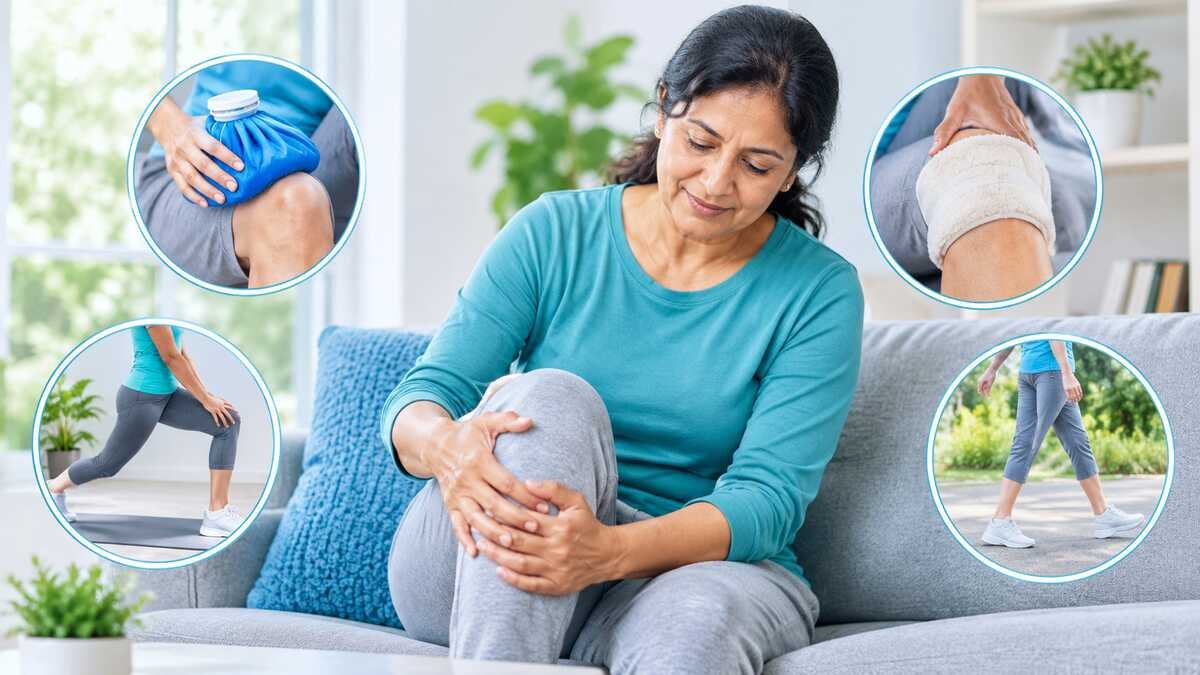

You may be able to relieve mild joint pain at home by resting the affected joint, applying wrapped cold packs or comfortable warmth, performing gentle movements, and avoiding activities that worsen discomfort. Persistent or severe pain should be evaluated by a healthcare professional. The NHS and Mayo Clinic both describe simple self-care steps like these for mild joint pain.
Joint pain can make everyday activities such as walking, climbing stairs, or reaching for objects uncomfortable. Fortunately, some mild joint discomfort can be managed with appropriate rest, gentle movement, cold or heat, and a few lifestyle adjustments. Knowing which approaches may help can make the next flare-up feel more manageable.
The right approach depends on what is behind the pain, and home care offers comfort, not a cure. This guide covers 10 practical strategies, simple ideas for different joints, helpful daily habits, common mistakes to avoid, and clear signs that it is time to see a doctor. If you are unsure what is causing your symptoms, start with our guides to the causes of joint pain and what joint pain feels like.
Can You Relieve Joint Pain at Home?
Often, yes, for mild discomfort. Home care may be reasonable for soreness after everyday activity, temporary stiffness after sitting for a while, or minor overuse. Mayo Clinic notes that mild joint pain can often be managed at home, and the NHS says that sometimes joint pain goes away without any treatment.
Still, home remedies usually offer temporary relief and do not treat the underlying cause. Joint pain linked to infection, a significant injury, or an inflammatory disease may need medical treatment. A hot, swollen, very painful joint, or pain with a fever, should not be managed with home remedies alone.
So, can joint pain go away on its own? Minor, activity-related pain often settles as the joint recovers. Pain that lingers, keeps returning, or gets worse deserves a professional opinion.
10 Ways to Relieve Joint Pain at Home
These strategies are general comfort measures. Not every one will suit every person or every joint, so choose what fits your situation and stop anything that makes the pain worse.
1. Give the Affected Joint Appropriate Rest
Temporarily cutting back on activities that increase discomfort can help a sore joint settle. Try to avoid repetitive movements that trigger symptoms, and balance activity with recovery time.
Rest does not mean stopping all movement. The NHS advises against completely stopping use of the affected joint, and long periods of inactivity can add to stiffness. As symptoms allow, return to normal activities gradually. Our guide to rest days explains how recovery fits into an active routine.
2. Apply Cold Therapy to Reduce Discomfort
A cold pack may temporarily ease pain and swelling, especially after an injury or a strenuous activity. Mayo Clinic notes that cold can relieve pain and inflammation after strenuous exercise.
Wrap an ice pack or a bag of frozen vegetables in a towel rather than placing it on bare skin. The NHS suggests keeping it on for up to 20 minutes, repeated every 2 to 3 hours. Let your skin return to normal temperature between applications.
3. Use Heat Therapy for Joint Stiffness
Warmth can relax tight muscles around a joint and ease stiffness. Options include a warm towel, a heating pad, or a warm bath or shower. Mayo Clinic says heat can temporarily relieve joint pain and advises limiting heating pad use to 20 minutes at a time.
Keep the temperature comfortable, not painfully hot, to avoid burns. Heat and cold do different jobs: cold is often chosen after activity or injury, and warmth for stiffness. Avoid heat on a joint that is already hot, red, or swollen.
4. Try Gentle Stretching and Range-of-Motion Exercises
Slow, gentle movements that take a joint through its comfortable range may help reduce stiffness. Start slowly, never force a stretch, and stop if you feel sharp or worsening pain.
A physical therapist can suggest movements suited to the affected joint. For general flexibility ideas, see our guides on how to improve flexibility and stretching before or after exercise.
5. Choose Low-Impact Physical Activities
Low-impact activity can help maintain joint movement without adding too much stress. The CDC lists joint-friendly options such as brisk walking, cycling, swimming, and water exercises. Mayo Clinic adds that water activities are easier on weight-bearing joints because of buoyancy.
The CDC also notes that some pain, stiffness, or swelling is normal when starting a new activity, and that joint pain from activity should improve over time. If it does not, contact your healthcare provider. Do not exercise through significant pain or on a joint that has just been injured. Our walking for health and best exercises for beginners guides can help you start gently.
6. Maintain a Balanced, Nutrient-Rich Diet
Eating well supports your overall health, including your muscles, bones, and weight. A balanced pattern includes fruits and vegetables, whole grains, fish, nuts and seeds, adequate protein, and enough fluids. See our guides to a balanced diet and omega-3 fatty acids.
Balanced nutrition does not guarantee quick relief, and no single food cures joint pain or inflammation. Extra weight can add to joint strain, and Mayo Clinic notes that managing weight may help ease arthritis pain. Our weight management guide takes a supportive, non-judgmental approach.
7. Improve Sleep and Recovery Habits
Pain can disrupt sleep, and poor sleep can make pain feel harder to cope with. A consistent sleep schedule, a comfortable sleeping position, and supportive pillows may help. Try placing a pillow between or under the knees, or avoid lying on a sore shoulder.
Allow enough recovery time after strenuous activity as well. Our tips on how to improve sleep and how to build a sleep schedule may be useful.
8. Practice Gentle Massage When Appropriate
Light massage may ease tension in the muscles around a sore joint. Mayo Clinic says massage might improve pain and stiffness temporarily and recommends telling the massage therapist about your joint condition.
Avoid pressing directly on a joint that is hot, swollen, or recently injured. If you are unsure, ask a healthcare professional or qualified therapist first.
9. Protect Your Joints During Daily Activities
Small changes can reduce unnecessary strain. Take breaks during repetitive tasks, wear comfortable, supportive footwear, and keep a comfortable posture. Use supportive tools or aids when a clinician recommends them, and adjust daily tasks to spread the load across larger joints.
Mayo Clinic advises that you know your limits and balance activity with rest. A physical or occupational therapist can offer joint protection tips for specific tasks.
10. Consider Pain-Relief Options With Professional Guidance
Over-the-counter products come in two general groups: topical products applied to the skin and oral medicines. Mayo Clinic lists NSAIDs such as ibuprofen and naproxen sodium among commonly used options, and notes that capsaicin cream can be applied over a painful joint.
Medicines carry different risks and precautions, and no medicine suits everyone. Read the label, and ask a pharmacist or doctor if you have stomach, kidney, or heart conditions, take other medicines, or are pregnant. Children and teenagers need professional guidance before using any pain reliever. Medicines should not be used to mask severe or unexplained pain.
Best Home Remedies for Different Types of Joint Pain
Different symptoms may respond to different comfort measures. The table below offers general ideas only. It is not a diagnosis or condition-specific treatment.
| Type of joint discomfort | Home-care approaches to consider |
|---|---|
| Joint stiffness | Comfortable warmth and gentle movement |
| Mild swelling after activity | Wrapped cold pack and activity modification |
| Knee discomfort | Appropriate rest and low-impact movement |
| Hand stiffness | Gentle finger movements and comfortable warmth |
| Shoulder discomfort | Avoiding aggravating movements and gentle mobility exercises |
| Ankle discomfort | Rest, protection, and cold therapy after minor activity-related irritation |
If you have a suspected fracture, a significant injury, an infection, or a severely inflamed joint, do not rely on home remedies. For minor ankle problems, our guide to managing an ankle sprain at home offers more detail.
Foods and Daily Habits That Support Joint Health
No food or habit will cure joint pain, but several support the overall health of your body and joints.
Eat a Balanced Diet
Colorful fruits and vegetables, fish rich in omega-3 fats, nuts and seeds, and foods with calcium and vitamin D all play a role in a healthy eating pattern. Our articles on fatty fish, calcium-rich foods, and foods high in vitamin D provide ideas.
Stay Hydrated
Water supports normal body function. Drinking extra water is not a direct treatment for joint pain, but staying well hydrated is part of general good health. See our hydration benefits guide.
Stay Consistently Active
The CDC recommends that adults, including those with arthritis, aim for 150 minutes of moderate activity per week and adjust the amount to match their symptoms. Some activity is better than none. Even short sessions spread through the day may be easier on the joints.
Avoid Smoking
Mayo Clinic notes that smoking can stress connective tissues and may increase arthritis pain. Quitting supports joint and overall health, and a healthcare professional can help you find a plan.
What Should You Avoid When Experiencing Joint Pain?
These common mistakes can make joint pain worse or delay needed care:
- Continuing activities that clearly worsen pain
- Placing ice directly on bare skin
- Using strong heat on a joint that is already hot or swollen
- Avoiding movement for long periods without medical advice
- Ignoring symptoms that persist or worsen
- Taking pain relievers without checking precautions
- Relying on unproven supplements or “miracle” remedies
- Forcing painful stretches or exercises
Mayo Clinic also warns against ignoring severe, prolonged pain, since it may reflect inflammation or damage that needs treatment. Good home care reduces strain on the joint. If a step adds discomfort, scale it back.
How Long Does It Take for Joint Pain to Improve?
There is no single timeline. Minor, activity-related soreness may ease within days with appropriate recovery. Pain after an injury can take longer, depending on how serious the injury is.
Chronic conditions such as arthritis may need ongoing management rather than a quick fix. Improvement depends on the cause, the treatment, and your individual circumstances. MedlinePlus advises contacting a provider if joint pain lasts beyond 3 days or is severe and unexplained.
Temporary relief from a heating pad or cold pack does not mean the cause has gone away. Do not ignore symptoms that keep returning.
When Should You See a Doctor?
Arrange a routine appointment if:
- Joint pain keeps returning.
- Symptoms interfere with daily activities or sleep.
- Pain or swelling is getting worse.
- Morning stiffness persists.
- Home care does not help.
- Several joints become painful without an obvious explanation.
The NHS advises seeing a GP if joint pain stops you doing normal activities, affects sleep, is getting worse, or keeps coming back.
Seek urgent medical care if:
- A joint becomes hot, red, swollen, and very painful.
- Joint pain comes with a fever or chills.
- You have severe pain after a fall or injury.
- You cannot walk or put weight on the joint.
- The joint looks deformed after trauma.
These signs may point to conditions that need prompt treatment, such as a joint infection or fracture. After an ankle injury, see our guide on when to see a doctor for an ankle sprain.
Frequently Asked Questions
What is the fastest way to relieve joint pain at home?
There is no single fastest method, because relief depends on the cause. Rest from aggravating activities, a wrapped cold pack after a minor injury, comfortable warmth for stiffness, and gentle movement may help some people. Pain that is severe or does not improve should be checked, as the NHS advises.
Does heat or ice work better for joint pain?
Neither is better for everyone. Cold may help with pain and swelling after activity or injury, while warmth may ease stiffness. Mayo Clinic describes both as temporary pain relievers, so choose based on your symptoms.
Can walking help relieve joint pain?
Comfortable walking may support mobility and reduce pain for some people. The CDC lists brisk walking as a joint-friendly activity for people with arthritis. It is not suitable for every joint problem, especially a significant injury or severe pain.
What foods may help support joint health?
A balanced diet with vegetables, fruits, fish, nuts, seeds, whole grains, and adequate protein supports overall health. No single food cures joint pain. Our guide to anti-inflammatory foods explains what the evidence can and cannot tell us.
How can I relieve joint pain naturally?
Gentle movement, appropriate rest, warm or cold applications, good sleep, and balanced nutrition are the main natural approaches. They may ease mild discomfort. They do not replace medical care when symptoms are severe, persistent, or unexplained.
Should I rest or exercise when my joints hurt?
Usually a mix of both helps. Cut back on what aggravates the pain, but keep moving gently, since total rest can add to stiffness. Mayo Clinic suggests that pain that lasts more than two hours after exercise may mean you pushed too hard.
When should I stop treating joint pain at home?
Stop and seek medical advice if pain is severe, getting worse, lasting, or unusual. A hot, swollen joint with fever needs urgent assessment, according to the NHS. Pain after a significant injury also needs prompt evaluation.
Key Takeaways
- Appropriate rest can help mild joint discomfort, but total inactivity can add to stiffness.
- Cold and heat may offer temporary relief, and they serve different purposes.
- Gentle, low-impact movement can support flexibility and mobility.
- Balanced nutrition, good sleep, and not smoking support general joint health.
- Avoid activities and remedies that worsen symptoms.
- Persistent, severe, or unusual joint pain needs professional care.
Managing joint pain starts with understanding your symptoms and choosing appropriate care. While simple home strategies may help with mild discomfort, persistent or severe joint pain deserves professional attention. Speak with a healthcare professional to identify the cause and find the most suitable treatment.
Sources
- NHS: Joint pain
- MedlinePlus: Joint pain, when to contact a provider
- Mayo Clinic: Joint pain causes and self-care
- Mayo Clinic: Joint pain, when to see a doctor
- Mayo Clinic: Arthritis pain, do’s and don’ts
- Mayo Clinic: Exercise helps ease arthritis pain and stiffness
- Mayo Clinic: Arthritis diagnosis and treatment
- CDC: About physical activity and arthritis
- CDC: Physical activity for arthritis
Medical Disclaimer: This article is for general educational purposes only and is not medical advice. It cannot diagnose or treat any condition, and it does not replace care from a qualified healthcare professional. Talk with your doctor or pharmacist before trying new treatments or medicines. If you have severe, lasting, or worrying joint pain, seek medical care. If you think you may be having a medical emergency, call 911 or your local emergency number right away.