
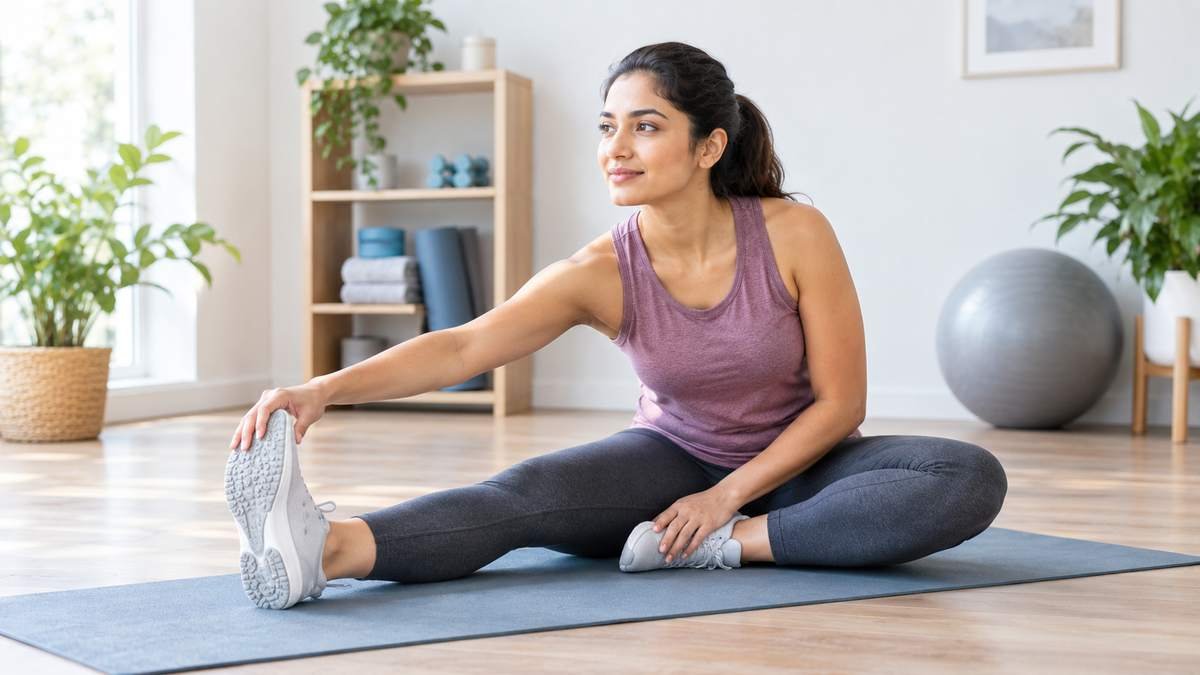

You can improve flexibility through consistent, gradual stretching and movement that takes your joints and muscles through comfortable ranges of motion. Flexibility is the ability of your muscles and joints to move freely through their available range. Regular stretching can improve that range and make some everyday movements easier, according to Mayo Clinic’s guidance on stretching.
Flexibility develops slowly, and it differs naturally from person to person. You don’t need extreme flexibility to move well. Consistency matters more than forcing a stretch, and pain is not a sign that a stretch is working. Flexibility and mobility are also related but not identical, and this guide explains the difference.
Below, you’ll find practical stretching principles, beginner-friendly exercises for major body areas, a simple 10-minute routine, and clear guidance on when to be careful.
What Is Flexibility?
Flexibility describes how easily your muscles, tendons, and other connective tissues lengthen so your joints can move through their range of motion. It’s one part of physical fitness, alongside aerobic fitness, strength, and balance.
Flexibility varies widely between people. Anatomy, genetics, activity history, and age all play a role. Being less flexible than someone else doesn’t mean something is wrong with you.
Flexibility matters mostly because of what it lets you do. Reaching a high shelf, tying your shoes, turning to check a blind spot, and getting up from the floor all depend on usable range of motion.
Flexibility vs. Range of Motion
Range of motion is how far a joint can move in a given direction. Flexibility is one of the factors that affects it. When muscles and connective tissues are tight, a joint may not move as far as its structure would otherwise allow.
Flexibility vs. Mobility
Flexibility generally describes the range of motion available to you, often when you are relaxed or supported. Mobility is the ability to actively control movement through that range.
The difference matters. Someone can touch their toes easily but struggle to control a deep squat. Good mobility usually involves both enough flexibility and enough strength and coordination to use it. That’s why the best routines combine stretching with active movement.
Why Is Flexibility Important?
Flexibility has practical benefits, but the evidence for some commonly claimed benefits is stronger than for others. Here’s what a realistic view looks like.
Makes Everyday Movement Easier
Adequate flexibility can help with common tasks, including:
- Reaching overhead
- Bending down to pick something up
- Getting dressed
- Turning and reaching
- Getting up from a chair or the floor
Supports Exercise and Physical Activity
Many exercises and sports need a certain range of motion. A comfortable range at your hips, shoulders, and ankles can make movements like squats, lunges, and overhead presses feel more natural. If you’re building a strength routine, our guide to strength training for beginners explains how to get started safely.
Supports Healthy Joint Movement
Moving your joints through their comfortable range regularly helps you keep that range. Use it or lose it applies here, at least in part.
May Support Physical Function as You Age
Staying active and maintaining mobility can help with everyday independence over time. Flexibility is only one piece of that picture, alongside strength, balance, and aerobic fitness. Our guide to the benefits of exercise covers the bigger picture.
A note on injury prevention: The Physical Activity Guidelines for Americans recognize flexibility activities as part of physical fitness. They also note that the evidence on whether flexibility activities reduce injury risk is limited. Stretching can support movement, but it isn’t a guarantee against injury.
What Causes Poor Flexibility?
Several factors can affect how flexible you feel. Most people have more than one at play.
Inactivity
Moving less often can contribute to stiffness and a smaller usable range of motion. Long periods of sitting are a common example.
Aging
Flexibility can change as you get older. Regular physical activity can help you maintain movement capacity, though results vary from person to person.
Previous Injury
An injury or ongoing pain can change how comfortably a joint or muscle moves. Sometimes people also move less to protect the area, which can add to stiffness.
Repetitive Movement
Doing the same movements again and again while neglecting other ranges of motion may contribute to feeling stiff in certain areas.
Individual Differences
Anatomy, genetics, and activity history all influence natural flexibility. Limited flexibility isn’t a personal failure, and it doesn’t mean you’re doing something wrong.
How to Improve Flexibility
The main approach is simple: stretch regularly, warm up first, move slowly, and stay within a comfortable range. These principles come from Mayo Clinic’s stretching guidance.
Stretch Regularly
Consistency is the biggest driver of progress. Mayo Clinic recommends stretching major muscle groups at least two to three days per week. People who exercise regularly may choose to stretch more often. Even 5 to 10 minutes can be useful when you do it consistently.
Warm Up Before Stretching
Spend 5 to 10 minutes on light activity before you stretch. Good options include:
- Easy walking
- Gentle cycling
- Light movement related to your upcoming activity
Stretching cold muscles is not a substitute for warming up. If you want ideas for building easy activity into your day, see our guide to walking for health.
Use Slow, Controlled Movements
Technique matters as much as time spent stretching:
- Don’t bounce
- Don’t force a joint into position
- Breathe normally
- Move into the stretch gradually
Stretch to Gentle Tension, Not Pain
You should feel a mild pulling sensation. Sharp or painful discomfort is a signal to ease off. Mayo Clinic advises against stretching into pain.
Combine Stretching With Active Movement
Static stretches are one tool. Dynamic movements and mobility exercises help you build control through your range of motion. Together, they make a more complete approach than stretching alone.
Best Flexibility Exercises for Beginners
These stretches cover the major areas. Hold each static stretch gently and breathe normally. Repeat on both sides. For detailed technique, Mayo Clinic’s guide to basic stretches includes calf, hamstring, quadriceps, hip-flexor, shoulder, and neck stretches.
Neck and Upper-Body Exercises
- Gentle neck side stretch: Sit or stand tall. Slowly tilt one ear toward the same-side shoulder until you feel a mild stretch. Don’t pull on your head.
- Cross-body shoulder stretch: Bring one arm across your chest and support it with the other arm. Keep your shoulders relaxed.
- Chest-opening movement: Clasp your hands behind your back or place your forearms on a doorframe, then gently lean forward.
Shoulder Mobility
- Arm circles: Make small, controlled circles, then gradually increase the size.
- Controlled shoulder movements: Slowly raise and lower your arms through a comfortable range.
- Gentle overhead reach: Reach both arms overhead and lengthen through your sides.
Upper-Back Mobility
- Cat-cow: On hands and knees, slowly move between rounding and gently arching your back within a comfortable range.
- Gentle thoracic rotation: From hands and knees or a seated position, place one hand behind your head and slowly rotate your upper body.
Hip Flexor Stretch
Kneel on one knee with the other foot in front. Tuck your pelvis slightly and shift your weight forward until you feel a stretch at the front of the back hip. Keep your torso upright.
Hamstring Stretch
Lie on your back and loop a towel or strap around one foot. Straighten that leg toward the ceiling as far as is comfortable. Keep the other leg bent or flat on the floor. A slight bend in the stretched knee is fine.
Quadriceps Stretch
Stand near a wall or chair for balance. Bend one knee and hold your ankle behind you, keeping your knees close together. Stand tall and avoid arching your lower back.
Calf Stretch
Stand facing a wall with your hands on it. Step one foot back, keeping the heel down and the back leg fairly straight. Lean gently forward until you feel a stretch in the calf.
Lower-Back and Hip Mobility
Choose gentle movements instead of aggressive spinal stretching. Examples include knees-to-chest while lying down and slow, small hip circles. If you deal with back pain, our overview of what causes back pain can help you understand when to seek an assessment.
Static Stretching vs. Dynamic Stretching
Both types of stretching have a place. They serve different purposes.
| Feature | Static stretching | Dynamic stretching |
|---|---|---|
| Movement | Hold a position | Controlled movement |
| Typical use | Flexibility training | Warm-up and movement preparation |
| Intensity | Gentle sustained stretch | Gradually increasing movement |
| Examples | Hamstring hold | Leg swings, controlled lunges |
| Main goal | Increase flexibility | Prepare the body for movement |
Dynamic movements work well during a warm-up because they gradually raise your heart rate and prepare your joints for activity. Static stretching is commonly done when your muscles are warm, such as after exercise. Mayo Clinic recommends light activity before stretching.
For a closer look at timing, read our guide to stretching before or after a workout.
How Often Should You Stretch to Improve Flexibility?
A practical starting point is two to three days per week, targeting your major muscle groups. Mayo Clinic notes that even 5 to 10 minutes can be helpful when you do it consistently.
Keep these principles in mind:
- Short, regular sessions work better than occasional long ones
- Cover the major muscle groups
- Increase the challenge gradually
- Keep your routine going over time
You don’t have to stretch every day. If stretching fits naturally into your schedule more often, that’s fine. How stretching fits alongside other exercise depends on your overall plan. Our guide on how often to work out can help you balance it.
How Long Does It Take to Improve Flexibility?
There’s no universal timeline. Your progress depends on several things:
- Your starting flexibility
- Your age
- How consistent you are
- Which exercises you choose
- Previous injuries
- How often you stretch
- Your individual anatomy
Some people notice changes within a few weeks of regular practice. Others take longer. Comparing yourself to other people isn’t helpful, because natural flexibility differs so much.
Signs Your Flexibility Is Improving
Look for practical improvements rather than dramatic ones:
- A greater comfortable range of motion
- Easier movement
- Less stiffness during certain activities
- Improved ability to perform specific exercises
Track what you can do, not how you compare with others. For example, notice whether reaching a high shelf or getting off the floor feels easier than it did a month ago.
Flexibility Exercises for Different Areas of the Body
Use this table as a quick reference when planning a routine.
| Area | Examples |
|---|---|
| Neck | Gentle side and forward movements |
| Shoulders | Cross-body stretch, controlled arm circles |
| Chest | Chest-opening stretch |
| Upper back | Thoracic rotation |
| Hips | Hip-flexor stretch, controlled hip mobility |
| Hamstrings | Gentle hamstring stretch |
| Quadriceps | Standing quad stretch |
| Calves | Wall calf stretch |
| Lower body | Gentle lunges and mobility movements |
If you’re new to exercise more broadly, our list of best exercises for beginners is a good companion to this routine.
How to Create a Simple Flexibility Routine
Here’s a beginner-friendly 10-minute template. It is an example, not a personalized exercise plan. Adjust it to your abilities, and skip anything that causes pain.
Example 10-Minute Routine
- 2 minutes: Easy walking or gentle warm-up
- 1 minute: Shoulder and arm mobility
- 1 minute: Upper-back mobility
- 1 minute: Hip-flexor stretch
- 1 minute: Hamstring stretch
- 1 minute: Quadriceps stretch
- 1 minute: Calf stretch
- 2 minutes: Gentle whole-body movement
Do this two to three days per week to start. You can increase the hold time or add other stretches as it becomes comfortable. Flexibility work fits well into a broader recovery routine, and our guide to workout recovery covers sleep, nutrition, hydration, and rest.
Common Flexibility Mistakes to Avoid
A few habits can slow your progress or increase your risk of discomfort.
Stretching Until It Hurts
Pain isn’t necessary for improving flexibility. A mild pulling sensation is expected. Sharp pain is a reason to reduce the stretch or stop.
Bouncing During Static Stretches
Controlled, steady movement is safer than forceful bouncing. Mayo Clinic advises against bouncing while stretching.
Stretching Cold Muscles
Warm up first with light activity. Stretching cold muscles is not a substitute for a warm-up.
Doing Too Much Too Soon
Flexibility builds gradually. Pushing too hard can leave you sore and discouraged. If you feel unusually sore afterward, see our guides to muscle soreness after a workout and DOMS.
Ignoring One Side
Work both sides. Notice whether one side feels meaningfully tighter, because that can be worth mentioning to a healthcare professional or physical therapist.
Expecting Immediate Results
Consistency matters more than one intense stretching session. Small, regular efforts add up.
Stretching Through an Injury
If you have an existing injury, you may need individualized guidance from a healthcare professional or physical therapist before stretching that area. Mayo Clinic advises people with injuries to check on appropriate techniques first.
When Should You Be Careful With Stretching?
Stretching is safe for many people, but it isn’t appropriate in every situation. Talk with a healthcare professional or physical therapist before starting or changing your routine if you have:
- A recent injury
- Significant or unexplained pain
- Joint instability
- A condition that limits movement
- Persistent swelling
- Major loss of range of motion
- Symptoms that worsen with exercise
Mayo Clinic specifically advises people with chronic conditions or injuries to discuss appropriate stretching techniques with a doctor or physical therapist.
Stop and get medical advice if you notice sudden or severe pain, new numbness or weakness, or swelling after stretching. If you have chest pain or trouble breathing during any exercise, stop right away and seek urgent care. See our guide to chest pain for more information.
Frequently Asked Questions About Improving Flexibility
How can I improve my flexibility quickly?
Flexibility generally develops through consistent practice, not one intense session. There’s no reliable shortcut, and forcing a stretch can backfire. Warm up, stretch gently two to three days per week, and give your body time to adapt.
How often should I stretch to improve flexibility?
A practical starting point is two to three days per week for your major muscle groups, as Mayo Clinic recommends. Consistency is more important than long sessions.
Can you improve flexibility at any age?
You can work on flexibility throughout adulthood. Individual results vary depending on your starting point, health, and consistency. Start gently and progress gradually.
Is it better to stretch every day?
Daily stretching isn’t required for everyone. A consistent routine several times per week can be effective. If you enjoy daily stretching and it feels comfortable, that’s fine.
Should I stretch before or after a workout?
Warm up with light activity first. Dynamic movements work well before exercise. Static stretches are often more comfortable after exercise, when your muscles are warm. Read more in our guide to stretching before or after a workout.
Does stretching make you more flexible?
Yes. Regular stretching can improve flexibility and joint range of motion, according to Mayo Clinic.
Why am I not getting more flexible?
Common reasons include:
- Inconsistent practice
- Overly aggressive stretching
- Not warming up enough
- Individual anatomy
- A previous injury
- Unrealistic expectations
Try stretching more regularly, warming up first, and keeping stretches gentle. If you see little change or have concerns, a physical therapist can assess what may be limiting you.
What is the difference between flexibility and mobility?
Flexibility generally describes the range of motion available to you. Mobility involves actively controlling movement through that range. Both matter for everyday function.
Can stretching prevent injuries?
Not reliably. Flexibility can support movement, but stretching alone doesn’t guarantee injury prevention. The Physical Activity Guidelines for Americans note uncertainty about whether flexibility activities reduce injury risk. A balanced routine with strength, aerobic activity, and rest matters too. See how cardio vs. strength training fit together.
Should stretching hurt?
No. A gentle pulling sensation is expected. Pain is a reason to reduce the stretch or stop, as Mayo Clinic advises.
The Bottom Line
Flexibility improves through consistent, controlled movement and stretching, not by forcing your body into painful positions. A sustainable routine that combines a warm-up, appropriate stretching, mobility exercises, and gradual progression can help improve your comfortable range of motion over time.
If you want to build a broader fitness routine, explore our guides to how to build muscle and sleep and muscle recovery. If you have an injury, persistent pain, or a medical condition, check with a healthcare professional or physical therapist before changing your routine.
Sources
- Mayo Clinic. Stretching: Focus on flexibility
- Mayo Clinic. A guide to basic stretches
- U.S. Department of Health and Human Services. Physical Activity Guidelines for Americans, 2nd Edition
Medical disclaimer
This article is for general information and education. It is not medical advice and cannot diagnose or treat any condition. If you have persistent, severe, or worsening pain, or symptoms of a possible emergency, seek medical evaluation promptly.
Read our full Medical Disclaimer.