
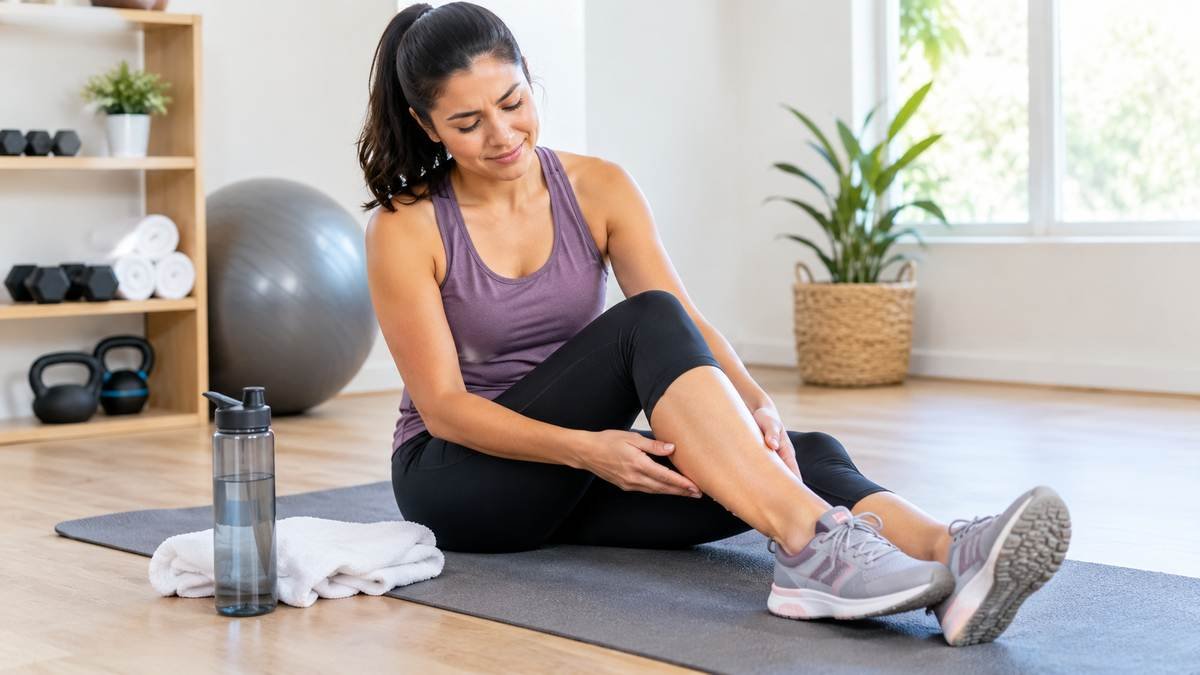

Muscle soreness after a workout is common, especially after a new or tougher-than-usual session. You may feel fine when you finish, then wake up a day or two later with stiff, tender muscles.
This delayed soreness has a name: delayed-onset muscle soreness, or DOMS. According to Cleveland Clinic, it usually sets in one to three days after intense exercise and fades as your muscles recover.
Here’s the reassuring part. You don’t need to feel sore for a workout to be effective. Soreness can be a normal side effect of challenging your body, but it isn’t a score.
This guide explains why muscle soreness after a workout happens, how long it lasts, what may help, and how to tell normal soreness from something that needs medical care.
What Is Muscle Soreness After a Workout?
Not all post-exercise discomfort is the same. It helps to know the difference between three common experiences:
- Muscle fatigue: A tired, heavy feeling during or right after exercise
- Acute soreness: Discomfort you feel during or immediately after a workout
- Delayed-onset muscle soreness (DOMS): Soreness that builds hours later and often peaks a day or two after exercise
Most people searching for answers about sore muscles after a workout are dealing with DOMS.
What Is Delayed-Onset Muscle Soreness (DOMS)?
DOMS is muscle pain and stiffness that shows up after unfamiliar or demanding exercise. It is usually felt in the muscles you worked. A hard leg day may leave your thighs sore. A new upper-body routine may leave your arms and shoulders tender.
Cleveland Clinic notes that DOMS affects the specific muscles you worked and usually goes away within a few days. For a deeper look at the basics, see our guide to DOMS.
Is Muscle Soreness Normal After Exercise?
Yes. Mild to moderate soreness is common, especially if you:
- Start a new exercise program
- Return to exercise after time off
- Try a new activity
- Increase your workout intensity or volume
Soreness that improves steadily over several days is usually part of the normal recovery process. But normal doesn’t mean necessary. Cleveland Clinic points out that the “no pain, no gain” idea isn’t necessarily true, and a workout can still be productive without DOMS.
What Causes Muscle Soreness After Exercise?
Experts don’t fully agree on every detail of how DOMS works. What we do know is that it tends to follow exercise your muscles aren’t used to.
Delayed Muscle Response to Exercise
When you challenge your muscles in a new way, they respond to that stress. The response likely involves several processes, including tiny amounts of muscle fiber damage, inflammation, and the repair work that follows.
Cleveland Clinic explains that exercise can cause tiny tears in muscle fibers and that DOMS is often a sign your body is repairing and rebuilding muscle. Still, microscopic damage isn’t the only explanation, and it isn’t something you need to aim for. You can read more about how muscles adapt in our guide on how to build muscle.
Eccentric Exercise and Muscle Soreness
Some movements are more likely to cause DOMS. These are called eccentric movements, where the muscle lengthens while it works.
Common examples include:
- Lowering a dumbbell during a biceps curl
- Lowering your body during a squat or lunge
- Walking down stairs
- Running downhill
- Lowering into a push-up
Cleveland Clinic lists eccentric exercises among the movements more likely to lead to DOMS.
Increasing Workout Intensity Too Quickly
A sudden jump in effort can leave you very sore. That includes:
- Adding a lot more weight
- Doing far more sets or reps
- Exercising much longer than usual
- Trying a new type of movement
The American College of Sports Medicine (ACSM) offers an information sheet on DOMS that supports gradual progression as a practical approach.
Other Causes of Muscle Pain After Exercise
Not every post-workout ache is DOMS. MedlinePlus says the most common causes of muscle aches include injury, overuse, and tension or stress.
Other possibilities include:
- Muscle strains: Sudden pain from overstretching or overloading a muscle
- Overuse injuries: Pain that builds from repeated stress
- Dehydration or electrolyte loss: Which can contribute to cramping and fatigue
- Illness: Some infections cause body aches that can be mistaken for soreness
If your pain feels different from typical soreness, don’t assume it’s DOMS.
What Does Muscle Soreness Feel Like?
DOMS feels different from a sharp injury. It’s usually dull, achy, and spread across a muscle rather than centered on one spot.
Common Symptoms of DOMS
Typical symptoms include:
- Tenderness when you press on the muscle
- Stiffness, especially after resting
- A dull ache when you move or stretch the muscle
- Temporary weakness or a feeling of heaviness
- Slightly reduced range of motion
These symptoms often ease as you warm up and move around.
Which Muscles Can Become Sore?
Soreness usually shows up in the muscles you used most. Examples:
- Thighs and glutes after squats, lunges, or hiking
- Calves after running or jumping
- Arms and shoulders after upper-body training
- Back and core after rowing, deadlifts, or core work
If you feel soreness in areas you didn’t work, or if you feel unwell in general, consider other causes.
How Long Does Muscle Soreness Last After a Workout?
Timing varies from person to person. Still, DOMS follows a fairly predictable pattern. Cleveland Clinic says that DOMS should go away in a few days, and that pain lasting a week or longer may point to an injury such as a muscle strain.
Muscle Soreness Timeline
Here’s a general guide:
- During exercise: DOMS usually isn’t noticeable yet.
- Several hours afterward: Mild stiffness or tenderness may begin.
- 12 to 24 hours: Soreness often becomes more noticeable.
- 24 to 72 hours: Soreness commonly peaks.
- Following several days: Soreness gradually improves.
These are typical patterns, not deadlines. Pain that gets worse instead of better, or that lingers well beyond a week, deserves a closer look.
Why Are My Muscles More Sore Two Days Later?
It can feel strange to be sorer on day two than on day one. That’s a normal feature of DOMS. The soreness builds as your muscles respond to the workout, so it often peaks after the exercise, not during it.
Being sorer two days later is usually not a warning sign on its own. But severe pain, big swelling, or serious trouble moving is different. Those symptoms shouldn’t be brushed off.
How to Relieve Muscle Soreness After a Workout
No single method makes soreness disappear. Some strategies may ease discomfort, while others simply support your general recovery. It’s worth keeping those two goals separate.
For a wider view of recovery habits, see our guide to workout recovery strategies.
Prioritize Rest and Adjust Training
Sore muscles often need a break from hard loading. That doesn’t mean you have to stop moving. It means you can skip another heavy session on the same muscles until they feel better.
Not sure how often to train? Our article on how often you should work out can help you plan.
Try Gentle Movement and Active Recovery
Light activity can feel better than sitting still. Options include:
- Easy walking
- Comfortable cycling
- Gentle swimming
- Light mobility work
Cleveland Clinic lists active recovery among the strategies that may help with soreness. Keep the effort easy. If a movement makes your pain worse, stop. Our guide to walking for health is a good place to start.
Use Heat or Cold for Comfort
Heat and cold may both provide short-term comfort. MedlinePlus notes that heat often feels more soothing after the first day or two of an injury, while ice is often used early on to reduce pain and swelling.
Choose whichever feels better. Don’t expect either to speed up muscle repair. Never apply heat or ice directly to bare skin for long periods.
Consider Gentle Massage or Foam Rolling
Massage may provide short-term relief. Cleveland Clinic suggests massage may help with immediate soreness, but adds that you shouldn’t feel additional pain while doing it. If it hurts more, stop.
Avoid deep pressure on any area that is swollen, bruised, or possibly injured.
Stay Hydrated
You lose fluid when you sweat. Replacing it supports normal body function and recovery. Cleveland Clinic includes hydration among its tips for muscle recovery.
Water won’t erase DOMS. But being well hydrated helps you feel better overall.
Eat Enough to Support Recovery
Your body needs fuel to repair and adapt. Aim for:
- Regular balanced meals
- Enough total calories for your activity level
- Protein-containing foods, such as eggs, yogurt, fish, beans, or poultry
- Carbohydrates, such as rice, oats, fruit, or potatoes, to replenish energy
You don’t need special supplements. For ideas, see our list of high-protein foods and our guide on how much protein you need to build muscle.
Prioritize Sleep
Sleep supports physical recovery and normal function. MedlinePlus recommends getting plenty of sleep as part of caring for muscle aches. Read more in our article on sleep and muscle recovery.
What About Pain Relievers?
Over-the-counter pain relievers may ease discomfort for some people. They aren’t a required part of recovery. If you’re thinking about using them, follow the label and check with a healthcare provider or pharmacist first, especially if you have other health conditions or take other medicines.
Should You Work Out With Sore Muscles?
The answer depends on how sore you are and how well you can move. A simple rule: mild soreness usually allows light activity, but significant pain does not.
When Light Exercise May Be Appropriate
You may be able to exercise if:
- The soreness is mild
- You can move normally
- The discomfort eases as you warm up
Cleveland Clinic says it’s probably fine to try a lighter workout than you’re used to, and some activity may help ease achiness. You can also train muscle groups that aren’t sore. For example, do upper-body work if your legs are aching.
When to Modify or Skip a Workout
Take a break from hard training if you have:
- Pain that feels sharp or gets worse as you move
- Significant stiffness
- Noticeable weakness
- Restricted movement
- Swelling
Cleveland Clinic advises avoiding strenuous activity if the soreness is more painful or your usual exercises feel harder to do. In that case, rest or choose gentle movement.
How to Return to Normal Training
Ease back in as your symptoms improve. A good pattern is:
- Wait until movement feels normal again.
- Start with a lighter session than usual.
- Increase weight, volume, or intensity gradually.
- Pay attention to how you feel over the next 24 to 48 hours.
If you’re newer to lifting, our guide on starting strength training safely can help you build up at a sensible pace.
Muscle Soreness vs. Muscle Injury: How to Tell the Difference
Soreness and injury can feel similar at first. You can’t reliably diagnose yourself, but some patterns help.
| Feature | Typical DOMS | Possible Muscle Injury |
|---|---|---|
| Onset | Develops hours after exercise | May begin suddenly during activity or afterward |
| Sensation | Aching, tenderness, stiffness | May involve sharp, localized, or persistent pain |
| Swelling | Usually mild or absent | May be more pronounced |
| Movement | May feel stiff or temporarily limited | May cause substantial difficulty moving or using the area |
| Progression | Often peaks within 24–72 hours, then improves | May persist or worsen without appropriate care |
| Response | Usually improves with time and adjusted activity | May require clinical assessment and specific treatment |
These are general patterns, not diagnostic criteria. Severe pain, significant swelling, pronounced weakness, or dark urine after exercise needs urgent medical assessment. Suspected rhabdomyolysis requires emergency evaluation.
Typical Features of DOMS
DOMS tends to be delayed, spread across the muscles you worked, and gradually better each day after the peak. It usually improves with time and lighter activity.
Signs That May Suggest an Injury
Be cautious if you notice:
- Sudden or sharp pain during exercise
- Significant swelling
- Bruising
- A “pop” or tearing sensation
- Major loss of strength or function
- Pain that doesn’t improve after several days
Cleveland Clinic advises that people who have DOMS often after their workouts or have severe pain should talk with a healthcare provider.
When Muscle Pain May Be an Emergency
Rarely, intense exercise can lead to rhabdomyolysis, a serious condition in which muscle tissue breaks down. It can affect the kidneys and needs urgent care.
Get emergency medical help if you have:
- Severe muscle pain or swelling
- Pronounced weakness
- Dark, tea-colored, or cola-colored urine
- Confusion or extreme fatigue along with muscle symptoms
The CDC lists these among the signs and symptoms of rhabdomyolysis. MedlinePlus also notes that muscle pain with chest pain or pressure, an abnormal heartbeat, or shortness of breath can signal an emergency. Don’t wait it out or rely on home remedies.
How to Prevent Excessive Muscle Soreness
You can’t always avoid soreness, and you don’t need to. But you can often keep it manageable.
Increase Exercise Intensity Gradually
Big jumps in workload are a common trigger. Instead, make small, steady changes. Add a little weight, a few reps, or a few minutes at a time.
The ACSM’s DOMS information sheet supports easing into new activity. If you’re starting out, our guide to the best exercises for beginners is a helpful starting point.
Warm Up Before Exercise
A warm-up prepares your body for the work ahead. Try a few minutes of easy movement that matches your workout, such as light cardio or lighter practice sets. MedlinePlus lists warming up before exercise among steps that may lower the risk of muscle aches.
A warm-up won’t guarantee you avoid DOMS, but it’s a smart habit.
Build Recovery Into Your Workout Schedule
Give muscles time to adapt. That can mean:
- Taking rest days
- Alternating hard and easy sessions
- Training different muscle groups on different days
- Adjusting your plan to your experience level
Maintain Consistent Nutrition and Sleep
Regular meals, enough protein, good hydration, and steady sleep all support training. They don’t eliminate soreness, but they help your body adapt. If sleep is a struggle, see our tips on how to improve sleep.
Common Myths About Muscle Soreness
A few misunderstandings can lead people to train in unhelpful ways.
Myth 1: Soreness always means a workout was effective. Not true. Cleveland Clinic notes a workout can be productive without soreness.
Myth 2: More soreness means more muscle growth. Soreness isn’t a reliable measure of how much muscle you’re building. Consistency, progression, nutrition, and recovery matter more.
Myth 3: Stretching completely prevents DOMS. Stretching supports flexibility and comfort, but it doesn’t reliably prevent DOMS. Learn more in our guide to stretching before or after exercise.
Myth 4: Training through significant pain gets faster results. Pushing through sharp or worsening pain can make problems worse. Listen to your body.
Frequently Asked Questions
Why are my muscles sore after a workout?
Most often, it’s DOMS. It follows unfamiliar or demanding exercise, a sudden increase in intensity, or movements that lengthen the muscle under load, such as lowering a weight. Not every workout causes soreness, and you can make progress without it.
How long does muscle soreness last after exercise?
DOMS usually peaks within one to three days and improves over several days. Pain that lasts a week or longer, keeps getting worse, or is severe should be checked by a healthcare provider.
Is it normal to be sore two days after working out?
Yes. Delayed soreness often peaks 24 to 72 hours after exercise. However, severe pain, significant swelling, or other worrying symptoms shouldn’t be dismissed as routine soreness.
How can I relieve muscle soreness after a workout?
Try relative rest, easy movement, good sleep, balanced meals, and hydration. Heat, cold, or gentle massage may add comfort. These steps may ease discomfort, but none is guaranteed to speed recovery.
Should I work out if my muscles are sore?
With mild soreness, lighter activity or training other muscle groups is often fine. With severe pain or limited movement, avoid strenuous exercise and consider whether you need medical advice.
Does muscle soreness mean my workout was effective?
No. Soreness isn’t a reliable sign of workout quality or muscle growth. Steady training, sensible progression, and good recovery matter more than whether you feel sore.
Can stretching prevent muscle soreness?
Stretching can support flexibility and mobility, but it doesn’t reliably prevent DOMS, whether you do it before or after exercise.
When should I see a doctor for muscle soreness?
See a healthcare provider for severe or worsening pain, significant swelling, symptoms lasting more than a week, or major trouble moving. Dark, tea- or cola-colored urine with muscle pain or weakness needs emergency care.
The Bottom Line
Muscle soreness after a workout is common after new or demanding exercise. It usually starts within a day, peaks within one to three days, and fades over several days. It isn’t a requirement for progress.
Rest, easy movement, sleep, hydration, and balanced meals can help you feel better and get back to training. Gradual progression is the best way to keep soreness manageable.
Pay attention to warning signs. Sharp pain, significant swelling, weakness, symptoms that persist, or dark urine mean it’s time to get medical advice. When in doubt, get it checked.
Medical Disclaimer: This article is for general information and is not a substitute for professional medical advice. Talk with a healthcare provider if you have severe, worsening, or unusual muscle pain.
Sources
- Cleveland Clinic – Delayed Onset Muscle Soreness (DOMS)
- Cleveland Clinic – What Helps Sore Muscles After a Workout?
- Cleveland Clinic – If You’re Sore After a Workout, Should You Be Concerned?
- American College of Sports Medicine – Delayed Onset Muscle Soreness (DOMS)
- MedlinePlus – Muscle Aches
- CDC – Signs and Symptoms of Rhabdomyolysis
2 thoughts on “Muscle Soreness After Exercise: Causes, Relief & Recovery”
Comments are closed.