


Emergency warning: If you have sudden, severe, or unexplained chest pain, or chest pain with shortness of breath, cold sweating, nausea, fainting, or pain spreading to the arm, back, neck, or jaw, call your local emergency number right away. Do not wait to see if it passes.
Chest pain is not one specific sensation. Depending on the cause, it can feel like pressure, heaviness, tightness, squeezing, burning, sharp or stabbing pain, aching, or tenderness. It may stay in the center of the chest or spread to other parts of the upper body.
The feeling alone cannot reliably tell you what is causing it. Heart-related and non-heart-related conditions can produce overlapping symptoms, and even experienced clinicians rely on tests to sort them out. That is why new, unexplained, severe, or persistent chest pain should be evaluated promptly, since Mayo Clinic notes that the most life-threatening causes involve the heart or lungs.
This guide describes seven common types of chest pain, what each may feel like, and what conditions are sometimes linked to them. It also explains the warning signs that call for emergency care, how doctors find the cause, and when to see a doctor. For a broader overview, see CollectedMed’s guide to chest pain causes and symptoms.
What Does Chest Pain Feel Like?
People describe chest pain in many different ways. Common descriptions include:
- “Something heavy is sitting on my chest”
- A squeezing sensation
- Tightness or fullness
- Burning behind the breastbone
- A sharp pain in one specific spot
- A dull ache
- Pain that gets worse with a deep breath
- Soreness when touching or moving the chest
Details matter to healthcare professionals. Where the pain is, how long it lasts, what triggers it, what makes it better or worse, and what other symptoms come with it can all help narrow down the possible causes. Try to notice these details, but do not use them to diagnose yourself.
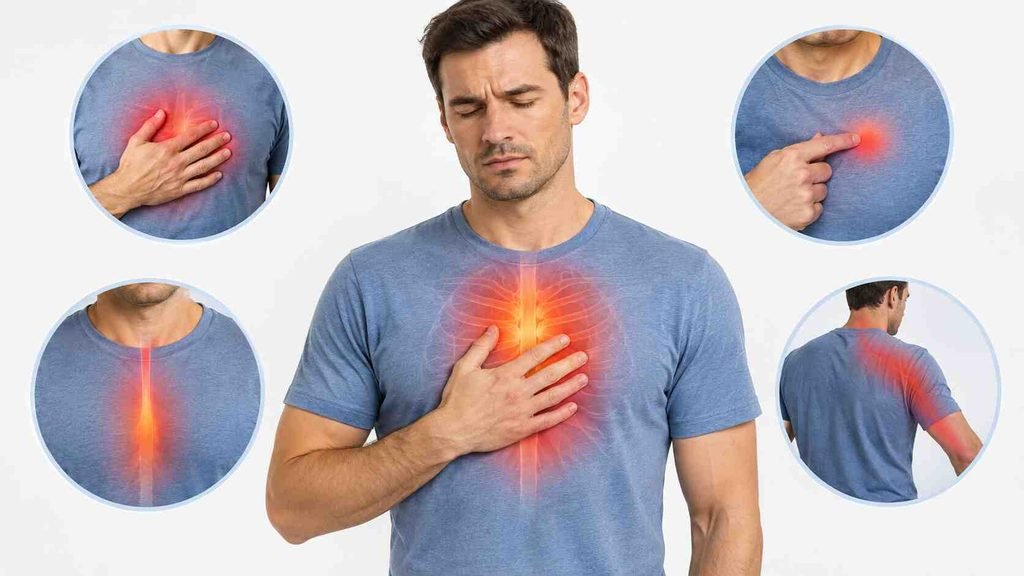
7 Types of Chest Pain and What They May Feel Like
Type 1: Pressure, Heaviness, or Squeezing
This type may feel like pressure, tightness, heaviness, squeezing, or fullness in the center or left side of the chest. These sensations can occur with heart-related conditions such as angina (reduced blood flow to the heart muscle) or a heart attack. Heart-related discomfort may also spread to the arm, shoulder, back, neck, jaw, or upper abdomen.
Not every pressure sensation means a heart attack. Muscle tension, reflux, and anxiety can also feel this way. Still, new or unexplained pressure in the chest requires medical attention, particularly if it lasts more than a few minutes, returns, or comes with other warning signs.
Type 2: Burning Chest Pain
A burning feeling behind the breastbone is often linked to acid reflux or heartburn. The National Institute of Diabetes and Digestive and Kidney Diseases explains that GERD commonly causes heartburn, and the burning may be accompanied by a sour taste or regurgitation. Irritation of the esophagus can feel similar. Some heart-related conditions can also cause burning or indigestion-like discomfort.
This overlap is why burning chest pain can be hard to sort out. Never assume burning chest pain is “just heartburn” if it is new, severe, persistent, or accompanied by other concerning symptoms. If your burning pain tends to show up after meals, see CollectedMed’s article on chest pain after eating and its guide to early signs of acid reflux.
Type 3: Sharp or Stabbing Chest Pain
Sharp or stabbing pain can have several possible causes. It may become more noticeable with deep breathing, coughing, certain movements, or lying down.
Possible causes include:
- Pleurisy (inflammation of the lining around the lungs)
- Pericarditis (inflammation of the sac around the heart)
- Chest wall irritation
- Muscle strain
- Other conditions affecting the lungs or surrounding tissues
Mayo Clinic notes that pericarditis can cause sharp chest pain that worsens with breathing or lying down, and may ease when sitting up and leaning forward. A sharp pain is not automatically harmless, so the sensation alone cannot show how serious it is.
Type 4: Chest Pain That Gets Worse When You Breathe or Cough
Doctors call pain that worsens with breathing “pleuritic” chest pain. In simple terms, it feels like a catch or stab each time you inhale deeply, cough, or sneeze. You may find yourself taking shallow breaths to avoid it.
Possible causes include respiratory infections, pleurisy, pneumonia, and other lung-related problems. Some serious conditions, such as a pulmonary embolism (a blood clot in the lungs), can also cause chest pain and difficulty breathing. Severe or unexplained symptoms should not be ignored. See also CollectedMed’s guides to shortness of breath and what causes a cough.
Type 5: Aching or Sore Chest Pain
Some chest pain feels achy, sore, bruised, or tender. It may be a dull discomfort in a specific area of the chest wall rather than deep inside the chest.
Possible causes include muscle strain, chest wall injury, repeated coughing, and costochondritis, which is inflammation of the cartilage connecting the ribs to the breastbone. Chest wall pain may become more noticeable with movement or when you press on the area.
Tenderness to the touch can be a helpful clue, but it does not rule out a heart or lung problem. If you are unsure, get checked. If a clinician has already confirmed a muscle or chest wall cause, CollectedMed’s guide on how to relieve chest pain at home covers comfort measures.
Type 6: Chest Pain That Spreads to Other Areas
Chest discomfort can sometimes radiate beyond the chest. Possible areas include:
- The left arm, right arm, or both arms
- The shoulder
- The back
- The neck
- The jaw
- The upper abdomen
Pain that spreads to the upper body is especially important when it occurs with shortness of breath, sweating, nausea, dizziness, or significant chest pressure. The American Heart Association lists these among the recognized warning signs of a possible heart attack. Sudden, severe pain in the upper back or neck also needs emergency evaluation, because it can occur with serious conditions such as aortic dissection, a tear in the body’s main artery.
Type 7: Chest Pain With Anxiety or Panic
Anxiety and panic attacks can cause real physical symptoms. These may include chest discomfort, a rapid heartbeat, fast breathing, sweating, dizziness, nausea, shortness of breath, and intense fear. The National Institute of Mental Health describes panic attacks as sudden episodes of intense fear with strong physical reactions.
Anxiety symptoms can closely resemble heart-related symptoms. Do not automatically assume chest pain is caused by anxiety, particularly when it is new or unexplained. Once a clinician has ruled out other causes, learning about panic attacks and anxiety can be a useful next step.
Chest Pain: When Should You Worry?
New, unexplained, severe, or persistent chest pain deserves prompt medical evaluation. Call your local emergency number if chest pain comes with any of the following:
- Pressure, squeezing, or severe tightness
- Pain lasting more than a few minutes, or pain that keeps returning
- Shortness of breath
- Cold sweating
- Nausea or vomiting
- Fainting or severe dizziness
- Pain spreading to the arm, shoulder, back, neck, or jaw
- Sudden, severe upper back or neck pain
- Significant difficulty breathing
These symptoms can occur with heart attacks and other serious conditions. Mayo Clinic advises seeking emergency help for sudden, severe, or unexplained chest pain lasting more than a few minutes. For related symptoms, see CollectedMed’s guides on dizziness and nausea.
How to Tell the Difference Between Chest Pain Causes
The table below shows general patterns that clinicians consider. It is not a diagnostic tool, and many conditions overlap.
| Chest Pain Pattern | Possible Cause | Typical Clues |
|---|---|---|
| Pressure or heaviness | Heart-related | May occur with exertion and may spread |
| Burning | Acid reflux or heartburn | May occur after eating or when lying down |
| Sharp pain with breathing | Lung or chest lining inflammation | Worse with deep breaths or coughing |
| Tender or sore pain | Muscle or chest wall | May worsen with movement or pressure |
| Sharp pain when lying down | Pericarditis | May improve when sitting forward |
| Chest pain with intense fear | Panic attack | May occur with rapid heartbeat, sweating, dizziness |
| Recurrent pressure with exertion | Angina | Often improves with rest, but needs medical evaluation |
Use this table to prepare for a conversation with a clinician, not to rule anything in or out. If your pain comes and goes, see CollectedMed’s article on chest pain that comes and goes. If it mostly happens after dark, see chest pain at night.
Chest Pain vs. Heart Attack Symptoms
Heart attack symptoms can include:
- Chest pressure, tightness, squeezing, or aching
- Pain or discomfort spreading to the upper body
- Shortness of breath
- Cold sweats
- Nausea
- Lightheadedness
- Unusual fatigue
Not everyone has dramatic, “crushing” chest pain. The American Heart Association notes that symptoms can be milder or less typical, particularly in women, older adults, and people with diabetes. Some people mainly notice shortness of breath, nausea, back or jaw pain, or unusual tiredness.
If you think you may be having a heart attack, do not wait for symptoms to become severe. For more detail, see CollectedMed’s guide to heart attack symptoms and its overview of diabetes symptoms.
What Should You Do if You Have Unexplained Chest Pain?
When chest pain is unexplained, take these steps:
- Stop strenuous activity.
- Sit or rest in a comfortable position.
- Do not try to diagnose the cause yourself.
- Call your local emergency number for severe, persistent, or concerning symptoms.
- Avoid driving yourself if emergency medical care is needed, unless there is no other option.
The American Heart Association recommends calling emergency medical services for suspected heart attack symptoms because they can begin care right away and arrange rapid transport. Mayo Clinic likewise recommends emergency evaluation for new or unexplained chest pain, especially when symptoms suggest a possible heart attack. Do not take medication such as aspirin unless a clinician or emergency dispatcher advises it for your situation.
How Doctors Diagnose Chest Pain
For acute chest pain, the 2021 AHA/ACC chest pain guideline focuses on quickly identifying or excluding life-threatening causes. The approach depends on your symptoms and risk factors.
Evaluation may include:
- A medical history and symptom assessment
- A physical examination
- An electrocardiogram (ECG or EKG)
- Blood tests, including cardiac troponin
- A chest X-ray
- Additional heart or lung testing when appropriate
Not everyone needs every test. If reflux is suspected after serious causes are ruled out, see CollectedMed’s article on how acid reflux is diagnosed.
When to See a Doctor for Chest Pain
Make an appointment, or seek urgent care if symptoms are concerning, for any of the following:
- New chest pain
- Recurrent chest pain
- Unexplained chest discomfort
- Chest pain that changes over time
- Chest pain during physical activity
- Chest pain with shortness of breath
- Symptoms in someone with cardiovascular risk factors, such as high blood pressure, high cholesterol, diabetes, smoking, or a family history of heart disease
Mild chest pain is not automatically safe. If you want to understand your risks, see CollectedMed’s guides on heart disease and how to prevent heart disease.
Frequently Asked Questions
What does chest pain feel like?
Chest pain can feel like pressure, tightness, squeezing, burning, sharp pain, aching, or tenderness. The sensation varies with the cause, and the feeling alone cannot reliably identify it. Mayo Clinic lists many possible causes, from the heart and lungs to the digestive system and chest wall.
What does heart-related chest pain feel like?
It is often described as pressure, heaviness, squeezing, tightness, or aching in the center or left side of the chest. It may spread to the arm, shoulder, back, neck, jaw, or upper abdomen, and may come with shortness of breath, sweating, or nausea. Symptoms can differ from person to person, according to the American Heart Association.
Can chest pain be sharp and still be serious?
Yes. Some serious conditions, including pericarditis and pulmonary embolism, can cause sharp chest pain. Because sharpness alone cannot determine severity, sudden, severe, or unexplained sharp pain should be evaluated promptly.
How do I know if chest pain is heartburn or a heart problem?
You often cannot tell by feel alone, because the symptoms overlap. Heartburn is typically a burning sensation, sometimes with a sour taste, while heart-related pain is often pressure or squeezing, but exceptions are common. New or unexplained chest pain should not automatically be blamed on heartburn, and relief after an antacid does not prove the cause. See CollectedMed’s guide on whether acid reflux is serious.
Can anxiety cause chest pain?
Yes. Anxiety and panic can cause chest discomfort, a racing heart, and other physical symptoms, as described by the National Institute of Mental Health. However, new chest pain should not be assumed to be anxiety until a clinician has considered other causes.
When should I go to the emergency room for chest pain?
Call your local emergency number for chest pressure, squeezing, or tightness; pain lasting more than a few minutes; pain spreading to the arm, back, neck, or jaw; shortness of breath; cold sweats; nausea; fainting; or severe dizziness. These are recognized heart attack warning signs.
Can chest pain go away and still be serious?
Yes. Pain that improves or comes and goes can still need medical assessment, depending on the pattern and any other symptoms. Angina, for example, often eases with rest but still requires evaluation, according to Mayo Clinic.
Conclusion
Chest pain can feel very different from person to person. Pressure, squeezing, burning, sharp, aching, and tender sensations can each have different causes, but the sensation alone cannot reliably show what is going on.
New, unexplained, severe, persistent, or concerning chest pain should be medically evaluated. Symptoms that suggest a heart attack or another emergency require immediate help, so call your local emergency number rather than waiting.
Sources
- Mayo Clinic. Chest pain: Symptoms and causes
- Mayo Clinic. Angina: Symptoms and causes
- Mayo Clinic. Pericarditis: Symptoms and causes
- Mayo Clinic. Pleurisy: Symptoms and causes
- Mayo Clinic. Costochondritis: Symptoms and causes
- Mayo Clinic. Pulmonary embolism: Symptoms and causes
- Mayo Clinic. Aortic dissection: Symptoms and causes
- American Heart Association. Warning signs of a heart attack
- American Heart Association. Heart attack symptoms in women
- Gulati M, et al. 2021 AHA/ACC guideline for the evaluation and diagnosis of chest pain. Circulation.
- National Institute of Diabetes and Digestive and Kidney Diseases. Symptoms and causes of acid reflux (GER and GERD) in adults
- National Institute of Mental Health. Panic disorder
This article is for educational purposes only and does not replace professional medical advice, diagnosis, or treatment. Chest pain can have many causes, and some are serious. New, unexplained, severe, or persistent chest pain may require emergency medical attention. If you think you are having a medical emergency, call your local emergency number right away.
1 thought on “What Does Chest Pain Feel Like? 7 Types & When to Worry”
Comments are closed.