
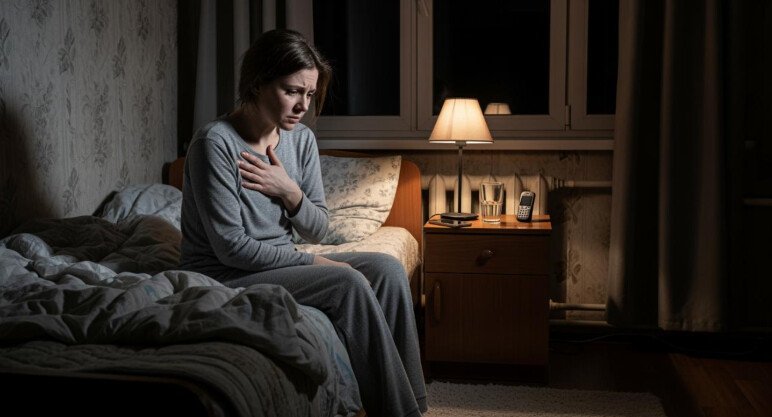

Waking up with chest pain can be frightening. In the quiet of the night, it is natural to wonder whether it is something minor or something serious. Many people also notice discomfort only when they lie down, which can add to the worry.
Chest pain at night has many possible causes, from acid reflux and muscle pain to heart or lung conditions. Lying down can make some digestive symptoms, especially reflux, more noticeable. At the same time, some serious heart conditions can cause symptoms while a person is resting or sleeping, so it is not safe to assume that nighttime chest pain is simply heartburn or indigestion.
This guide explains what nighttime chest pain can feel like, seven common causes, and why symptoms can seem worse after dark. It also covers the warning signs that call for emergency care. New or unexplained chest pain should be taken seriously, because potentially life-threatening heart and lung conditions can present with chest discomfort.
Quick answer: Chest pain at night can have several causes, including acid reflux, heart-related conditions, anxiety, chest wall pain, pericarditis, lung conditions, and esophageal problems. Lying down may worsen acid reflux, but nighttime chest pain should not automatically be assumed to be heartburn. Sudden, severe, persistent, or unexplained chest pain, especially with shortness of breath, sweating, nausea, dizziness, or pain spreading to the arm, back, neck, or jaw, requires urgent medical attention.
What Does Chest Pain at Night Feel Like?
Nighttime chest pain does not feel the same for everyone. The sensation often depends on the cause, but the description alone cannot tell you what is happening.
Common descriptions
People commonly describe nighttime chest pain as:
- Pressure or heaviness
- Tightness or squeezing
- Burning
- Sharp or stabbing pain
- Aching or soreness
- General chest discomfort or fullness
- Pain that comes and goes
- Pain that becomes noticeable when lying down
- Pain that wakes them from sleep
Where can nighttime chest pain occur?
Discomfort may be felt in the center of the chest, on the left or right side, or behind the breastbone. It can also show up in the upper abdomen, shoulder, arm, back, neck, or jaw.
The American Heart Association notes that heart-related discomfort can extend beyond the chest to the arms, back, neck, jaw, or upper abdomen. For a broader overview, see our guide on what causes chest pain.
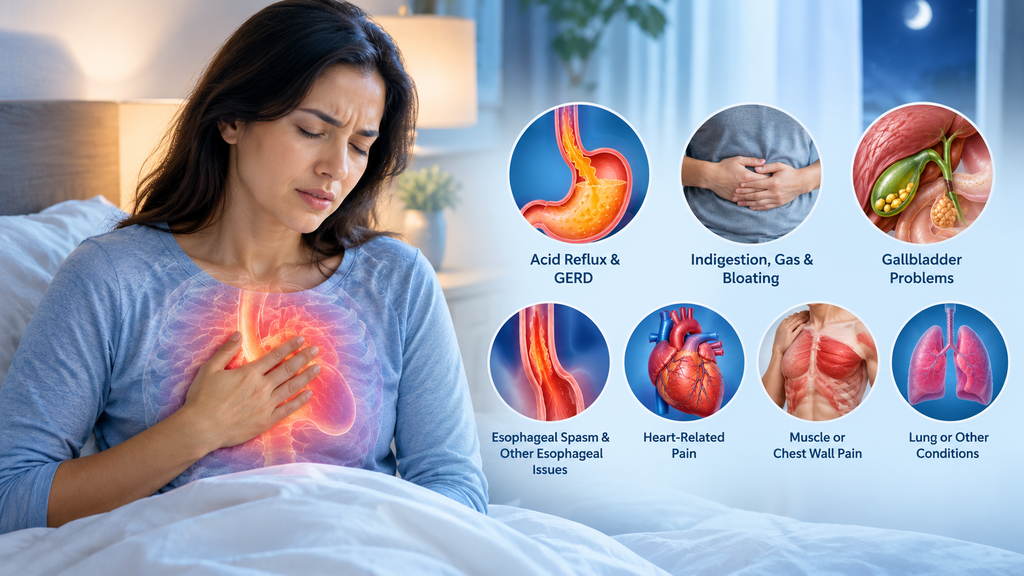
7 Common Causes of Chest Pain at Night
1. Acid Reflux and GERD
Gastroesophageal reflux disease (GERD) is one common reason chest discomfort becomes noticeable at night. Stomach contents can move upward into the esophagus, and symptoms may get worse when you lie down.
Typical features include:
- Burning behind the breastbone
- A sour or bitter taste in the mouth
- Regurgitation
- Symptoms after a late or large meal
- Sleep disruption from nighttime reflux
The NIDDK notes that eating meals at least three hours before lying down or going to bed may help people with nighttime GERD symptoms. This applies to reflux that has been confirmed or strongly suspected, not to unexplained chest pain.
To learn more, see our guides on early signs of acid reflux, acid reflux treatment options, and chest pain after eating.
2. Heart-Related Chest Pain, Angina, or Heart Attack
This is one of the most important causes to understand. Heart-related chest pain can occur at rest, not only during exercise.
Angina may feel like pressure, tightness, squeezing, heaviness, or aching. A heart attack can cause chest discomfort that lasts more than a few minutes or comes and goes. Symptoms can be mild or mistaken for indigestion or heartburn, so nighttime chest pain should not automatically be blamed on reflux.
Possible associated symptoms include:
- Shortness of breath
- Sweating
- Nausea
- Dizziness or lightheadedness
- Unusual fatigue
- Pain or discomfort in the arm, shoulder, back, neck, jaw, or upper abdomen
The American Heart Association’s professional guidance stresses that acute coronary syndrome requires immediate medical attention. Our guides on heart attack symptoms, high blood pressure, and high cholesterol cover related risk factors.
3. Pericarditis
Pericarditis is inflammation of the tissue surrounding the heart. It can cause sharp chest pain, and positional pain can be an important clue.
Mayo Clinic notes that pericarditis commonly causes sharp chest pain that can worsen when lying down or taking a deep breath. Coughing may also make it worse. Sitting up or leaning forward sometimes eases the pain.
Because pericarditis can look like other heart and lung problems, it needs a medical evaluation.
4. Anxiety or Panic Attacks
Anxiety can feel stronger at night, when there are fewer distractions. Panic attacks can cause chest tightness or pain, and Mayo Clinic lists several other physical symptoms that may come with them:
- Rapid heartbeat
- Sweating and trembling
- Shortness of breath
- Dizziness
- A feeling of impending danger
Stress and anxiety can also make a person more aware of normal body sensations. Still, anxiety should not be assumed to be the cause of new chest pain until serious causes have been considered. You can read more in our guides to what anxiety is and panic attacks.
5. Muscle Strain or Chest Wall Pain
Pain from the muscles, ribs, and cartilage of the chest wall can also appear at night. Possible contributors include:
- Recent exercise or weight lifting
- Repetitive upper-body movement
- Coughing
- A minor injury
- A poor sleeping position
- Costochondritis, which is inflammation of the cartilage connecting the ribs to the breastbone
Clues can include localized soreness, pain with certain movements, tenderness when touching the area, or pain that changes with body position. However, these patterns cannot reliably rule out a serious cause.
6. Lung and Breathing-Related Conditions
Several lung conditions can cause chest pain, including pleurisy, pneumonia, and pulmonary embolism. These are less common causes than reflux or muscle pain, but they matter because some are emergencies.
Possible associated symptoms include:
- Shortness of breath
- Pain that worsens with breathing
- Cough
- Fever
- Rapid heartbeat
- Coughing up blood in some serious conditions
Pulmonary embolism and other serious lung conditions can produce chest pain that may resemble heart-related symptoms. If chest pain comes with sudden breathing difficulty, seek emergency care. See our guide to shortness of breath for more.
7. Esophageal Spasm and Other Digestive Causes
Esophageal problems can produce chest pain that feels similar to heart pain. Esophageal spasms can cause squeezing or pressure-like chest discomfort. Difficulty or pain when swallowing may be an important clue. Large meals and nighttime reflux can overlap with these symptoms.
Gallbladder or pancreatic conditions can also sometimes cause upper abdominal pain that spreads toward the chest. For related reading, see abdominal pain at night and common digestive problems.
Why Does Chest Pain Get Worse at Night?
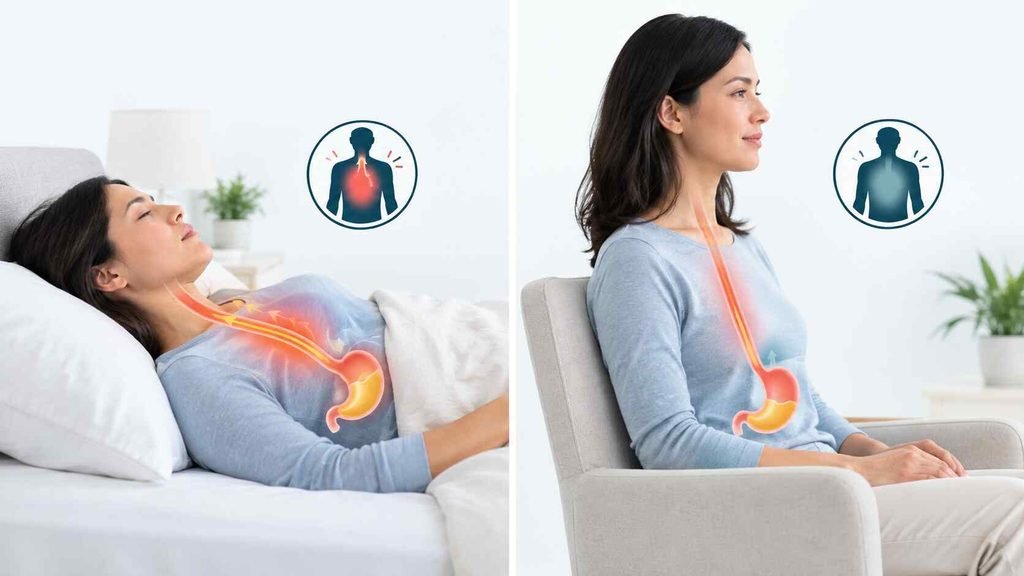
Several factors may explain why symptoms seem stronger at night. The timing of pain is a clue, not a diagnosis.
- Lying down: This can make acid reflux easier to occur. It can also make some positional conditions, such as pericarditis, more painful.
- Eating late at night: A late meal can contribute to nighttime reflux. Large or high-fat meals may worsen symptoms in some people.
- Resting instead of being distracted: Anxiety and awareness of physical sensations may become more noticeable when the day quiets down.
- Symptoms at rest: Some heart-related conditions can cause symptoms even when a person is resting.
Because these explanations overlap, do not use the time of day to decide whether pain is harmless.
Chest Pain at Night vs. Heartburn: How Are They Different?
The table below shows general patterns. It cannot tell you which one you have.
| Feature | More suggestive of heartburn or reflux | More concerning for heart-related pain |
|---|---|---|
| Sensation | Burning behind the breastbone | Pressure, squeezing, tightness, heaviness |
| Timing | Often after eating or lying down | Can occur with activity or at rest |
| Taste | Sour or bitter taste may occur | Usually absent |
| Regurgitation | Common | Usually absent |
| Spreading pain | Less typical | Arm, shoulder, back, neck, or jaw |
| Breathing difficulty | Not typical | Can occur |
| Sweating | Not typical | Cold sweating can occur |
| Nausea | Possible | Possible |
| Response to position | May worsen lying down | Not reliably position-dependent |
Important caveat: Heartburn and heart-related chest pain can feel very similar, and symptoms alone may not reliably tell them apart. Mayo Clinic notes that heartburn can feel like chest pain from a heart problem.
When Is Chest Pain at Night an Emergency?
Do not wait to see whether it passes. Call 911 or your local emergency number right away if chest pain:
- Is sudden or severe
- Is new or unexplained
- Lasts more than a few minutes
- Goes away and returns
- Feels like pressure, squeezing, tightness, or heaviness
- Spreads to the arm, shoulder, back, neck, jaw, or upper abdomen
- Occurs with shortness of breath
- Occurs with cold sweating
- Causes nausea or vomiting
- Causes dizziness or fainting
- Occurs with a rapid or irregular heartbeat
- Occurs with severe weakness or unusual fatigue
Also seek emergency help for sudden difficulty breathing, or for chest pain with possible blood clot symptoms, such as leg swelling or pain along with shortness of breath.
The American Heart Association advises calling for emergency help for heart attack warning signs, and Mayo Clinic recommends emergency evaluation for sudden, severe, or unexplained chest pain. If you are unsure whether it is heartburn or a heart problem, do not simply “wait and see.” Persistent or unexplained chest pain warrants medical evaluation.
When Should You See a Doctor About Chest Pain at Night?
Not every case is an emergency, but many still need a visit. Make an appointment if:
- Nighttime chest pain keeps recurring
- Symptoms are becoming more frequent or severe
- Pain repeatedly wakes you from sleep
- Chest discomfort has no obvious explanation
- You have frequent nighttime heartburn
- You have difficulty swallowing or food feels stuck
- You have persistent nausea or vomiting
- You have unexplained weight loss
- You have cardiovascular risk factors
- Symptoms occur during physical activity as well as at night
Frequent or severe GERD symptoms, trouble swallowing, persistent nausea or vomiting, and unexplained weight loss are all reasons to seek medical care.
How Is Chest Pain at Night Diagnosed?
Diagnosis depends on your symptoms and risk factors. There is no single test that is right for every person with nighttime chest pain.
A clinician will usually start with a medical history, including how the pain feels, when it occurs, and how long it lasts. A physical examination and vital signs, such as blood pressure, are typically included.
Depending on the situation, evaluation may include:
- ECG or EKG
- Blood tests, including cardiac biomarkers when appropriate
- Chest X-ray
- Echocardiogram or other cardiac testing when indicated
- Stress testing or coronary imaging when appropriate
- Gastrointestinal testing, such as endoscopy, when indicated
- Additional lung or abdominal testing based on symptoms
For acute chest pain, evaluation focuses first on identifying or excluding life-threatening causes, as described in the 2021 AHA/ACC chest pain guideline.
What Can You Do to Reduce Nighttime Chest Discomfort?
These steps apply only after serious causes have been addressed by a healthcare professional. They are not treatments for unexplained chest pain, and home remedies should not replace an evaluation.
For possible reflux-related symptoms
- Avoid eating immediately before bed
- Consider finishing meals at least three hours before lying down, if advised for nighttime GERD
- Identify foods that trigger your symptoms
- Avoid large meals close to bedtime
- Follow any prescribed GERD treatment
- Discuss persistent symptoms with a healthcare professional
The NIDDK specifically notes that eating at least three hours before lying down may improve nighttime GERD symptoms. For more, see how to manage acid reflux at home.
For musculoskeletal discomfort
- Avoid activities that aggravate the pain
- Allow appropriate recovery after exercise
- Seek medical advice if the pain persists or its cause is unclear
If stress is a factor, our guide on how to reduce stress may help, and how to improve sleep offers general sleep tips.
Frequently Asked Questions About Chest Pain at Night
Why does my chest hurt only at night?
Possible causes include acid reflux, heart-related conditions, anxiety, chest wall pain, pericarditis, and lung or esophageal problems. The nighttime pattern alone cannot identify the cause, so a healthcare professional should evaluate recurring symptoms.
Can acid reflux cause chest pain at night?
Yes. Reflux-related burning in the chest often becomes worse after eating, when lying down, or in the evening. The NIDDK describes heartburn as a common symptom of GER and GERD.
Can a heart attack happen while sleeping?
Yes. Heart attacks can occur at rest, including during sleep. Do not dismiss new nighttime chest pain as indigestion just because it happens while you are lying down.
How can I tell if nighttime chest pain is heartburn or my heart?
Symptoms can overlap substantially. Pressure, squeezing, spreading pain, shortness of breath, sweating, nausea, or dizziness are particularly concerning. Even so, symptom patterns alone cannot reliably rule out a heart problem, as Mayo Clinic explains.
Should I go to the ER for chest pain at night?
Go to the ER or call 911 for sudden, severe, persistent, or unexplained chest pain. This is especially important with breathing difficulty, sweating, nausea, dizziness, fainting, or pain spreading to the arm, back, neck, or jaw. See the Mayo Clinic guidance.
Why does chest pain get worse when I lie down?
Lying down can worsen acid reflux, and it can aggravate conditions such as pericarditis. The underlying cause determines what the pain means, so positional pain should be evaluated if it keeps happening.
Can anxiety cause chest pain at night?
Yes. Anxiety and panic can cause chest discomfort, rapid heartbeat, shortness of breath, sweating, and other physical symptoms. However, new or unexplained chest pain should not automatically be attributed to anxiety.
Can sleeping position cause chest pain?
A sleeping position may contribute to muscle or chest wall discomfort in some people. Even so, persistent or unexplained chest pain should be medically assessed rather than blamed on sleeping position alone.
Key Takeaways
- Chest pain at night has many possible causes.
- GERD and heartburn can become worse when lying down.
- Heart-related chest pain can also occur at rest or during the night.
- Pericarditis, anxiety, chest wall pain, lung conditions, and esophageal problems are other possibilities.
- Nighttime timing alone cannot determine the cause.
- Sudden, severe, persistent, or unexplained chest pain requires urgent medical attention, especially with shortness of breath, sweating, nausea, dizziness, fainting, or spreading pain.
Sources
- Mayo Clinic. Chest pain
- American Heart Association. Warning signs of a heart attack
- American Heart Association Professional Heart Daily. Guidelines and statements
- Gulati M, et al. 2021 AHA/ACC/ASE/CHEST/SAEM/SCCT/SCMR Guideline for the Evaluation and Diagnosis of Chest Pain. Circulation.
- NIDDK (NIH). Acid reflux (GER and GERD) in adults
- Mayo Clinic. Gastroesophageal reflux disease (GERD)
- Mayo Clinic. Heartburn
- Mayo Clinic. Angina
- Mayo Clinic. Pericarditis
- Mayo Clinic. Panic attacks and panic disorder
- Mayo Clinic. Costochondritis
- Mayo Clinic. Pleurisy
- Mayo Clinic. Diffuse esophageal spasm
- MedlinePlus (NIH). Pulmonary embolism
Medical Disclaimer: This article is for general information and education only. It is not medical advice, and it does not diagnose, treat, or prevent any condition. Chest pain can be a sign of a serious or life-threatening problem. If you have sudden, severe, or unexplained chest pain, or you think you may be having a heart attack, call 911 or your local emergency number right away. For any health concern, talk with a qualified healthcare professional who can consider your personal history and needs. Never delay or ignore medical care because of something you read here.
1 thought on “Chest Pain at Night: Causes, Symptoms & When to Seek Help”
Comments are closed.