
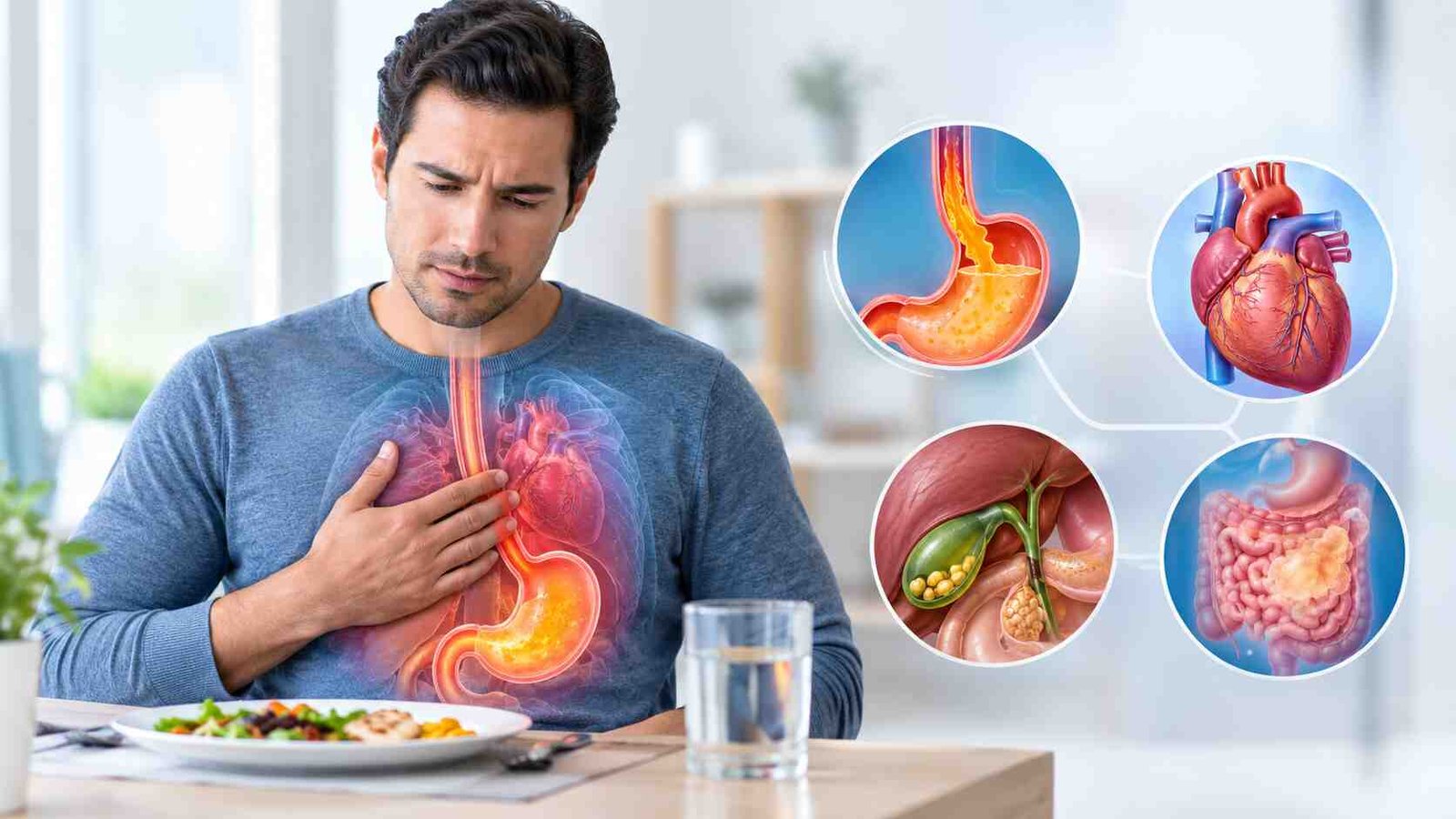

Chest pain after a meal can be uncomfortable and worrying. Many people assume it is heartburn, and that is often a reasonable first thought. Acid reflux is a common explanation, particularly when symptoms start after eating or get worse when lying down.
However, not all post-meal chest pain is digestive. Heart problems, gallbladder disease, esophageal disorders, and other conditions can produce similar symptoms. Mayo Clinic notes that heart attack symptoms can include indigestion, heartburn, nausea, and upper abdominal discomfort, so a meal does not rule out a heart problem.
This guide covers seven possible causes of chest pain after eating, how to compare heartburn with more serious warning signs, and when to get urgent help. It is general information, not a diagnosis. If you are not sure what your symptoms mean, a healthcare professional can help you find out.
Quick answer: Chest pain after eating is often related to acid reflux or heartburn, but it can also result from gas, gallbladder problems, esophageal disorders, muscle pain, or heart conditions. Because heartburn and heart-related chest pain can feel similar, new, severe, persistent, or unexplained chest pain should not be self-diagnosed. Call 911 for sudden or severe pain, or pain with shortness of breath, sweating, nausea, dizziness, or spreading to the arm, back, neck, or jaw.
Why Can Chest Pain Happen After Eating?
Eating puts the digestive system to work, and several organs sit close to the heart and lungs. That is why digestive discomfort can be felt in the chest. At the same time, eating is only one possible trigger, and timing alone does not tell you the cause.
Digestive causes
A meal can change what happens in the upper digestive tract. Eating can:
- Increase the amount of stomach contents and the pressure inside the stomach
- Trigger acid reflux
- Make heartburn worse
- Prompt the gallbladder to contract, particularly after a fatty meal
- Cause bloating or gas that may be felt in the upper abdomen or chest
Mayo Clinic explains that gastroesophageal reflux disease (GERD) symptoms commonly occur after eating and may worsen when lying down or bending over. For a broader look at digestion-related symptoms, see our guide to common digestive problems.
Why eating does not rule out a heart problem
Some heart-related symptoms are mistaken for indigestion or heartburn. If chest pain follows a meal, it is easy to blame the food. But a meal does not make heart-related chest pain impossible.
Do not assume that chest pain after eating is automatically caused by what you ate. Our broader guide on what causes chest pain explains how many different conditions can overlap.
7 Common Causes of Chest Pain After Eating
1. Acid Reflux and GERD
Acid reflux happens when stomach contents move back up into the esophagus. This can cause burning chest discomfort known as heartburn. Symptoms often show up after eating, and large meals can make them more noticeable. Lying down or bending over soon after a meal may make them worse.
Common clues include:
- Burning behind the breastbone
- A sour or acidic taste
- Food or liquid coming back up into the throat
- Burping
- Symptoms after meals
- Worse symptoms when lying down
GERD can also cause upper abdominal or chest pain and difficulty swallowing. These clues can suggest reflux, but they cannot confirm it.
For more detail, see our guides on early signs of acid reflux, acid reflux risk factors, and how acid reflux is diagnosed.
2. Indigestion, Gas, or Bloating
Digestive discomfort is sometimes felt in the upper abdomen and chest. Indigestion can cause fullness, bloating, and discomfort during or after a meal.
Possible triggers include:
- Eating too quickly
- Large meals
- Carbonated drinks
- Certain foods
- Excess gas
- Food intolerance
Gas or indigestion may explain mild, temporary discomfort. But unexplained chest pressure or significant chest pain should not automatically be attributed to gas.
3. Gallbladder Problems or Gallstones
Gallbladder attacks can occur after eating, especially after a fatty meal. Mayo Clinic notes that gallstones can cause sudden, intense pain in the upper right or upper middle abdomen. The pain may spread to the back or the right shoulder.
Other possible symptoms include:
- Nausea or vomiting
- Pain that begins or worsens after meals
- Discomfort that may sometimes be felt toward the chest
Seek medical evaluation if you have fever, persistent severe pain, yellowing of the skin or eyes (jaundice), repeated vomiting, or symptoms that are getting worse. The NIDDK provides additional patient information on gallstones.
4. Esophageal Spasm or Other Esophageal Problems
The esophagus can produce chest pain that resembles heart-related discomfort. In esophageal spasm, the muscles of the esophagus contract in an uncoordinated or forceful way.
Possible signs include:
- Squeezing chest pain
- Difficulty or pain with swallowing
- A feeling that food is stuck in the throat or chest
- Chest discomfort after swallowing
MedlinePlus lists esophageal disorders among the recognized causes of chest pain. They can be hard to tell apart from heart pain based on symptoms alone, so testing is often needed.
5. Heart-Related Chest Pain
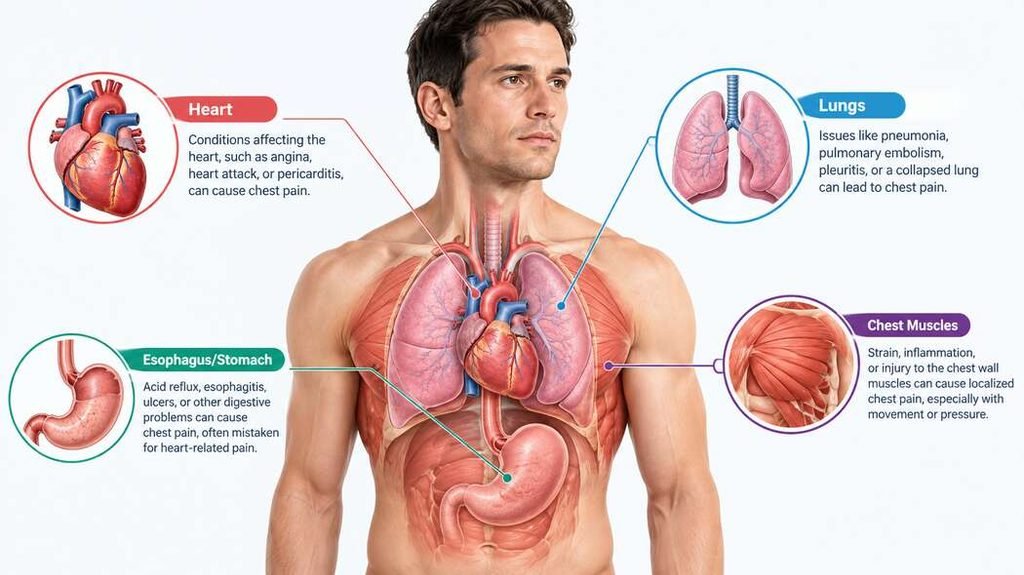
This cause deserves special attention, even though this article focuses on symptoms after eating. Angina can cause pressure, tightness, squeezing, or discomfort in the chest. A heart attack can also cause chest discomfort. Both can be mistaken for indigestion or heartburn.
Potential warning symptoms include:
- Pressure, squeezing, tightness, or heaviness in the chest
- Pain spreading to the arm, shoulder, back, neck, jaw, or upper abdomen
- Shortness of breath
- Sweating
- Nausea
- Dizziness or lightheadedness
- Unusual fatigue
Heart attack symptoms can be mild or variable. Do not wait for severe “classic” chest pain before seeking help. You can read more in our guide to heart attack symptoms and learn about the underlying risk factors in our articles on high blood pressure and high cholesterol.
6. Muscle or Chest Wall Pain
Sometimes the timing is a coincidence. Chest discomfort that happens to occur after a meal may come from the muscles, ribs, or cartilage of the chest wall. Possible causes include:
- Muscle strain
- Recent exercise
- Heavy lifting
- Persistent coughing
- Chest wall inflammation, such as costochondritis
Clues that point toward a chest wall source include localized tenderness, pain that changes with movement, and pain that can be reproduced by pressing on the area. Still, symptom patterns alone cannot safely rule out a serious cause of chest pain, as Mayo Clinic cautions.
7. Other Causes, Including Lung or Pancreatic Conditions
Several other conditions can cause pain felt in the chest. These are less common, but worth knowing about:
- Pneumonia or pleurisy: may cause chest pain that worsens with breathing or coughing, sometimes with fever
- Pulmonary embolism: a blood clot in the lung that can cause sudden shortness of breath and chest pain; it can be life-threatening
- Pancreatitis: inflammation of the pancreas that can cause severe upper abdominal pain, sometimes after eating; see the NIDDK overview
- Other upper abdominal conditions: these can refer pain toward the chest
Warning signs for these conditions include breathing difficulty, fever, severe abdominal pain, or pain that worsens with breathing. Our guide to shortness of breath explains why that symptom needs attention.
How to Tell if Chest Pain After Eating Is Heartburn or Something More Serious
The table below shows general patterns. It is meant to help you understand why the question is hard, not to help you decide on your own.
| Feature | More consistent with heartburn | Potentially concerning for heart-related pain |
|---|---|---|
| Sensation | Burning | Pressure, squeezing, tightness, aching |
| Timing | Often after eating | Can occur after exertion or at rest |
| Position | May worsen lying down or bending over | Not necessarily related to position |
| Taste | Sour or acidic taste may occur | Usually absent |
| Spread | Usually localized | May spread to the arm, jaw, back, neck, or shoulder |
| Other symptoms | Regurgitation, burping | Shortness of breath, sweating, nausea, dizziness |
| Certainty | Symptoms can suggest reflux | Symptoms require medical assessment when concerning |
Key message: There is substantial overlap between heartburn and heart-related chest pain. Even experienced clinicians may need testing to tell them apart. Mayo Clinic notes that heartburn can feel like chest pain from a heart problem, which is why unexplained or persistent chest pain deserves a medical evaluation.
When Should You Worry About Chest Pain After Eating?
Seek emergency medical help if chest pain is:
- Sudden or severe
- Persistent or unexplained
- Associated with shortness of breath
- Accompanied by cold sweating
- Associated with nausea or vomiting
- Accompanied by dizziness or fainting
- Associated with unusual weakness
- Spreading to the arm, shoulder, back, neck, jaw, or upper abdomen
- Associated with a rapid or irregular heartbeat
The American Heart Association recommends taking chest discomfort and related heart attack symptoms seriously and calling for emergency help rather than trying to work out the cause at home.
Emergency callout: If you have unexplained chest pain right now, especially with shortness of breath, sweating, nausea, dizziness, fainting, or pain spreading to your arm, back, neck, or jaw, call 911 or your local emergency number immediately. Do not drive yourself.
Chest Pain After Eating: When to See a Doctor
Not every episode needs emergency care. Still, schedule a medical evaluation if:
- Chest pain repeatedly occurs after meals
- Heartburn occurs frequently
- Symptoms are becoming more frequent or more severe
- Over-the-counter heartburn treatments are not helping
- You have difficulty swallowing
- Food feels stuck when you swallow
- You have unexplained weight loss
- You have persistent nausea or vomiting
- You have cardiovascular risk factors, such as high blood pressure, high cholesterol, diabetes, or smoking
- The cause of your chest pain is unclear
Frequent heartburn or persistent symptoms can warrant evaluation for GERD or another underlying condition, according to Mayo Clinic.
What Can Trigger Chest Pain After Eating?
Triggers differ from person to person. Learning your own pattern can help when you talk with a clinician.
Possible food-related triggers
- Large meals
- High-fat meals
- Spicy foods
- Acidic foods
- Chocolate
- Caffeinated drinks
- Carbonated beverages
- Alcohol
These foods do not affect everyone the same way. Avoid cutting foods out unnecessarily unless you notice a consistent link between a specific food and your symptoms.
Lifestyle triggers
- Lying down soon after eating
- Eating close to bedtime
- Eating very large portions
- Smoking
- Certain medications
MedlinePlus notes that lying down soon after eating can make reflux symptoms worse. Our guide to acid reflux treatment options offers more background on managing reflux.
How Is Chest Pain After Eating Diagnosed?
Diagnosis depends on your symptoms, medical history, and risk factors. Chest pain that may be cardiac can require urgent testing, so the first goal is often to rule out dangerous causes.
Medical history
A clinician may ask:
- What did you eat?
- How soon after eating did the symptoms begin?
- Where is the pain, and what does it feel like?
- How long does it last?
- Does it happen repeatedly?
- Does lying down make it worse?
- Do you have breathing problems, sweating, nausea, or dizziness?
Possible tests
Depending on the suspected cause, your care team may use:
- ECG or EKG to check the heart’s electrical activity
- Blood tests, including cardiac markers when appropriate
- Chest X-ray
- Upper GI endoscopy to look at the esophagus and stomach
- Abdominal ultrasound, often used to look for gallstones
- Other cardiac or digestive tests
Testing is individualized. Not everyone needs every test.
What Can You Do to Reduce Meal-Related Chest Discomfort?
The steps below apply only to symptoms that a healthcare professional has already evaluated and found consistent with reflux or another non-emergency cause. They are not a way to treat unexplained chest pain.
- Eat smaller meals
- Avoid lying down soon after eating
- Identify your individual food triggers
- Avoid eating right before bedtime
- Maintain a healthy weight where appropriate
- Follow any prescribed GERD treatment
- Avoid smoking
For more ideas, see how to manage acid reflux at home and living with acid reflux. Ongoing stress can also affect how people notice digestive symptoms; our article on what anxiety is may be helpful if worry is part of the picture.
Frequently Asked Questions About Chest Pain After Eating
Why does my chest hurt after I eat?
Reflux and heartburn are common causes. Gallbladder problems, esophageal conditions, muscle pain, and heart-related conditions are also possible. Because the cause cannot be determined from symptoms alone, new or unexplained pain should be checked by a healthcare professional.
Can acid reflux cause chest pain?
Yes. Acid reflux can cause burning chest pain, known as heartburn, especially after eating. Mayo Clinic describes heartburn as a burning pain in the chest, usually behind the breastbone, that often occurs after eating.
Can gas cause chest pain?
Gas and bloating can cause upper abdominal discomfort that may be felt around the chest. However, unexplained chest pain should not automatically be blamed on gas.
Can gallstones cause chest pain after eating?
Gallstones can cause pain after meals, especially fatty meals. The discomfort may sometimes spread beyond the upper abdomen, including toward the back or shoulder, according to Mayo Clinic.
How do I know if chest pain after eating is a heart attack?
You cannot reliably tell based on symptoms alone. Concerning signs include chest pressure or tightness, shortness of breath, sweating, nausea, dizziness, or pain spreading to the arm, back, neck, jaw, or upper abdomen. If you are unsure, call 911. See the AHA warning signs.
Should I worry about chest pain after every meal?
Repeated chest pain after meals should be evaluated, especially if it is new, getting worse, unexplained, or paired with other symptoms. A clinician can look for treatable causes and rule out serious ones.
Can overeating cause chest pain?
A large meal can increase reflux, bloating, and digestive discomfort. Even so, persistent or significant chest pain should not automatically be blamed on overeating.
When should I go to the ER for chest pain after eating?
Go to the ER or call 911 if the pain is sudden, severe, persistent, or unexplained, or if it comes with shortness of breath, cold sweats, nausea, dizziness, fainting, or spreading pain to the arm, back, neck, or jaw. Persistent or unexplained chest pain should receive urgent medical attention, as Mayo Clinic advises.
Key Takeaways
- Heartburn and acid reflux are common causes of chest pain after eating.
- Gallbladder problems, esophageal disorders, gas, and muscle-related pain can also cause discomfort.
- Heart-related chest pain can sometimes feel like indigestion or heartburn.
- Chest pain with shortness of breath, sweating, nausea, dizziness, fainting, or pain spreading to the upper body requires urgent medical attention.
- Do not assume that chest pain after a meal is simply “gas” or “heartburn.”
- Recurrent post-meal chest pain should be discussed with a healthcare professional.
Sources
- Mayo Clinic. Heart attack: symptoms and causes
- Mayo Clinic. Chest pain
- Mayo Clinic. Gastroesophageal reflux disease (GERD)
- Mayo Clinic. Heartburn
- Mayo Clinic. Indigestion
- Mayo Clinic. Gallstones
- Mayo Clinic. Diffuse esophageal spasm
- Mayo Clinic. Angina
- Mayo Clinic. Costochondritis
- American Heart Association. Warning signs of a heart attack
- MedlinePlus (NIH). Chest pain
- MedlinePlus (NIH). Heartburn
- MedlinePlus (NIH). Pulmonary embolism
- NIDDK (NIH). Gallstones
- NIDDK (NIH). Pancreatitis
- NIDDK (NIH). Upper GI endoscopy
Medical Disclaimer: This article is for general information and education only. It is not medical advice, and it does not diagnose, treat, or prevent any condition. Chest pain can be a sign of a serious or life-threatening problem. If you have sudden, severe, or unexplained chest pain, or you think you may be having a heart attack, call 911 or your local emergency number right away. For any health concern, talk with a qualified healthcare professional who can consider your personal history and needs. Never delay or ignore medical care because of something you read here.
3 thoughts on “Chest Pain After Eating? 7 Common Causes & When to Worry”
Comments are closed.