
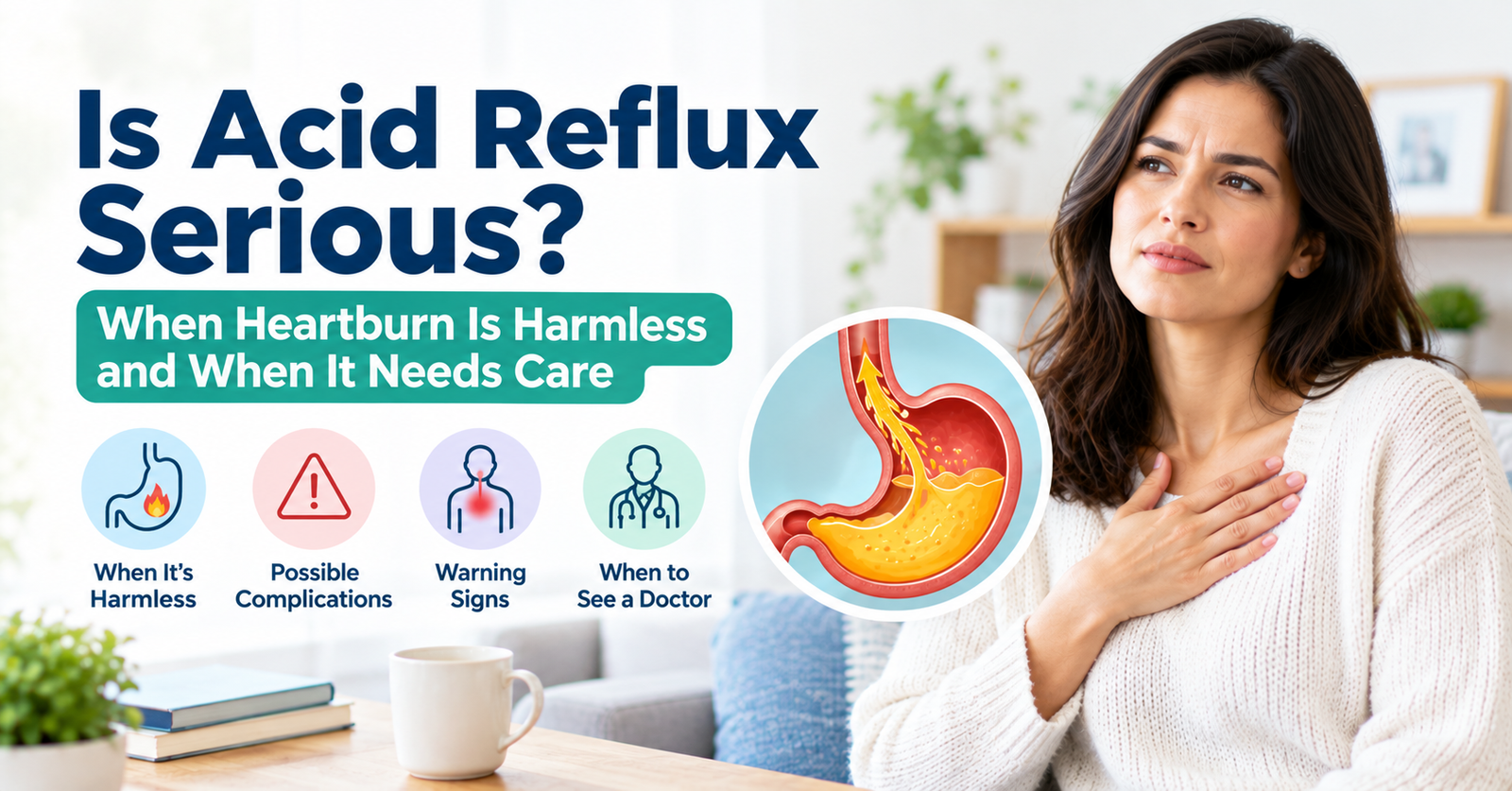

Heartburn after a big meal feels awful. When it keeps happening, many people start to worry. They ask: is acid reflux serious, or is it just an annoying part of life?
The honest answer is that it depends. Occasional reflux is common and usually harmless. Frequent, untreated reflux can cause real damage over time. This guide explains the difference, the complications to watch for, and the warning signs that need a doctor. Reflux ranks among the most common health issues adults face, and most people manage it well with the right care.
Is Acid Reflux Serious? The Short Answer
For most people, acid reflux is not dangerous. It causes discomfort, not lasting harm. About 20% of U.S. adults have gastroesophageal reflux disease (GERD), the long-lasting form of reflux. Most of them control their symptoms with treatment.
Reflux becomes more serious when it happens often, lasts for years, or comes with warning signs. Here is a quick summary:
- Occasional reflux: Usually harmless and easy to manage.
- Frequent reflux (GERD): Manageable, but it needs attention.
- Long-term, untreated GERD: Can cause complications in some people.
- Warning signs: Trouble swallowing, weight loss, or bleeding need prompt medical care.
Occasional Reflux vs. GERD
Everyone has reflux now and then. A ring of muscle called the lower esophageal sphincter (LES) sits between your esophagus and stomach. It works like a valve. It opens to let food in, then closes to keep stomach contents down.
Sometimes the valve relaxes at the wrong moment. Stomach acid then flows back up into the esophagus, the tube that connects your throat to your stomach. The esophagus lacks the tough lining that protects your stomach, so the acid causes a burning feeling.
Where the Line Falls
The National Institute of Diabetes and Digestive and Kidney Diseases (NIDDK) explains that reflux occurring more than twice a week for a few weeks could be GERD. Doctors also use the term GERD when reflux causes complications. This table shows the main differences.
| Feature | Occasional reflux | GERD |
|---|---|---|
| How often | Now and then, often after a big meal | More than twice a week for several weeks |
| Impact | Mild, short discomfort | Disrupts sleep, eating, and daily life |
| Complication risk | Very low | Higher if untreated |
| Usual care | Lifestyle changes and occasional antacids | Lifestyle changes, medicine, and doctor guidance |
Possible Complications of Untreated GERD
Stomach acid irritates the esophagus lining. Repeated irritation over months and years can lead to damage. Most people never develop these problems. Still, knowing them helps you understand why doctors take frequent reflux seriously.
Esophagitis
Esophagitis means inflammation of the esophagus. It can cause pain with swallowing, ulcers, and bleeding. Acid-reducing medicine usually heals it. Untreated inflammation that lasts for years raises the chance of more serious changes.
Esophageal Strictures
Repeated inflammation can leave scar tissue. That scar tissue can narrow the esophagus, which doctors call a stricture. Food may stick, and swallowing may become difficult. A doctor can widen a stricture with a procedure called dilation.
Barrett’s Esophagus
In Barrett’s esophagus, the lining of the lower esophagus changes and starts to resemble intestinal tissue. Long-term reflux is the main risk factor. Doctors diagnose it with an endoscopy and a tissue sample (biopsy).
Esophageal Cancer
Barrett’s esophagus is the only known precursor to esophageal adenocarcinoma, a serious cancer. The risk stays low, though. Fewer than 5% of people with Barrett’s esophagus develop this cancer. Without abnormal cell changes (dysplasia), the yearly risk runs from about 0.1% to 0.5%.
Doctors watch higher-grade cell changes closely because they carry more risk. Regular monitoring lets them catch problems early.
Breathing and Throat Problems
Acid can reach the throat and airways. It may cause hoarseness, a chronic cough, a sore throat, or a lump-in-the-throat feeling. Reflux can also aggravate asthma. Acid in the mouth can wear down tooth enamel over time.
These symptoms have many possible causes. The American College of Gastroenterology (ACG) advises doctors to check for other causes before they blame reflux.
Complications at a Glance
| Complication | What happens | Common warning signs |
|---|---|---|
| Esophagitis | Inflamed, irritated esophagus lining | Painful swallowing, bleeding |
| Stricture | Scar tissue narrows the esophagus | Food sticking, trouble swallowing |
| Barrett’s esophagus | Lining changes after long-term acid exposure | Often none beyond reflux symptoms |
| Esophageal cancer | Rare cancer that can follow Barrett’s | Swallowing trouble, weight loss |
| Airway and throat issues | Acid irritates the throat and lungs | Chronic cough, hoarseness, wheezing |
Putting the Risk in Perspective
The list above may sound alarming. In reality, most people with reflux never develop serious complications. These problems usually follow years of frequent, poorly controlled reflux.
Treatment changes the picture. Acid-reducing medicine heals esophagitis for most people. Daily habits reduce how often acid reaches the esophagus. Regular follow-up catches changes early in people at higher risk.
So the goal is not to fear every burp of acid. The goal is to notice when reflux stops being occasional and to act.
Who Faces a Higher Risk of Complications?
Some people have a higher chance of complications, especially Barrett’s esophagus. The ACG suggests a single screening endoscopy for people with long-term reflux symptoms who also have three or more of these risk factors:
- Male sex
- Age over 50
- White race
- Tobacco smoking
- Obesity
- A family history of Barrett’s esophagus or esophageal cancer in a parent, sibling, or child
Long-lasting, frequent, or severe symptoms also raise concern. Our guide to acid reflux risk factors explains what raises your risk and which factors you can change. If several of these apply to you, ask your doctor about screening.
Warning Signs That Reflux May Be Serious
Certain symptoms suggest that reflux may be causing damage or that another problem exists. Do not wait these out.
See a Doctor Soon If You Have
- Trouble swallowing or pain when swallowing
- Food that feels stuck in your chest or throat
- Unexplained weight loss or loss of appetite
- Ongoing vomiting
- A chronic cough, hoarseness, or wheezing
- Reflux symptoms more than twice a week
- Heartburn that does not improve with over-the-counter medicine or lifestyle changes
Seek urgent care if you vomit blood or notice vomit that looks like coffee grounds. Also seek urgent care if you pass black, tarry stools. Both can signal bleeding in your digestive tract.
Treat Chest Pain as an Emergency Until Proven Otherwise
Heartburn and a heart attack can feel alike. Both cause pressure or burning in the chest. The ACG advises doctors to rule out heart disease in people with chest pain before they focus on reflux.
Call your local emergency number if chest pain comes with any of these signs:
- Shortness of breath
- Sweating or nausea
- Pain that spreads to your arm, jaw, neck, or back
- Sudden dizziness or fainting
Not every upper belly pain comes from reflux. Our guide on what abdominal pain feels like can help you describe your symptoms. Other common digestive problems can mimic reflux, so a proper evaluation matters.
Is Acid Reflux Serious in Pregnancy, Babies, and Older Adults?
Reflux affects people at every life stage. The level of concern changes with age and circumstances.
During Pregnancy
Pregnancy commonly triggers heartburn. Hormone changes relax the LES, and a growing uterus pushes on the stomach. Pregnancy-related reflux is usually harmless and often improves after delivery. Ask your provider before you take any reflux medicine.
In Babies
Many babies spit up, and most of the time it is a normal part of growth. See a pediatrician if your baby refuses feeds, gains weight poorly, vomits forcefully, or has trouble breathing. Blood in vomit also needs prompt care.
In Older Adults
Older adults face more risk for several reasons. Age over 50 counts as a risk factor for Barrett’s esophagus. Many older adults also take medicines that can worsen reflux. New reflux symptoms after 50 deserve a medical review, so read more in our guide to acid reflux in your 50s.
How Doctors Check How Serious Your Reflux Is
Your doctor starts with your symptoms and medical history. For classic symptoms such as heartburn and regurgitation without warning signs, the ACG recommends an eight-week trial of a proton pump inhibitor (PPI). PPIs are medicines that block acid production. If symptoms improve, you may not need more testing.
Your doctor may order tests if you have warning signs, if symptoms persist, or if you have several risk factors. Common tests include:
- Upper endoscopy: A doctor passes a thin, flexible camera down your esophagus to look for damage and take biopsies.
- Reflux monitoring: A small device measures how much acid reaches your esophagus over time.
- Esophageal manometry: This test measures muscle contractions in your esophagus, often before anti-reflux surgery.
Our guide on how acid reflux is diagnosed walks through each step.
How to Lower Your Risk of Complications
Good news: treatment works well for most people. The right mix of habits, medicine, and follow-up protects your esophagus.
Start With Daily Habits
Lifestyle changes form the foundation of reflux care. Research supports several of them:
- Lose excess weight if you have overweight or obesity.
- Stop eating two to three hours before bed.
- Raise the head of your bed if symptoms strike at night.
- Quit smoking and limit alcohol.
- Eat smaller meals and note which foods trigger your symptoms.
For a step-by-step plan, see our guide on how to manage acid reflux at home. If weight is part of the picture, our overview of weight loss trends in 2026 can help you choose sustainable methods.
Use Medicines Wisely
Different medicines suit different needs:
- Antacids neutralize acid quickly for occasional heartburn.
- H2 blockers, such as famotidine, reduce acid production for several hours.
- PPIs provide the strongest acid control and heal esophagitis most reliably.
The ACG recommends the lowest effective PPI dose for long-term use. Some studies link long-term PPI use to problems such as low magnesium, low vitamin B12, and fractures. These studies show associations, not proof of cause. Never stop a prescribed PPI on your own. Ask your doctor whether you still need it and at what dose.
Consider Procedures When Medicine Falls Short
Some people keep having symptoms despite medicine and lifestyle changes. Others prefer not to take medicine for years. A doctor may then suggest surgery, such as fundoplication. In this operation, a surgeon wraps the top of the stomach around the lower esophagus to strengthen the valve.
Surgery carries more risk of complications than medicine does, so doctors reserve it for the right candidates. A gastroenterologist or surgeon can explain your options.
Prevent Problems Before They Start
You cannot prevent every case of reflux, but you can lower your risk. Healthy habits also protect you from complications. Our article on whether acid reflux can be prevented covers the most effective strategies.
Frequently Asked Questions
Can acid reflux kill you?
Reflux itself rarely threatens life. Complications, such as esophageal cancer, can become life-threatening but remain uncommon. Also, chest pain that seems like heartburn may signal a heart attack. Take chest pain seriously.
Is it serious if I have heartburn every day?
Daily heartburn is not normal. It suggests GERD, and it deserves a medical evaluation. Most people improve with treatment, and an early visit lowers the chance of complications.
Can acid reflux cause cancer?
Long-term reflux raises the risk of Barrett’s esophagus. Barrett’s esophagus can, in a small number of people, lead to esophageal adenocarcinoma. Most people with reflux never develop cancer.
Can acid reflux go away on its own?
Occasional reflux often fades once you avoid the trigger. Chronic GERD usually needs ongoing habits and sometimes medicine. Talk with your doctor if symptoms last for more than two to three weeks.
When should I worry about heartburn?
Worry when heartburn comes with trouble swallowing, weight loss, vomiting, bleeding, or chest pain with shortness of breath. Also seek care when symptoms occur more than twice a week or keep returning despite treatment.
Key Takeaways
- Occasional acid reflux is common and usually harmless.
- GERD means reflux more than twice a week for several weeks, and it deserves attention.
- Untreated GERD can lead to esophagitis, strictures, Barrett’s esophagus, and, rarely, cancer.
- Most people with reflux never develop serious complications, and treatment lowers the risk.
- Warning signs include trouble swallowing, weight loss, vomiting, bleeding, and chest pain.
- Daily habits, medicine, and regular follow-up protect your esophagus.
So, is acid reflux serious? It can be, but it usually is not. Pay attention to how often symptoms occur, how long they last, and whether warning signs appear. When in doubt, ask your doctor. Early action keeps a common problem from becoming a bigger one.
This article offers general education and does not replace personal medical advice. Talk with a qualified healthcare professional about your symptoms and treatment.
Read our full Medical Disclaimer.
References
- National Institute of Diabetes and Digestive and Kidney Diseases. Acid Reflux (GER & GERD) in Adults.
- National Institute of Diabetes and Digestive and Kidney Diseases. Symptoms & Causes of GER & GERD.
- National Institute of Diabetes and Digestive and Kidney Diseases. Treatment for GER & GERD.
- Katz PO, Dunbar KB, Schnoll-Sussman FH, et al. ACG Clinical Guideline for the Diagnosis and Management of Gastroesophageal Reflux Disease. Am J Gastroenterol. 2022;117(1):27-56.
- Shaheen NJ, Falk GW, Iyer PG, et al. Diagnosis and Management of Barrett’s Esophagus: An Updated ACG Guideline. Am J Gastroenterol. 2022;117(4):559-587.
- Ness-Jensen E, Hveem K, El-Serag H, Lagergren J. Lifestyle Intervention in Gastroesophageal Reflux Disease. Clin Gastroenterol Hepatol. 2016;14(2):175-182.
- Barrett Esophagus. StatPearls. National Center for Biotechnology Information.
1 thought on “Is Acid Reflux Serious? When Heartburn Is Harmless and When It Needs Care”
Comments are closed.