
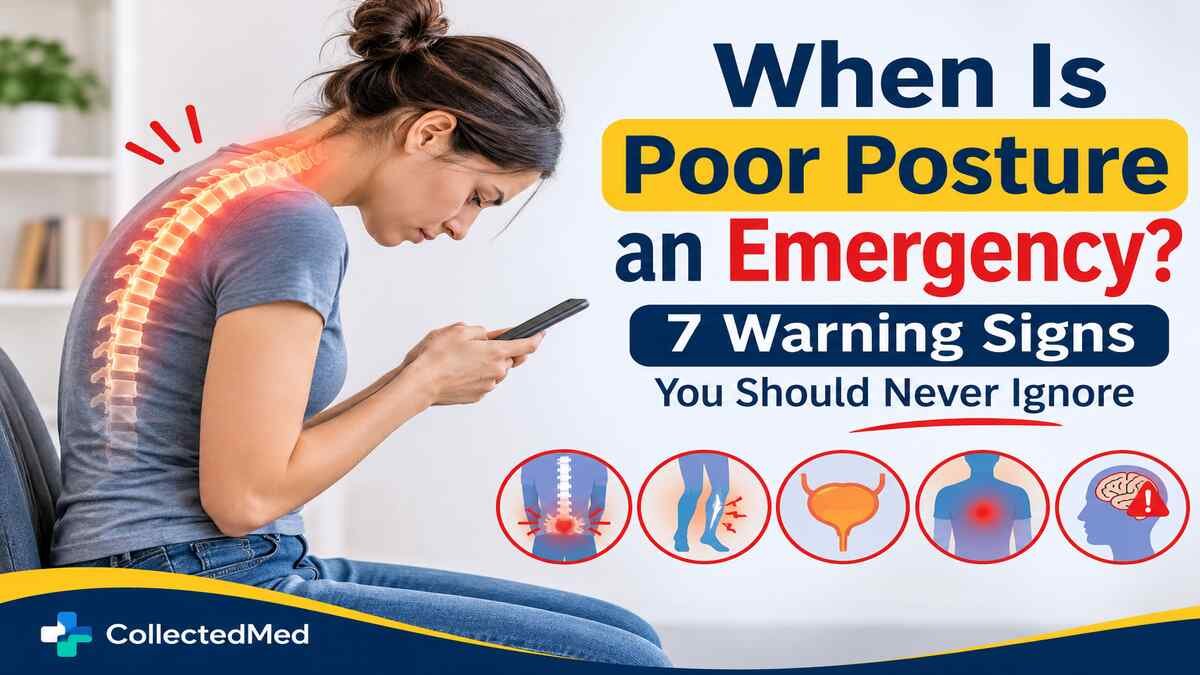

Sitting at a desk for hours, looking down at a phone, or standing in an awkward position can all contribute to muscle tension. Poor posture is a common reason people notice neck stiffness, shoulder tightness, and a sore back. In most cases, these problems are uncomfortable but manageable, and they are not emergencies.
The more useful question is not whether poor posture itself is dangerous, but whether the symptoms that come with it are. Back or neck pain that appears alongside new weakness, bladder or bowel changes, numbness in the groin area, chest pain, or a serious injury needs a different response. These symptoms should not be blamed on sitting or standing incorrectly.
This article explains when poor posture is usually harmless and which warning signs call for emergency care. It also covers symptoms that deserve a regular or prompt doctor visit, how to tell whether posture is really behind your discomfort, and safe steps you can take at home. If you are not sure whether your symptoms are serious, a healthcare professional can help you decide.
Can Poor Posture Become a Medical Emergency?
Poor posture is rarely a medical emergency by itself. However, back or neck discomfort accompanied by symptoms such as sudden leg weakness, loss of bladder or bowel control, numbness around the groin, chest pain, or severe pain after an accident may indicate a serious medical condition. These symptoms require immediate medical evaluation rather than assuming poor posture is the cause.
Poor posture generally means positions or habits that place extra strain on your muscles and joints, often because you stay in one position for too long. Mayo Clinic experts note that hours of slouching or looking down at a phone can strain muscles and joints over time. Ordinary slouching and temporary stiffness are common and are not usually dangerous.
Research on posture and pain is also more cautious than many people expect. Cleveland Clinic says that studies suggest posture may not directly cause pain as often as people assume. An NHS hospital resource adds that no strong evidence shows one “correct” posture exists.
It helps to think in four levels:
- Everyday discomfort: mild stiffness or tired muscles that ease when you move or change position.
- Routine appointment: symptoms that persist or interfere with daily life.
- Prompt medical assessment: concerning symptoms that need to be checked soon, though not necessarily in an emergency room.
- Emergency care: the warning signs described below.
Do not assume that a serious symptom comes from posture just because you sit for long hours.
7 Warning Signs That Poor Posture-Related Symptoms May Be an Emergency
The symptoms below are not typical of simple posture-related muscle strain. If you have any of them, do not try to stretch or “correct” your posture as a substitute for medical care. Only a healthcare professional can tell you what is causing them.
1. Sudden Weakness or Numbness in Both Legs
New or worsening weakness in both legs, significant numbness, or a clear change in sensation is not ordinary stiffness. You may also find it hard to stand or walk normally. When these symptoms come with back pain, they need immediate evaluation.
Serious pressure on the nerves that control leg movement and feeling can sometimes cause these problems. Mayo Clinic lists weakness, numbness, or tingling in the legs as reasons to contact a healthcare professional, and sudden leg weakness is a reason to seek emergency care rather than wait for a routine visit.
2. Loss of Bladder or Bowel Control
New difficulty passing urine, inability to urinate, or new loss of bladder or bowel control are urgent warning signs. Some people also notice changes in sensation around the pelvic or genital area.
These symptoms can point to cauda equina syndrome. In plain terms, this is serious pressure on the bundle of nerves at the bottom of the spine. An NHS patient resource describes it as rare but potentially causing lasting harm, and it says people with these warning signs should seek help immediately.
3. Numbness Around the Groin or Saddle Area
Unusual loss of feeling around the groin, buttocks, inner thighs, or anus is different from ordinary muscle stiffness. This is sometimes called “saddle numbness” because it affects the area that would touch a saddle.
The same NHS resource lists numbness or tingling in this area among its warning symptoms. Seek emergency attention, especially if you also have back pain or bladder changes.
4. Severe Back or Neck Pain Following a Serious Injury
Pain after a significant fall, car crash, or other major accident should never be dismissed as poor posture. The spine can be injured, including through fractures, even if the pain feels muscular at first.
Mayo Clinic lists back pain that follows a fall, blow, or other injury among the reasons for immediate care. Get evaluated even if you think it is just a strain.
5. Back Pain Accompanied by Chest Pain
Back pain with chest pain should not be assumed to be posture-related. Chest pain can have several causes, including heart problems, and it needs proper assessment rather than self-diagnosis.
Mayo Clinic notes that heart attack discomfort can spread to the shoulder, arm, back, neck, jaw, teeth, or upper belly. It advises calling 911 or your local emergency number right away instead of driving yourself unless there is no other way. For more detail, see our guides to chest pain, when chest pain is an emergency, and heart attack symptoms.
6. Sudden Neurological Symptoms
Sudden weakness on one side of the body, trouble speaking or understanding speech, or sudden vision or balance problems can be signs of a stroke, not a posture problem. Harvard Health explains that face drooping, arm weakness, and speech difficulty are the most common stroke warning signs, and that balance and vision changes can occur too.
Call 911 right away, even if the symptoms improve. Short-lived symptoms can still signal a temporary drop in blood flow to the brain, which can come before a more serious stroke.
7. Back Pain With Fever or Signs of Serious Illness
Back pain with a fever or chills, or with feeling unusually unwell, should be taken seriously. Mayo Clinic lists back pain with a fever as a reason for immediate care.
One possible cause is a spinal infection. The American Association of Neurological Surgeons describes symptoms such as worsening pain, fever, and chills, and says new weakness, numbness, or bowel or bladder incontinence needs immediate care. Other situations may call for a prompt appointment instead, such as a recent infection or a medical history your doctor should know about.
When Should You See a Doctor About Poor Posture?
Not every concerning symptom needs an emergency room visit. These situations call for a regular or prompt appointment:
- Persistent neck, shoulder, or back pain
- Discomfort that interferes with normal daily activities
- Pain that continues despite reasonable self-care
- Recurring headaches or stiffness linked with neck discomfort
- Pain that gradually gets worse
- Back pain with unexplained weight loss, or a history of cancer
- Constant or intense pain, especially at night or when lying down
Most back pain improves within a few weeks with self-care, according to Mayo Clinic. Mayo Clinic Health System advises talking with a provider about unexplained weight loss, a history of cancer, and night pain. It also lists pain with swelling or redness, which could indicate infection.
Persistent symptoms may need a physical examination and sometimes further investigation. If your pain spreads down a leg, especially below the knee, or you notice weakness or tingling, do not wait for it to pass.
What Happens If You Ignore Serious Symptoms?
Ordinary posture-related discomfort does not mean you will develop permanent damage. The concern is serious symptoms that get brushed off as “just posture.”
Delays can matter for several reasons:
- Pressure on spinal nerves can cause lasting problems if it is not treated promptly.
- The AANS notes that delays in treating spinal infections can lead to permanent damage to the bones and soft tissues of the spine.
- Neurological symptoms, such as new weakness or numbness, need timely investigation to find the cause.
- A significant injury can worsen if it is left unchecked.
The goal is not to frighten you. It is to help you tell routine muscular discomfort from symptoms that need timely medical assessment.
Most people who read about warning signs will never have them. If you do, acting early is simple: call your local emergency number or go to an emergency department for the red-flag symptoms above, and book a prompt appointment for the less urgent ones. You do not need to be certain about the cause before you ask for help.
How Can You Tell Whether Poor Posture Is Causing Your Symptoms?
You cannot be sure from symptoms alone, but some patterns point toward a posture-related muscle problem. Ask yourself:
- Do symptoms show up after long periods of sitting or standing?
- Does the discomfort change with position or movement?
- Does it ease after you change positions or take a break?
- Is the pain mostly in one area, without unusual neurological symptoms?
These clues are helpful but cannot establish a diagnosis. Pain that is constant, severe, or unrelated to how you move deserves more caution than pain that clearly changes with position. Even typical-looking patterns can have other explanations, so do not hesitate to ask a professional if something feels off.
Neck and shoulder tension from long screen sessions can also trigger headaches, and our guide to what causes headaches covers other possible triggers. Our articles on what causes poor posture and what poor posture feels like describe the usual causes and sensations.
A healthcare professional may check your posture and spinal alignment, muscle strength and flexibility, range of motion, sensation and reflexes, and medical history. Tests such as imaging are used only when clinically appropriate. A BMJ guideline summary advises against routine imaging for uncomplicated low back pain, reserving it for cases with warning signs.
What Should You Do If You Experience Poor Posture-Related Discomfort?
If you have no emergency warning signs, these steps are generally safe and may help. They are general suggestions, not individual medical advice.
- Change positions often. Avoid staying in one position for long stretches.
- Set up a comfortable workspace. Keep your feet supported and your screen near eye level, and keep frequently used items within reach.
- Take regular movement breaks. Even a minute or two of walking helps.
- Stay gently active. Do what feels comfortable. Our guides to walking for health and exercises for lower back pain are good places to start.
- Consider a physical therapist. Professional guidance can help if discomfort persists.
Give simple self-care a fair trial, but set a limit. If your symptoms are not improving after a few weeks, or they get worse at any point, arrange a visit rather than waiting longer. Sleep and stress can also affect muscle tension, so our guides on how to improve sleep and how to reduce stress may help.
Important safety note: If you have any emergency warning signs, do not try to fix your posture, stretch, or exercise in place of getting medical help.
How Can You Reduce the Risk of Posture-Related Problems?
No single perfect posture prevents all back or neck problems. Comfort, movement, and variety matter more than holding a rigid position.
- Develop comfortable sitting and standing habits.
- Adjust your desk and screen position.
- Avoid staying in one position too long.
- Build regular physical activity into your week. See how many steps a day you should walk and strength training for beginners.
- Seek professional advice for persistent discomfort.
Small, steady changes tend to work better than dramatic ones, and you do not need a perfect setup to benefit. Our guide to healthy habits can help you keep these routines going. For a broader look at whether posture deserves concern, read should I worry about poor posture.
Frequently Asked Questions
1. Can poor posture cause permanent damage?
Poor posture may contribute to discomfort and musculoskeletal problems, but ordinary slouching does not automatically cause permanent spinal damage. The evidence linking everyday posture to lasting harm is limited, according to Cleveland Clinic. Persistent or worsening symptoms should still be checked.
2. When should I go to the emergency room for back pain?
Seek emergency care for new bladder or bowel problems, numbness around the groin or saddle area, sudden leg weakness, back pain with a fever, or back pain after a serious injury. Chest pain with back pain also needs emergency help. Mayo Clinic lists several of these as reasons for immediate care.
3. Can poor posture cause nerve damage?
Prolonged positioning may irritate nerves in some situations, but significant neurological symptoms such as weakness, numbness, or loss of bladder or bowel control need medical assessment. Do not assume they come from posture. A healthcare professional can find the cause.
4. Can poor posture cause neck pain and headaches?
Sustained positions and muscle tension may contribute to neck discomfort and some headaches. If a headache comes on suddenly or severely, or comes with weakness, speech trouble, or vision changes, call 911, as Harvard Health advises for possible stroke signs.
5. How long does posture-related back pain usually last?
It varies with the cause and severity. Mayo Clinic Health System says most back pain goes away within four to six weeks with self-care. Pain that lasts longer or keeps getting worse should be assessed.
6. Can poor posture be a sign of an underlying medical condition?
Sometimes. Posture can change because of pain, muscle weakness, neurological conditions, or other health problems. A healthcare professional can assess the underlying cause rather than assuming it is a habit.
Conclusion: Know When Poor Posture Needs Medical Attention
Poor posture is usually not an emergency by itself. The real concern is symptoms that can accompany back or neck discomfort, such as leg weakness, bladder or bowel changes, saddle numbness, chest pain, fever, or pain after a serious injury. Knowing these warning signs helps you get care quickly when it matters.
If your discomfort is persistent, or you are unsure what is causing it, talk with a qualified healthcare professional.
Sources
- Mayo Clinic. Back pain: Symptoms and causes
- Mayo Clinic Health System. When should I see a doctor about back pain?
- Mayo Clinic Health System. 8 Common Myths About Back Pain
- Mayo Clinic. Heart attack symptoms: Know what’s a medical emergency
- East Lancashire Hospitals NHS Trust. Cauda Equina Syndrome (patient information)
- Cambridge University Hospitals NHS Foundation Trust. Myth Busting About Posture, Core Stability and Lifting
- Cleveland Clinic. Posture: Good vs. Bad
- American Association of Neurological Surgeons. Spinal Infections
- Harvard Health Publishing. Recognizing the most common warning signs of a stroke
- The BMJ. Do not routinely offer imaging for uncomplicated low back pain
Medical Disclaimer
This article is for general educational purposes only and is not a substitute for professional medical advice, diagnosis, or treatment. Every person is different, and the information here may not apply to your situation. Always talk with a doctor, physical therapist, or other qualified healthcare professional about any health concerns, especially if you have pain, numbness, weakness, or changes in your spine.