
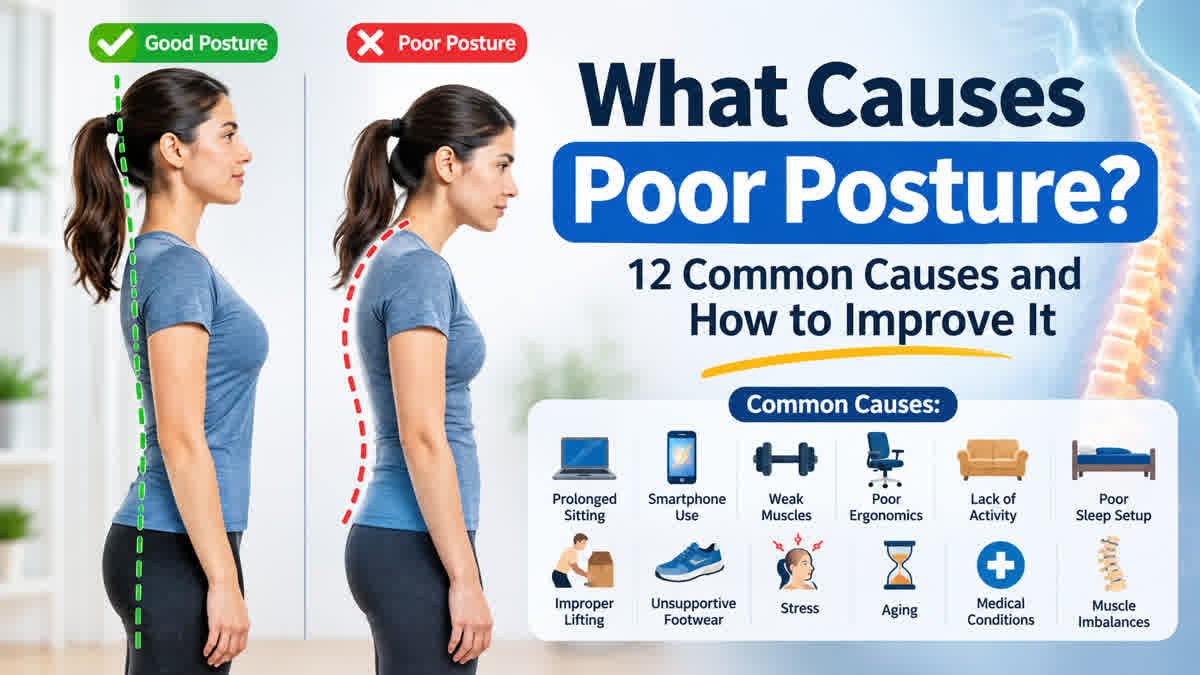

Poor posture is one of the most common concerns people raise about their neck, shoulders, and back. Many of us spend hours each day sitting at desks, studying, driving, or looking down at a phone, so it is easy to see why habits form. If you have ever noticed yourself slouching or leaning toward a screen, you are far from alone.
Modern routines play a big role. Long periods of sitting, frequent smartphone use, weaker muscles from inactivity, and workstations that do not fit your body can all encourage the same positions for hours at a time. Stress, sleep setup, age, and certain medical conditions can also shape how you hold yourself.
It helps to know that posture varies naturally from person to person, and no single “perfect” posture exists. This article explains what poor posture is, walks through 12 common causes, covers signs to watch for, looks at the link with pain, and offers practical ways to improve. It also explains when it is worth talking with a healthcare professional.
What Is Poor Posture?
Posture is the way you hold your body while sitting, standing, and moving. It reflects how your head, shoulders, spine, pelvis, and hips line up with one another. Your muscles, bones, joints, and nervous system work together to maintain it, mostly without conscious effort, as Cleveland Clinic explains.
Poor posture generally describes positions that place extra strain on muscles and joints, or habits that keep you in one position for too long. It is not a diagnosis. Posture also changes with the task: sitting posture, standing posture, and movement posture (such as walking, bending, or lifting) each have their own demands.
Common patterns include rounded shoulders, a head that sits forward of the shoulders (often called forward head posture), and an exaggerated curve in the upper or lower back. Some people call these bad posture, but they are better understood as habits or adaptations than as personal failings.
What Does Good Posture Look Like?
Good posture generally keeps the natural curves of your spine in a comfortable, balanced position. In standing, the head sits over the shoulders, the shoulders sit over the hips, and weight is shared evenly across both feet. In sitting, your feet rest flat, your back is supported, and your screen is not pulling your head forward.
Cleveland Clinic notes that there is no such thing as perfect posture, and that worrying too much about it can backfire. The best posture is often your next posture, meaning that changing positions regularly matters as much as any one position.
Common Signs of Poor Posture
Signs of poor posture can include a head that juts forward, shoulders that round inward or sit unevenly, and a noticeably rounded upper back. Some people notice changes in the curve of the lower back or in how the pelvis tilts. We cover these in more detail below.
What Causes Poor Posture? 12 Common Reasons
Poor posture rarely has a single cause. It usually develops from a mix of habits, physical factors, and surroundings. The 12 causes below are the most common, and many people have more than one at the same time.
1. Sitting for Long Periods
Sitting itself is not harmful, but staying in one position for hours encourages sustained postural habits. Desk work, studying, long commutes, and sedentary evenings can all keep the spine and neck in the same slightly rounded shape. Over time, muscles can feel stiff, tired, or achy.
Mayo Clinic experts note that slouching at a computer for hours can strain muscles and joints over time. Breaking up sitting with short movement breaks is one of the simplest ways to reduce that load. For more on staying active, see our guide to walking for health.
2. Excessive Smartphone and Screen Use
Looking down at a phone tilts the head forward and flexes the neck. Held for long stretches, this position is linked with forward head posture and neck discomfort. A study of smartphone users found that heavier smartphone use was associated with lower neck muscle endurance and changes in head and neck alignment.
Laptops cause a similar problem when the screen sits too low. Keep in mind that research of this kind shows associations, not proof that phones directly cause lasting posture changes. Still, raising your device closer to eye level is a low-effort adjustment worth trying.
3. Weak Core Muscles
Your abdominal, back, and pelvic muscles help stabilize your trunk. When these muscles are less conditioned, certain positions may feel harder to hold, and you may drift into a slumped position as you tire. This is a matter of muscular endurance, not just raw strength.
The evidence here is nuanced. An NHS hospital resource on posture and core stability discusses how core muscles support the spine while cautioning against simple claims about what any one muscle group does. If you are new to training, our strength training for beginners guide is a gentle place to start.
4. Muscle Imbalances and Tight Muscles
Muscles work in pairs and groups. When some are tight or shortened (such as the chest muscles and hip flexors) and others are lengthened or underused (such as the upper back muscles), the body can settle into a rounded or tilted position.
Long hours of sitting can contribute to this pattern. Improving mobility and strength together tends to work better than focusing on one side alone. See our article on how to improve flexibility for safe ways to build range of motion.
5. Poor Workplace Ergonomics
A workstation that does not fit your body can push you into awkward positions all day. Common problems include a monitor that is too low or too far away, a keyboard that is out of easy reach, a chair without adequate support, and a desk at the wrong height.
Mayo Clinic’s posture guidance highlights the role of the work environment and supportive seating. Small adjustments, such as raising the screen and keeping frequently used items within reach, can make sustained work more comfortable.
6. Lack of Physical Activity
Regular movement keeps muscles conditioned and joints mobile. When physical activity drops, muscular endurance and flexibility may decline, which can make it harder to hold comfortable positions through the day.
Cleveland Clinic points out that not staying active or stretching may contribute to aches and pains as much as, or more than, posture alone. Our overview of the benefits of exercise explains why movement matters for the whole body.
7. Improper Lifting Techniques
Repeatedly lifting or carrying heavy objects in awkward positions can contribute to discomfort and to compensating movement habits. Carrying a heavy bag on one shoulder, for example, may lead you to tilt or hike that shoulder.
Mayo Clinic experts say that lifting with poor form can contribute to back pain, though it is not the only cause. Research on whether a particular lifting technique prevents injury is mixed, so the practical advice is to keep loads manageable, bring objects close to your body, and avoid sudden twisting.
8. Wearing Unsupportive or Uncomfortable Footwear
Shoes can affect comfort, balance, and the way you walk. Very high heels or shoes that do not fit well may change how weight is distributed through your feet and legs.
It is important not to overstate this. There is no strong evidence that a particular shoe automatically causes spinal misalignment. If your shoes make walking uncomfortable, choosing a comfortable, well-fitting pair is a reasonable step, and a clinician can advise you if foot or gait problems persist.
9. Stress and Muscle Tension
Stress can show up in the body. Many people unconsciously raise their shoulders, clench their jaw, or hold their neck stiffly when they feel tense. Over time, this guarding can become a habit that affects how you carry yourself.
Posture and mood can influence each other, though the relationship is complex. Stress-management strategies may help you notice and release tension. Our guide on how to reduce stress offers practical options.
10. Sleeping Positions and Sleep Setup
A mattress or pillow that does not suit you can lead to waking up stiff. Sleeping in a twisted or strained position may cause temporary soreness in the neck or back that affects how you move in the morning.
Mayo Clinic suggests choosing a mattress that gives support and comfort based on your needs. A sleep setup is usually a short-term contributor to stiffness rather than a cause of lasting posture changes. If sleep trouble is part of the picture, see how to improve sleep.
11. Age-Related Changes
With age, muscle mass, flexibility, joint mobility, and bone density can change. These shifts may make it harder to maintain certain positions, and some people develop a more rounded upper back.
Posture changes are not inevitable in the same way for everyone. Staying active, keeping muscles conditioned, and supporting bone health through nutrition (see our guides to calcium-rich foods and foods high in vitamin D) can support healthy aging. Our article on best foods for healthy aging offers more ideas.
12. Medical Conditions and Structural Problems
Some postural changes are not simply habits. Conditions such as scoliosis (a sideways curve of the spine), kyphosis (an increased forward rounding of the upper back), and osteoporosis-related vertebral compression fractures can change spinal alignment.
MedlinePlus explains that kyphosis can result from several causes, including osteoporotic fractures, degenerative spine disease, injury, and other conditions, and that treatment depends on the cause. The Hospital for Special Surgery notes that postural kyphosis, which is related to habitual posture, is different from other types such as those tied to fractures or spinal development.
This distinction matters. Not every case of poor posture can be corrected by exercise alone, and structural or medical causes need professional assessment rather than self-correction.
What Are the Common Signs of Poor Posture?
Signs of poor posture can be visible, physical, or both. None of them confirms a problem on their own, because bodies and spinal curves naturally differ. Possible signs include:
- A head that sits forward of the shoulders
- Rounded or uneven shoulders
- Noticeable rounding of the upper back
- Changes in the curve of the lower back
- A tilted pelvis or an uneven stance
- Neck, shoulder, or back discomfort
- Muscle fatigue after sitting or standing for a long time
How to Recognize Poor Posture in Everyday Life
You may notice that you lean toward your screen, slump when you are tired, or feel achy by the end of a long workday. A simple self-check can help. Mayo Clinic experts describe a wall test: stand with your upper back, shoulders, and buttocks against a wall and see how your head and spine line up.
Treat the results as a rough guide, not a diagnosis. NHS guidance reminds readers that natural variations in spinal curves are common and should not automatically be blamed for pain. If you are worried, a physical therapist or doctor can assess you in person.
Can Poor Posture Cause Back, Neck, and Shoulder Pain?
It can contribute, but it is rarely the whole story. Holding the same position for long stretches can tire muscles, reduce movement variety, and leave you stiff. Mayo Clinic states that slouching and phone use can strain muscles and joints over time.
The research is more cautious than many people expect. Cleveland Clinic says studies suggest that posture may not directly cause pain as often as people assume, and that it is more likely one factor among several. An NHS hospital resource similarly says the research does not clearly show that posture alone causes pain, while noting that time spent in one position often matters.
How Poor Posture May Affect Different Parts of the Body
- Neck and shoulders: A forward head position and rounded shoulders may increase muscle tension and fatigue. Heavy smartphone use has been associated with neck pain in research on university students.
- Upper back: Sustained rounding may lead to stiffness or aching between the shoulder blades.
- Lower back: Long periods of static sitting or standing may contribute to lower-back discomfort. Our article on what causes back pain explains the many other possible causes.
- Head: Tension in the neck and shoulders may be linked with tension-type headaches in some people. See what causes headaches.
Because pain has many possible causes, it should not automatically be blamed on posture.
How to Improve Poor Posture: 7 Practical Tips
Many habitual patterns can improve with small, consistent changes. Cleveland Clinic’s chiropractor source suggests that building a posture habit may take about four to six weeks to show real change, similar to any exercise routine. Results vary from person to person.
1. Adjust Your Workstation
Place the screen around eye level and about an arm’s length away. Keep your keyboard and mouse within comfortable reach, and use a chair that supports the natural curve of your lower back. Your feet should rest flat on the floor or a footrest.
2. Take Regular Movement Breaks
Change positions often and avoid staying seated or standing still for long periods. Even a minute or two of walking or gentle stretching can help. Our guide to how many steps a day you should walk can help you set a realistic goal.
3. Strengthen Your Core and Back Muscles
Strengthening exercises can improve the muscular endurance that supports comfortable positions. Cleveland Clinic’s expert suggests simple movements such as supermans and similar exercises. Start gently and build up gradually. Our best exercises for beginners and exercises for lower back pain are good starting points.
4. Stretch Tight or Stiff Muscle Groups
Gentle chest, hip flexor, and upper-back mobility work can help if these areas feel tight. Move slowly, stay within a comfortable range, and stop if you feel sharp pain. See stretching before or after exercise for timing tips.
5. Improve Smartphone Habits
Raise your phone closer to eye level instead of dropping your head to meet it. Vary your viewing position, and take breaks from long scrolling sessions. A Mayo Clinic physician recommends holding your phone at eye level to avoid bending your neck forward.
6. Stay Physically Active
Walking, swimming, strength training, and other activities you enjoy all keep your body conditioned. The best activity is one you can do regularly. Our guide to healthy habits can help you build routines that last.
7. Seek Professional Guidance When Needed
If postural changes are persistent, painful, or come with other symptoms, a qualified healthcare professional or physical therapist can assess you and build a plan that fits your body. Be cautious with quick fixes. Devices and gadgets that promise to “correct” posture have limited evidence behind them, so ask a clinician before relying on them.
When Should You See a Doctor About Poor Posture?
Most posture-related discomfort is manageable with movement and routine changes. However, some situations call for a medical evaluation. Consider making an appointment if you notice:
- Back, neck, or shoulder pain that is persistent or getting worse
- A visible or progressive change in spinal curvature
- Difficulty with balance or walking
- Numbness, tingling, or weakness in the arms or legs
- Postural changes after an injury or fall
- A new rounding of the upper back, especially in older adults, which can sometimes reflect osteoporosis-related spinal changes
New or progressing neurological symptoms need prompt medical attention. Seek emergency care right away for sudden significant weakness, loss of bladder or bowel control, or numbness around the groin or saddle area.
Frequently Asked Questions About Poor Posture
What is the main cause of poor posture?
There is rarely one main cause. Staying in the same position for long periods, limited movement, lower muscle endurance, and individual physical factors often combine. Everyday habits such as prolonged sitting and screen use are among the most common contributors, according to Cleveland Clinic.
Can sitting too much cause poor posture?
Sitting too long can reinforce slouched or forward-leaning habits and contribute to stiffness and discomfort. The issue is often the lack of movement rather than sitting itself. Breaking up sitting time and adjusting your workstation can help, as described in Mayo Clinic guidance.
Can poor posture be corrected?
Many habitual postural patterns can improve with movement, strengthening, ergonomic changes, and professional guidance when needed. Results depend on the cause and how consistently you practice. Postural patterns tied to structural conditions may need medical management instead.
Does using a phone cause poor posture?
Frequent downward viewing is associated with forward head positioning and neck discomfort, based on research in smartphone users. The evidence shows an association rather than certain cause and effect. Raising your phone and taking breaks are simple ways to reduce strain.
How long does it take to improve poor posture?
It varies. Progress depends on the cause, how consistent you are, your overall physical condition, and whether a structural problem is involved. One Cleveland Clinic source suggests roughly four to six weeks of regular effort may bring noticeable change for some people.
Is poor posture permanent?
Many habitual patterns can change, so poor posture is often not permanent. Some structural conditions, such as scoliosis or osteoporosis-related changes, need ongoing management and professional care, as MedlinePlus describes for kyphosis.
Final Thoughts: Understanding What Causes Poor Posture
Understanding what causes poor posture starts with recognizing that it usually comes from many small factors, including long sitting, screen habits, muscle imbalances, stress, and sometimes medical conditions. Regular movement, building muscle strength, and a comfortable workspace are the most practical places to begin.
Try not to blame yourself for every postural change, since bodies naturally differ. If you have persistent pain or notice significant changes in your posture, talk with a healthcare professional.
Sources
- Cleveland Clinic. Posture: Good vs. Bad
- Cleveland Clinic. Poor Posture Hurts Your Health More Than You Realize
- Mayo Clinic Health System. Do You Have Good Posture?
- Mayo Clinic Health System. Proper Posture Is Important for Good Health
- Mayo Clinic Health System. 8 Common Myths About Back Pain
- Cambridge University Hospitals NHS Foundation Trust. Myth Busting About Posture, Core Stability and Lifting
- South Tees Hospitals NHS Foundation Trust. Posture Reformed (patient leaflet)
- MedlinePlus (National Library of Medicine). Kyphosis
- Hospital for Special Surgery. Kyphosis: Causes, Symptoms and Treatment
- PubMed Central. Smartphone addiction, neck muscle endurance, and head posture
Medical Disclaimer
This article is for general educational purposes only and is not a substitute for professional medical advice, diagnosis, or treatment. Every person is different, and the information here may not apply to your situation. Always talk with a doctor, physical therapist, or other qualified healthcare professional about any health concerns, especially if you have pain, numbness, weakness, or changes in your spine.
4 thoughts on “What Causes Poor Posture? 12 Common Causes and How to Improve It”
Comments are closed.