
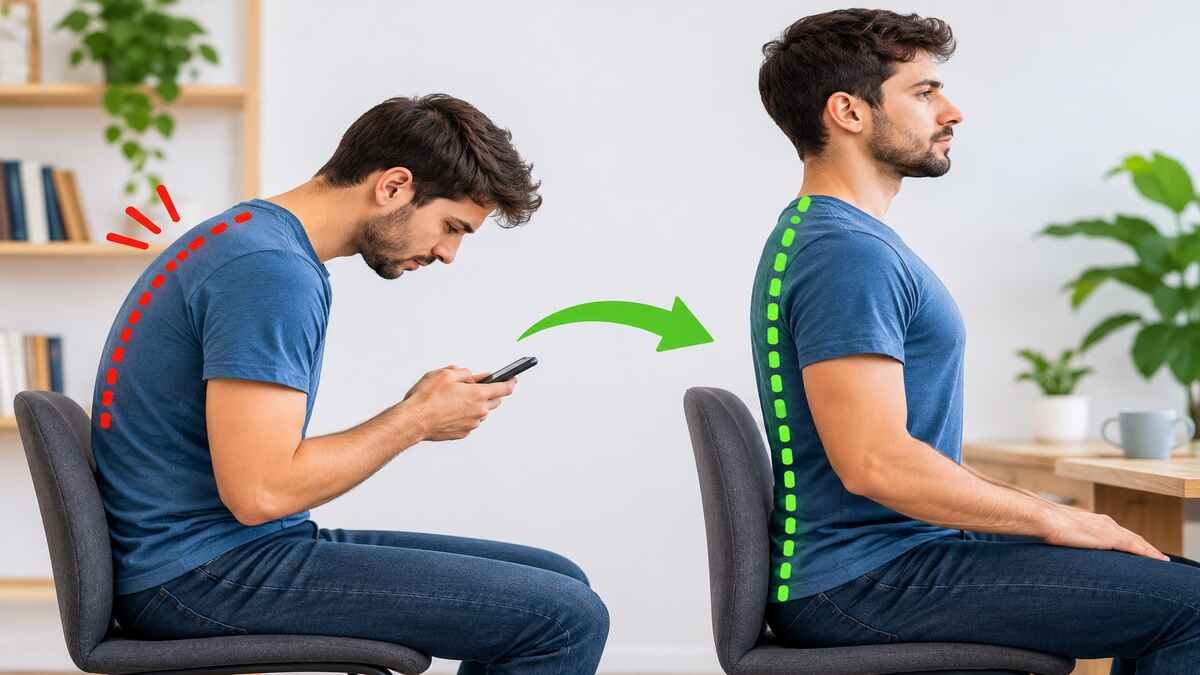

Spending hours at a desk, looking down at a phone, or relaxing in an awkward position can leave your neck, shoulders, and back feeling tight. Poor posture often means holding the same position for too long, and it is a very common reason people notice stiffness and muscle tension. The good news is that small changes at home can make a real difference in how comfortable you feel.
To relieve poor posture at home, start with gentle stretching, upper-back strengthening, comfortable sitting arrangements, and regular movement breaks. Exercises such as chest stretches, shoulder-blade squeezes, and gentle neck mobility movements may help improve flexibility and reduce muscle tension. Consistency and comfortable movement are more important than maintaining one rigid posture.
Keep in mind that posture improves gradually, not overnight, and there is no single perfect posture everyone must hold. This guide explains what poor posture is, walks through eight practical ways to relieve it, and offers a simple daily routine. It also covers common habits to change, realistic timelines, and when it is time to get professional help.
What Is Poor Posture and How Does It Affect Your Body?
Posture is the way you hold your body while sitting, standing, and moving. Poor posture usually describes positions or habits that place extra strain on your muscles and joints, such as slouching, rounded shoulders, or a head that sits forward of your shoulders. For a closer look at the usual causes, see our guide on what causes poor posture.
Staying in one position for long periods can tire your muscles and leave them stiff. Many people notice this as tension in the neck and shoulders or aching in the back. Our article on what poor posture feels like describes these sensations in more detail.
Movement habits and flexibility also play a role. When some muscles are tight and others are underused, certain positions can feel harder to avoid. That is why most home approaches combine stretching, gentle strengthening, and more variety in how you move.
It is worth remembering that posture varies naturally between people and between activities. Cleveland Clinic notes that everyone has a unique natural posture and that thinking too much about it can make you believe it is worse than it is. An NHS hospital resource similarly says there is no strong evidence that one “correct” posture exists. The goal is comfort and movement, not rigid perfection.
8 Effective Ways to Relieve Poor Posture at Home
These simple adjustments and gentle routines can help you build more comfortable everyday habits. They are general suggestions and may not suit everyone, so adapt them to your body. Move slowly, and stop any exercise that causes pain or makes your symptoms worse.
1. Practice Gentle Chest Stretches
Spending long hours leaning forward can leave your chest and front shoulder muscles feeling tight. Gentle stretching may help improve flexibility in these areas.
Cleveland Clinic describes a doorway stretch. Stand in a doorway and place your forearms or palms on the frame at about shoulder height, with your elbows bent. Step one leg back and lean forward until you feel a stretch across your upper chest, then hold and switch legs. The stretch should feel gentle, not painful, so do not push further than is comfortable.
2. Strengthen Your Upper Back
The muscles between and around your shoulder blades help support your shoulders. Gentle strengthening may make it easier to stay comfortable in upright positions.
Two simple options are shoulder-blade squeezes and band rows. For a squeeze, sit or stand tall and gently draw your shoulder blades back and down, hold briefly, then release. For a standing row, Cleveland Clinic suggests looping a resistance band around a doorknob, pulling it back while squeezing your shoulder blades, and keeping your elbows close to your sides. Control each movement rather than rushing.
3. Improve Your Core Strength
Your abdominal, back, and pelvic muscles help stabilize your trunk. Starting with comfortable, beginner-friendly movements can build muscular endurance over time.
Two common starting points are the bird-dog and the dead bug. For a bird-dog, start on your hands and knees and slowly extend one arm forward while keeping your back steady, then switch sides (add the opposite leg later if it feels comfortable). For a dead bug, lie on your back with your knees bent and slowly lower one foot toward the floor, then switch. Core work alone will not fix poor posture, but it can be one helpful piece.
Our guide to strength training for beginners can help you progress safely.
4. Try Gentle Neck Mobility Exercises
Long screen sessions can leave the neck feeling stiff. Gentle movement may ease that tightness.
Try slowly turning your head from side to side within a comfortable range, keeping your shoulders relaxed. A seated neck stretch can also help: Cleveland Clinic describes sitting with your feet flat, holding the bottom of the chair with one hand, and lowering the opposite ear toward its shoulder while keeping your trunk straight. A chin tuck, where you gently draw your chin straight back, is another option. Never force your neck into an uncomfortable position.
5. Adjust Your Sitting Position
A better setup makes comfortable positions easier to keep. A Cambridge University Hospitals leaflet recommends:
- Placing your screen at arm’s length, directly in front of you at eye level
- Keeping your feet flat on the floor, or using a footrest
- Supporting the curve of your lower back, using a small rolled towel if your chair does not
- Keeping your mouse and frequently used items within easy reach
Cleveland Clinic adds that looking down at a screen greatly increases neck strain. Even the best chair does not replace changing positions, which is the next tip.
6. Take Regular Movement Breaks
Changing positions often is one of the simplest ways to ease tension. Stand up, walk around, or do a few gentle standing movements. The same Cambridge leaflet says no one should sit for more than an hour at a time.
If you use a standing desk, keep moving, because standing still for hours can cause its own discomfort. Alternating between sitting and standing when practical works well for many people. See how many steps a day you should walk and our guide to walking for health for easy ways to build movement into your day.
7. Practice Comfortable Standing and Walking Habits
You do not need to stiffen your back to look “straight.” Keep your shoulders relaxed, let your arms swing naturally, and spread your weight comfortably between both feet.
A simple self-check is the wall test described by Mayo Clinic. Stand with your head, shoulder blades, and buttocks against a wall, and see whether a flat hand just fits behind your lower back. Then walk away and notice how the position feels. Use it as a loose guide, not a strict standard.
8. Create a More Supportive Sleep Environment
How you sleep can affect how stiff your neck and back feel in the morning. Choose a sleeping position that is comfortable for you, and use a pillow that supports your neck without pushing it sharply up or to the side.
Mayo Clinic Health System suggests a pillow between your knees for side sleeping or under your knees for back sleeping. It also says to look for a mattress that offers support and comfort for your needs. Preferences vary, so go with what feels best.
Our guide on how to improve sleep offers more ideas.
A Simple Daily Routine to Improve Poor Posture at Home
You do not need much time or special equipment. Start gradually, and adjust the routine to your comfort and abilities.
Morning
- Roll your shoulders up, back, and down a few times.
- Do a gentle doorway chest stretch.
- Take a short walk or do some light movement to wake your body up.
During the Day
- Adjust your seating and screen so you are comfortable.
- Change positions regularly, and take short movement breaks.
- Bring your phone up toward eye level instead of bending your head forward.
- Try setting a reminder to check in with your posture. Cleveland Clinic suggests a timer every 10 minutes to help build the habit.
Evening
- Do gentle neck movements, such as slow turns or a seated neck stretch.
- Add a few comfortable upper-back movements, such as shoulder-blade squeezes.
- Give your body time to relax and recover before bed.
If you are new to exercise, begin with a few repetitions and build up slowly. Our best exercises for beginners and stretching before or after exercise guides can help.
Five Small Changes You Can Start Today
If a full routine feels like too much, begin with one or two of these:
- Raise your screen or phone closer to eye level.
- Stand up and move for a minute or two every hour.
- Place a small rolled towel behind your lower back when you sit.
- Do a doorway chest stretch after long periods at a desk.
- Keep frequently used items within easy reach.
Small steps are easier to keep up, and consistency matters more than doing everything at once.
Common Daily Habits That Can Contribute to Poor Posture
Recognizing habits that keep you in the same position makes them easier to change. These habits do not affect everyone the same way, but adjusting them may improve your comfort.
- Looking down at your phone for long periods. This tips your head forward and can tire your neck.
- Working at an uncomfortable desk. A screen that is too low or a keyboard that is too far away can pull you into awkward positions.
- Staying in one position too long. Even a good position becomes tiring when you hold it for hours.
- Sitting in a chair without enough support. A chair that does not suit you can make slouching more likely.
- Reaching repeatedly for items placed far away. Keep frequently used items within easy reach.
- Getting little physical activity. Regular movement keeps muscles conditioned and joints mobile. Our overview of the benefits of exercise explains why it matters.
Stress can also add to muscle tension, and our guide on how to reduce stress offers practical ideas.
How Long Does It Take to Improve Poor Posture?
There is no universal timeline. Progress depends on your habits, your starting point, how consistent you are, and whether another condition is contributing to your discomfort.
One Cleveland Clinic source says it may take about four to six weeks of regular exercise to see real change in posture, though daily habit changes may help you feel better sooner. Treat this as a rough guide, not a promise.
Comfort and mobility often improve gradually. You may notice less stiffness before you notice any change in how you look. If you have ongoing pain or a medical condition, those need attention too, because home exercises alone may not be enough.
When Should You Seek Professional Help for Poor Posture?
Home care works well for many people, but it is not right for every situation. Consider seeing a doctor or physical therapist if you have:
- Persistent neck, shoulder, or back discomfort
- Pain that interferes with daily activities
- Symptoms that keep getting worse
- Numbness, tingling, or unexplained weakness
- Difficulty moving normally
- Posture changes after an injury
A doctor or physical therapist can look for underlying causes and recommend appropriate treatment. Cleveland Clinic advises seeing a primary care physician or physical therapist if pain persists or exercises are not helping. Mayo Clinic lists weakness, numbness, or tingling in the legs among the reasons to contact a healthcare professional.
Our articles on whether to worry about poor posture and when poor posture is an emergency can help you judge how urgent your symptoms may be.
Safety note: Sudden significant weakness, new bladder or bowel problems with back pain, numbness around the groin or saddle area, or other serious neurological symptoms need emergency medical attention. Do not try home exercises in place of care. An NHS patient resource explains why these warning signs need urgent assessment.
Frequently Asked Questions
1. Can poor posture be corrected at home?
Many habitual posture patterns can improve with regular movement, gentle exercises, and ergonomic changes at home. Results vary from person to person. Posture changes linked to an underlying condition may need professional assessment.
2. What is the best exercise for poor posture?
No single exercise works best for everyone. Upper-back strengthening, chest mobility work, and general physical activity can all be useful. A mix of gentle stretching and strengthening that you can do comfortably and consistently is usually the most practical approach.
3. Can walking help improve poor posture?
Walking will not correct posture on its own, but it supports general physical activity and breaks up long periods of sitting. Even short walks can ease stiffness. Our article on morning walk health benefits offers ideas for building a simple routine.
4. How can I fix poor posture while sitting?
Support your lower back, keep your feet flat or on a footrest, and place your screen at eye level, as the Cambridge University Hospitals leaflet advises. Most importantly, change positions regularly instead of holding any one posture for hours.
5. Does sleeping position affect posture?
Sleep position does not usually cause lasting posture changes, but an unsupportive pillow or mattress can leave your neck or back stiff. Mayo Clinic Health System offers pillow-placement tips for different sleeping positions. Choose what feels comfortable for you.
6. Can poor posture cause neck and back pain?
It can contribute. Mayo Clinic experts say that slouching and focusing on a phone can strain muscles and joints over time. Pain has many possible causes, though, and Cleveland Clinic notes that posture may be only one factor. See our guide on what causes back pain for others.
Conclusion: Start Improving Poor Posture With Small Changes
Poor posture-related discomfort can often be eased with practical changes at home. Gentle exercises can support flexibility and strength, while regular movement and a comfortable setup keep you from staying stuck in one position. Improvement takes time and consistency, so start with one or two manageable habits.
If your symptoms persist, worsen, or concern you, talk with a qualified healthcare professional.
Sources
- Cleveland Clinic. Posture: Good vs. Bad
- Cleveland Clinic. Posture Exercises
- Cleveland Clinic. Poor Posture Hurts Your Health More Than You Realize
- Mayo Clinic. Mayo Clinic Q and A: Proper posture and body alignment
- Mayo Clinic. Back pain: Symptoms and causes
- Mayo Clinic Health System. Proper Posture Is Important for Good Health
- Mayo Clinic Health System. 8 Common Myths About Back Pain
- Cambridge University Hospitals NHS Foundation Trust. Seating and Ergonomics
- Cambridge University Hospitals NHS Foundation Trust. Myth Busting About Posture, Core Stability and Lifting
- East Lancashire Hospitals NHS Trust. Cauda Equina Syndrome (patient information)
Medical Disclaimer
This article is for general educational purposes only and is not a substitute for professional medical advice, diagnosis, or treatment. Every person is different, and the information here may not apply to your situation. Check with a doctor or physical therapist before starting a new exercise routine, especially if you have pain, numbness, weakness, or changes in your spine.
1 thought on “How to Relieve Poor Posture at Home: Simple Exercises and Daily Tips”
Comments are closed.