
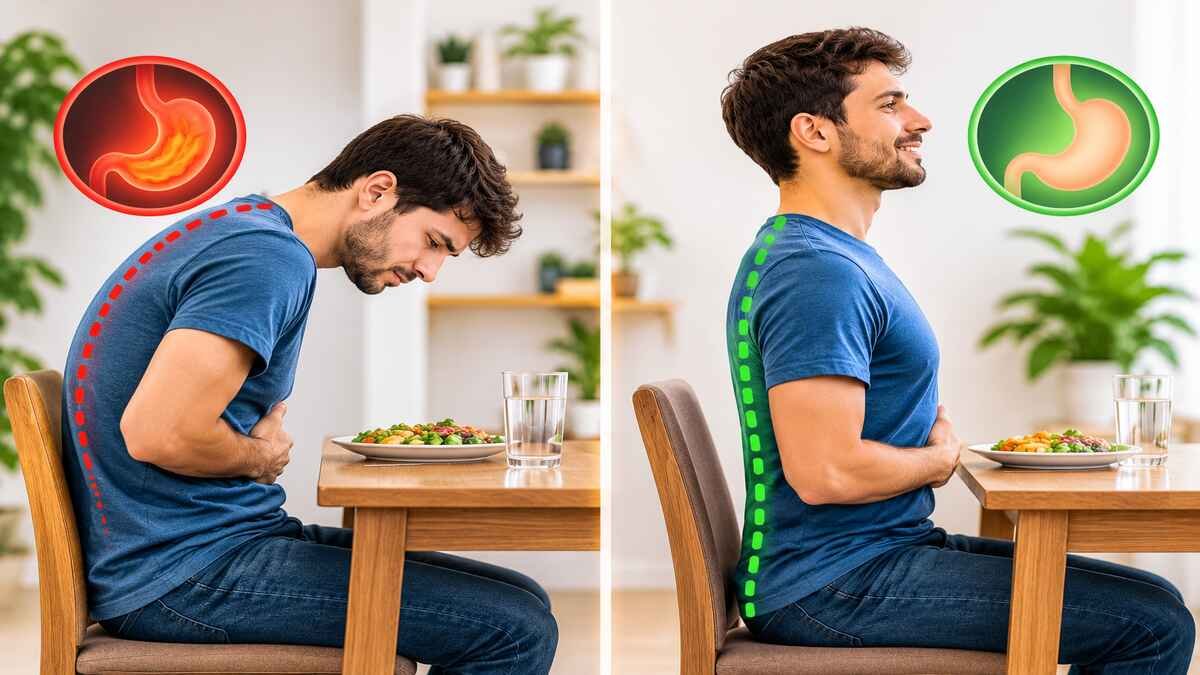

Have you ever noticed yourself slouching on the couch or bending forward over a desk right after a meal? Poor posture after eating is a common habit, and it is easy to overlook. Most of us finish a meal, settle into the nearest soft seat, and let our shoulders round without a second thought.
Poor posture after eating may contribute to abdominal discomfort and worsen acid reflux symptoms in some people. Slouching, bending forward, or lying down immediately after meals can increase discomfort. Sitting comfortably upright, avoiding unnecessary bending, and allowing time before lying down may help support better digestive comfort.
This guide explains why post-meal slouching happens, how body position may affect heartburn, fullness, and bloating, and which simple habits can help. Posture is one possible contributing factor, not the only explanation for digestive symptoms. If your symptoms are frequent or worrying, our guide on how to relieve poor posture at home and the medical advice below can help you decide what to do next.
What Is Poor Posture After Eating?
Poor posture generally means holding your body in positions that put extra strain on muscles, joints, or the spine over time. In the context of eating, it describes the positions many people fall into during and after a meal. You can learn more about what causes poor posture and what poor posture feels like in our broader guides.
Common examples of poor posture after eating include:
- Slouching deep into a sofa with rounded shoulders
- Bending forward over a desk, table, or phone
- Sitting in a compressed position, with the belly folded against the thighs
- Lying flat or reclining almost fully right after a meal
None of these positions is dangerous for most people on an occasional basis. The concern is mainly about comfort, and about how repeated habits may interact with digestive symptoms such as heartburn or fullness.
In general, comfortable, supported sitting is preferable to staying hunched over or compressed after a meal. You do not need a rigid, military-style posture. A relaxed, upright position that does not squeeze the abdomen is usually the goal.
Why Do People Develop Poor Posture After Eating?
Post-meal slouching rarely has one cause. It usually comes from a mix of tiredness, furniture, screen habits, and how full you feel.
Feeling Sleepy or Tired After Meals
Many people feel relaxed or drowsy after eating, especially after a large lunch or dinner. This is a normal experience for lots of adults. When you feel tired, you naturally let your muscles loosen, and your back and shoulders may round forward.
A comfortable chair with good back support can make it easier to stay upright without effort. It can also help to stay socially or mentally engaged, such as by chatting with others at the table.
Sitting on Sofas or Soft Furniture
Deeply cushioned furniture tends to let the pelvis tilt backward and the shoulders round. Without support for the lower back, the spine often curves into a C shape.
Seating that is too low, too soft, or too deep may also make it harder to keep your feet supported. Over time, an uncomfortable setup can encourage the same slouched position every time you sit down after a meal.
Using Phones or Screens While Eating
Looking down at a phone or tablet pushes the head forward of the shoulders. This forward-head position can strain the muscles of the neck and upper back, especially when it lasts for a long time.
Eating while scrolling or watching a screen can also keep you in one fixed position for the whole meal and well after it.
Eating Large Meals
After a large meal, the stomach is fuller and the abdomen may feel tight. Some people respond by leaning forward or slumping to find a more comfortable position, which can compress the belly even more.
Meal size, food choices, and digestive sensitivity vary a lot from person to person. What feels uncomfortable for one person may not bother another.
How Can Poor Posture After Eating Affect Your Body?
Research directly linking posture to digestion is limited, so it is important to stay realistic. Poor posture after eating does not directly cause every digestive problem, and it does not stop your body from digesting food properly. However, body position may influence how comfortable you feel and may make certain symptoms worse in some people.
1. May Worsen Acid Reflux and Heartburn
Acid reflux happens when stomach contents flow back up toward the esophagus, the tube that carries food from your mouth to your stomach. A muscular valve at the bottom of the esophagus, called the lower esophageal sphincter, normally helps keep stomach contents where they belong. When reflux happens often, it may be called gastroesophageal reflux disease (GERD).
The NHS notes that heartburn and acid reflux symptoms are often worse after eating, when lying down, and when bending over. Bending forward or lying down can make it easier for stomach contents to travel upward, and a compressed sitting position may add pressure on the stomach.
Common symptoms include a burning feeling in the chest, a sour or bitter taste in the mouth, and the sense of food or fluid coming back up. Our guides on the early signs of acid reflux and what makes acid reflux worse explain these in more detail.
It is worth repeating that posture does not appear to be the root cause of GERD. Slouching and bending are better understood as factors that may worsen symptoms in people who already experience reflux.
2. May Increase Abdominal Discomfort
A compressed sitting position can add pressure to the abdomen, which may increase the feeling of fullness or tightness after a meal. Tight waistbands and belts can add to this effect.
Positional discomfort usually eases when you sit up, loosen your clothing, or move around. Discomfort that does not change with position, keeps returning, or comes with other symptoms may have another cause. Our guides on what causes abdominal pain and common digestive problems can help you understand the possibilities.
3. Can Contribute to Neck and Back Discomfort
Holding a slouched position for a long time can increase strain on the muscles of the neck, shoulders, and back. Rounded shoulders and a forward head position are common features of this pattern.
If you often feel stiff after sitting through a long meal or an evening on the couch, your position may be playing a role. Back pain after eating can also have other causes, so it helps to read about what causes back pain if it keeps happening.
4. May Make Bloating Feel More Uncomfortable
Bloating is a sense of fullness, tightness, or swelling in the abdomen, often with gas. It can have many causes, including food choices, swallowing air, constipation, and digestive conditions.
Poor posture is not an established cause of bloating. However, a compressed position may make existing fullness feel more noticeable. Sitting upright and moving gently may feel better for some people. You can read more about the link between reflux and bloating in our article on whether acid reflux can cause bloating.
5. May Affect Overall Post-Meal Comfort
Staying in one position for a long time, especially a slumped one, can lead to stiffness. Many people feel better after a short change of position, a stretch, or a slow walk.
Gentle movement is one reason posture advice often goes together with activity advice. Remember that posture is only one of many factors, including meal size, food choices, stress, and sleep, that influence how you feel after eating.
What Is the Best Posture After Eating?
The best posture after eating is one that feels comfortable, supported, and upright, without squeezing your stomach. There is no single perfect position that works for everyone, and forcing your body into a rigid posture is not necessary.
Here are practical features of a comfortable post-meal position:
- Sit upright with support. Use a chair or sofa that supports your lower back so you do not need to slump.
- Relax your shoulders. Let them drop away from your ears instead of rounding forward.
- Avoid excessive bending forward. Try not to hunch over a table, desk, or phone for long periods.
- Support your feet. Keep them flat on the floor or on a low footrest.
- Avoid compressing the abdomen. Loosen tight belts or waistbands if they press on your stomach.
- Keep a natural spinal curve. A small cushion behind the lower back can help.
- Avoid lying flat right away. This matters most if you are prone to reflux.
The Cambridge University Hospitals NHS Foundation Trust lists avoiding bending, lifting, or lying down straight after meals, and wearing loose clothing among its self-help measures for GORD (the UK term for GERD). Guy’s and St Thomas’ NHS Foundation Trust gives similar advice, including not stooping or bending over too much after eating and drinking.
In short, a comfortable position that you can hold without effort is more useful than a perfect one you cannot maintain.
7 Healthy Habits to Improve Posture After Eating
Small changes are often the easiest to keep. Try one or two of these first, then add more as they become routine.
1. Sit Upright During and After Meals
Supportive seating and a comfortable upright position can reduce unnecessary abdominal compression. Eating at a table, rather than on a low sofa, makes this easier for many people.
2. Avoid Bending Forward Immediately After Eating
Try not to lean over for long periods right after a meal, especially if you often get reflux. If you need to pick something up, bend at the knees instead of the waist. Our guide on how to manage acid reflux at home covers more everyday strategies.
3. Take a Gentle Walk After Meals
Light walking keeps you upright and may support digestive comfort. It also adds general physical activity to your day. A relaxed pace is enough, and our article on walking for health explains more about the wider benefits.
Avoid vigorous exercise immediately after a large meal. Guy’s and St Thomas’ suggests allowing at least 30 minutes between eating and starting any heavy exercise if you have reflux.
4. Avoid Lying Down Immediately After Eating
Staying upright after meals is especially important for people who experience acid reflux. Gravity helps keep stomach contents down when you are sitting or standing. Try to stay upright for a while before reclining or going to bed.
5. Choose Comfortable Seating
Chairs with appropriate back support make good posture easier to maintain. If your sofa is very soft, a firm cushion behind your lower back can help. A seat height that lets your feet rest flat is also useful.
6. Reduce Prolonged Screen Use
Keep screens at a comfortable height so you are not constantly bending your neck. Raising a phone or tablet closer to eye level can reduce forward-head positioning. Taking short breaks from screens after meals can also help you shift position.
7. Develop Consistent Eating and Movement Habits
Regular mealtimes, comfortable eating positions, and gentle movement all support overall well-being. Eating smaller portions and avoiding very large late meals may also help if you are prone to reflux. For broader routines, see our guides on healthy habits and how to improve sleep.
How Long Should You Stay Upright After Eating?
Staying upright after a meal may help reduce reflux symptoms because gravity helps keep stomach contents in the stomach. For people with GERD, the NIDDK says that if you have symptoms at night or when lying down, eating meals at least 3 hours before you lie down or go to bed may improve symptoms.
The American College of Gastroenterology guideline on GERD also includes lifestyle measures, such as weight loss for people with overweight or obesity and avoiding meals close to bedtime.
This three-hour guideline mainly applies to people managing reflux symptoms before lying down or sleeping. It is not a rule that everyone needs to follow. If you do not have reflux, you may feel fine reclining sooner.
Individual needs vary. Meal size, the type of food, and any existing digestive condition can all change how long you need to stay upright. A smaller, lighter meal is often easier on the stomach than a large, heavy one.
When Should You See a Doctor About Digestive Discomfort After Eating?
Most occasional post-meal discomfort is not serious. Still, some symptoms deserve a medical evaluation, and posture changes alone may not be enough.
See a healthcare professional if you have:
- Frequent or persistent heartburn
- Difficulty swallowing
- Repeated vomiting
- Persistent abdominal pain
- Unexplained weight loss
- Symptoms that interfere with everyday activities
Our guide on when to see a doctor for acid reflux and our article on whether poor posture is something to worry about can help you think through next steps.
Chest pain should not automatically be blamed on acid reflux or poor posture. New, severe, or unexplained chest pain needs prompt attention. Get emergency medical help right away if chest pain comes with trouble breathing, sweating, faintness, or pain that spreads to the arm or jaw.
Read more in our article on when chest pain is an emergency and our guide on when poor posture is an emergency.
Frequently Asked Questions
1. Can poor posture after eating cause acid reflux?
Poor posture is not considered a root cause of GERD. However, bending forward or lying down after meals may worsen reflux symptoms in some people, as the NHS notes that symptoms are often worse after eating, when lying down, and when bending over. If reflux is frequent, a healthcare professional can look for underlying causes. You can also read about what causes acid reflux.
2. Is it bad to slouch after eating?
Occasional slouching is usually not harmful. Still, a slumped position may increase abdominal pressure and may make heartburn or fullness more noticeable in some people. Sitting upright with back support is a simple, low-risk alternative.
3. Can poor posture cause bloating after meals?
Posture may influence how bloating feels, but it is not an established cause of bloating. Food choices, swallowing air, constipation, and digestive conditions are more common explanations. If bloating is frequent, see our guide to improving gut health or speak with a healthcare professional.
4. Is walking after eating good for digestion?
A gentle walk keeps you upright and moving, and many people find it helps them feel more comfortable after a meal. Research on its exact effects varies, so it is best viewed as a helpful habit rather than a guaranteed fix. Avoid vigorous exercise right after eating, especially if you have reflux.
5. How long should I wait before lying down after eating?
For people with reflux symptoms at night or when lying down, the NIDDK suggests leaving at least 3 hours between a meal and lying down. People without reflux may not need to wait this long. Your own comfort and any medical advice you have received should guide you.
6. What is the healthiest sitting position after eating?
The most comfortable option is usually an upright, well-supported position with relaxed shoulders and supported feet. Avoid compressing the abdomen or hunching over a phone or table. Small posture breaks and gentle movement can keep you comfortable.
Conclusion: Maintain Healthy Posture for Better Comfort After Meals
Poor posture after eating may contribute to discomfort, and slouching or lying down right after a meal may worsen reflux symptoms in some people. Comfortable upright sitting and gentle walking are simple habits that many people find helpful. At the same time, posture is only one piece of the puzzle, and persistent digestive symptoms deserve a medical evaluation.
You do not have to change everything at once. Pick one small habit, such as sitting at the table or taking a short walk after dinner, and build from there. Your body will likely thank you.
Sources
- NHS: Heartburn and acid reflux
- NIDDK: Eating, Diet, & Nutrition for GER & GERD
- Cambridge University Hospitals NHS Foundation Trust: Dietary and lifestyle advice for adults with gastro-oesophageal reflux disease (GORD)
- Guy’s and St Thomas’ NHS Foundation Trust: Managing gastroesophageal reflux disease or GORD
- Katz PO, et al. ACG Clinical Guideline for the Diagnosis and Management of Gastroesophageal Reflux Disease. Am J Gastroenterol. 2022;117(1):27-56 (PubMed)
Medical Disclaimer: This article is for general information and education only. It is not medical advice, and it does not diagnose, treat, or replace care from a qualified healthcare professional. Talk with your doctor about your own symptoms, risks, and treatment options.