
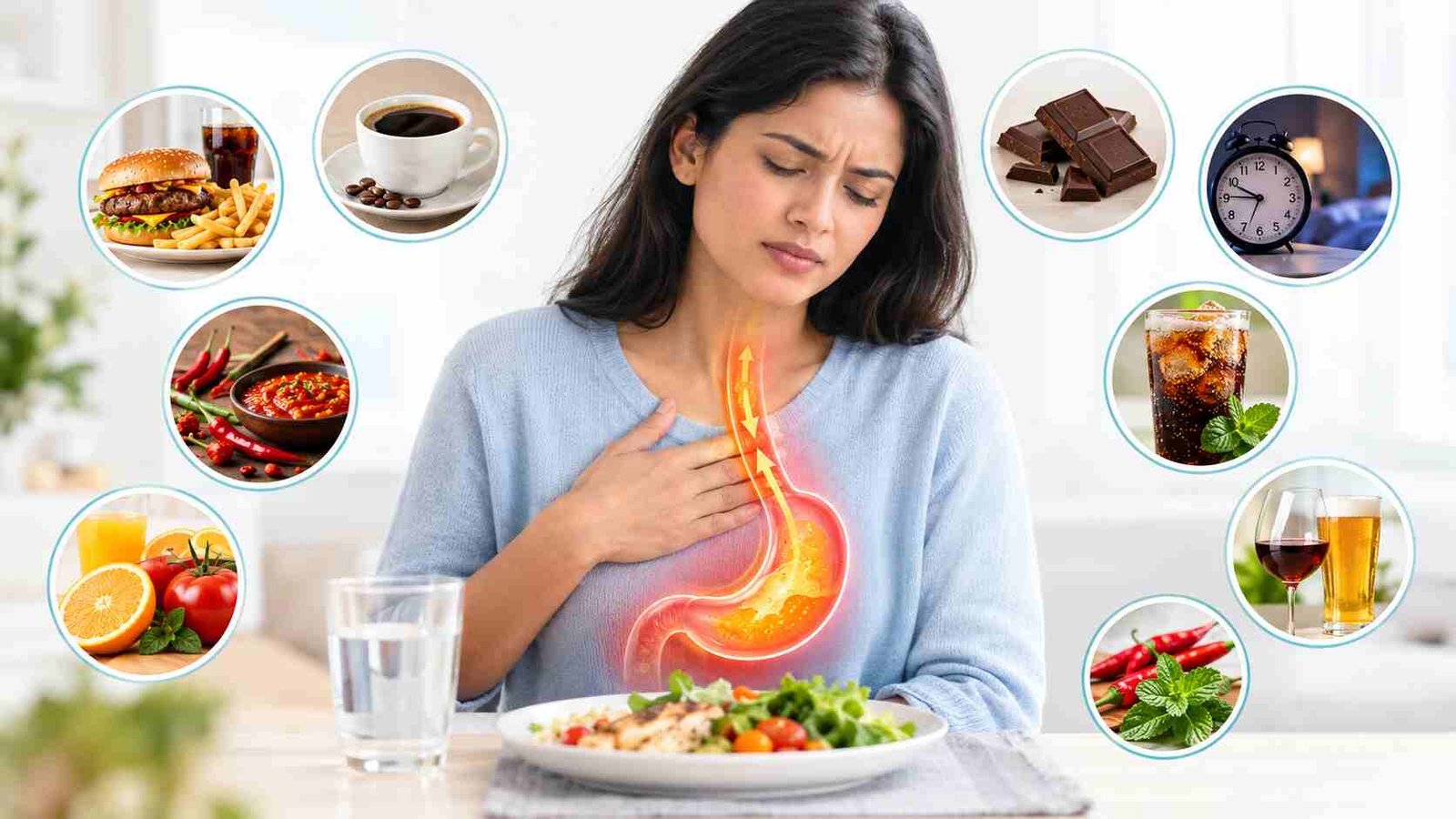

Your acid reflux may seem unpredictable. One meal leaves you with burning in your chest, another feels fine, and symptoms often seem to appear just as you lie down at night. That pattern is common, and it usually has an explanation.
Several factors can make acid reflux worse, including large meals, fatty or spicy foods, eating close to bedtime, alcohol, smoking, excess weight, and lying down after eating. Certain medicines and health conditions can also play a role. A trigger is not necessarily the underlying cause of reflux, which is a separate question covered in our guide on what causes acid reflux.
The most useful approach is rarely to avoid every food on a generic list. Instead, you can identify your own triggers and adjust the habits that consistently worsen your symptoms. This article explains seven common aggravators, how to reduce them, and when symptoms need medical attention. It offers general information, not individual medical advice.
Quick answer: Large meals, eating late at night, lying down after eating, alcohol, smoking, excess weight, and certain foods can worsen reflux symptoms. However, triggers vary between people, so identifying your own pattern is often more useful than avoiding every food on a standard list.
Why Does Acid Reflux Get Worse?
Acid reflux happens when stomach contents flow backward into the esophagus. NIDDK explains that this can occur when the lower esophageal sphincter (LES), the muscle at the bottom of the esophagus, relaxes when it shouldn’t or becomes weak.
The lower esophageal sphincter
The LES normally acts as a one-way valve between the esophagus and the stomach. It opens to let food through, then closes. When it relaxes at the wrong moment or does not close well, stomach contents can move upward.
Anything that raises stomach pressure, relaxes the LES, slows stomach emptying, or removes the help of gravity can make symptoms worse. That idea explains each of the seven triggers below. Mayo Clinic notes that heartburn often happens after eating and may be worse at night or while lying down. If you are not sure whether your symptoms fit reflux, our article on early signs of acid reflux can help.
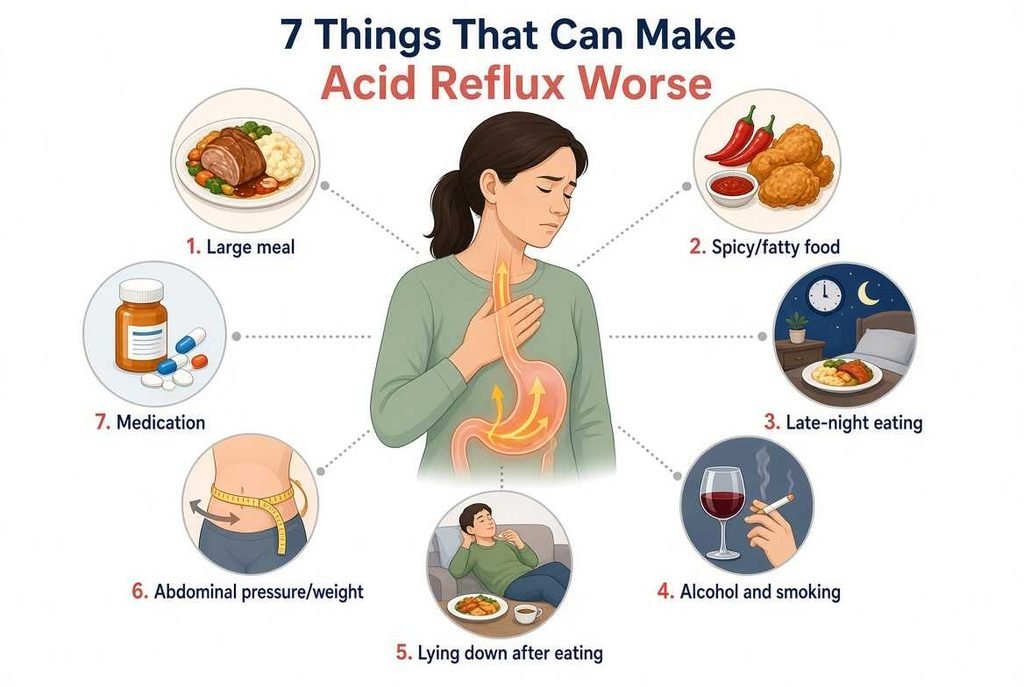
7 Common Things That Make Acid Reflux Worse
Acid reflux can flare up for different reasons, and what bothers one person may not affect another. However, certain foods, eating habits, lifestyle factors, and daily routines are common triggers. Knowing what makes acid reflux worse can help you identify your personal triggers and make simple changes that may reduce symptoms.
1. Eating Large or Heavy Meals
Large meals stretch the stomach and raise the pressure inside it. That pressure can encourage stomach contents to move upward. High-fat meals may also slow stomach emptying, so food stays in the stomach longer. A Mayo Clinic gastroenterologist calls overeating a big trigger for heartburn.
Instead of simply eating less, you can try a few practical changes:
- Choose smaller portions.
- Eat more slowly.
- Avoid very large evening meals.
- Notice how you feel after particularly heavy meals.
Our guide on how to manage acid reflux at home explains how meal size affects pressure on the LES.
2. Eating Too Close to Bedtime
A full stomach combined with lying down makes reflux easier. Late dinners, bedtime snacks, and falling asleep soon after eating are common culprits for nighttime heartburn.
NIDDK says doctors may recommend eating meals 2 to 3 hours before you lie down. If nighttime symptoms bother you, try finishing dinner earlier and see whether things improve. Chest discomfort after dark can have other causes, so see our article on chest pain at night if you are unsure.
3. Fatty, Fried, Spicy, or Personal Trigger Foods
Foods that people commonly report as triggers include:
- Fried or high-fat foods
- Spicy foods
- Chocolate
- Peppermint
- Citrus fruits and juices
- Tomato-based foods
- Coffee and other caffeinated drinks
- Carbonated beverages
The Mayo Clinic heartburn guide lists many of these as possible triggers. Not everyone reacts to the same foods, though. A statement like “never eat tomatoes” is too broad. A more accurate one is: if tomato-based foods consistently trigger your symptoms, reducing them may help.
A food and symptom diary can show your own pattern. Write down what you ate, when, and how you felt over about two weeks. For gentler everyday choices, our guides to high-fiber foods for digestive health and how to improve gut health may help.
4. Alcohol and Smoking
Both are lifestyle factors, but they work in different ways.
Alcohol may relax the LES and can aggravate symptoms in susceptible people. It is also often combined with other triggers, such as large or late meals.
Smoking can lower LES pressure and may reduce saliva, which helps clear acid from the esophagus. A Mayo Clinic gastroenterologist advises avoiding triggers such as coffee, alcohol, and smoking as a first step.
If either consistently worsens your symptoms, reducing or avoiding it can be an important part of managing reflux. Smokefree.gov offers free tools for quitting.
5. Lying Down or Bending Over After Eating
Gravity helps keep stomach contents down when you are upright. Symptoms may get worse when you:
- Lie flat after a meal
- Recline on the sofa
- Bend over repeatedly with a full stomach
- Exercise or do chores right after a large meal
Mayo Clinic notes that heartburn may be worse when lying down. A simple habit is to stay upright after eating and take a gentle walk instead of reclining. Our guide to walking for health offers easy ways to start.
6. Excess Weight and Abdominal Pressure
Extra pressure around the abdomen can push stomach contents upward and make reflux more likely. Mayo Clinic lists obesity among the conditions that raise the risk of GERD.
If you have overweight or obesity, gradual weight loss may reduce symptoms. NIDDK notes that doctors may recommend weight loss for people with GERD who are above a healthy weight. Reflux affects people of every size, and weight is only one factor.
7. Certain Medicines and Supplements
Some medicines can relax the LES, irritate the esophagus, or cause heartburn-like symptoms. NIDDK names several medicine types that may contribute to reflux, including calcium channel blockers, some sedatives, certain asthma medicines, NSAIDs, and some antidepressants.
Other pills can irritate the esophagus directly if they linger there. A StatPearls review of drug-induced esophagitis names tetracycline antibiotics (especially doxycycline), bisphosphonates for osteoporosis, and iron among the culprits. Taking pills with a full glass of water and staying upright afterward can reduce this risk, but follow the instructions that come with each medicine.
Never stop a prescribed medicine on your own. If you think a medicine is making your reflux worse, ask your doctor or pharmacist whether the timing, dose, or medicine itself should change.
What About Stress?
Many people ask whether stress makes acid reflux worse. Stress does not necessarily cause reflux directly, and research findings are mixed. It may change how strongly you notice symptoms.
Stress can also lead to habits that trigger reflux, such as late-night eating, more alcohol, smoking, and poor sleep. Our acid reflux risk factors article makes the same distinction. If stress affects your routine, our guides on how to reduce stress and how to improve sleep offer practical steps.
How to Stop Making Acid Reflux Worse
You do not need to change everything at once. Start with the two or three changes that fit your symptoms best, then reassess.
- Eat smaller meals. Avoid very large portions, especially at dinner.
- Finish eating 2 to 3 hours before bed. This matters most if nighttime reflux is a problem.
- Stay upright after meals. Avoid lying down or reclining right away.
- Track your food triggers. Use a two-week symptom diary.
- Reduce alcohol if it triggers symptoms.
- Stop smoking.
- Work toward a healthy weight if appropriate. Ask your clinician what is realistic for you.
- Review medicines with a healthcare professional if symptoms changed after you started one.
Our guide on how to prevent acid reflux covers longer-term habits. If lifestyle changes are not enough, our article on acid reflux treatment options explains what else may help, including over-the-counter medicines.
Should You Avoid All Acidic Foods?
Not necessarily. Having acid reflux does not mean every acidic food must be removed forever. The important difference is between an acidic food and a food that personally triggers your reflux.
Citrus, tomato products, vinegar-containing foods, coffee, and spicy dishes bother some people and not others. If one of them clearly worsens your symptoms, cut back on that item. If it does not, there may be little reason to avoid it.
Overly strict diets can also make meals stressful and less nutritious. Try changing one thing at a time so you can see what actually makes a difference. Our overview of what a healthy diet looks like can help you keep meals balanced.
What Makes Acid Reflux Worse at Night?
Common nighttime aggravators include:
- Late meals
- Large evening meals
- Bedtime snacks
- Lying flat
- Alcohol in the evening
- Falling asleep right after eating
Several steps may help. Finish meals 2 to 3 hours before bed. Raising the head of your bed may also ease symptoms, and NIDDK’s treatment guidance covers this approach. Some people find sleeping on the left side more comfortable, though evidence varies.
Our guide on how to manage nighttime acid reflux covers bed elevation and sleeping position in more detail.
When Acid Reflux Keeps Getting Worse
Persistent or worsening symptoms may point to GERD or another condition, not simply “too much stomach acid.” If reflux keeps returning, our article on whether acid reflux can go away on its own explains what to expect.
See a healthcare professional if you have:
- Frequent symptoms
- Symptoms that continue despite lifestyle changes
- Little relief from over-the-counter medicines
- Symptoms that interfere with sleep or daily activities
- Difficulty or pain when swallowing
- Persistent vomiting
- Unexplained weight loss
Mayo Clinic advises seeing a doctor if you have severe or frequent symptoms or use nonprescription heartburn medicines more than twice a week. NIDDK also lists trouble swallowing, persistent vomiting, and unexplained weight loss as warning signs.
Learn more about when acid reflux needs medical care.
When Is Chest Pain an Emergency?
Seek emergency care right away (call 911 in the U.S.) for severe or unexplained chest pain or pressure, especially with shortness of breath, sweating, or pain that spreads to the arm, jaw, or back. Do not assume chest discomfort is acid reflux.
Mayo Clinic notes that telling GERD apart from a heart problem can be difficult. For more on warning signs, see our guides to heart attack symptoms and what chest pain can feel like.
Frequently Asked Questions
What makes acid reflux worse?
Large meals, eating late, lying down after eating, alcohol, smoking, excess weight, and certain foods and medicines can worsen reflux. Triggers differ from person to person. NIDDK describes how these factors relate to GER and GERD.
What foods make acid reflux worse?
Fatty or fried foods, spicy foods, chocolate, peppermint, citrus, tomato-based foods, caffeine, and carbonated drinks are common triggers. You may react to some and not others. Mayo Clinic lists these possible heartburn triggers.
Does eating late make acid reflux worse?
It can. Lying down with a full stomach makes it easier for stomach contents to move upward. NIDDK says doctors may suggest eating 2 to 3 hours before lying down.
Does coffee make acid reflux worse?
For some people, yes. Caffeinated drinks appear among possible triggers on the Mayo Clinic heartburn page, but responses vary. If coffee seems to bother you, try smaller amounts or note how you feel in a symptom diary.
Does alcohol make acid reflux worse?
It may. Alcohol can relax the LES and aggravate symptoms in susceptible people. A Mayo Clinic gastroenterologist lists alcohol among the triggers to avoid first.
Does stress make acid reflux worse?
Stress may make symptoms feel stronger and can lead to habits that trigger reflux, but it has not been shown to directly cause it. Research is mixed. Our guide on how to reduce stress may help.
Why is my acid reflux worse at night?
Lying flat removes the help of gravity, and late meals or alcohol can add to the problem. Finishing meals 2 to 3 hours before bed and raising the head of the bed may reduce symptoms.
Can lying down make acid reflux worse?
Yes, lying down can worsen reflux, especially after a meal. Mayo Clinic notes that symptoms may be worse when lying down. Staying upright for a couple of hours after eating often helps.
When should I see a doctor about acid reflux?
See a healthcare professional if reflux is frequent, keeps returning, or comes with trouble swallowing, persistent vomiting, or unexplained weight loss. Call 911 for severe chest pain or pressure, especially with shortness of breath or arm or jaw pain. Mayo Clinic explains these warning signs.
Conclusion
Acid reflux is not always caused by one specific food. Large meals, late-night eating, lying down after meals, fatty or spicy foods, alcohol, smoking, excess abdominal pressure, and certain medicines can all worsen symptoms in some people.
A simple next step is to identify your top two triggers, change those habits, and track your symptoms. If you need more ideas, our article on how to prevent acid reflux offers longer-term strategies. If reflux persists, gets worse, or comes with warning signs, talk with a healthcare professional.
Sources
- National Institute of Diabetes and Digestive and Kidney Diseases (NIDDK). Acid Reflux (GER & GERD) in Adults
- NIDDK. Symptoms & Causes of GER & GERD
- NIDDK. Treatment for GER & GERD
- Mayo Clinic. Gastroesophageal reflux disease (GERD): Symptoms and causes
- Mayo Clinic. Heartburn: Symptoms and causes
- Mayo Clinic News Network. Mayo Clinic Minute: Help with heartburn
- Mayo Clinic News Network. Mayo Clinic Minute: GERD is not “just” heartburn
- Mayo Clinic News Network. Mayo Clinic Q and A: Is it heartburn or a heart attack?
- StatPearls. Drug-Induced Esophagitis
- Smokefree.gov. Quit smoking resources
Medical Disclaimer: This article is for general information and education only. It does not provide medical advice, diagnosis, or treatment, and it is not a substitute for care from a qualified healthcare professional. Everyone’s health situation is different, so talk with your own clinician about your symptoms, medicines, and treatment choices. Never ignore or delay seeking professional advice because of something you read here. If you think you may be having a medical emergency, such as severe chest pain, call 911 or your local emergency number right away.