
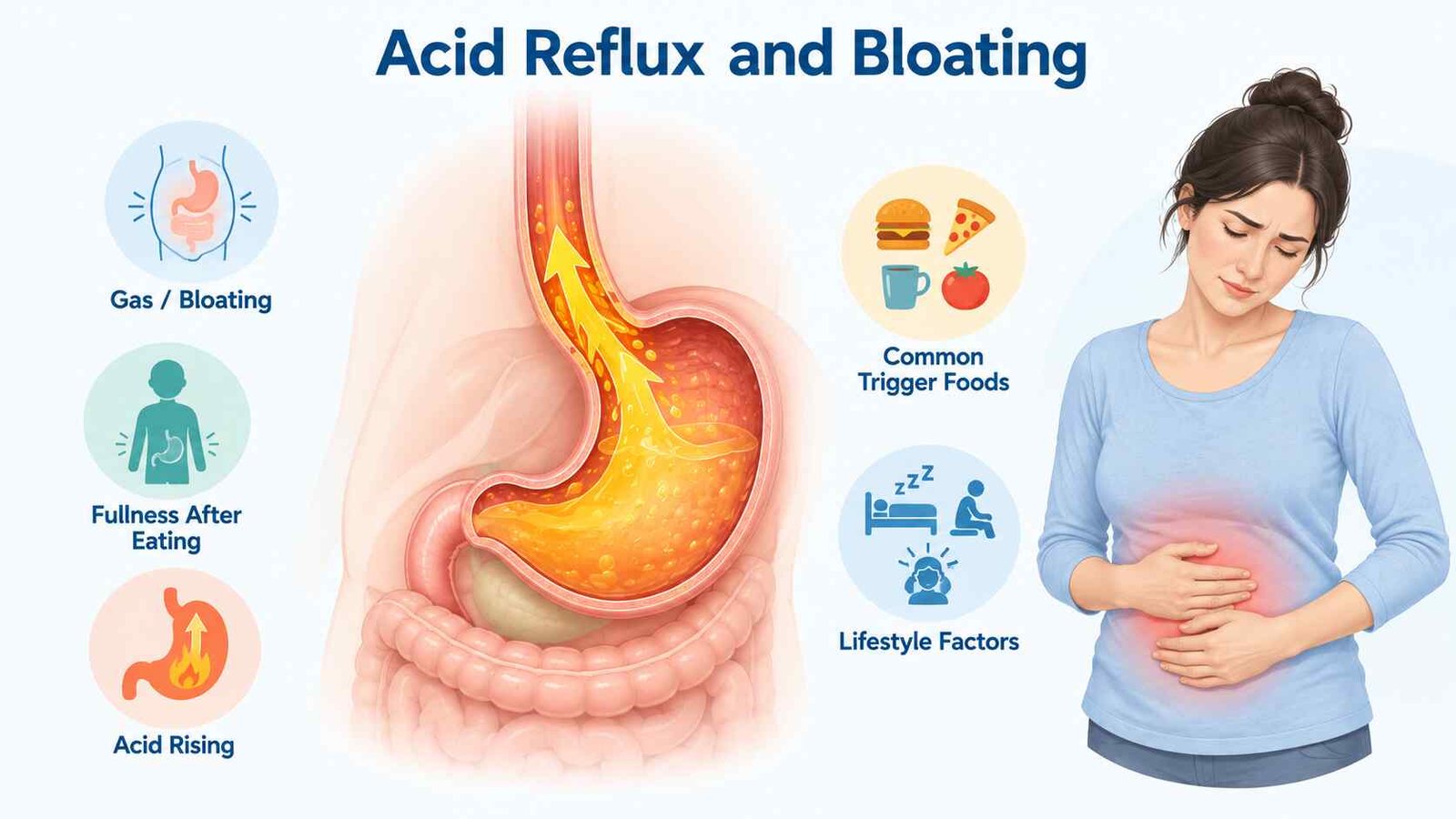

If you feel full, puffy, or tight in the upper belly and you also burp a lot or get heartburn, it is natural to wonder whether acid reflux is the cause. These symptoms often show up around the same time, especially after meals. That overlap can make them seem like one problem.
Acid reflux may be associated with bloating and frequent belching, but bloating is not one of its main symptoms. NIDDK lists heartburn and regurgitation as the common GERD symptoms, while bloating has many other possible causes, including swallowed air, indigestion, constipation, and food intolerance. So the symptoms can occur together without having the same cause.
This guide explains seven things worth knowing: how reflux and bloating can overlap, how burping may link them, other causes of bloating, how eating habits matter, what may help, why bloating alone does not point to reflux, and when to get medical advice. It offers general information, not a diagnosis.
Can Acid Reflux Cause Bloating?
Quick answer: Acid reflux may be associated with bloating and frequent belching, but bloating is not one of the main symptoms of acid reflux. Bloating can have many other causes, including swallowed air, indigestion, constipation, food intolerance, and other digestive conditions.
GERD commonly causes heartburn, regurgitation, and sometimes upper abdominal or chest discomfort. Bloating is more often tied to gas and other digestive issues. Still, the two can overlap.
Reflux may be associated with frequent burping, increased swallowing, swallowed air, upper digestive discomfort, and a feeling of fullness. Mayo Clinic notes that acid reflux or GERD can sometimes cause excessive belching by promoting increased swallowing. For background on why reflux happens, see our guide on what causes acid reflux.
7 Things You Should Know About Acid Reflux and Bloating
- Acid reflux and bloating can happen together
- Burping may be the link between reflux and bloating
- Bloating may have another cause
- Your eating habits may trigger both
- Simple changes may help
- Bloating alone doesn’t mean you have acid reflux
- Persistent bloating shouldn’t automatically be blamed on reflux
1. Acid Reflux and Bloating Can Happen Together
Having both symptoms does not necessarily mean reflux is directly causing the bloating. The two may simply share a trigger, such as a large meal, or they may be unrelated.
Symptoms that can overlap include:
- Burping
- Fullness
- Upper abdominal discomfort
- Heartburn
- Regurgitation (stomach contents rising into the throat or mouth)
- Nausea
The difference between association and direct cause matters. Reflux may be connected to some of these sensations, but it is rarely the only explanation for bloating.
2. Burping May Be the Link Between Reflux and Bloating
For many people, burping is the bridge between the two. A simple chain can explain it: swallowed air leads to burping, which can cause temporary pressure or fullness that feels like bloating.
People may swallow more air when they:
- Eat quickly
- Drink carbonated beverages
- Chew gum
- Smoke
- Talk while eating
Mayo Clinic explains that most belching is caused by swallowing excess air and that GERD can sometimes increase belching by promoting more swallowing. The American College of Gastroenterology (ACG) also notes that excessive belching is sometimes associated with GERD. Our article on early signs of acid reflux can help you notice other clues.
3. Bloating May Actually Have Another Cause
Not every case of bloating comes from reflux. Common alternatives include:
- Indigestion (dyspepsia)
- Constipation
- Food intolerance
- Gas buildup
- Irritable bowel syndrome (IBS)
- Carbonated drinks
- Eating too quickly
- Certain high-gas foods
- Other digestive conditions
NIDDK describes indigestion as a group of symptoms that most often includes pain, burning, or discomfort in the upper abdomen, along with bloating, nausea, or belching. Mayo Clinic notes that IBS can cause bloating, gas, abdominal pain, diarrhea, or constipation.
Bloating is also not fully understood. Mayo Clinic says that many people with bloating do not have more intestinal gas than others. Our guides on common digestive problems and how to improve gut health offer more context.
4. Your Eating Habits May Trigger Both Reflux and Bloating
Some eating behaviors can contribute to both problems:
- Large meals
- Eating too quickly
- High-fat meals
- Carbonated beverages
- Eating late at night
- Personal trigger foods
- Alcohol
- Overeating
For reflux, some people find that high-fat foods, coffee or caffeine, alcohol, chocolate, mint, acidic foods, and spicy foods worsen symptoms. Triggers vary between individuals, and the Mayo Clinic heartburn guide lists many as possible triggers, not universal ones. To explore this further, read about what makes acid reflux worse.
5. Simple Changes May Help Reduce Bloating and Reflux Symptoms
These steps are general and may not work for everyone.
Eating habits
- Eat smaller meals and avoid overeating.
- Eat more slowly.
- Limit carbonated beverages if they worsen bloating.
- Identify your personal food triggers, perhaps with a symptom diary.
Reflux habits
- Avoid lying down soon after eating.
- If you have nighttime symptoms, leave a few hours between dinner and bedtime.
- Follow your prescribed or recommended reflux treatment.
Other habits
- Stop smoking.
- Maintain a healthy weight if appropriate.
- Take a short walk after meals if it feels comfortable.
NIDDK’s treatment guidance lists dietary changes, weight management when appropriate, and quitting smoking among lifestyle measures that may help GERD. Our guide on how to manage acid reflux at home offers more detail, and our article on walking for health can help you build an easy habit.
6. Bloating Alone Doesn’t Mean You Have Acid Reflux
Symptoms overlap, and they cannot reliably identify the cause by themselves. This table shows general patterns, not diagnoses.
| Symptom | More commonly associated with |
|---|---|
| Heartburn | Acid reflux/GERD |
| Sour liquid or food coming back up | Acid reflux/GERD |
| Bloating | Gas, indigestion, constipation, IBS, food intolerance, and other causes |
| Frequent burping | Swallowed air, reflux, and other digestive causes |
| Lower abdominal bloating | Often intestinal rather than reflux-related |
If your main complaint is bloating without heartburn or regurgitation, reflux becomes less likely, though only a clinician can sort that out.
7. Persistent Bloating Shouldn’t Automatically Be Blamed on Acid Reflux
Seek medical advice if bloating:
- Keeps returning
- Does not improve with simple changes
- Interferes with daily activities
- Comes with significant abdominal pain
- Comes with vomiting
- Comes with diarrhea or persistent constipation
- Comes with unexplained weight loss
- Comes with blood in the stool
- Comes with chest discomfort
Mayo Clinic says that belching, gas, and bloating often resolve on their own or with simple changes, but it recommends seeing a healthcare professional when symptoms persist or come with warning signs such as severe or persistent abdominal pain, bloody stools, or weight loss. Our article on whether you should worry about abdominal pain can help you decide on next steps.
What Does Acid Reflux Bloating Feel Like?
There is no single “acid reflux bloating” sensation. People may describe:
- Fullness
- Pressure
- Tightness in the upper abdomen
- A frequent need to burp
- Upper abdominal discomfort
- Feeling overly full after eating
These sensations can also occur with gas, indigestion, constipation, IBS, and other digestive problems. For related upper belly symptoms, see our guide on acid reflux and abdominal pain.
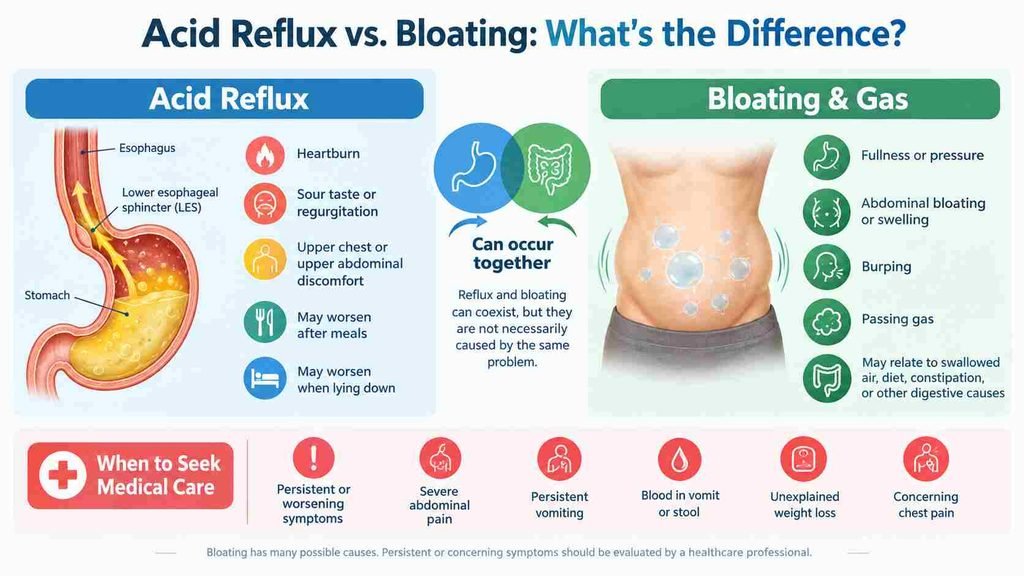
Acid Reflux vs. Gas and Bloating
| Feature | Acid reflux | Gas/bloating |
|---|---|---|
| Heartburn | Common | Not typical |
| Sour taste or regurgitation | Common | Not typical |
| Frequent burping | Can occur | Common |
| Abdominal fullness | May occur | Common |
| Visible abdominal swelling | Not typical | Can occur |
| Passing gas | Not typical | Common |
| Worse after certain foods | Possible | Possible |
| Worse lying down | Common reflux clue | Less specific |
These patterns are general and not diagnostic. Many people have features of both.
Can Acid Reflux Cause Gas?
Reflux and gas can occur together, but intestinal gas has different mechanisms and causes. It commonly comes from swallowed air or from bacteria in the gut breaking down undigested carbohydrates. Mayo Clinic describes swallowed air and certain foods as sources of intestinal gas.
Stomach acid itself is not known to directly create intestinal gas. If you pass a lot of gas, constipation, food intolerance, or another digestive issue may be a better explanation than reflux.
How to Reduce Bloating When You Have Acid Reflux
Try this simple checklist:
- Eat smaller meals.
- Slow down when eating.
- Reduce carbonated drinks if they trigger symptoms.
- Track foods that repeatedly cause symptoms.
- Avoid lying down soon after meals.
- Finish dinner a few hours before bedtime if nighttime reflux is an issue.
- Address constipation if it is present.
- Follow your healthcare professional’s reflux treatment plan.
The ACG notes that bloating and gas can sometimes relate to constipation, so look at bowel habits too. Our guide to high-fiber foods for digestive health may help, though adding fiber very quickly can worsen gas, so go gradually.
When Should You See a Doctor?
Contact a healthcare professional if you have:
- Frequent reflux symptoms
- Persistent bloating
- Symptoms that do not improve
- Difficulty or pain when swallowing
- Persistent vomiting
- Unexplained weight loss
- Signs of gastrointestinal bleeding, such as vomiting blood or black, tarry stools
- Severe or persistent abdominal pain
- Chest pain
Seek emergency care (call 911 in the U.S.) for chest pain with shortness of breath or pain in the jaw or arm. Chest pain should not automatically be assumed to be reflux.
Mayo Clinic advises urgent medical evaluation for severe chest pain with these symptoms. For more on warning signs, read our guide on when to see a doctor for acid reflux. You can also learn about heart attack symptoms.
How Is the Cause of Bloating Diagnosed?
A clinician may consider:
- Your symptom history
- Eating patterns
- Bowel habits
- Medicine use
- A physical examination
- Reflux evaluation when appropriate
- Testing for other digestive conditions when indicated
NIDDK explains that doctors usually diagnose GER and GERD from symptoms and medical history, with tests such as upper GI endoscopy used when symptoms persist, treatment does not help, or another condition or complication is suspected. Our guide on how acid reflux is diagnosed walks through the process.
Treatment When Acid Reflux and Bloating Occur Together
Treatment depends on the cause, so it helps to think of reflux and bloating separately.
For reflux, management may include lifestyle changes, over-the-counter medicines when appropriate, prescription medicines when needed, and further evaluation for persistent symptoms. See our overview of acid reflux treatment options for details.
For bloating, management depends on the underlying cause. It may involve dietary changes, changes in eating behavior, treating constipation, addressing food intolerance, or managing an underlying digestive condition. Mayo Clinic notes that simple behavioral and dietary changes may relieve bloating for some people.
Do not stop prescription medicines without speaking with your clinician.
Frequently Asked Questions
Can acid reflux cause bloating?
Reflux can occur alongside bloating and may contribute to frequent belching, but bloating has many other possible causes. Heartburn and regurgitation are the main reflux symptoms. NIDDK lists the common GERD symptoms.
Can acid reflux cause gas?
Acid reflux and gas can occur together, but intestinal gas usually has causes other than stomach acid. Swallowed air and certain foods are common sources. Mayo Clinic describes these causes.
Why do I feel bloated and have acid reflux?
Possible explanations include large meals, swallowed air, dietary triggers, indigestion, constipation, or another digestive condition. The two symptoms may share a trigger without one causing the other. If it keeps happening, a healthcare professional can help sort it out.
Does bloating make acid reflux worse?
Bloating and abdominal pressure may occur alongside reflux, but the relationship varies between people. It is more useful to identify your own triggers than to assume bloating always worsens reflux. Our guide on living with acid reflux may help.
How can I reduce bloating from acid reflux?
Smaller meals, slower eating, limiting personal triggers, avoiding carbonated drinks if they cause symptoms, and following reflux-management strategies may help. Not every approach works for everyone. Mayo Clinic suggests eating slowly and limiting swallowed air.
When is bloating a sign of something serious?
Persistent or severe bloating needs medical evaluation, especially with significant pain, vomiting, bleeding, unexplained weight loss, bowel changes, or chest discomfort. Mayo Clinic lists these warning signs. Most bloating is not dangerous, but these signs should not be ignored.
Conclusion
Acid reflux can occur along with bloating, and burping may be the link between them. Even so, bloating alone does not mean you have reflux, and many other digestive causes are possible.
Pay attention to which symptoms come together, when they appear, and what seems to trigger them. Simple steps such as smaller meals, slower eating, and an earlier dinner may help. For more guidance, see our articles on acid reflux treatment options and how to manage acid reflux at home.
If symptoms persist, worsen, or come with warning signs, talk with a healthcare professional. Chest pain should never automatically be blamed on reflux.
Sources
- National Institute of Diabetes and Digestive and Kidney Diseases (NIDDK). Symptoms & Causes of GER & GERD
- NIDDK. Diagnosis of GER & GERD
- NIDDK. Treatment for GER & GERD
- NIDDK. Definition & Facts of Indigestion
- Mayo Clinic. Belching, gas and bloating: Tips for reducing them
- Mayo Clinic News Network. Home remedies: Tips for reducing belching, intestinal gas and bloating
- Mayo Clinic. Irritable bowel syndrome: Symptoms and causes
- Mayo Clinic. Heartburn: Symptoms and causes
- Mayo Clinic News Network. Mayo Clinic Q and A: Is it heartburn or a heart attack?
- American College of Gastroenterology. Belching, Bloating and Flatulence
Medical Disclaimer: This article is for general information and education only. It does not provide medical advice, diagnosis, or treatment, and it is not a substitute for care from a qualified healthcare professional. Everyone’s health situation is different, so talk with your own clinician about your symptoms, medicines, and treatment choices. Never ignore or delay seeking professional advice because of something you read here. If you think you may be having a medical emergency, such as severe chest pain, call 911 or your local emergency number right away.