
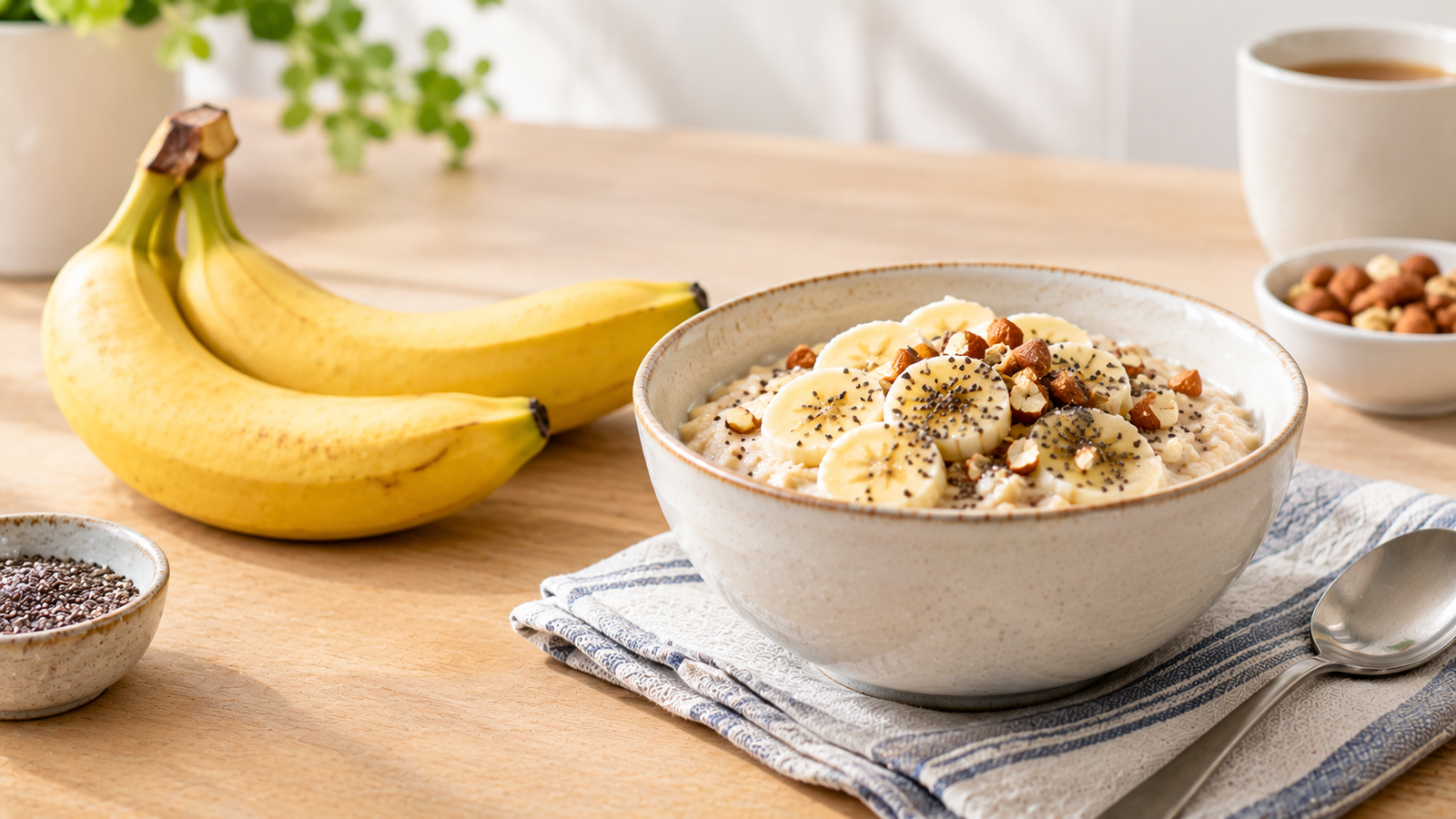

Bananas may be a good fruit choice for some people with acid reflux because they are relatively low in acidity and provide fiber. However, they do not reliably relieve heartburn for everyone, and persistent reflux may need medical evaluation. If you have been wondering whether a banana can calm a burning chest, the honest answer is: maybe, for some people.
Bananas are widely available and affordable, and they contain carbohydrates, fiber, potassium, and vitamin B6. Many people with reflux find them easier to tolerate than more acidic fruits such as oranges. Even so, research has not established bananas as a treatment for reflux, and individual responses differ.
This guide explains how acid reflux works, why bananas may suit some people, and when they might not. It also covers ripeness, portion sizes, other foods that may be easier to tolerate, lifestyle habits that help, and warning signs that call for a doctor. Everything here is general information, not individualized medical advice.
Are Bananas Good for Acid Reflux?
Bananas may fit into an acid-reflux-friendly eating pattern, but they are not a proven cure or a guaranteed way to stop heartburn. They are commonly listed among fruits that may be easier to tolerate than citrus for people who are sensitive to acidic foods, as the Cleveland Clinic’s GERD diet guide notes.
Low acidity does not automatically mean a food prevents reflux. Reflux can be affected by meal size, individual food sensitivity, body position, and other factors. The NIDDK emphasizes that triggers differ from person to person.
So the best approach is to observe how you feel after eating bananas rather than assuming they will always help. For background on the fruit itself, see our guide to the health benefits of bananas.
What Is Acid Reflux, and Why Does It Happen?
A quick look at the basics makes it easier to judge how food might play a role.
What Happens During Acid Reflux?
Acid reflux happens when stomach contents flow back into the esophagus. A muscle called the lower esophageal sphincter normally helps keep stomach contents from moving upward. When it relaxes at the wrong time or does not close well, reflux can occur.
Common symptoms include heartburn, a sour taste, regurgitation, and discomfort in the chest or throat, according to the NIDDK. Learn more in our article on what causes acid reflux.
How Is GERD Different From Occasional Reflux?
Gastroesophageal reflux disease (GERD) is a more persistent or complicated form of reflux. Frequent symptoms, or symptoms that lead to complications, may need a medical assessment. Symptoms alone do not always establish a diagnosis, so a healthcare professional can help sort out what is going on. See our guide on how acid reflux is diagnosed.
Can Food Choices Affect Reflux?
Yes, for some people. Foods and drinks commonly reported as triggers include high-fat foods, chocolate, coffee, alcohol, mint, spicy foods, and acidic foods such as citrus and tomatoes. The NIDDK notes that triggers vary, so a food that bothers one person may be fine for another.
The American College of Gastroenterology (ACG) guideline also points out that evidence for restricting many individual foods is limited. For more, see our article on what makes acid reflux worse.
5 Potential Reasons Bananas May Suit People With Acid Reflux
These are general reasons bananas may be well tolerated. They do not mean bananas treat reflux.
1. Bananas Are Relatively Low in Acidity
Some people prefer lower-acidity fruits when managing symptoms. Compared with oranges and lemons, bananas are milder. Still, acidity is only one factor, and it does not decide how any one person will respond.
2. They Provide Dietary Fiber
Fiber supports normal bowel function, and a banana is one way to add to your daily intake. Fiber is part of a healthy eating pattern, but bananas have not been established as a stand-alone treatment for GERD.
Increasing fiber abruptly can cause gas or bloating in some people, so build up gradually. Our list of high-fiber foods offers other options.
3. They Can Be a Convenient, Low-Fat Snack
A plain banana contains very little fat. Some people find that high-fat meals aggravate reflux, so a plain banana may feel easier than a rich snack. A banana will not guarantee protection from reflux, though, and total meal size and accompanying foods still matter.
4. They Provide Useful Nutrients
Bananas offer potassium, vitamin B6, carbohydrates, and smaller amounts of other nutrients. These support general health. They do not neutralize stomach acid or directly treat reflux. You can check nutrient values in the Harvard Nutrition Source overview of bananas.
5. They Can Replace Potentially Triggering Snacks
If a rich pastry, a chocolate-heavy snack, or a high-fat dessert tends to set off your symptoms, swapping in a plain banana may help. In that case the benefit probably comes from the overall food choice rather than a medicinal effect of bananas. Personal tolerance still matters.
Can Bananas Make Acid Reflux Worse?
They can for some people, though it is not common to hear bananas named as a major trigger. Many people tolerate them well, but they may not suit everyone.
A large snack or meal can cause discomfort even when the food itself is not very acidic. Adding chocolate, full-fat cream, or big spoonfuls of nut butter can change how a banana-based snack affects you. Some people also feel bloated or overly full after eating fruit, which can be uncomfortable. If bloating is a concern, see our article on acid reflux and bloating.
Rather than eliminating bananas right away, track your symptoms after eating them. Worsening symptoms after one banana do not prove the fruit is harmful for everyone.
A practical tip: if bananas seem to trigger symptoms, try a smaller portion another time, look at what you ate them with, or choose another fruit that sits better. Our guide on blueberries and acid reflux covers another option.
Are Ripe or Green Bananas Better for Acid Reflux?
There is no established reflux-specific rule that favors either one. Choose the ripeness you tolerate best.
Green or Less-Ripe Bananas
Less-ripe bananas are firmer and contain more resistant starch. This type of starch is processed differently from fully digestible starch and can be fermented by gut bacteria. There is no strong clinical evidence that green bananas are better than ripe ones for acid reflux.
Yellow or Fully Ripe Bananas
Ripening changes a banana’s starch content, texture, and sweetness. Ripe bananas may be easier for some people to chew and eat. They have not been shown to reliably reduce reflux, and green bananas have not been shown to cause heartburn.
How Should You Eat Bananas if You Have Acid Reflux?
These suggestions help you test your own tolerance. They are not guaranteed to prevent symptoms.
Start With a Moderate Portion
One small or medium banana is a practical starting point. That is not a medically prescribed dose, and it is not a guaranteed amount for symptom relief. If you eat bananas often, our article on eating bananas every day offers more detail.
Pair Bananas With Other Well-Tolerated Foods
- A banana with plain oatmeal.
- Banana slices with plain, low-fat yogurt, if dairy agrees with you (see our guide on yogurt and acid reflux).
- A banana with whole-grain cereal.
- A banana on its own as a snack between meals.
Toppings and accompaniments matter. Chocolate, high-fat cream, or large portions of rich foods may bother some people.
Pay Attention to Timing and Portion Size
Moderate-sized meals are often easier on reflux. Eating a large amount shortly before lying down may make symptoms worse. If you have nighttime reflux, the NIDDK suggests finishing meals at least three hours before bed.
Other Foods That May Be Easier to Tolerate With Acid Reflux
These are options to try, not a universal treatment diet. Tolerance differs even among lower-acidity foods, so use your own symptoms as a guide.
Fruits
- Melons
- Pears
- Apples, if tolerated
- Bananas
Vegetables
- Broccoli
- Green beans
- Carrots
- Leafy greens
How vegetables are prepared matters. Added fats or spices may change how well they sit.
Grains and Other Foods
- Oatmeal
- Whole-grain bread
- Rice
- Lean proteins prepared with less added fat
Build balanced meals rather than counting on one food to control symptoms. Our guide to building a balanced diet can help, and you may also be curious about ginger and acid reflux.
Lifestyle Tips That May Help Manage Acid Reflux
Food is only part of the picture. The NIDDK and the ACG both discuss these habits. See also our guide to managing acid reflux at home.
Avoid Lying Down Immediately After Eating
Stay upright after meals. Gravity helps limit how much stomach content moves toward the esophagus.
Leave Time Between Dinner and Bed
Try to finish meals at least three hours before you lie down or go to sleep, especially if you have nighttime symptoms.
Identify Personal Trigger Foods
Keep a brief food and symptom diary. Look for repeatable patterns instead of eliminating many foods at once.
Consider Other Evidence-Based Measures
Smaller meals can help if large ones bring on symptoms. For people with overweight or obesity, weight management may help (see our weight management guide). Medication may be appropriate when lifestyle changes are not enough, and you can read about treatment options.
Do not stop prescribed reflux medication or replace it with bananas or other foods.
When Should You See a Doctor About Acid Reflux?
Talk with a healthcare professional if reflux is frequent, persistent, or getting worse. Ongoing reflux may need diagnosis and treatment, and food choices alone may not control GERD. Our article on when to see a doctor for acid reflux has more detail.
Seek prompt medical evaluation if you have difficulty swallowing, painful swallowing, persistent vomiting, or unexplained weight loss. Chest pain should not automatically be blamed on heartburn. Get emergency care for severe or unexplained chest pain, especially with shortness of breath, sweating, dizziness, or pain that spreads to the arm, jaw, or back. See our guide on when chest pain is an emergency.
Frequently Asked Questions About Bananas and Acid Reflux
Can Bananas Stop Heartburn Immediately?
There is no reliable evidence that bananas stop heartburn right away. Some people tolerate them well, but persistent symptoms may need appropriate treatment. For sudden or severe symptoms, seek medical advice.
Are Bananas Acidic or Alkaline?
Bananas are generally considered a relatively low-acidity fruit. Their acidity alone does not establish whether they will improve reflux symptoms, and the NIDDK stresses personal triggers over broad food labels.
Is It Okay to Eat Bananas Every Day if You Have Acid Reflux?
Many people can include bananas in their daily diet if they tolerate them. Overall diet, portion size, and individual triggers matter more than a universal rule about daily bananas.
Are Bananas Better Than Oranges for Acid Reflux?
Some people with reflux tolerate bananas better because oranges are more acidic. Responses vary, though, and oranges do not trigger symptoms in everyone. Citrus is among the foods the NIDDK lists as common triggers.
Should I Eat a Banana Before Bed for Acid Reflux?
A banana may be tolerated as a food, but eating shortly before lying down can worsen nighttime reflux. Finishing meals and snacks at least three hours before bed may help.
Do Bananas Heal GERD?
No. Bananas can be part of a balanced diet, but they have not been proven to heal GERD or replace medical treatment.
The Bottom Line: Are Bananas Good for Acid Reflux?
Bananas may be a suitable, relatively low-acidity fruit for many people with acid reflux. Individual tolerance varies, and the evidence does not support bananas as a cure. Choose moderate portions, build balanced meals, and track your own triggers.
If symptoms are persistent or severe, talk with a healthcare professional. Personal triggers, meal timing, overall eating habits, and appropriate medical care matter more than relying on any single food. For more everyday guidance, see our article on living with acid reflux.
Sources
- National Institute of Diabetes and Digestive and Kidney Diseases. Eating, Diet, & Nutrition for GER & GERD
- National Institute of Diabetes and Digestive and Kidney Diseases. Acid Reflux (GER & GERD) in Adults
- Katz PO, et al. ACG Clinical Guideline for the Diagnosis and Management of Gastroesophageal Reflux Disease. American College of Gastroenterology.
- Cleveland Clinic. GERD Diet: Foods to Eat and Avoid
- Harvard T.H. Chan School of Public Health. Bananas
Medical Disclaimer: This article is for general information and education only. It is not medical advice and does not replace care from a doctor or other qualified healthcare professional. Everyone’s health needs are different, so please talk with your healthcare provider before changing your diet or treatment. Never stop prescribed reflux medicine without medical guidance. If you have severe chest pain, trouble breathing, trouble swallowing, or vomiting that will not stop, seek emergency care right away.