
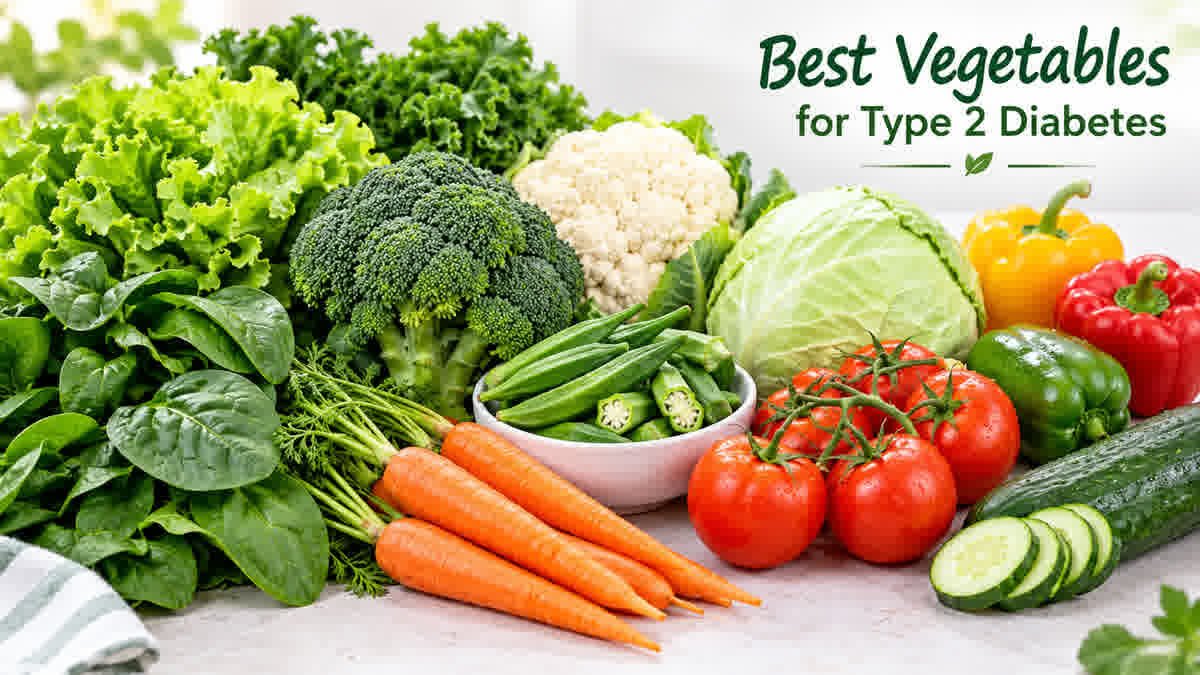

Non-starchy vegetables such as leafy greens, broccoli, cauliflower, cabbage, peppers, okra, and green beans are useful choices for many people with type 2 diabetes. They provide fiber and nutrients while generally containing fewer carbohydrates per serving than starchy vegetables. The American Diabetes Association (ADA) recommends emphasizing non-starchy vegetables as part of a varied eating pattern.
Vegetables contribute fiber, vitamins, minerals, and variety to meals, and many are naturally low in calories. Still, carbohydrate content and portion size matter, especially for starchy options like potatoes and corn. No single vegetable treats or controls diabetes. Your overall eating pattern, your medicines, your activity level, and your personal care plan matter far more than any one food.
This guide explains what makes vegetables helpful, how starchy and non-starchy types differ, and which 15 vegetables are practical everyday choices, including familiar South Asian options such as okra, bitter gourd, and amaranth leaves. You will also find cooking tips, advice on portioning starchy vegetables, and a simple sample meal plan. If you want a broader overview first, see our guide to type 2 diabetes.
What Makes Vegetables Good for People With Diabetes?
Vegetables support diabetes-friendly eating because they add volume, fiber, and nutrients to a meal without adding many carbohydrates. They also make it easier to build balanced plates. Here is what to know about the main benefits.
Fiber and overall nutrition
Most vegetables provide dietary fiber, along with vitamins such as vitamin C and folate, and minerals such as potassium and magnesium. Fiber helps you feel full and supports digestive health. You can explore more foods that provide fiber for ideas beyond vegetables.
For a wider look at the nutritional value of vegetables, read about the benefits of eating vegetables daily.
Carbohydrate content
Many non-starchy vegetables contain fewer carbohydrates per serving than potatoes, corn, or green peas. This is one reason they are encouraged in diabetes meal plans. Actual amounts vary by vegetable and serving size, and you can check specific values in the USDA FoodData Central database.
Variety matters
Different colors and types of vegetables offer different nutrients. Rather than relying on one “superfood,” try to rotate leafy greens, cruciferous vegetables, and colorful options through your week. Variety also keeps meals interesting, which makes healthy habits easier to maintain.
Fresh, frozen, and canned options
Fresh vegetables are not the only choice. Plain frozen vegetables can be convenient and nutritious, and canned vegetables can work well if you choose lower-sodium versions and rinse them. Check labels for added sauces, sugar, or salt. Our article on frozen vegetables covers this in more detail.
Non-Starchy vs. Starchy Vegetables
Non-starchy vegetables have little starch and fewer carbohydrates per serving, while starchy vegetables such as potatoes, corn, and green peas contain more. Both groups can have a place in a balanced diet. Our guide to starchy vs. non-starchy vegetables explains the differences in more depth.
What are non-starchy vegetables?
The ADA’s list of non-starchy vegetables includes broccoli, cauliflower, cabbage, spinach and other leafy greens, cucumbers, tomatoes, mushrooms, okra, eggplant, peppers, carrots, and green beans. The CDC describes them as most vegetables other than potatoes, green peas, corn, and winter squash.
What are starchy vegetables?
Common starchy vegetables include potatoes, sweet potatoes, corn, green peas, and winter squash. The CDC groups these with carbohydrate foods for meal planning. They also provide fiber, potassium, and other nutrients.
Can people with diabetes eat starchy vegetables?
Yes. Starchy vegetables can fit into a balanced meal plan, as long as you consider the portion and what else is on your plate. Pairing a modest serving with non-starchy vegetables and protein is a practical approach. Your care team can help you decide how much carbohydrate suits you.
15 Best Vegetables for Type 2 Diabetes
These vegetables are widely available, versatile, and generally considered non-starchy choices. The order below is not a ranking. Research does not support claiming that one vegetable lowers blood sugar more than another.
1. Spinach and other leafy greens
Spinach provides folate, vitamin K, and fiber with very few carbohydrates. Use it in salads, soups, dals, omelets, or lightly cooked sides. Our guide on the health benefits of leafy green vegetables offers more ideas.
2. Broccoli
Broccoli contains fiber and vitamin C. Steam it, roast it, or stir-fry it lightly. As a cruciferous vegetable, it pairs well with garlic, lemon, and spices. Learn more about cruciferous vegetables.
3. Cauliflower
Cauliflower is flexible. It works in curries, soups, roasted dishes, and as grated “cauliflower rice” to partly replace rice on the plate. It also absorbs spices well, which makes it satisfying without heavy sauces.
4. Cabbage
Cabbage is affordable and keeps well. Enjoy it raw in salads and slaws, lightly cooked as a side dish, or added to vegetable stir-fries and soups. Red, green, and napa varieties all fit.
5. Bell peppers
Bell peppers are a good source of vitamin C and add color and crunch. Eat them raw with a dip, toss them into salads, or cook them with other vegetables. Green, red, and yellow peppers can all work.
6. Okra
Okra is popular in South Asian cooking and contains fiber. Try it lightly sauteed, roasted, or in a vegetable curry. Avoid deep-frying it often, since added oil and batter change the overall nutrition of the dish.
7. Bitter gourd (bitter melon)
Bitter gourd is a nutritious traditional vegetable, and it is fine to enjoy as part of meals. However, it should not be treated as a diabetes remedy. A systematic review and meta-analysis found insufficient evidence that bitter melon improves blood sugar control. Talk with your doctor before using bitter gourd juice or supplements, especially if you take diabetes medicines.
8. Green beans
Green beans are an easy side dish that goes with almost any meal. Steam or saute them with garlic, or add them to mixed vegetable dishes. Frozen plain green beans are a convenient backup.
9. Eggplant
Eggplant is soft and filling when roasted, grilled, or cooked with a moderate amount of oil. It can absorb a lot of oil during frying, so use measured amounts if you are watching fat and calories.
10. Tomatoes
Tomatoes can be eaten fresh, cooked into curries, or added to soups and salads. Plain tomatoes are different from ketchup or bottled sauces, which may contain added sugar and sodium. Check labels when buying prepared products.
11. Cucumbers
Cucumbers are crisp and refreshing. Use them in salads, as a fresh side, or as unsweetened cucumber-infused water. They are mostly water, so they are useful for adding volume to a meal.
12. Carrots
Some people avoid carrots because they taste sweet. The ADA lists carrots as a non-starchy vegetable, so they can fit into a balanced eating pattern. Enjoy them raw, steamed, or in stir-fries and soups, and pay attention to overall portions.
13. Mushrooms
Mushrooms add a savory flavor to soups, omelets, stir-fries, and curries. They can help make a meal feel substantial. Cook them with modest amounts of oil, and avoid heavy cream sauces if you are limiting saturated fat.
14. Zucchini
Zucchini is a mild summer squash that can be roasted, grilled, sauteed, or added to mixed vegetable dishes and soups. It cooks quickly and works well in many cuisines.
15. Amaranth leaves and other local greens
Amaranth leaves (such as lal shak and data shak), mustard greens, and other locally available greens are valuable everyday vegetables. They are commonly cooked in light stir-fries or simple dishes. Choose what is fresh, affordable, and familiar to you.
For storage tips that help you waste less, see our guide on how to wash and store vegetables. For another list of options, you can also read our article on the best vegetables for people with diabetes.
How to Eat Vegetables to Support Blood Sugar Management
How you prepare and combine vegetables matters as much as which ones you choose. These approaches are general ideas, not personalized instructions.
Use the Diabetes Plate Method
The CDC describes the Diabetes Plate Method as a simple way to plan meals. Using a nine-inch plate, you fill:
- Half the plate with non-starchy vegetables
- One quarter with protein foods
- One quarter with carbohydrate foods, such as grains, starchy vegetables, or fruit
This is a starting framework, not a prescription. Your needs may differ based on your medicines, goals, and health conditions. A broader diabetes-friendly eating plan can help you build on it.
Choose cooking methods that suit your needs
Steaming, roasting, grilling, and lightly sauteing are practical ways to cook vegetables. Use a moderate amount of oil, and add flavor with herbs, spices, garlic, ginger, lemon, or vinegar. Raw and cooked vegetables each have benefits, as explained in our guide to raw vs. cooked vegetables.
Watch sauces and additions
Sugary sauces, heavy dressings, large amounts of salt, and extra fat can change a vegetable dish’s nutritional profile. Deep-fried vegetables, creamy casseroles, and sweetened glazes are examples. Read labels on prepared products and choose lower-sodium options when possible.
Vegetables to Eat in Moderation or Portion Carefully
Some vegetables contain more carbohydrates per serving, so portion awareness helps. That does not mean they are forbidden. The goal is a balanced meal, not an “approved” or “banned” list.
Potatoes and sweet potatoes
Potatoes and sweet potatoes provide more carbohydrates than most non-starchy vegetables. They can still fit into an individualized plan. Consider the serving size, the cooking method (boiled or baked versus fried), and what you pair them with.
Corn and green peas
Corn and green peas count as carbohydrate foods in the Diabetes Plate Method. They also provide fiber and nutrients. Measuring a portion and balancing it with non-starchy vegetables and protein can make them easier to include.
Vegetable preparations with added ingredients
A plain steamed vegetable and a deep-fried or creamy version of the same vegetable are very different dishes. Added batter, cream, cheese, sugar, or large amounts of oil can raise calories, saturated fat, sodium, or carbohydrates. Compare preparations rather than judging the vegetable alone.
What about carrots, beets, and tomatoes?
A vegetable’s natural sweetness does not automatically make it unsuitable. Carrots and tomatoes are listed by the ADA as non-starchy, and beets can also fit into balanced meals in sensible portions. Our article on beetroot health benefits provides additional details.
A Simple Vegetable-Focused Meal Plan
This sample is an example of how vegetables can be spread through the day. It is not a strict diet or a personalized plan.
- Breakfast: Eggs or tofu scrambled with spinach and tomatoes.
- Lunch: Fish, chicken, tofu, or lentils with cabbage, cucumber, and leafy greens, plus an appropriate portion of rice or another carbohydrate.
- Snack: Fresh cucumber or carrot sticks, if you want a snack.
- Dinner: Okra, eggplant, cauliflower, or mixed vegetables with a protein food and a portion of a preferred carbohydrate food.
Carbohydrate needs vary from person to person. This is especially important for people who take insulin or other medicines that can cause low blood sugar. Discuss meal planning with your diabetes care team, a registered dietitian, or a certified diabetes care and education specialist. For more ideas, see our tips on how to eat more vegetables.
Frequently Asked Questions
What are the best vegetables for type 2 diabetes?
Non-starchy vegetables such as spinach, broccoli, cauliflower, cabbage, peppers, okra, and green beans are useful choices for many people. They provide fiber and nutrients while generally having fewer carbohydrates per serving than starchy vegetables. The best choices are the ones you enjoy and can eat regularly (ADA).
Which vegetables are lowest in carbohydrates?
Leafy greens, cucumbers, mushrooms, zucchini, and many cruciferous vegetables are generally lower in carbohydrates per serving. Exact amounts depend on the portion size and preparation. You can compare specific vegetables using the USDA FoodData Central database.
Can people with diabetes eat carrots?
Yes. Carrots are listed by the ADA as a non-starchy vegetable and can fit into a balanced eating pattern. Their natural sweetness does not make them off-limits. Consider your portion and the total carbohydrate content of the whole meal (ADA).
Are tomatoes good for people with diabetes?
Plain tomatoes are generally considered a non-starchy vegetable and can be eaten fresh or cooked. The main concern is processed products. Ketchup and some sauces may contain added sugar or a lot of sodium, so check the label before buying.
Can people with type 2 diabetes eat potatoes?
Yes, in many cases. Potatoes contain more carbohydrates than most non-starchy vegetables, so portion size and meal composition matter. They can be part of an individualized plan alongside non-starchy vegetables and protein foods (CDC).
Is bitter gourd a treatment for diabetes?
No. Bitter gourd can be eaten as a nutritious vegetable, but a meta-analysis of clinical trials found insufficient evidence that it improves blood sugar control. If you take diabetes medicines, ask your doctor before using bitter gourd juice or supplements.
Are frozen vegetables suitable for people with diabetes?
Yes, plain frozen vegetables can be a convenient and nutritious option. Choose varieties without added sauces, sugar, or excess salt, and check the ingredient list. Frozen vegetables can help you eat more vegetables when fresh produce is expensive or hard to find.
How many servings of vegetables should a person with diabetes eat each day?
There is no universal daily number that suits everyone. A common starting point is to fill half your plate with non-starchy vegetables at lunch and dinner, as in the Diabetes Plate Method (CDC). A dietitian can help you tailor amounts to your needs.
Conclusion
Non-starchy vegetables are among the most practical foods for building balanced meals with type 2 diabetes. Starchy vegetables can also fit when portions are considered, and cooking methods and added ingredients make a real difference. Variety, enjoyment, and consistency matter more than any single food.
Choose a mix of vegetables you like, build your plate with the Diabetes Plate Method as a starting point, and ask your healthcare professional or a registered dietitian to personalize your plan.
Sources
- American Diabetes Association. Non-Starchy Vegetables
- Centers for Disease Control and Prevention. Diabetes Meal Planning
- Centers for Disease Control and Prevention. Carbohydrate Lists: Starchy Foods
- Nutrition & Diabetes. The effect of bitter melon (Momordica charantia) in patients with diabetes mellitus: a systematic review and meta-analysis
- U.S. Department of Agriculture. FoodData Central
Medical Disclaimer: This article is for general educational purposes only and is not medical advice. It does not replace guidance from your doctor, dietitian, or diabetes care team. Diabetes care is different for every person, so please talk with a qualified healthcare professional before changing your diet, medicines, or supplements. If you have symptoms of very low or very high blood sugar, seek medical care right away.