
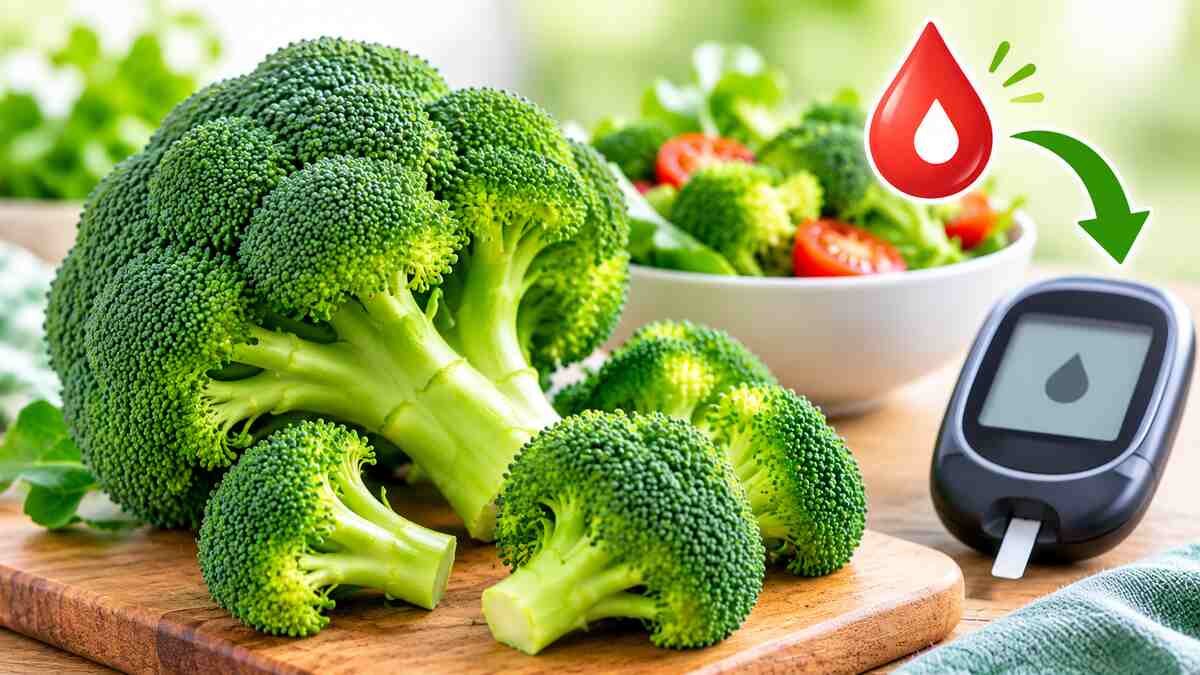

Broccoli is a nutritious, non-starchy vegetable that can be a useful addition to a blood-sugar-friendly diet. But does broccoli actually lower blood sugar? Broccoli generally has a modest effect on blood glucose because it contains relatively little carbohydrate, while research into its potential glucose-lowering effects is still developing. Its fiber and plant compounds may offer extra benefits, but broccoli should not be considered a treatment for diabetes.
That distinction matters. A food that has little impact on blood sugar is different from a food that actively lowers it, and some of the most exciting headlines about broccoli involve concentrated extracts rather than the florets on your plate. Understanding the difference helps you make realistic, safe choices.
In this guide, you will learn how broccoli fits into a blood-sugar-friendly eating pattern, what recent clinical research shows about sulforaphane, how much to eat, the best ways to prepare it, and which precautions apply. If you manage diabetes or prediabetes, talk with your healthcare team about how this fits your individual plan.
Does Broccoli Lower Blood Sugar?
Quick answer: Broccoli can help support blood sugar management because it is a low-carbohydrate, non-starchy vegetable that contains fiber. It generally has a modest effect on blood glucose when eaten as part of a balanced meal. However, broccoli is not a proven treatment for high blood sugar or diabetes.
The short answer
Broccoli is generally a good vegetable choice for people who monitor their blood glucose. It is relatively low in carbohydrate, provides fiber, and is classified as a non-starchy vegetable. It also pairs easily with protein and other foods to build balanced meals.
What broccoli does not do is reliably or immediately lower a high blood glucose reading. If your blood sugar is elevated, eating broccoli will not fix it, and you should follow the guidance of your healthcare professional.
Why broccoli may be helpful
There is an important difference between a food having a modest effect on blood glucose and a food actively lowering it. Broccoli falls into the first category. The American Diabetes Association includes broccoli on its list of non-starchy vegetables, which provide fiber and nutrients while generally containing little carbohydrate.
One serving of non-starchy vegetables (1 cup raw or half a cup cooked) contains about 5 grams of carbohydrate, according to the CDC’s reprint of the ADA carbohydrate lists. For a broader look at your options, see our guide to the best vegetables for diabetes.
How Broccoli May Support Blood Sugar Management
Broccoli supports a blood-sugar-conscious diet in several ways. None of these makes it a medical treatment, but together they explain why it appears so often in diabetes-friendly meal plans.
1. Broccoli contains relatively few carbohydrates
Carbohydrates are the nutrient that raises blood glucose most after eating. Non-starchy vegetables such as broccoli provide fewer carbohydrates than starchy foods, so they fit comfortably into a blood-sugar-conscious pattern. To learn more about the difference, see our article on starchy vs. non-starchy vegetables.
Broccoli is not carbohydrate-free, though. One cup of raw chopped broccoli contains about 6 grams of carbohydrate and about 2.4 grams of fiber, according to USDA FoodData Central. Portion sizes still matter, especially if you count carbohydrates.
2. Its fiber may help support glucose management
Dietary fiber slows digestion of some foods and adds bulk to meals. The ADA’s food guidance notes that higher-fiber foods can help slow the digestion of carbohydrate foods, which lowers the chance of sharp blood sugar spikes after meals. Fiber also supports bowel regularity and fits into a healthy dietary pattern. See our list of high-fiber foods for digestive health.
The fiber in broccoli is helpful, but it should not be described as a guaranteed way to lower blood glucose. The effect depends on the whole meal and on each person.
3. Broccoli contains sulforaphane
Sulforaphane is a plant compound associated with cruciferous vegetables. It is formed from glucosinolates in broccoli through the action of an enzyme called myrosinase, which is activated when broccoli is chopped or chewed. Researchers are studying sulforaphane in relation to glucose production by the liver and insulin resistance.
An important caution applies here. Eating a serving of broccoli does not produce the same effect as taking a concentrated broccoli sprout extract, because the doses are very different. Our overview of cruciferous vegetables explains more about these compounds.
4. Broccoli helps you build a balanced plate
Balanced meals are often more useful for blood glucose than focusing on any one ingredient. The ADA’s Diabetes Plate method suggests filling half your plate with non-starchy vegetables, about a quarter with protein, and about a quarter with carbohydrate foods. Practical combinations include:
- Broccoli with fish and a moderate portion of brown rice
- Broccoli with lentils and other vegetables
- Broccoli with eggs and whole-grain bread
The CDC also offers carbohydrate lists that show how vegetable, starch, and protein servings fit together.
5. Broccoli contributes to overall metabolic health
Broccoli provides vitamins, minerals, fiber, and plant compounds that support a healthy eating pattern. It does not directly reverse insulin resistance, prevent diabetes, or lower HbA1c on its own. For context on these terms, you can read our guides to insulin resistance and the A1C test.
What Research Says About Broccoli and Blood Sugar
The research on broccoli and glucose is interesting but easy to misread. The key is to separate studies on whole broccoli from studies on sprouts, powders, and concentrated extracts.
What studies say about sulforaphane
Researchers at the University of Gothenburg have studied sulforaphane delivered as a broccoli sprout extract. In a 2017 study published in Science Translational Medicine, a sulforaphane-rich extract lowered fasting blood glucose in people with obesity and poorly controlled type 2 diabetes over 12 weeks.
The doses in this kind of research are concentrated. They are not the same as eating a typical serving of cooked broccoli.
What the 2025 clinical trial found
A 2025 randomized, double-blind, placebo-controlled trial in Nature Microbiology tested broccoli sprout extract in adults with prediabetes who were not taking medication. Participants took the extract (35 people) or a placebo (39 people) once daily for 12 weeks.
Here is what the researchers reported:
- The extract did not meet the trial’s prespecified primary outcome, a 0.3 mmol/L reduction in fasting glucose compared with placebo.
- Overall, fasting blood glucose was about 0.2 mmol/L (roughly 4 mg/dL) lower in the extract group.
- A subgroup with specific characteristics, including mild obesity, low insulin resistance, and reduced insulin secretion, had a larger response of about 0.4 mmol/L (roughly 7 mg/dL).
- Gut bacteria that help convert the compound to its active form appeared to play a role.
- Some gastrointestinal side effects were observed, but no severe adverse events.
This research used a concentrated extract, not ordinary broccoli servings. The overall effect was modest, and more research is needed to learn whether similar effects occur with normal dietary broccoli.
Does this mean broccoli can treat diabetes?
No. Food choices can support diabetes management, but broccoli cannot replace prescribed medication, glucose monitoring, or an individualized nutrition plan. Think of broccoli as a helpful part of the plan, not a substitute for it.
How Much Broccoli Should You Eat for Blood Sugar Management?
What is a reasonable serving?
Quick answer: A half cup of cooked broccoli or one cup of raw broccoli is a practical serving. The American Diabetes Association defines a serving of non-starchy vegetables this way.
There is no broccoli-specific prescription for blood sugar. Your overall vegetable intake, carbohydrate intake, and medication matter much more. The ADA suggests aiming for several servings of non-starchy vegetables a day, and our guide on how many vegetables a day can help you plan.
Can you eat broccoli every day?
Most people can include broccoli regularly, including daily, if they tolerate it well. There is no requirement to eat it every day, and variety is valuable. See our article on eating broccoli every day for more detail.
Does eating more broccoli lower blood sugar more?
Not necessarily. Larger portions do not guarantee a bigger glucose-lowering effect. Total carbohydrate intake, meal composition, medication, activity, and individual response all play a role in your blood sugar readings.
Best Ways to Eat Broccoli for Blood Sugar Management
Steamed broccoli
Steaming is a simple way to cook broccoli while keeping its texture and most nutrients. It is easy to pair with protein and whole grains.
Raw broccoli
Raw broccoli works well in salads and as a snack with a dip. It may cause more gas or bloating in some people than cooked broccoli. Our comparison of raw vs. cooked vegetables explains the tradeoffs.
Roasted broccoli
Roast broccoli with a modest amount of olive oil, garlic, and spices. Be aware that sweet sauces, added sugar, or refined carbohydrate toppings can change the nutritional profile of the dish.
Broccoli with balanced meals
- Broccoli with grilled fish and a moderate portion of rice
- Broccoli with lentils and whole grains
- Broccoli with eggs, tofu, or chicken
- Broccoli in vegetable soups or stir-fries
Frozen broccoli without added sauces is another convenient option, as covered in our guide to frozen vegetables. For a broader look at its nutrients, see the health benefits of broccoli.
Possible Side Effects and Precautions
Gas and bloating
Broccoli contains fiber and fermentable carbohydrates that can cause gas in some people. Smaller portions, gradual increases in fiber, and cooking broccoli until tender can help.
Broccoli and diabetes medication
Ordinary broccoli is not generally considered a food that directly causes low blood sugar (hypoglycemia). However, people who take insulin or other medications that can cause low blood glucose should follow their treatment plan and monitor glucose as their healthcare team advises.
Do not adjust your medication based on how much broccoli you eat. If you notice unusual highs or lows, contact your healthcare professional.
Vitamin K and blood thinners
Broccoli contains vitamin K, which affects blood clotting. People who take warfarin should keep their vitamin K intake consistent, as explained by the NIH Office of Dietary Supplements, and talk with their healthcare professional before making major dietary changes.
Can broccoli replace diabetes medication?
No. Broccoli cannot replace prescribed medication, glucose monitoring, or medical care. It can support your overall eating pattern alongside them.
Frequently Asked Questions About Broccoli and Blood Sugar
Does broccoli lower blood sugar immediately?
No. Broccoli is not a rapid glucose-lowering treatment. It is a low-carbohydrate vegetable that generally has a modest effect on blood glucose, and it does not replace medical care for high blood sugar.
Is broccoli good for people with type 2 diabetes?
Broccoli can be a useful part of a balanced eating pattern for many people with type 2 diabetes, because it provides fiber and nutrients with relatively little carbohydrate. The ADA lists it among its recommended non-starchy vegetables. For more on this condition, see our guide to type 2 diabetes.
Is raw or cooked broccoli better for blood sugar?
Both can fit into a blood-sugar-friendly diet. The overall meal and portion size matter more than whether broccoli is raw or cooked, so choose the form you enjoy and tolerate best.
Does broccoli help with insulin resistance?
Researchers are studying sulforaphane and related compounds, but ordinary broccoli has not been established as a treatment for insulin resistance. It is best viewed as one part of a healthy diet, along with activity and medical guidance. See our article on natural home remedies for insulin resistance for context.
Can broccoli lower HbA1c?
There is not enough evidence to claim that eating broccoli alone lowers HbA1c. HbA1c reflects your average blood glucose over about three months and depends on many factors, including medication, diet, and activity.
Can I eat broccoli with rice if I have diabetes?
Yes, broccoli can be paired with rice as part of a balanced meal. Portion size and overall meal composition matter, so measure the rice and fill half your plate with non-starchy vegetables like broccoli.
Conclusion: Broccoli and Blood Sugar
Broccoli is a non-starchy vegetable with relatively little carbohydrate, and its fiber and plant compounds make it a helpful part of a healthy eating pattern. It generally has a modest effect on blood glucose, while research on sulforaphane is promising but not conclusive for ordinary broccoli intake.
Broccoli can be a smart addition to a blood-sugar-friendly diet, but it is not a substitute for diabetes treatment. Enjoy it alongside protein-rich foods, appropriate carbohydrate portions, and a variety of other vegetables to build balanced meals, and work with your healthcare team on an individualized plan.
Sources
- American Diabetes Association. Non-Starchy Vegetables.
- Centers for Disease Control and Prevention. Carbohydrate lists: starchy foods and non-starchy vegetables (reprinted from the American Diabetes Association).
- Dwibedi C, et al. Effect of broccoli sprout extract and baseline gut microbiota on fasting blood glucose in prediabetes: a randomized, placebo-controlled trial. Nature Microbiology, 2025.
- Axelsson AS, et al. Sulforaphane reduces hepatic glucose production and improves glucose control in patients with type 2 diabetes. Science Translational Medicine, 2017.
- U.S. Department of Agriculture. FoodData Central.
- NIH Office of Dietary Supplements. Vitamin K: Fact Sheet for Health Professionals.
Medical Disclaimer: This article is for informational purposes only and is not a substitute for professional medical advice, diagnosis, or treatment. If you have diabetes or prediabetes, talk with your healthcare team before making dietary changes, and never adjust or stop prescribed medication without their guidance. Seek urgent medical care for symptoms of very high or very low blood sugar.