
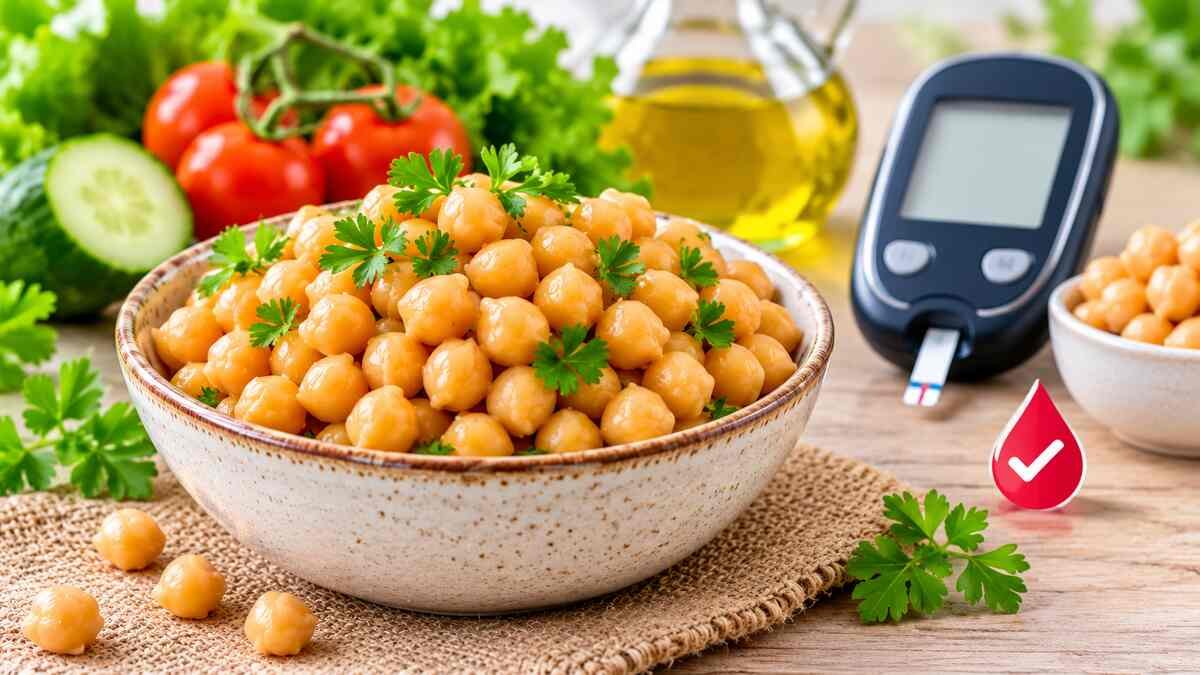

Chickpeas are a popular legume used in salads, curries, hummus, and soups. If you have diabetes, prediabetes, or simply want steadier energy, you may wonder whether they are a smart choice. It is a reasonable question, because chickpeas contain carbohydrates but also a lot of fiber and protein.
The short answer is that chickpeas may help reduce blood sugar rises after meals when they replace certain refined carbohydrates. They contain fiber, plant-based protein, and slowly digested carbohydrates. They are not a treatment for diabetes, and they still raise blood glucose to some degree.
This guide explains how chickpeas affect blood sugar, what research shows (and what it does not), how much to eat, and how to include them in balanced meals. It draws on a 2025 meta-analysis, the Harvard T.H. Chan School of Public Health, and USDA FoodData Central. It offers general information, not individualized medical advice. For a broader overview, see our guide to chickpeas health benefits.
Do Chickpeas Lower Blood Sugar?
Chickpeas may help support healthy blood sugar levels because they contain dietary fiber, plant-based protein, and slowly digested carbohydrates. Research suggests that eating chickpeas instead of certain refined carbohydrate foods may reduce blood sugar increases after meals. However, chickpeas still contain carbohydrates, so portion size and overall meal composition matter, especially for people with diabetes.
It helps to separate two ideas. Lowering the blood sugar rise after a meal (postprandial glucose) is different from lowering fasting blood sugar or long-term blood sugar control (measured by A1C). The evidence is better for the first than the second.
A 2025 systematic review and meta-analysis of controlled crossover trials found that eating chickpeas lowered post-meal glucose exposure compared with carbohydrate-matched control foods, such as wheat- or potato-based foods. It found no significant effect on peak glucose or insulin response, and the authors rated the certainty of the evidence as low to very low. Some of the authors work for a food company, so more independent research is welcome.
In short, chickpeas are a useful part of a balanced diet. They are not a diabetes treatment.
Chickpeas Nutrition: What Makes Them Good for Blood Sugar?
Chickpeas are a nutrient-dense legume with carbohydrates, protein, fiber, and several micronutrients. The values below are approximate for ½ cup (about 82 grams) of cooked, unsalted chickpeas, based on USDA FoodData Central.
| Nutrient | Approximate amount per ½ cup cooked |
|---|---|
| Calories | 135 kcal |
| Protein | 7.3 g |
| Fiber | 6.3 g |
| Carbohydrates | 22.5 g |
| Fat | 2.1 g |
| Folate | 141 mcg |
| Iron | 2.4 mg |
Actual values vary with cooking methods and product type. Four features matter most for blood sugar:
- Dietary fiber: slows digestion and can moderate the rise in blood glucose after meals. See our list of high-fiber foods for digestive health.
- Plant-based protein: adds to fullness and helps balance a meal. See high-protein foods.
- Complex carbohydrates: provide energy along with fiber and other nutrients.
- Micronutrients: folate, magnesium, iron, and potassium support normal body functions.
Chickpeas contain carbohydrates, so people with diabetes still need to count them in their carbohydrate planning.
5 Ways Chickpeas May Support Healthy Blood Sugar Levels
1. Their Fiber Content May Slow Carbohydrate Digestion
Fiber slows how quickly food leaves the stomach and how fast carbohydrates are broken down. This can help reduce sharp rises in blood glucose after meals. Fiber’s effect does not guarantee a specific drop in blood sugar.
2. They Provide Plant-Based Protein
Protein contributes to satiety and makes meals more balanced. It can also influence post-meal glucose responses. Even so, there is no good evidence that chickpea protein independently lowers blood sugar.
3. They May Have a Lower Glycemic Response Than Refined Carbohydrates
The glycemic index (GI) ranks how quickly a food raises blood sugar compared with a reference food. Glycemic response is what actually happens in your body after a particular meal. The Harvard Nutrition Source reports that both dried and canned chickpeas have a low glycemic index and glycemic load.
Replacing some refined carbohydrates, such as white bread or instant mashed potatoes, with chickpeas may produce a more gradual glucose response.
4. They Contain Slowly Digested Starch
Starch structure affects how fast glucose is absorbed. Harvard notes that chickpeas contain amylose, a resistant starch that digests slowly. Not all chickpea starch is resistant starch, but this slower digestion is one reason their response tends to be smaller.
5. They Can Support a Fiber-Rich, Balanced Eating Pattern
Swapping some refined carbohydrate foods for legumes can improve overall diet quality and support glucose management. A single chickpea meal can lower a post-meal rise, but that does not prove long-term diabetes outcomes. See our guide to the health benefits of legumes.
Are Chickpeas Good for People With Diabetes?
Chickpeas can fit into many diabetes-friendly eating patterns. Their combination of fiber and plant protein, and their potential to replace less nutritious refined carbohydrates, makes them a practical choice. The American Diabetes Association and the NIDDK both encourage fiber-rich, minimally processed foods.
Longer-term evidence is more mixed. A meta-analysis of acute and long-term trials found that eating pulses (a group that includes chickpeas) lowered post-meal glucose in adults with and without type 2 diabetes, and was linked to improvements in fasting glucose and A1C in people with type 2 diabetes. Results varied considerably across trials.
Glucose responses differ between people. If you have type 1 diabetes or type 2 diabetes, the right amount depends on your carbohydrate targets, medication, and care plan. People who use insulin or other glucose-lowering medicines should factor chickpeas into their carbohydrate count and follow their individualized plan. Our diabetes diet guide covers the basics.
How Many Chickpeas Should You Eat for Blood Sugar Control?
No universal chickpea serving is prescribed for blood sugar management. These examples are practical ideas, not medical prescriptions.
- ¼ cup: a smaller portion for someone just adding chickpeas to their diet.
- ½ cup: a practical starting portion for many adults. It has roughly 22 to 23 grams of carbohydrate, including about 6 grams of fiber.
- 1 cup: a larger portion that needs to fit into the meal’s total carbohydrate allowance.
People with diabetes should think in terms of total carbohydrates in the meal, not only the glycemic index of one food. If you are new to legumes, build up gradually to limit gas. Our article on whether you can eat chickpeas every day covers daily portions.
Can Chickpeas Raise Blood Sugar?
Yes, they can. Chickpeas contain carbohydrates, and carbohydrate-containing foods raise blood glucose after eating. What differs is the size and speed of the rise. Chickpeas often produce a smaller, slower response than white bread or other refined foods.
Several factors shape the response:
- Portion size: larger portions mean more carbohydrate.
- Meal makeup: pairing chickpeas with vegetables, healthy fats, and other protein sources creates a more balanced meal.
- Individual differences: your own response may differ from the average.
People who use a glucose meter or continuous glucose monitor can see how their body responds to chickpea meals. A low glycemic response does not mean zero effect on blood sugar. See our guide to signs of high blood sugar.
Best Ways to Eat Chickpeas for Blood Sugar Management
Simple, balanced preparations work best:
- Chickpea and cucumber salad with herbs and lemon
- Chickpea and vegetable curry (chana masala or chola) with a modest portion of grains
- Hummus with fresh vegetable sticks
- Roasted chickpeas as a snack
- Chickpeas with whole grains and leafy vegetables
A few tips help:
- Choose minimally processed chickpea dishes.
- Rinse canned chickpeas to reduce excess sodium.
- Avoid recipes with a lot of added sugar.
- Watch portions when combining chickpeas with rice, bread, or other carbohydrate foods.
- Build balanced meals instead of relying on chickpeas alone.
For vegetable pairings, see the best vegetables for diabetes and our guide to how many vegetables to eat a day.
Canned vs. Dried Chickpeas: Which Is Better for Blood Sugar?
Both can be good options when prepared well. Canned chickpeas are convenient, and the Harvard Nutrition Source notes that both dried and canned chickpeas have a low glycemic index. Dried chickpeas are inexpensive and let you control the salt, but they take longer to prepare.
Choose no-salt-added or lower-sodium canned products when possible, and drain and rinse them. Remember that added sauces, sugars, and seasonings can change the overall quality of a meal.
Are There Any Risks of Eating Chickpeas for Blood Sugar Control?
Chickpeas are generally a nutritious food, but keep these points in mind:
- Large portions increase total carbohydrate intake.
- Fiber and fermentable carbohydrates can cause gas and bloating in some people.
- Chickpea allergy requires avoidance.
- People on individualized medical diets should talk with their healthcare professional.
Chickpeas do not replace prescribed diabetes medicine or medical treatment. Never change your medication because you added chickpeas to your diet.
Frequently Asked Questions About Chickpeas and Blood Sugar
Do Chickpeas Lower Blood Sugar Quickly?
No. Chickpeas may reduce the post-meal glucose response compared with certain other carbohydrate foods, but they are not a rapid blood sugar-lowering treatment. See the 2025 meta-analysis.
Are Chickpeas Low in Sugar?
Plain chickpeas contain little naturally occurring sugar, but they do contain carbohydrate. Count them toward your carbohydrate total.
Can Diabetics Eat Chickpeas Every Day?
Many people with diabetes can include chickpeas regularly, depending on their carbohydrate targets and individual needs. Ask your care team how much fits your plan.
Are Chickpeas Better Than Rice for Blood Sugar?
Chickpeas generally provide more fiber and protein than white rice. Replacing some rice with chickpeas may improve a meal’s glucose response, though portion size still matters.
Does Hummus Lower Blood Sugar?
Hummus can be part of a balanced diet, but its ingredients and portion size matter. Check for added oils, salt, and sugar, and pair it with vegetables instead of large amounts of bread or chips.
Can Chickpeas Help Prevent Type 2 Diabetes?
Legumes can support healthy dietary patterns, but chickpeas alone have not been proven to prevent diabetes. See our guide on how to prevent diabetes.
The Bottom Line
Chickpeas may support healthy blood sugar management because they provide fiber, protein, and slowly digested carbohydrates. Research suggests they can produce a lower post-meal glucose response than certain refined carbohydrate foods, although the certainty of that evidence is low.
Chickpeas still contain carbohydrates, portion size matters, and they work best as part of a balanced eating pattern. Include sensible portions in your meals and follow your individual diabetes care advice. For related ideas, see our guide to the best foods for blood sugar levels.
Sources
- Mah E, et al. Chickpea attenuates postprandial blood glucose responses: a systematic review and meta-analysis. Nutrition Journal, 2025.
- Hafiz MS, et al. Pulse consumption improves indices of glycemic control in adults with and without type 2 diabetes: a systematic review and meta-analysis of acute and long-term randomized controlled trials. European Journal of Nutrition, 2022.
- Harvard T.H. Chan School of Public Health, The Nutrition Source. Chickpeas (Garbanzo Beans).
- U.S. Department of Agriculture. FoodData Central.
- American Diabetes Association. Food and Nutrition.
- National Institute of Diabetes and Digestive and Kidney Diseases. Diet, Eating, and Physical Activity.
Medical Disclaimer: This article is for general educational purposes only and is not medical advice. It does not replace the guidance of your doctor, pharmacist, or registered dietitian. Talk with a qualified healthcare professional before changing your diet or diabetes treatment, especially if you take insulin or other glucose-lowering medication.