
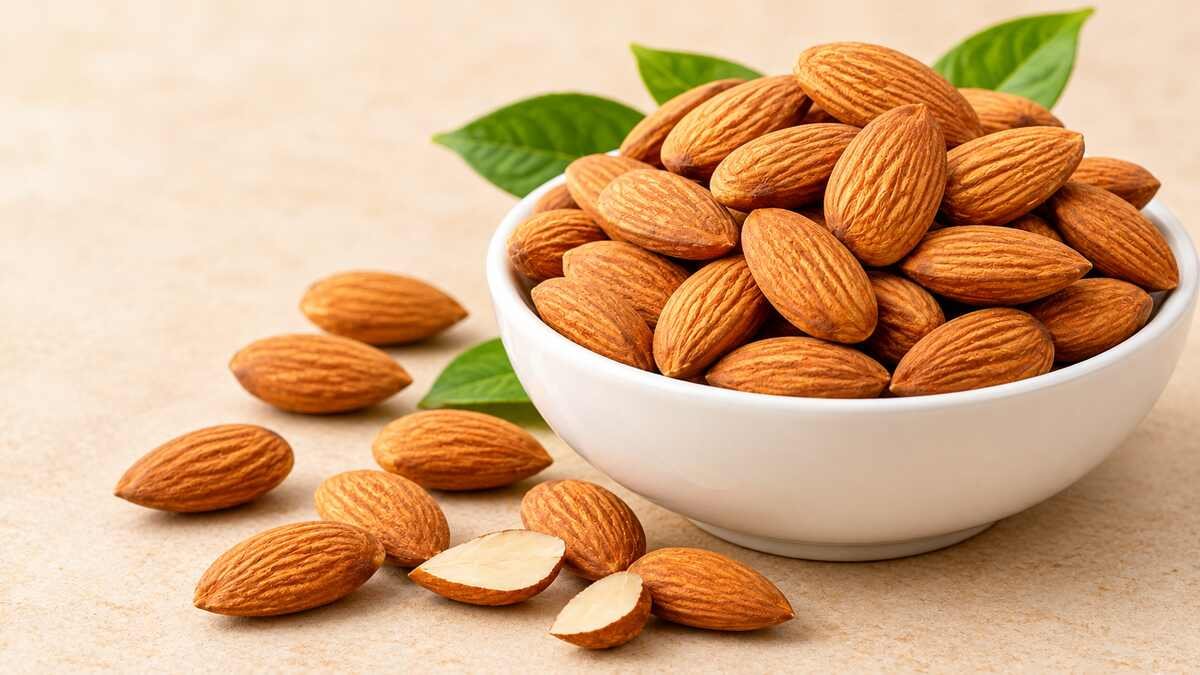

High cholesterol is common, and it often causes no symptoms. Too much LDL cholesterol in the blood can raise the risk of heart disease and stroke, according to the Centers for Disease Control and Prevention (CDC). Because food plays a big role, many people ask whether everyday snacks such as almonds can help.
The short answer is yes, in a modest way. Almonds provide unsaturated fats, fiber, and plant compounds that fit well into a heart-healthy eating pattern. Several reviews of clinical trials found small drops in LDL (“bad”) cholesterol and total cholesterol when people ate almonds regularly.
Still, almonds are a helpful food, not a treatment. They work best when they replace less healthy snacks, and they cannot take the place of prescribed medication. This guide explains what the research shows, how many almonds to eat, and how to enjoy them safely.
Are Almonds Good for High Cholesterol?
Yes, almonds can be a good food choice for people with high cholesterol. They contain unsaturated fats, fiber, and plant compounds that may support healthier blood cholesterol levels. Research suggests that eating almonds regularly can modestly lower LDL cholesterol and total cholesterol.
The benefit is most likely when almonds replace foods high in saturated fat. Adding them on top of an unchanged diet may not help as much. Extra calories can also work against heart health over time.
A moderate portion of unsalted almonds can fit into most heart-healthy eating plans. Portion size and overall diet quality matter. Almonds are not a cure, and they cannot replace cholesterol-lowering medication or other care from your healthcare professional.
For a broader look at this nut, see our guide to almonds and heart health.
Nutritional Benefits of Almonds for Cholesterol
Almonds are nutrient-dense. A 1-ounce serving (about 23 almonds, or 28 grams) provides roughly 160 to 165 calories, about 14 grams of fat, and only about 1 gram of saturated fat. It also supplies around 3.5 grams of fiber, 6 grams of protein, and about 7 milligrams of vitamin E, based on USDA-derived nutrition data.
Each of these nutrients plays a different role. For a wider overview, read our article on almonds health benefits.
Unsaturated fats and LDL cholesterol
Most of the fat in almonds is monounsaturated or polyunsaturated. These are often called healthy fats. Replacing saturated fat with unsaturated fat is a well-established way to support healthier blood cholesterol.
The swap is the key point. Eating almonds instead of butter-heavy pastries, biscuits, or chips changes the fat profile of your day. Eating almonds in addition to those foods does not.
Fiber and cholesterol management
Fiber is a core part of a heart-healthy diet. Fiber-rich foods help with fullness, digestion, and overall diet quality. Some types of fiber also help lower LDL cholesterol.
Almonds contribute fiber, but the amount in one serving is modest. The fiber in almonds alone will not dramatically lower LDL. It works best alongside other fiber-rich foods such as oats, beans, fruits, and vegetables.
Plant sterols and cholesterol absorption
Plant sterols are natural compounds found in plant foods. They resemble cholesterol and can compete with it for absorption in the digestive tract. Mayo Clinic notes that nuts naturally contain plant sterols.
Almonds contain small amounts. They are one contributor among several, not a strong standalone source.
Vitamin E and antioxidant protection
Almonds are a good source of vitamin E. This vitamin acts as an antioxidant, which means it helps protect cells from oxidative damage. Vitamin E supports overall health.
Its link to cholesterol is less direct. There is no strong evidence that the vitamin E in almonds lowers cholesterol by itself. Think of it as a useful nutrient that comes along with the other benefits.
What Does Scientific Research Say About Almonds and Cholesterol?
The best evidence comes from systematic reviews and meta-analyses. These studies combine results from many randomized controlled trials. Together, they point in the same direction: almonds can modestly improve blood lipids.
What clinical trials have found
A 2016 meta-analysis of 18 trials (837 participants) found that almond consumption lowered total cholesterol, LDL cholesterol, and triglycerides. The average LDL reduction was about 0.12 mmol/L, or roughly 5 mg/dL.
A 2021 meta-analysis of 27 studies reported an average LDL drop of about 5.65 mg/dL. Total cholesterol fell by about 4.9 mg/dL, and triglycerides fell by about 6.7 mg/dL. HDL (“good”) cholesterol did not change significantly.
A 2025 review of 36 publications covered 2,485 adults. Trials lasted at least four weeks, and almond intake ranged widely, from about 25 to 168 grams per day. Almonds were linked to lower LDL cholesterol, total cholesterol, non-HDL cholesterol, and apolipoprotein B. The authors said more trials are needed to understand the effect on triglycerides.
How much can almonds lower cholesterol?
The average reduction is small. A drop of about 5 mg/dL in LDL is meaningful for a population, but it is not dramatic for one person. Results vary with the starting cholesterol level, the amount of almonds, and what else a person eats.
No one can promise a specific number for any reader. Almonds are most useful as one part of a larger dietary pattern. That pattern includes less saturated fat, more fiber, regular activity, and a healthy weight. To understand the numbers on your lab report, see our guide to LDL vs. HDL cholesterol.
What are the limitations of the research?
Readers should know where the evidence is limited:
- Some trials were small, and many were short.
- Almond doses and study durations varied a great deal.
- Participants started with different cholesterol levels.
- Many trials had almonds replace other foods, which affects results.
- The 2016 review and the 2025 review were funded by the Almond Board of California, although the 2016 authors reported analyzing the data independently.
- More research is needed in people with specific lipid disorders. The 2021 authors noted this gap too.
Overall, the evidence supports almonds as a useful food. It does not show that they are a guaranteed way to lower cholesterol.
How Many Almonds Should You Eat a Day for High Cholesterol?
There is no official “cholesterol dose” for almonds. A practical, widely used portion is about 1 ounce. Here is how that fits into a healthy routine.
What is a reasonable serving size?
One ounce is about 23 almonds, or 28 grams. It provides roughly 160 to 165 calories. That is a small handful you can count out or measure once, then eyeball later.
Mayo Clinic suggests that adults aim for about 4 to 6 servings of unsalted nuts per week. A daily ounce of almonds falls at or just above that range. Our guide on how many nuts you should eat every day covers portions across different nuts.
Can you eat almonds every day?
Yes, for most people without an allergy. A small daily portion can be part of a heart-healthy routine. Consistency matters more than eating a large amount on any single day.
Keep in mind that no daily amount has been proven to treat high cholesterol. The portion above is a practical guide, not a medical dose.
Are more almonds better for cholesterol?
Not necessarily. Almonds are calorie-dense, so large portions can add up quickly. Extra calories may lead to weight gain, which can work against healthy cholesterol levels.
A better approach is to swap almonds in for less nutritious snacks. If you want to understand how nuts affect body weight, read our article on nuts and weight management.
Best Ways to Eat Almonds for High Cholesterol
Small choices make almonds work better for your heart. The form you buy and the foods you replace both matter.
Choose raw or unsalted almonds
Plain almonds are the simplest choice. Raw and dry-roasted almonds are both fine. Look for “unsalted” or “no salt added” on the label.
Sodium affects blood pressure more than cholesterol. Still, unsalted almonds are a practical heart-conscious choice. If blood pressure is a concern, you may also like our article on almonds and high blood pressure.
Replace saturated-fat-rich snacks
The cholesterol benefit is strongest when almonds take the place of other foods. Simple swaps include:
- A small handful of almonds instead of butter-rich biscuits
- Unsalted almonds instead of chips
- Chopped almonds on oatmeal instead of sugary toppings
- Almond-based toppings instead of creamy, high-fat ones
Add almonds to balanced meals
Almonds pair well with other heart-friendly foods. Try these ideas:
- Add them to whole-grain cereal or oatmeal.
- Pair them with fresh fruit.
- Sprinkle sliced almonds over a salad.
- Stir them into plain yogurt.
- Use unsweetened almond butter in moderate portions, about 2 tablespoons per serving.
Almonds also work well beside vegetables. If you want to eat more of them, see how many vegetables a day you should aim for.
Almonds and the Mediterranean diet
Almonds fit naturally into a Mediterranean-style diet. This pattern emphasizes vegetables, fruits, whole grains, legumes, nuts, and unsaturated fats. It limits processed foods and saturated fat.
The whole pattern matters more than any single ingredient. Almonds are a good fit, but they are not the whole plan. You can explore more options in our list of heart-healthy foods and best nuts for heart health.
Are There Any Risks of Eating Almonds With High Cholesterol?
Almonds are safe for most people. A few precautions apply.
Almond allergies
Almonds are tree nuts, and tree nuts are among the major food allergens in the United States. Food Allergy Research & Education (FARE) explains that tree nuts can cause severe, life-threatening reactions (anaphylaxis).
If you have a known almond or tree nut allergy, avoid almonds. Call emergency services right away if you have trouble breathing, throat swelling, or widespread hives after eating them. Ask your doctor or allergist about any questions on cross-reactivity with other nuts.
Calories and portion control
Almonds are energy-dense. A few handfuls can add several hundred calories. Moderate servings matter, especially if you are managing your weight.
Weight is one piece of cardiovascular health. Keeping portions steady helps almonds support your goals instead of undermining them.
Flavored and sweetened almonds
Some almond products have added sugar, salt, or oils. Honey-roasted, chocolate-covered, and heavily seasoned varieties can reduce the heart-health benefit. Check the ingredient list and nutrition label before you buy.
Almonds and cholesterol medication
Almonds should never replace prescribed cholesterol-lowering medication. Do not stop or change a medicine without talking to your healthcare professional. Diet and medication often work together.
Also, people with other health conditions, or those on special diets, should ask their clinician or a registered dietitian before making major changes. For a bigger picture of how diet, activity, and medical care connect, see our guide on cholesterol and heart health.
Frequently Asked Questions About Almonds and High Cholesterol
Are almonds good for high cholesterol?
Yes. Almonds contain unsaturated fats, fiber, and plant compounds that may support healthier cholesterol levels. Reviews of clinical trials show a modest drop in LDL cholesterol when almonds are part of a balanced diet (2025 meta-analysis).
Can almonds lower LDL cholesterol?
They can, by a small amount. A 2021 meta-analysis found an average LDL reduction of about 5.65 mg/dL. The effect varies by person, serving size, and overall diet.
How many almonds should I eat daily to lower cholesterol?
A common serving is about 23 almonds, or 28 grams. This is a practical portion for many adults. It is not a medically established treatment dose.
Are raw or roasted almonds better for high cholesterol?
Both raw and dry-roasted almonds can be healthy choices. Unsalted versions are usually better than salted or oil-coated ones. Always check the label for added salt, sugar, and oils.
Do almonds lower triglycerides?
Some research suggests a small reduction. A 2021 meta-analysis found an average drop of about 6.7 mg/dL. However, the 2025 review said more dedicated trials are needed, so the evidence is less consistent than for LDL.
Can almonds increase HDL cholesterol?
Not reliably. The 2021 meta-analysis found no significant change in HDL. The clearer benefit of almonds is on LDL and total cholesterol.
Are almonds better than walnuts for high cholesterol?
Both can fit into a heart-healthy diet. Neither is best for everyone. Variety and overall eating habits matter more than choosing one nut, and our comparison of almonds vs. walnuts goes into more detail.
Can almonds replace cholesterol medication?
No. Almonds can support a healthy diet, but they cannot replace prescribed medication or medical care. Talk to your healthcare professional before changing any treatment.
The Bottom Line: Are Almonds Good for High Cholesterol?
Almonds are a nutritious food that can support heart health. Their unsaturated fats, fiber, and plant compounds may help improve cholesterol levels. Research shows a modest reduction in LDL cholesterol.
A moderate portion of unsalted almonds, about 1 ounce, fits into a balanced diet. Replacing saturated-fat-rich snacks with almonds is likely more helpful than simply adding them on top. Managing cholesterol also takes an overall healthy lifestyle and appropriate medical care.
Almonds can be a useful addition to a cholesterol-conscious diet. They are not a cure for high cholesterol.
Sources
- Centers for Disease Control and Prevention: Cholesterol
- Mayo Clinic: Nuts and your heart, eating nuts for heart health
- Musa-Veloso K, et al. The effects of almond consumption on fasting blood lipid levels: a systematic review and meta-analysis of randomised controlled trials. J Nutr Sci. 2016
- Asbaghi O, et al. The effect of almond intake on lipid profile: a systematic review and meta-analysis of randomized controlled trials. Food Funct. 2021
- Musa-Veloso K, et al. Blood lipid levels in response to almond consumption: a systematic review and meta-analysis of randomized controlled trials. Nutrients. 2025
- University Hospitals: Nutrition facts for almonds, 1 oz (23 whole kernels), USDA-based data
- Food Allergy Research & Education: Tree nut allergy
Medical Disclaimer: This article is for informational purposes only and is not a substitute for professional medical advice, diagnosis, or treatment. Always talk with a qualified healthcare professional before making significant dietary changes, especially if you have high cholesterol, a food allergy, or take cholesterol-lowering medication. Never stop or change a prescribed medicine without your doctor’s guidance.
1 thought on “Are Almonds Good for High Cholesterol? Benefits & Serving Size”
Comments are closed.