
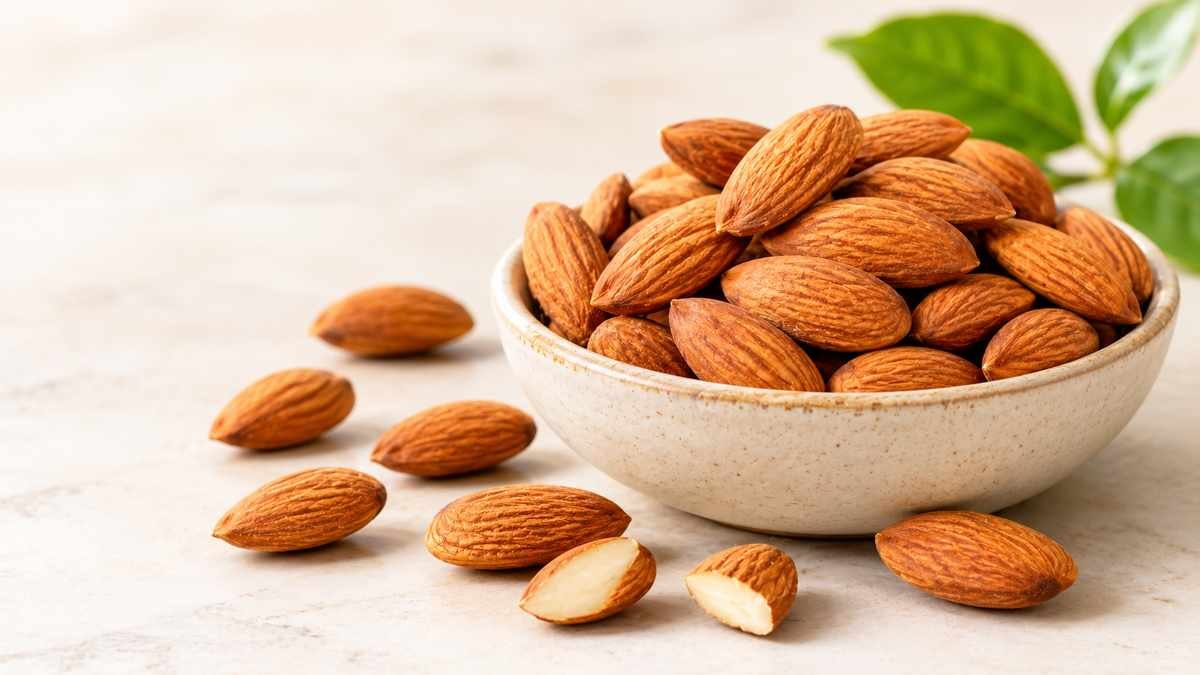

Can a small handful of almonds make a difference to your heart? Researchers have been asking that question for decades, and almonds heart health studies now fill a large body of literature. Almonds are nutrient-dense tree nuts that provide unsaturated fats, fiber, plant protein, vitamin E, and minerals such as magnesium.
Heart health depends on many things, including cholesterol levels, blood pressure, physical activity, sleep, and your overall eating pattern. Research suggests that regular almond consumption can modestly improve LDL cholesterol and some other blood lipid measures. Almonds can complement a heart-healthy diet, but they are not a treatment or cure for cardiovascular disease.
This guide covers almond nutrition facts, five potential benefits, and what clinical trials and systematic reviews actually show. You will also find practical serving guidance, tips on raw versus roasted almonds, and who should be careful. The key distinction throughout is between improving a risk factor and proving fewer heart attacks or strokes.
Are Almonds Good for Your Heart?
Almonds can support heart health when they are part of a balanced diet. The best-supported benefit is a modest improvement in LDL (“bad”) cholesterol and related blood lipid measures. A 2025 systematic review and meta-analysis of randomized controlled trials pooled 36 publications and 2,485 adults. It found that almond consumption improved LDL cholesterol, total cholesterol, non-HDL cholesterol, and apolipoprotein B (ApoB).
Part of the benefit likely comes from what almonds replace. Swapping foods high in saturated fat or refined carbohydrates for almonds improves the quality of the fats in your diet. Almonds also provide fiber, vitamin E, and magnesium.
However, improving a cardiovascular risk factor is not the same as preventing a heart attack or stroke. No trial has shown that almonds alone do that. The FDA permits a qualified health claim linking nuts, including almonds, with a lower risk of coronary heart disease, and the wording reflects this uncertainty. For a broader look, see our guide to the best nuts for heart health.
Almond Nutrition Facts and Heart-Healthy Nutrients
A standard serving of almonds is about 1 ounce (28 grams), or roughly 23 almonds. Here are approximate nutrition facts, which you can verify in USDA FoodData Central.
| Nutrient | Approximate amount per 28 g | Relevance to heart health |
|---|---|---|
| Calories | 164 | Helps readers understand the energy in a serving |
| Protein | 6 g | Supports normal body maintenance and repair |
| Total fat | 14 g | Mostly unsaturated fats |
| Saturated fat | 1.1 g | Low compared with many snack foods |
| Dietary fiber | 3.5 g | Supports digestive health and diet quality |
| Vitamin E | 7.3 mg | Antioxidant that helps protect cells |
| Magnesium | 76 mg | Supports normal muscle, nerve, and heart function |
Several of these nutrients matter for the heart:
- Monounsaturated fats make up a large share of almond fat. Expert reviewers note that almonds contain about two-thirds monounsaturated fat by weight (review).
- Polyunsaturated fats add to a balanced fat intake.
- Fiber supports digestion and overall diet quality. Our list of high-fiber foods offers more ideas.
- Vitamin E works as an antioxidant. The NIH vitamin E fact sheet lists nuts among its main food sources.
- Magnesium supports muscle and nerve function. See the NIH magnesium fact sheet.
Almonds also contain plant sterols such as beta-sitosterol, which can lower LDL cholesterol by blocking some cholesterol absorption. For a deeper look at almond nutrition, read our almond health benefits guide.
5 Potential Benefits of Almonds for Heart Health
1. May Help Lower LDL Cholesterol
LDL cholesterol is a type of cholesterol-carrying particle. When levels are high, it can contribute to atherosclerosis, the buildup of plaque in artery walls. Our guide to LDL versus HDL cholesterol explains the difference.
Evidence suggests almonds can modestly lower LDL cholesterol. An expert review of almond meta-analyses reported a pooled reduction of about 0.12 mmol/L, or roughly 5 mg/dL, across the general population (Trumbo et al., 2025). The size of the effect varies with serving size, study length, and what the almonds replace.
Almonds are not a substitute for prescribed cholesterol medication. If you have high cholesterol, see our guide on high cholesterol.
2. Provide Heart-Healthy Unsaturated Fats
Unsaturated fats, found in nuts, seeds, fish, and plant oils, can support a healthier blood lipid profile when they replace saturated fats. Saturated fats are common in fatty meats, butter, and many baked goods and snack foods.
What matters most is the swap. Replacing a pastry or chips with almonds changes the fat quality of your snack, while adding almonds on top of an unchanged diet may add calories without that benefit. Our guide to healthy fats covers the basics.
3. Supply Fiber That Supports Cardiovascular Health
A serving of almonds provides roughly 3.5 grams of fiber. Fiber supports digestion and overall diet quality, and some types of fiber help reduce cholesterol absorption. Almond fiber does not necessarily act exactly like the soluble fiber in oats or beans, so fiber is only one part of almonds’ effect.
Almonds fit best into a pattern that also includes vegetables, fruits, legumes, and whole grains. See our Mediterranean diet guide for an example.
4. Provide Vitamin E and Antioxidants
Almonds are a useful dietary source of vitamin E, an antioxidant that helps protect cells from oxidative damage. Oxidative stress is one process scientists study in cardiovascular disease.
Getting vitamin E from foods supports nutritional adequacy. But the antioxidant content of almonds has not been shown to prevent heart attacks, and vitamin E supplements should not be assumed to offer the same benefits as whole foods.
5. May Support Blood Pressure and Overall Cardiometabolic Health
Almonds contain magnesium, which contributes to normal muscle and nerve function. They may also fit into dietary patterns linked with better cardiometabolic health.
Evidence for blood pressure is less consistent than for LDL cholesterol. The expert review above described small reductions in diastolic blood pressure from almond meta-analyses, and it also identified important research gaps (Trumbo et al., 2025). Do not expect almonds alone to lower blood pressure. Our guides to high blood pressure and how to lower blood pressure cover proven strategies.
What Does the Scientific Evidence Say About Almonds and Heart Health?
Findings From Randomized Controlled Trials
Randomized controlled trials (RCTs) compare a diet change with a control under set conditions, which helps show cause and effect. One example is the ATTIS trial, published in the American Journal of Clinical Nutrition. It enrolled 107 adults aged 30 to 70 with above-average cardiovascular risk and ran for six weeks. Participants ate either whole almonds or a calorie-matched control snack (mini-muffins), each supplying about 20% of daily energy.
The ATTIS study found that the almond group had lower LDL cholesterol and improved flow-mediated dilation, a measure of how well arteries widen. Liver fat, triglycerides, HDL cholesterol, glucose, and other measures did not differ significantly. The almond amount was about 2.5 servings a day, more than a standard handful. Researchers also noted the study had few men, and it was funded by the Almond Board of California.
Short-term changes in cholesterol or artery function are not the same as fewer heart attacks or strokes. Study populations, almond amounts, and control diets also differ.
What Systematic Reviews and Meta-Analyses Show
The 2025 almond meta-analysis in Nutrients found improvements in LDL cholesterol, total cholesterol, non-HDL cholesterol, and several ratios (total to HDL, LDL to HDL, and ApoB to ApoA). ApoB, a protein on cholesterol-carrying particles, also fell. The authors said more dedicated trials are needed for triglycerides, and HDL cholesterol did not clearly improve. The review was funded by the Almond Board of California, though the authors state they interpreted the data independently.
A broader 2025 meta-analysis of nut trials in Nutrition, Metabolism and Cardiovascular Diseases looked at 113 trials and found moderate reductions in total and LDL cholesterol across nuts as a group. That supports nuts in a healthy diet, but results for all nuts together should not be assumed to apply to almonds specifically.
What Researchers Still Don’t Know
- Many trials last weeks or months, not years.
- Most trials measure risk factors, not actual heart attacks or strokes.
- The best almond amount for different people is unclear.
- Results depend on what almonds replace in the diet.
- Almonds should be studied within whole dietary patterns, not just alone.
The evidence reasonably supports modest improvements in certain blood lipid measures. It does not show that almonds alone prevent cardiovascular events. For more on nut research overall, see our guide to the health benefits of nuts.
How Many Almonds Should You Eat for Heart Health?
A common reference serving is about 1 ounce (28 grams), or roughly 23 almonds, though size varies. You can adjust this to your energy needs, preferences, and overall diet. There is no established almond dose proven to protect the heart.
Trials have used a wide range of amounts. A review of almond meta-analyses found doses from 10 to 100 grams per day (Trumbo et al., 2025). Eating more has not been shown to give extra protection, and almonds are calorie-dense.
Use almonds to replace less nutritious snacks instead of adding them on top of everything you already eat. Try:
- A small handful alongside fruit
- Chopped almonds in oatmeal or unsweetened yogurt
- A mix of almonds with other unsalted nuts and seeds
Our guide on how many nuts to eat every day can help you plan. Treat this serving as a practical reference, not a medical dose.
Raw, Roasted, or Salted: Which Almonds Are Best for Heart Health?
| Almond type | Potential advantages | What to consider |
|---|---|---|
| Raw almonds | Simple option with no added ingredients | Store properly to keep them fresh |
| Dry-roasted almonds | Convenient, often with no added oil | Check the ingredient list |
| Oil-roasted almonds | Similar nutrient profile | Added oil may change calories |
| Unsalted almonds | Easier to limit sodium | May taste less seasoned |
| Salted almonds | Convenient and widely available | Frequent high-sodium choices can make blood pressure harder to manage |
| Flavored almonds | Variety and convenience | May contain added sodium or sugar |
Both raw and roasted almonds can be nutritious, and neither is categorically better. If you are watching sodium, choose unsalted or lightly salted almonds. The ATTIS trial used dry-roasted, unsalted almonds. Whichever you pick, the ingredient list tells you about added salt, oils, and flavorings.
Easy Ways to Add Almonds to a Heart-Healthy Diet
- Breakfast: Add chopped almonds to oatmeal or whole-grain cereal.
- Fruit snacks: Pair almonds with apples, bananas, or seasonal fruit.
- Yogurt: Sprinkle almonds over plain yogurt.
- Salads: Use sliced almonds for crunch in vegetable-based meals.
- Home cooking: Add crushed almonds to vegetable or grain dishes.
- Nut mixes: Combine almonds with other unsalted nuts and seeds.
Almonds work best as one part of an eating pattern rich in vegetables, fruits, legumes, whole grains, and appropriate protein. Substitution matters: trading a snack high in saturated fat for almonds is more likely to improve fat quality than simply adding almonds. For more food ideas, see our guide to heart-healthy foods. Almonds also fit a wider nutrition cluster; see our articles on almonds versus walnuts and walnuts and heart health.
Who Should Be Careful About Eating Almonds?
- Tree nut allergy: People allergic to almonds should avoid them and follow their healthcare professional’s advice. The FDA’s food allergy information explains that tree nuts must be declared on packaged food labels.
- Prescribed diets: If you follow a medically prescribed plan, ask how almonds fit in.
- Digestive tolerance: Large amounts of nuts can cause bloating or discomfort for some people.
- Sodium: If you monitor sodium, check labels and choose unsalted varieties.
- Medical care: People with high cholesterol or cardiovascular disease should not replace prescribed treatment with almonds or any other food.
Almonds are generally a nutritious choice for people who can safely eat them, but individual circumstances matter. This article offers general education, not personal medical advice.
Frequently Asked Questions
Are almonds good for heart health?
Almonds can support a heart-healthy eating pattern because they provide unsaturated fats, fiber, and vitamin E. Clinical trials suggest that almond consumption can modestly improve some cholesterol measures (meta-analysis).
How many almonds should you eat daily for heart health?
About 23 almonds, or 28 grams, is a common reference serving. The right amount depends on your needs and overall diet, and this serving is not a guaranteed therapeutic dose.
Do almonds lower LDL cholesterol?
Randomized trials and meta-analyses suggest almonds can modestly lower LDL cholesterol on average (review). Individual results vary, and almonds should not replace prescribed treatment.
Are raw or roasted almonds better for your heart?
Both can be nutritious. Unsalted varieties help people who want to limit sodium, and ingredient labels show added oils, sugar, or salt.
Can eating almonds prevent heart disease?
Almonds may improve some cardiovascular risk factors, but research has not shown that eating almonds alone prevents heart attacks or strokes. Overall diet, lifestyle, and medical care remain important. Read more in our guide on how to prevent heart disease.
Are salted almonds bad for your heart?
Salted almonds still provide nutrients, but frequent high-sodium food choices can make blood pressure harder to manage. Unsalted or lightly salted almonds may be better for people limiting sodium.
The Bottom Line
Almonds offer unsaturated fats, fiber, vitamin E, and magnesium, which makes them a useful option in a heart-conscious eating pattern. Research suggests that regular almond consumption can modestly improve several blood lipid measures, especially LDL cholesterol. The benefits depend on the broader diet, and almonds alone cannot guarantee protection against cardiovascular disease.
Choose a sensible portion, consider unsalted varieties, and pair almonds with vegetables, fruits, whole grains, legumes, and other nutritious foods. Almonds complement medical care and do not replace it. For more on keeping your heart healthy, see our guide to cholesterol and heart health.
Sources
- Musa-Veloso K, et al. Blood Lipid Levels in Response to Almond Consumption: A Systematic Review and Meta-Analysis of Randomized Controlled Trials. Nutrients. 2025
- Dikariyanto V, et al. Snacking on whole almonds for 6 weeks improves endothelial function and lowers LDL cholesterol but does not affect liver fat and other cardiometabolic risk factors in healthy adults: the ATTIS study. American Journal of Clinical Nutrition. 2020
- Trumbo PR, et al. Perspective: Current Scientific Evidence and Research Strategies in the Role of Almonds in Cardiometabolic Health. Current Developments in Nutrition. 2025
- Nishi SK, et al. Effect of nut consumption on blood lipids: an updated systematic review and meta-analysis of randomized controlled trials. Nutrition, Metabolism and Cardiovascular Diseases. 2025
- USDA FoodData Central
- NIH Office of Dietary Supplements: Vitamin E
- NIH Office of Dietary Supplements: Magnesium
- FDA: Food Allergies
Medical Disclaimer: This article is for general educational purposes only and is not a substitute for professional medical advice, diagnosis, or treatment. Eating almonds has not been proven to prevent heart attacks, strokes, or heart disease, and it should not replace prescribed medicine or care. Talk with a doctor or registered dietitian about your cholesterol, blood pressure, and diet, especially if you have heart disease or a food allergy.