
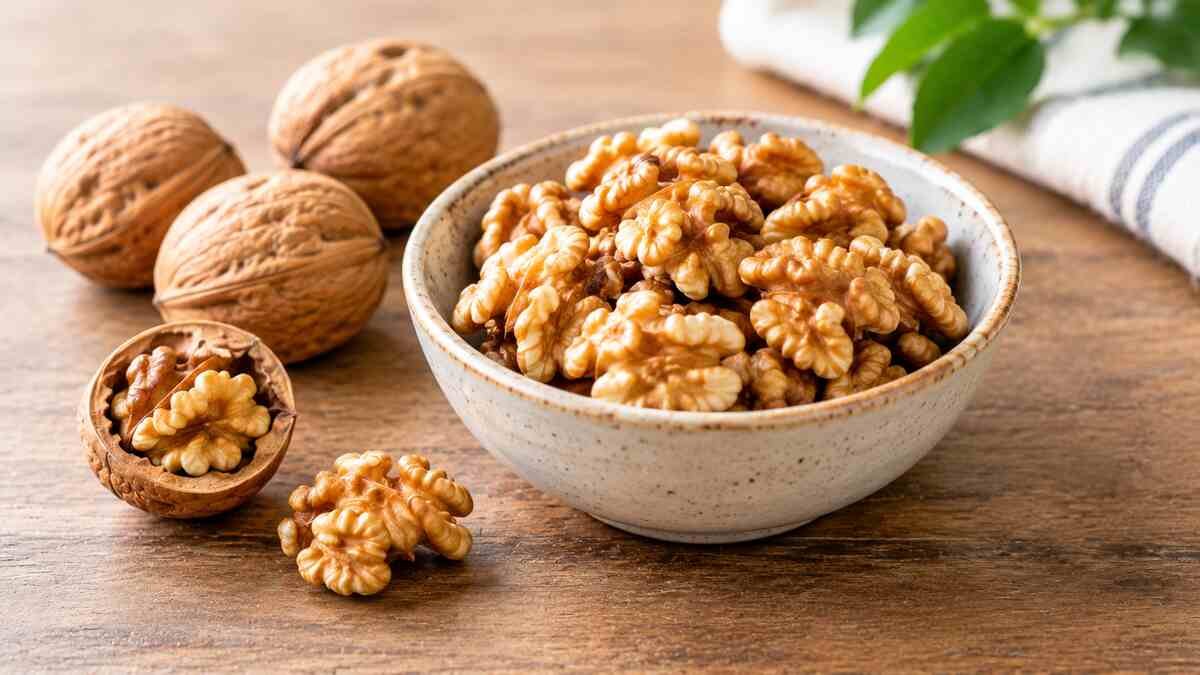

A common serving of walnuts is about 1 ounce (28 grams), or approximately 12 to 14 walnut halves. This amount provides plant-based omega-3 fatty acids, fiber, protein, and other nutrients. However, there is no single daily amount that is right for everyone.
Walnuts are a nutrient-dense tree nut, so it is natural to wonder how much to eat. They contain unsaturated fats, alpha-linolenic acid (ALA), fiber, and minerals, but they are also energy-dense, which makes portion size worth understanding. If you are asking how many walnuts per day makes sense, the answer depends on your overall diet, calorie needs, allergies, and health circumstances.
This guide explains what a serving looks like, what it provides, whether you need to eat walnuts every day, and how to enjoy them in meals. For broader nutrition background, see our guide to the health benefits of walnuts.
How Many Walnuts Should You Eat Daily?
A one-ounce serving is the most commonly used reference. It equals roughly a small handful, though the number of pieces varies with walnut size and whether they are halves or broken bits. That is why weight is often a more useful guide than counting individual nuts.
This amount is a practical serving reference, not a medical prescription. Some studies use larger amounts to answer specific research questions, and those doses should not be treated as personal recommendations. For example, the Walnuts and Healthy Aging trial used about 30 to 60 grams a day (roughly 1 to 2 ounces) in older adults.
Think about your whole eating pattern rather than treating walnuts as a required daily food. Our guide to how many nuts you should eat every day covers portions across other nuts as well.
Is One Ounce of Walnuts a Good Serving Size?
One ounce is a convenient reference for comparing foods and tracking nutrients. It provides about 185 calories, depending on the database and rounding. It also delivers a useful mix of fat, fiber, and minerals without being overly large.
That said, a serving is not a requirement. Many people eat less, and others eat more as part of a Mediterranean-style diet. What matters is how walnuts fit into your total intake.
Do You Need to Eat Walnuts Every Day?
No. Walnuts can be eaten regularly as part of a varied diet, but you do not need them daily to have a balanced eating pattern. Other foods also supply unsaturated fats, fiber, and plant-based nutrients, including other nuts, seeds, olive oil, avocados, beans, and whole grains.
If you enjoy walnuts every day, that is fine for most people without allergies. If you eat them a few times a week, you are still getting their nutrients. Our guide to what a balanced diet looks like can help you put this in context.
What Does One Serving of Walnuts Look Like?
A one-ounce serving of shelled walnuts is approximately 28 grams, a quarter cup, 12 to 14 halves, or one small handful. These household measures are useful when you do not have a scale.
| Serving measurement | Approximate amount |
|---|---|
| Weight | 28 grams |
| Walnut halves | 12 to 14 |
| Volume | ¼ cup |
| Household estimate | One small handful |
These are approximate household measurements, not exact equivalents for every walnut size.
A kitchen scale is the most consistent way to measure, since walnut pieces vary in size. Whole halves take up more space than chopped pieces, so a quarter cup of chopped walnuts can weigh more than a quarter cup of halves.
If you do not own a scale, use a small cupped handful as a rough guide. Hand sizes differ, so check your handful against a measuring cup once to calibrate it.
Walnut Nutrition Facts: What Does One Serving Provide?
Walnuts contain mostly unsaturated fats, with a high proportion of polyunsaturated fat. They also provide protein, fiber, magnesium, and other minerals. A one-ounce serving offers roughly the following:
| Nutrient | Approximate amount |
|---|---|
| Energy | 185 calories |
| Total fat | 18 g |
| Protein | 4 g |
| Carbohydrates | 4 g |
| Fiber | 2 g |
| ALA omega-3 | 2.5 g |
| Magnesium | 45 mg |
Values are approximate and may vary slightly by database and product.
Why Are Walnuts Rich in Omega-3 Fatty Acids?
Walnuts contain a notable amount of ALA, an essential omega-3 fat that your body cannot make. The NIH Office of Dietary Supplements lists adequate intakes of 1.6 grams per day for men and 1.1 grams per day for women. One ounce of walnuts provides more than either figure.
ALA is different from EPA and DHA, the omega-3 fats found mainly in seafood. The body converts only small amounts of ALA into EPA and DHA, so walnuts do not provide the same omega-3 profile as fish. See our guides to omega-3 fatty acids and healthy fats.
Why Does a Sensible Daily Walnut Portion Matter?
Walnuts combine fats, fiber, and minerals in a small package. A defined portion helps you see what you are adding to meals, and it supports a balanced intake of other foods. Keeping a portion in mind is not about restriction. It is about being intentional.
It also helps to think about whether walnuts are an addition or a replacement. Adding a handful on top of an already calorie-heavy snack increases total intake. Using walnuts in place of chips or pastries swaps one food for another.
Variety across food groups matters most. Walnuts work best next to vegetables, fruits, whole grains, and other protein foods.
Are More Walnuts Always Better?
No. Larger amounts provide more of certain nutrients, but they also increase total calories and make it harder to eat a varied diet. Eating more walnuts does not automatically produce more benefits.
Research doses should not automatically be treated as personal recommendations. If you are unsure what amount fits your goals or health conditions, ask a doctor or registered dietitian.
Should You Measure Walnuts or Eat Them by Handful?
Both approaches work. A scale is more consistent, while a small handful is more convenient. Weighing a few times can help you learn what a serving looks like.
You do not need to measure every portion. Food anxiety is not the goal, and a rough sense of portion size is enough for most people.
Potential Benefits of Eating Walnuts Regularly
This section is brief because we cover it in depth elsewhere. See the benefits of eating walnuts every day for a full discussion. Here is how a sensible portion may contribute to a balanced diet.
May Support Healthy Cholesterol Levels
Walnuts have been studied more for blood lipids than for almost any other outcome. A 2026 meta-analysis of 49 randomized trials found that walnut consumption lowered total cholesterol, LDL cholesterol, and triglycerides, with no significant overall change in HDL.
The effects are modest, and walnuts do not treat high cholesterol. Replacing foods high in saturated fat with foods rich in unsaturated fat can support healthier cholesterol patterns. Read more in our article on whether walnuts are good for heart health.
Provide Plant-Based Omega-3 Fatty Acids
ALA plays a role in normal body function, and a one-ounce serving supplies about 2.5 grams. This makes walnuts a helpful omega-3 source for people who eat little fish. Our list of best nuts for heart health shows how they compare with other nuts.
Contribute Fiber to the Diet
Fiber supports digestion and regular bowel movements. Walnuts provide about 2 grams per ounce, which is a contribution rather than a major source. Combine them with beans, vegetables, fruit, and whole grains. Our guide to high-fiber foods for digestive health has more ideas.
Add Nutrients to a Balanced Eating Pattern
Walnuts offer protein, magnesium, and polyunsaturated fats. They complement fruit, vegetables, whole grains, and other nutritious foods well, which is why they appear often in Mediterranean-style eating.
May Support Gut Health
Early research suggests walnuts may influence gut bacteria. In a small controlled-feeding study of 18 healthy adults, about 42 grams of walnuts per day increased some bacteria linked with butyrate production. The study was small and short, so these findings do not show that walnuts prevent or treat digestive conditions. Learn more in our guide to how to improve gut health.
Can You Eat Too Many Walnuts?
For most people without allergies, eating walnuts in normal food portions is fine. Still, walnuts are energy-dense, at about 185 calories per ounce, so larger amounts add up quickly. Two ounces provide roughly 370 calories.
Trials suggest that adding walnuts does not lead to weight gain for most people, particularly when they replace other foods. Our article on whether nuts are good for weight management explains this research.
A few other considerations apply:
- Eating a very large amount at once may cause digestive discomfort.
- Relying heavily on one food can reduce dietary variety.
- Salted, candied, or flavored products may add sodium or sugar.
What Happens If You Eat a Large Amount of Walnuts?
Some people notice bloating, gas, or stomach discomfort after eating a lot of walnuts at once, especially if they are not used to a high-fat, high-fiber snack. Individual tolerance varies.
Pay attention to how foods suit you, without turning it into worry. If discomfort is frequent or severe, talk with a healthcare professional.
Best Ways to Include Walnuts in Your Daily Meals
Walnuts are easy to work into meals you already eat:
- Breakfast: Add chopped walnuts to oatmeal, cereal, or smoothie bowls.
- Snack: Pair walnuts with fruit or plain yogurt.
- Lunch: Sprinkle walnuts over a vegetable or grain salad.
- Dinner: Add chopped walnuts to vegetable dishes or grain bowls.
- Baking: Use walnuts in homemade whole-grain breads or muffins.
Storing walnuts in a sealed container in the refrigerator helps keep them fresh, since their healthy fats can go rancid over time.
Can You Eat Walnuts on an Empty Stomach?
There is no established requirement to eat walnuts on an empty stomach. They can be included with meals or snacks at whatever time is convenient.
What Is the Best Time to Eat Walnuts?
There is no universally established best time. Breakfast, an afternoon snack, or dinner all work. Choose the time that helps you eat them consistently, if you choose to eat them regularly.
Raw, Roasted, and Soaked Walnuts: Which Should You Choose?
Raw walnuts have a mild flavor and a slightly soft texture. Dry-roasted walnuts taste toastier and crunchier. Roasting can change flavor and may affect some heat-sensitive compounds, though both forms can fit into a healthy diet.
| Type | Main characteristics |
|---|---|
| Raw walnuts | Mild flavor, no roasting |
| Dry-roasted walnuts | Toastier flavor and crisp texture |
| Salted walnuts | May contain additional sodium |
| Candied walnuts | Often contain added sugar |
| Soaked walnuts | Softer texture; no established need to soak |
Plain, unsalted versions are the most practical everyday choices. Soaking walnuts is not necessary to make them nutritious, and there is no solid evidence that soaked walnuts offer proven health advantages. Soak them only if you prefer the texture.
Who Should Be Careful With Walnuts?
For most people, walnuts are a safe and nutritious food. A few groups should be cautious.
- People with walnut allergies: The FDA lists tree nuts among the major food allergens. Avoid walnuts if you are allergic, and seek urgent medical help for signs of a severe reaction.
- People with digestive sensitivities: Large amounts may cause discomfort.
- People following medically advised diets: Follow individualized guidance from a qualified healthcare professional.
- Parents and caregivers: Whole nuts can be a choking hazard for young children. Use age-appropriate forms, such as finely ground walnuts, and follow your pediatrician’s advice.
Walnuts do not need to be avoided by everyone, and there is no single serving size for all readers.
Frequently Asked Questions About Daily Walnut Intake
How many walnuts should you eat daily?
A common serving reference is about 1 ounce (28 grams), or approximately 12 to 14 walnut halves. Individual needs vary, and this is not a universal daily requirement. UC Davis Health also cautions against overeating walnuts despite their benefits.
Is eating walnuts every day healthy?
Walnuts can be part of a balanced eating pattern for people who are not allergic. Variety and overall dietary quality matter more than eating any one food every day.
How many walnut halves are in one serving?
A one-ounce serving contains approximately 12 to 14 walnut halves, depending on size.
Can you eat walnuts at night?
Yes, walnuts can be eaten at night if that suits your routine. There is no established requirement to eat them at a particular time.
Are raw walnuts healthier than roasted walnuts?
Both can fit into a balanced diet. Plain, unsalted versions are practical choices, whether raw or dry-roasted.
Do walnuts provide omega-3?
Yes. Walnuts provide ALA, a plant-based omega-3 fatty acid. About one ounce supplies more than the daily adequate intake of ALA for adults, though ALA is different from the EPA and DHA found in fish.
Conclusion: Enjoy Walnuts as Part of a Balanced Diet
About one ounce, or roughly 12 to 14 walnut halves, is a practical serving reference, but the ideal amount varies from person to person. Enjoy walnuts alongside a variety of nutritious foods, and choose plain versions most of the time. For a broader look at their nutrition and research, read our guide to the health benefits of walnuts.
Sources
- NIH Office of Dietary Supplements. Omega-3 Fatty Acids: Fact Sheet for Consumers.
- Effects of Walnut Consumption on Blood Lipid Profile and Apolipoproteins in Adults: A GRADE-Assessed Systematic Review and Dose-Response Meta-Analysis of 49 Randomized Controlled Trials. Food Science & Nutrition. 2026.
- The Walnuts and Healthy Aging Study (WAHA): Protocol for a Nutritional Intervention Trial with Walnuts on Brain Aging. Frontiers in Aging Neuroscience. 2017.
- Holscher HD, et al. Walnut consumption alters the gastrointestinal microbiota, microbially derived secondary bile acids, and health markers in healthy adults: a randomized controlled trial. The Journal of Nutrition. 2018. University of Illinois summary.
- UC Davis Health. 4 health benefits of walnuts and how much you should eat. 2024.
- Healthline. Walnuts: Nutrition, benefits, and serving size.
- U.S. Food and Drug Administration. Food Allergies.
Medical Disclaimer: This article is for general educational purposes only and is not a substitute for professional medical advice, diagnosis, or treatment. Nutrition needs vary from person to person, so talk with your doctor or a registered dietitian before making major changes to your diet, especially if you have a health condition, a food allergy, or take medication. Never ignore professional advice or delay seeking care because of something you read here.