
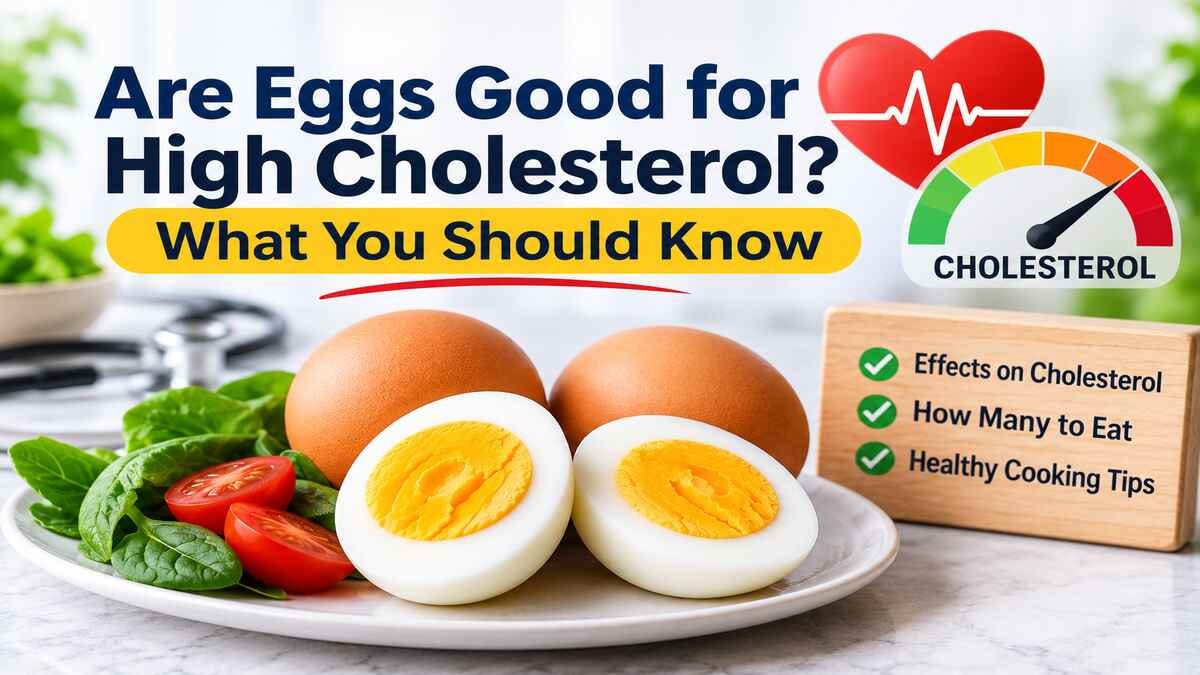

If you have high cholesterol, you have probably wondered about the foods on your plate. Eggs are affordable, versatile, and rich in protein, but the yolk contains dietary cholesterol, which has long made people nervous. It is also easy to confuse the cholesterol in food with the cholesterol in your blood, and the two are not the same thing.
Here is the short answer: eggs can fit into some diets for people with high cholesterol, but moderation and individual health factors matter. Egg yolks contain dietary cholesterol, which may raise LDL cholesterol in some people. Limiting saturated fat, choosing healthier cooking methods, and eating a balanced diet support better cholesterol management, and people with elevated LDL should get personalized advice.
This guide explains how eggs affect LDL and HDL cholesterol, what the latest research shows, and how many eggs to eat. You will also find cooking tips, foods to pair with eggs, and guidance on who should be more careful. For broader background, see our guide to the health benefits of eggs.
Are Eggs Good for High Cholesterol?
Eggs are not automatically harmful for everyone with high cholesterol. They provide protein and nutrients, and for many people their effect on blood cholesterol is modest. The answer depends on your cholesterol levels, your overall diet, and your cardiovascular risk.
Dietary cholesterol can influence blood LDL in some people, and responses vary widely. The broader dietary pattern also matters. Saturated and trans fats from foods such as bacon, butter, and processed meats tend to have a stronger effect on LDL than the egg itself.
A 2025 umbrella review of 14 meta-analyses rated the evidence on egg consumption and health outcomes as very weak overall. The authors concluded there was insufficient evidence to discourage egg consumption. People with significantly elevated LDL may still need individualized recommendations.
The takeaway: People with high cholesterol do not necessarily need to eliminate eggs, but they should consider their own numbers and overall diet. Our guide to high cholesterol explains the condition in more detail.
How Do Eggs Affect Cholesterol Levels?
Understanding Dietary Cholesterol
Dietary cholesterol is the cholesterol found in animal-based foods, including meat, dairy, and eggs. Egg yolks are a concentrated source, with roughly 185 to 200 mg in a large egg. Cholesterol in the blood is a different measure, and your liver makes much of it.
Harvard’s Heart Letter notes that only about 10% to 20% of blood cholesterol comes from food. Still, the body’s response varies. Some people absorb or react to dietary cholesterol more strongly than others.
Do Eggs Increase LDL (Bad) Cholesterol?
LDL cholesterol carries cholesterol into artery walls, where it can contribute to plaque. Our guide to LDL vs. HDL cholesterol explains this in more detail.
Research shows that eggs can raise LDL in some circumstances. A 2020 meta-analysis of 17 randomized controlled trials in healthy people found that higher egg intake raised LDL by about 8.14 mg/dL compared with control diets. The authors noted that longer-term trials are needed.
Eggs do not always raise LDL, and they do not never raise it. The amount of dietary cholesterol and the rest of the diet both matter.
Do Eggs Increase HDL (Good) Cholesterol?
HDL helps carry cholesterol back to the liver for removal. Some research suggests egg intake may nudge HDL up. The 2025 umbrella review found a weak association between eggs and higher HDL, alongside very weak links to higher LDL and total cholesterol.
A higher HDL does not automatically cancel out a rise in LDL. Cholesterol numbers should be read as part of your overall cardiovascular risk. Our guide to cholesterol and heart health covers how risk is assessed.
What Does Recent Research Say?
A 2025 randomized crossover study in The American Journal of Clinical Nutrition tested three diets in 61 adults, each for five weeks. They included a low-saturated-fat diet with two eggs a day, a high-saturated-fat diet without eggs, and a high-saturated-fat control diet with one egg a week. Across all diets, saturated fat intake was linked to LDL, while dietary cholesterol was not. The two-egg, low-saturated-fat diet lowered LDL compared with the control.
Important limitations apply:
- The trial was relatively small.
- Participants started with LDL below about 135 mg/dL.
- Each diet lasted only five weeks.
- The study was funded by the Egg Nutrition Center, a division of the American Egg Board, so results should be interpreted with that in mind.
These findings should not be generalized to everyone with high cholesterol.
Egg Yolks vs. Egg Whites: Which Is Better for High Cholesterol?
Nutritional Benefits of Egg Yolks
Yolks hold most of an egg’s nutrients, including vitamin B12, vitamin D, choline, selenium, and vitamin A. They also contain nearly all of an egg’s dietary cholesterol and most of its fat. See our guides to vitamin B12 foods and vitamin D foods for other sources.
Why Egg Whites May Be a Better Option for Some People
Egg whites provide protein with very little dietary cholesterol. The American Heart Association notes that egg whites are not high in dietary cholesterol. They can help people who want to reduce dietary cholesterol. Whites do not supply all the nutrients found in whole eggs.
Should You Avoid Egg Yolks Completely?
Not necessarily. Avoiding yolks is not required for everyone, and the right choice depends on your LDL level and cardiovascular risk. A registered dietitian or healthcare professional can help you decide.
How Many Eggs Can You Eat If You Have High Cholesterol?
There is no universally appropriate egg allowance for everyone with high cholesterol. The right amount depends on your LDL, cardiovascular history, diabetes status, and overall diet.
Guidance also differs for healthy adults and people with dyslipidemia. The AHA science advisory said healthy individuals can include up to one whole egg a day within a heart-healthy pattern. It urged caution for people with dyslipidemia, especially those with diabetes or heart failure risk. Variety and moderation matter, and lipid testing with medical guidance can show how you respond.
Can You Eat One Egg Every Day?
Some healthy adults can include an egg daily in a balanced diet. People with elevated LDL may need more individualized recommendations. Our guide on eating eggs every day explores this in more depth.
Should You Eat Eggs Every Week Instead?
Frequency should depend on your eating pattern, risk factors, and clinical advice, not an arbitrary weekly limit. Ask your healthcare professional what fits your numbers.
Healthiest Ways to Prepare Eggs for High Cholesterol
The preparation method and the foods served with eggs can change the nutrition profile far more than the egg itself. Always cook eggs until the whites and yolks are firm.
Boiled Eggs
Boiling needs no added fat, making boiled eggs a convenient protein option. Go easy on added salt.
Poached Eggs
Poaching uses water instead of butter or oil. Serve with vegetables and whole-grain bread.
Scrambled Eggs
Use minimal butter, or cook with a small amount of olive oil or another unsaturated oil. Add vegetables for fiber and variety. Our guide to olive oil benefits explains why this swap helps.
Fried Eggs
Frying does not automatically make eggs unhealthy. The cooking fat matters, so limit butter and other saturated fats.
Egg Meals to Limit
- Eggs with bacon or sausage
- Eggs with processed meats
- Eggs with high-fat cheese
- Eggs cooked in excess butter
- Eggs served in cream-based sauces
Harvard Health makes the same point: the saturated fat in butter, cheese, and bacon raises blood cholesterol more than the cholesterol in the egg.
Who Should Be Careful About Eating Eggs?
Some people may need a more personalized approach to dietary cholesterol:
- People with significantly elevated LDL cholesterol
- People with familial hypercholesterolemia (inherited high cholesterol)
- People with existing cardiovascular disease
- People with diabetes and other cardiovascular risk factors
- People whose cholesterol rose after they ate more eggs
- People with egg allergies (see Mayo Clinic)
This does not mean everyone in these groups must avoid eggs entirely. It means advice should be tailored to the individual.
Foods to Eat and Avoid Alongside Eggs for Better Cholesterol Management
Foods That Support Healthy Cholesterol Levels
- Oats and barley: rich in soluble fiber (see high-fiber foods).
- Beans and lentils: see health benefits of legumes.
- Fruits: apples, pears, and oranges.
- Leafy green vegetables: see leafy greens and heart health.
- Nuts and seeds: see the best nuts for heart health.
- Fatty fish: see our fatty fish guide.
- Whole grains, olive oil, and other unsaturated fats.
Soluble fiber forms a gel in the gut that can bind cholesterol-rich bile acids. Harvard Health explains that this prompts the liver to pull more LDL from the blood. Pairing eggs with oatmeal, beans, or vegetables adds fiber to the meal.
Foods to Limit
- Fatty and processed meats
- Butter and cream
- Full-fat dairy products
- Foods with partially hydrogenated oils (the FDA determined in 2015 that these are not generally recognized as safe)
- Excessive fried foods
- Commercial baked goods high in saturated fat
Coconut oil is also high in saturated fat; see our article on coconut oil and high cholesterol.
Why Saturated Fat Matters
Saturated fat can raise LDL. The AHA recommends keeping it below 6% of calories (about 13 grams on a 2,000-calorie diet) and replacing it with unsaturated fats. The 2026 ACC/AHA dyslipidemia guideline also points to dietary measures such as cutting saturated fat and eating more fiber-rich plant foods. Our guide to healthy fats can help you choose swaps.
How to Monitor Your Cholesterol While Eating Eggs
Understand Your Cholesterol Test Results
A lipid panel measures four things, according to the CDC:
- Total cholesterol: the overall amount in your blood.
- LDL cholesterol: the type most linked to plaque buildup, so it is especially important for risk.
- HDL cholesterol: helps remove cholesterol from the bloodstream.
- Triglycerides: a type of fat used for energy.
Track Changes in Your Dietary Habits
Pay attention to your overall eating pattern, not just eggs. Responses to dietary changes differ from person to person. Ask your healthcare professional whether repeat lipid testing makes sense after you change your diet.
Work With a Healthcare Professional
A registered dietitian can help tailor your plan, especially if you have cardiovascular disease. The 2026 ACC/AHA guideline notes that statins remain the foundation of lipid-lowering therapy when medication is needed. Dietary changes do not replace prescribed cholesterol medication. For more, see our guide on how to prevent heart disease.
Frequently Asked Questions About Eggs and High Cholesterol
Are boiled eggs good for high cholesterol?
Boiled eggs avoid added cooking fats, which makes them a simple option. They still contain dietary cholesterol in the yolk. Whether they suit you depends on your LDL and overall diet.
Do egg yolks increase cholesterol?
Egg yolks contain dietary cholesterol and may raise LDL in some people. Responses vary widely. A 2020 meta-analysis found an average LDL increase of about 8 mg/dL in healthy adults.
Are egg whites better than whole eggs for cholesterol?
Egg whites supply protein without the dietary cholesterol found in yolks. Whole eggs offer more nutrients. Which is better depends on your cholesterol levels and goals.
Can I eat eggs if I have high LDL cholesterol?
Some people can include eggs in moderation. The AHA advisory urges caution with dyslipidemia, especially with diabetes. Seek individualized guidance from your healthcare professional.
Do eggs increase good cholesterol?
Some studies find HDL increases alongside LDL changes. The 2025 umbrella review found only weak evidence for this. Higher HDL does not eliminate cardiovascular risk.
Is it better to stop eating eggs completely?
Strong evidence does not support universal egg avoidance. The 2025 umbrella review found insufficient evidence to discourage eggs. Dietary advice should reflect your circumstances.
Conclusion
Eggs contain dietary cholesterol, mostly in the yolk, and their effect on blood cholesterol varies between people. Overall dietary quality and saturated fat intake matter a great deal. People with high cholesterol should follow personalized advice from a healthcare professional or registered dietitian.
Sources
- Formisano E, et al. Effect of egg consumption on health outcomes: An updated umbrella review. Nutr Metab Cardiovasc Dis. 2025.
- Carter S, et al. Impact of dietary cholesterol from eggs and saturated fat on LDL cholesterol levels: a randomized cross-over study. Am J Clin Nutr. 2025.
- Li MY, et al. Association between Egg Consumption and Cholesterol Concentration: A Systematic Review and Meta-Analysis of Randomized Controlled Trials. Nutrients. 2020.
- Carson JAS, et al. Dietary Cholesterol and Cardiovascular Risk: A Science Advisory From the American Heart Association. Circulation. 2019.
- American Heart Association. Here’s the latest on dietary cholesterol and how it fits in with a healthy diet. 2023.
- American Heart Association. Saturated Fat
- American College of Cardiology. ACC/AHA Issue Updated Guideline for Managing Lipids, Cholesterol. 2026.
- American College of Cardiology. Getting to Goals: Applying the 2026 Dyslipidemia Guideline in High-Risk Patients
- Harvard Health Publishing. Enjoy eggs – just skip the bacon
- Harvard Health Publishing. Are eggs risky for heart health?
- Harvard Health Publishing. 11 foods that can help lower your cholesterol
- Centers for Disease Control and Prevention. Cholesterol Testing
- U.S. Food and Drug Administration. Determinations Regarding Partially Hydrogenated Oils (Federal Register, 2015)
- Mayo Clinic. Egg allergy
Medical Disclaimer: This article is for general educational purposes only and is not medical advice. It does not replace diagnosis or treatment from a qualified healthcare professional. If you have high cholesterol, heart disease, diabetes, or a food allergy, talk with your doctor or a registered dietitian before changing your diet. Never stop or change prescribed cholesterol medication without their guidance.