
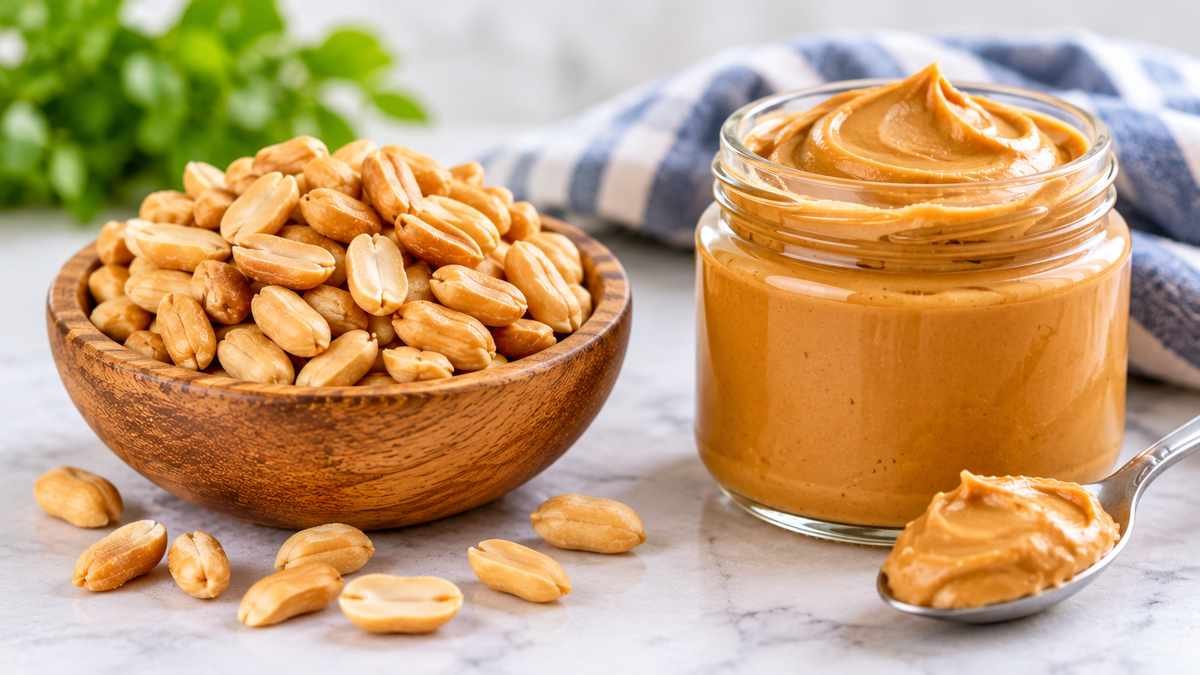

Whole peanuts or a spoonful of peanut butter: which is the better everyday choice? The question of peanuts vs peanut butter comes up often, especially among people who want a protein-rich snack without feeling guilty about it. Both are popular, affordable, and widely available, and both can fit into a healthy diet.
The main differences are not about one being good and the other bad. They come down to food structure, ingredients, portion control, and how easily extra salt, sugar, or oils end up in the product. A jar of peanut butter made only from peanuts is a very different food from a sweetened peanut spread, and a bag of plain peanuts is very different from honey-roasted ones.
This guide compares peanuts and peanut butter side by side, including calories, protein, fats, fiber, and micronutrients. It also covers shared benefits, weight management, how to choose a healthy peanut butter, and how much to eat. Neither food is a treatment for any condition, and people with a peanut allergy should avoid both. For more background, see our guide to the health benefits of peanuts.
Quick Answer: Which Is Healthier?
Whole peanuts and peanut butter can both be healthy sources of plant-based protein, unsaturated fats, and important nutrients. Whole peanuts generally make portion control easier and provide their natural fiber-rich structure, while peanut butter is convenient and easy to spread. The healthiest choice depends on ingredients, serving size, and personal preference.
Peanuts vs. Peanut Butter Nutrition: What’s the Difference?
The table below compares equal weights (30 grams, roughly one ounce) of plain whole peanuts and unsweetened peanut butter. Figures are approximate and vary by brand, roasting method, and recipe, so check product labels and USDA FoodData Central for exact values.
| Nutrient | Whole peanuts (30 g) | Peanut butter (30 g, unsweetened) |
|---|---|---|
| Calories | 170 to 180 kcal | 175 to 190 kcal |
| Protein | 7 to 8 g | 7 to 8 g |
| Total fat | 14 to 15 g | 15 to 16 g |
| Carbohydrates | 5 to 6 g | 5 to 6 g |
| Fiber | 2 to 2.5 g | 1.8 to 2.2 g |
| Saturated fat | Around 2 g | Around 2 to 3 g |
| Added sugar | 0 g | 0 g if unsweetened |
| Sodium | Very low if unsalted | Depends on added salt |
The two foods are nutritionally very similar when peanut butter is made mostly from peanuts. Compare equal weights, not a handful of peanuts with two tablespoons of peanut butter, because those portions are not the same.
Calories and Serving Sizes
Both foods are energy-dense, meaning a small amount contains many calories. A standard peanut butter serving is two tablespoons (about 32 grams), which provides roughly 190 calories. One ounce of peanuts is a small handful and provides about 165 to 170 calories.
It is easy to take a larger scoop from a jar than you realize, which is why measuring matters. Our article on whether peanuts are fattening explains what research says about peanuts and weight.
Protein Content
Both foods provide roughly 7 to 8 grams of protein per 30 grams. Protein supports tissue maintenance, enzyme function, and fullness. Plant-based protein from peanuts can contribute to a balanced diet, but neither food should be treated as a complete replacement for all other protein sources. For more options, see our list of high-protein foods.
Healthy Fats
Most of the fat in both foods is unsaturated, including monounsaturated and polyunsaturated fats. The American Heart Association recommends replacing saturated fat with unsaturated fat as part of a heart-healthy pattern.
Some peanut butters contain added oils, such as palm oil, to prevent separation. These can slightly raise the saturated fat content, so check the label. Learn more about healthy fats.
Fiber, Vitamins, and Minerals
Both foods provide fiber, vitamin E, niacin, magnesium, and other nutrients. Whole peanuts may retain slightly more fiber and, if eaten with the thin skin, additional plant compounds. Peanut butter still provides meaningful amounts of these nutrients, so it should not be dismissed as nutritionally poor.
For fiber-rich ideas, see high-fiber foods for digestive health.
5 Health Benefits Peanuts and Peanut Butter Share
Research on peanuts and peanut products, including a systematic review of clinical studies you can find on PubMed, generally looks at risk factors and findings vary. These studies do not prove that one form is superior.
1. Support Heart Health
Both provide unsaturated fats, fiber, and other nutrients that fit a heart-conscious eating pattern. Replacing foods high in saturated fat, such as processed meats or fried snacks, with sources of unsaturated fat can be beneficial, as noted by the Dietary Guidelines for Americans. Neither food prevents heart disease on its own. See our guide to the best nuts for heart health.
2. Provide Plant-Based Protein
Peanuts and peanut butter are useful in vegetarian and plant-forward meals. Spread peanut butter on whole-grain toast, stir it into oatmeal, or add chopped peanuts to a salad or stir-fry. These simple additions can raise the protein content of a meal.
3. Help Make Meals More Satisfying
The combination of fat, protein, and fiber slows digestion and contributes to fullness. Appetite responses vary from person to person, so this effect is not guaranteed for everyone. Both foods can help make a snack feel more substantial.
4. Supply Important Micronutrients
Peanuts provide magnesium, vitamin E, niacin, and folate, among others. Magnesium supports muscle and nerve function, vitamin E acts as an antioxidant in the body, and niacin helps with energy metabolism. The NIH Office of Dietary Supplements describes magnesium’s roles in detail.
5. Fit Into a Balanced Eating Pattern
Either food pairs well with fruit, whole grains, vegetables, and other nutrient-rich foods. The Harvard Nutrition Source reviews research on nuts and overall health. For a wider view, see our overview of the health benefits of nuts.
What Makes Whole Peanuts Different?
Less Processing and an Intact Food Structure
Whole peanuts are generally eaten with little processing beyond roasting. Chewing breaks the peanut down gradually, and some of the fat stays inside intact plant cells during digestion. Peanut skins, the thin reddish-brown layer, contain polyphenols and are safe to eat.
Easier to Recognize Portions
A measured handful is easy to see and serve. Pouring peanuts into a small bowl instead of eating from a large bag helps you notice how much you have eaten. A spoonful of peanut butter taken directly from a jar is harder to track.
Best Ways to Eat Peanuts
- Unsalted roasted or dry-roasted peanuts
- Plain boiled peanuts, where available
- Peanuts mixed with fruit or added to meals
Heavily salted, sugar-coated, or oil-fried varieties have a different nutritional profile. For more on preparation, read our guide to raw vs. roasted peanuts.
What Makes Peanut Butter Different?
Convenient and Versatile
Peanut butter is easy to spread, stir into oatmeal, blend into smoothies, or use in sauces. It is helpful when whole peanuts are hard to chew, and it works well for quick snacks and meal prep.
Does Grinding Peanuts Change Their Nutrition?
Grinding changes the physical structure and texture of peanuts, but the nutrient composition stays broadly similar when peanut butter is made mostly from peanuts. Some laboratory research suggests that crushing peanuts may make their fat more available for digestion, compared with eating them whole. Studies on this are limited, and the practical impact on health is not established. You can find an example by searching PubMed.
Watch Out for Added Ingredients
Some products contain added sugar, honey, syrups, extra salt, added oils, or stabilizers. Some spreads contain ingredients beyond peanuts. Terms such as “natural” or “premium” do not guarantee a healthier product, so the ingredient list and nutrition label matter more.
Is Peanut Butter Less Healthy Because It Is Processed?
Not necessarily. There is a big difference between simply grinding peanuts and heavily reformulating a product with sugar, oils, and flavorings. Processing alone does not make a food unhealthy.
Products made from peanuts (and perhaps a little salt) are straightforward choices. Sweetened peanut spreads and chocolate-flavored spreads are closer to desserts, and they should be compared separately. Compare ingredient lists and the Nutrition Facts label, including added sugars, which the FDA explains how to read.
Peanuts vs. Peanut Butter for Weight Management
Both foods are calorie-dense, and neither automatically causes weight gain or weight loss. Whole peanuts may make portions more visible, whereas peanut butter makes it easier to eat more than intended without noticing. Protein, fat, and fiber contribute to fullness in both forms.
Pre-portioning either food is a practical strategy. For example, scoop a measured tablespoon of peanut butter onto an apple, or place an ounce of peanuts in a bowl. Peanuts do not burn fat or reduce belly fat specifically. For the research, see our article on whether nuts are good for weight management.
Practical takeaway: whole peanuts may make portions more visible, while peanut butter can still fit into a weight-conscious eating pattern when measured.
Which Is Better for Heart Health, Blood Sugar, and Digestion?
Heart Health
Both provide unsaturated fats, and the overall dietary pattern matters most. If sodium is a concern, choose unsalted peanuts or peanut butter with modest sodium. The American Heart Association recommends limiting sodium to 2,300 mg per day, with an ideal limit of 1,500 mg for most adults.
Blood Sugar
Both are relatively low in carbohydrate compared with many sweet spreads, and the added protein and fat slow digestion. Serving size and what you eat them with matter. Neither food treats or controls diabetes. The American Diabetes Association provides general nutrition guidance, and our article on the best nuts for type 2 diabetes offers more background.
Digestion and Fiber
Whole peanuts may provide slightly more fiber per comparable serving, but the difference is small. Overall daily fiber intake from many foods matters more. The Harvard Nutrition Source explains the role of fiber. Individual tolerance varies, and some people feel full or bloated after large servings.
How to Choose the Healthiest Peanut Butter
Use this simple checklist when comparing jars:
- Look for peanuts as the first and main ingredient.
- Choose unsweetened options when possible.
- Compare sodium levels across brands.
- Check for added sugars and oils.
- Do not assume “natural” automatically means healthier.
- Choose a texture and price that make the product practical for regular use.
Natural peanut butter often separates, so stir it well and store it in the refrigerator after opening to slow oil separation and spoilage.
How Much Peanuts or Peanut Butter Should You Eat?
A common reference portion is about one ounce (28 to 30 grams) of whole peanuts. For peanut butter, the standard serving is around two tablespoons, though spoon sizes and products vary, so check the label.
These are reference portions, not strict requirements. Your ideal amount depends on your total daily calorie needs, meal composition, and preferences. If calorie intake is a concern, measure portions. For comparisons across other nuts, see our guide on how many nuts you should eat every day.
Peanuts vs. Peanut Butter: Which One Should You Choose?
| Your priority | Practical choice |
|---|---|
| Less processing | Plain whole peanuts |
| Convenience | Peanut butter |
| Visible portion control | Whole peanuts in a small bowl |
| Easy spreading or mixing | Peanut butter |
| Lower added sugar | Whichever has no added sugar |
| Lower sodium | Compare unsalted products and labels |
| More intact food structure | Whole peanuts |
The best option is the one that meets your nutritional needs, preferences, and portion goals.
Allergy and Safety Notes
Peanut allergy can cause severe reactions, including anaphylaxis. People with a peanut allergy should avoid both peanuts and peanut butter and follow their clinician’s advice. The FDA provides information on food allergies and labeling.
Whole peanuts and thick spoonfuls of peanut butter can be choking hazards for young children. Ask your child’s pediatrician about safe ways to introduce peanut-containing foods.
Frequently Asked Questions
Are peanuts healthier than peanut butter?
Both can be nutritious. Whole peanuts offer an intact food structure, while peanut butter offers convenience. Ingredient quality and serving size often matter more than choosing one form over the other.
Does peanut butter have more calories than peanuts?
It can have slightly more calories per equal weight, depending on the product. Compare the same weight and check the nutrition label rather than assuming every brand is identical. See USDA FoodData Central for reference values.
Is natural peanut butter better than regular peanut butter?
Not automatically. A peanut-only or peanut-and-salt product may contain fewer added ingredients, but compare the actual nutrition labels and ingredient lists.
Which is better for weight loss: peanuts or peanut butter?
Neither guarantees weight loss. Both are calorie-dense, so portion size matters. Whole peanuts may make portions easier to see, while measured peanut butter can also fit into a balanced eating plan.
Can I eat peanuts or peanut butter every day?
Many people can include either regularly as part of a varied diet, provided they tolerate peanuts and account for portion size and overall dietary needs. See our guide to whether peanuts are good for you.
Is peanut butter a good source of protein?
It provides plant-based protein, but it is also high in fat and calories. Treat it as a useful protein-containing food rather than relying on it as your only protein source.
Is peanut butter healthy for older adults?
It can be, especially because it is soft, easy to chew, and provides protein and calories in a small portion. Older adults who limit sodium or sugar should choose unsalted, unsweetened versions. Read more in our guide to the best foods for healthy aging.
Are almonds or peanuts better?
Both are nutritious and have different strengths. Peanuts are slightly higher in protein, and almonds are higher in vitamin E and calcium. Our comparison of almonds vs. walnuts shows how nut choices differ.
Final Verdict
Both whole peanuts and peanut butter can be healthy. Whole peanuts offer an intact structure and a simple ingredient list, and peanut butter offers convenience and versatility. Choose unsalted or lower-sodium options, check for added sugar, and measure your portions. There is no universal winner when comparing peanuts vs peanut butter; the best choice depends on how the food fits into your overall diet.
Sources
- U.S. Department of Agriculture. FoodData Central
- U.S. Department of Agriculture and U.S. Department of Health and Human Services. Dietary Guidelines for Americans
- American Heart Association. Nuts and Your Heart: Eating Nuts for Heart Health
- American Heart Association. Sodium
- Harvard T.H. Chan School of Public Health, The Nutrition Source. Nuts for the Heart
- Harvard T.H. Chan School of Public Health, The Nutrition Source. Fiber
- National Institutes of Health, Office of Dietary Supplements. Magnesium: Fact Sheet for Health Professionals
- U.S. Food and Drug Administration. How to Understand and Use the Nutrition Facts Label
- U.S. Food and Drug Administration. Food Allergies
- American Diabetes Association. Food and Nutrition
- PubMed. Peanuts, peanut butter, and cardiometabolic health: systematic review
- PubMed. Crushing, chewing, and peanut lipid bioaccessibility
Medical Disclaimer: This article is for general educational purposes only and is not medical advice. It does not diagnose, treat, or replace guidance from a qualified healthcare professional who knows your health history. Talk with your doctor or a registered dietitian before changing your diet, especially if you have diabetes, high blood pressure, or are managing your weight for a medical reason. If you have a peanut allergy, avoid peanuts and peanut butter and ask an allergist for guidance.